Welcome to Lappe's Bee Supply's blogs section. We are a trusted beekeeping company in the USA. We give relevant insights, seasonal guidance, and professional advice for beekeepers of all experience levels. From hive management and bee wellness to honey production and equipment guides, we have it all that you will require to thrive. Get updated, motivated, and connected with the beekeeping community through regular news from Lappe's Bee Supply.
How Is Honey Made? Step-by-Step From Nectar to Honeycomb
The Buzz About This Post
- The Buzz About This Post
- Key Takeaways on how is honey made
- What is the difference between nectar and honey?
- What is honey, and how do bees make it?
- How do honeybees collect nectar from flowers?
- How does pollination relate to honey production?
- What happens to nectar after a bee returns to the hive?
- What enzymes turn nectar into honey?
- How do bees remove water from nectar to make honey?
- Why do bees store honey in hexagonal honeycomb cells?
- How do bees cap honey, and why does it matter?
- How do beekeepers harvest honey from a hive?
- Why do different honeys taste and look different?
- Frequently Asked Questions for how honey is made
- How long does it take bees to make honey?
- Do bees defecate in honey?
- Is honey just dried nectar?
- What enzyme is most important in honey making?
- Why do bees fan their wings in the hive?
- Why do bees cap honey with wax?
- What is the difference between honeycomb and honey?
- Does heating honey change it?
- Why does honey crystallize?
- Can bees make honey without flowers?
- Sources
- Related honey guides & supplies
- FAQs
How Is Honey Made? Step-by-Step From Nectar to Honeycomb
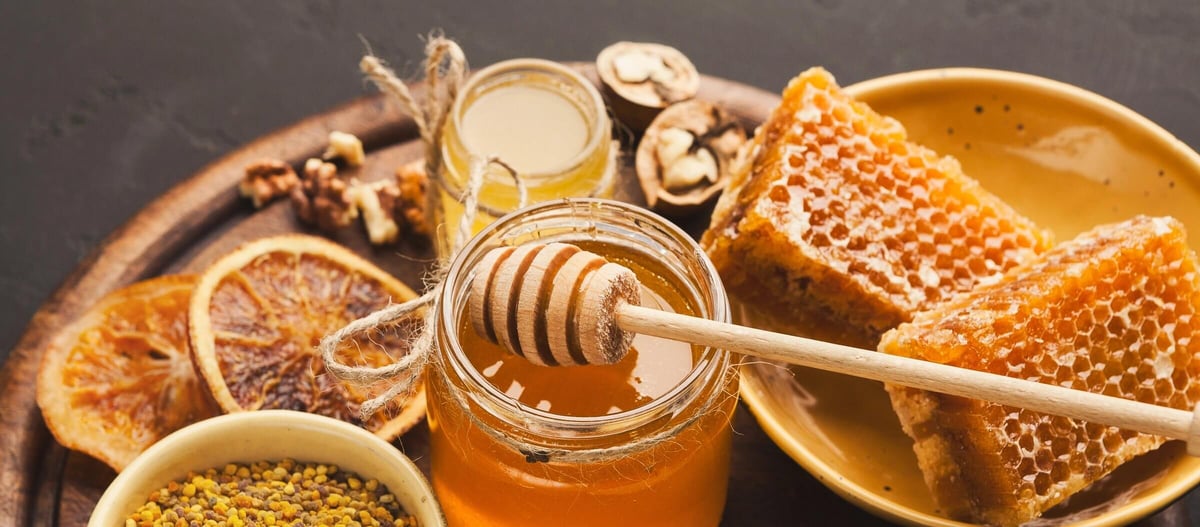
How is honey made is with nectar that honeybees enzymatically transform and dehydrate, then store in honeycomb cells as a concentrated food reserve. If you have ever wondered how is honey made, this guide follows the process from flower to hive, through ripening and capping, and finally through a typical beekeeper harvest.
Looking to buy honey? See our honey options .
Author: Lappe's Bee Supply Team
Reviewed by: Lappe's Bee Supply Team
Published: February 25, 2026
Last Updated: September 1, 2026
Editorial standards: This guide is reviewed against established honey standards, honey-bee biology references for how is honey made, institutional resources, and the sources listed near the end of the article.
Key Takeaways on how is honey made
- Honey is more than dried nectar. Honeybees alter nectar chemically with enzymes while also reducing its water content.
- Forager bees carry nectar to the hive in a specialized crop commonly called the honey stomach.
- Invertase, also called sucrase, helps break sucrose into the simpler sugars glucose and fructose during maturation.
- Honeybees promote evaporation by manipulating nectar and moving air through the colony as the developing food becomes increasingly concentrated.
- Mature stores are held in beeswax cells, and bees commonly cover sufficiently ripened food with a wax capping.
- Floral source is one of the primary reasons different honeys vary in color, aroma, flavor, sugar composition, and crystallization behavior.
- Beekeepers commonly harvest the finished crop by removing appropriate frames, uncapping cells, and using centrifugal extraction while preserving drawn comb for possible reuse.
What is the difference between nectar and honey?
Nectar is a plant-produced sugar solution; honey is nectar honeybees chemically transform, concentrate through moisture removal, store in comb, and allow to mature.
Nectar begins as a sugary liquid produced by plants. Honeybees collect that liquid from flowers and transport it back to the colony. From that point, the collected nectar undergoes two major types of change: biochemical transformation and dehydration. Bee-derived enzymes alter components of the liquid, while water is progressively removed until the developing food becomes much more concentrated.
One important biochemical change involves sucrose. The enzyme invertase helps split sucrose into glucose and fructose. At the same time, workers expose the developing food to conditions that promote evaporation. The final product is therefore not simply flower nectar that has been sitting in a cell; its chemistry and physical properties have changed.
The finished food is then stored in beeswax comb as a colony reserve. Bees commonly seal sufficiently ripened stores beneath thin wax cappings. For internationally recognized definitions and compositional requirements, see the Codex Standard for Honey listed in the Sources section.
| Feature | Nectar | Honey |
|---|---|---|
| Origin | Produced by plants | Produced by honeybees from collected plant-derived material |
| Water content | Generally relatively high and watery | Reduced substantially during ripening |
| Biochemistry | Plant sugars and other compounds as collected | Composition altered during processing by bees |
| Storage | Collected as a temporary forage resource | Stored in comb as concentrated colony food |
| Purpose for the colony | Raw carbohydrate-rich forage | Concentrated food reserve |
What is honey, and how do bees make it?
Honey is a concentrated food honeybees produce by collecting plant-derived material, adding bee-derived substances, removing water, storing it in comb, and allowing it to ripen.
Understanding how honey is made starts with recognizing it as a colony-level process. A single forager does not collect a finished product from a flower. Instead, workers gather nectar and carry it back to the hive, where other bees become involved in processing, redistribution, dehydration, and storage.
During these steps, enzymes contribute to chemical changes in the collected nectar. Workers also reduce the amount of water present, producing a thicker and increasingly concentrated food. The developing material may be handled repeatedly before it reaches its final condition in the comb.
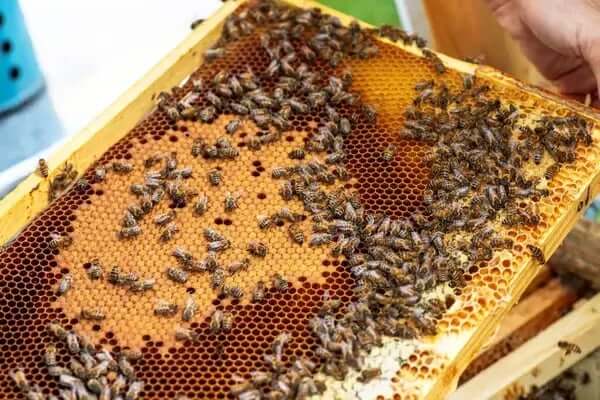
Once sufficiently ripened, the stored food can remain in honeycomb as part of the colony's reserve. Beeswax cappings help separate mature stores from the surrounding hive environment and make capped cells easy for beekeepers to recognize during inspections.
How do honeybees collect nectar from flowers?
Honeybees take up nectar with the proboscis, carry it in a specialized crop commonly called the honey stomach, and return it to the colony for processing.
Forager honeybees search for rewarding flowers using scent, color, previous experience, and information available within the colony. When a worker reaches a flower containing accessible nectar, she uses her proboscis to take up the liquid.
The collected nectar enters an expandable structure called the crop. Beekeepers often call it the honey stomach, but the nickname should not be confused with the bee's primary digestive stomach. The crop functions as a transport and storage chamber that allows the forager to carry nectar back to the colony.
Once the bee returns, the collected liquid can be transferred to other workers. This handoff is one of the first visible steps in the transition from freshly gathered nectar to the concentrated food that will eventually be stored in the comb.
How does pollination relate to honey production?
Honey production uses nectar, while pollination occurs when foraging bees transfer pollen among flowers; the processes often occur together but are biologically distinct.
Honeybees visit flowers for more than one resource. Nectar provides carbohydrate-rich forage, while pollen supplies important proteins, fats, vitamins, minerals, and other nutrients used by the colony. A worker may collect one resource or encounter both during a foraging trip.
Pollination occurs when pollen is transferred to the reproductive structures of a compatible flower. As a bee moves through blossoms, grains of pollen can adhere to its body and later be deposited on another flower. That movement supports reproduction in many flowering plants.
These two biological processes are therefore closely connected through floral foraging, but they are not the same thing. Nectar is the primary raw material for blossom honey; pollen transfer is the reproductive service that occurs as bees move among flowers.
What happens to nectar after a bee returns to the hive?
Returning foragers transfer nectar to workers inside the colony, where enzyme exposure, handling, moisture reduction, and storage continue as the nectar matures.
The returning forager does not simply pour nectar into a cell and finish the job. Collected material can be transferred among workers, exposing it to bee-derived secretions and increasing the amount of handling that occurs before final storage.
This transfer helps explain how honey is made inside the hive. Workers may manipulate the liquid and place it into honeycomb cells while water removal continues. This repeated processing makes the finished food a product of the entire colony's coordinated activity, rather than the work of only the individual forager that visited the flower.
The nectar continues changing during this period. Sugars are altered, water is lost, and the developing food becomes progressively more concentrated until it reaches the condition bees maintain for long-term storage.
What enzymes turn nectar into honey?
Invertase helps split nectar sucrose into glucose and fructose, while additional enzymes also contribute to the chemical changes associated with honey maturation.
Invertase, also called sucrase, is one of the best-known enzymes involved in the process. It catalyzes the breakdown of sucrose into the simpler sugars glucose and fructose. This helps explain why the finished food has a different sugar profile from the nectar originally collected from a flower.
The chemistry of the final product involves more than invertase alone. Scientific literature also discusses enzymes such as glucose oxidase, diastase, catalase, and others. Their presence and activity can vary with biological origin, nectar source, handling, storage, and other conditions.
For that reason, it is more accurate to say that multiple biochemical reactions contribute to maturation rather than claiming one enzyme alone turns nectar into honey. Enzymatic transformation works alongside physical dehydration to produce the concentrated food stored by the colony.
How do bees remove water from nectar to make honey?
Honeybees reduce nectar moisture by exposing the liquid to air and ventilating the hive, promoting evaporation until the developing honey becomes much more concentrated.
Freshly collected nectar generally contains far more water than the finished product. That excess moisture must be reduced before the food becomes suitable for long-term colony storage. Honeybees accomplish this through a combination of nectar handling, exposure to air, and hive ventilation.
Spreading the developing food across available cell surfaces can increase exposure to air. At the same time, workers can fan their wings and contribute to airflow through the colony. Together, greater surface exposure and ventilation support evaporation.
Moisture matters because the finished food is hygroscopic and can absorb water from humid air. A crop with excessive moisture is also more vulnerable to fermentation. For an internationally recognized commercial standard, the current Codex Standard for Honey generally sets a maximum moisture content of 20% for most honey covered by the standard, with specified exceptions.
Beekeeper note: Wax capping is a useful visual sign that the stored food has undergone substantial ripening, but capping percentage is not a direct moisture measurement. When exact moisture content matters, a properly used honey refractometer provides a more direct check.
Why do bees store honey in hexagonal honeycomb cells?
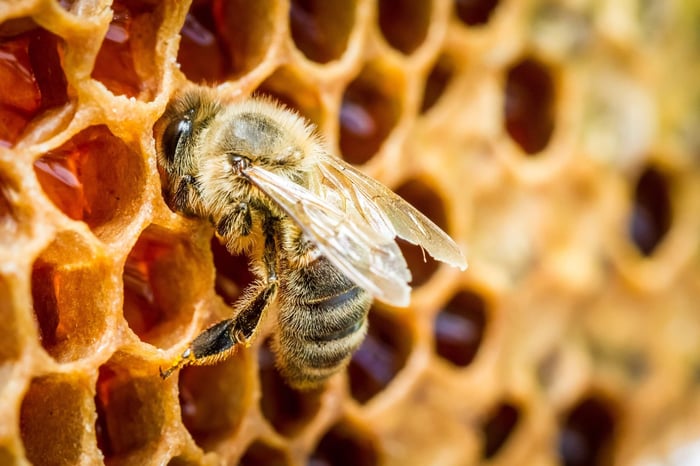
Hexagonal beeswax cells create reusable colony infrastructure for storing honey and pollen and raising brood, with individual cells available for sealed food storage.
Worker honeybees produce beeswax and use it to construct the interconnected structure known as honeycomb. Although stored sweetness may be the first function people associate with comb, the structure serves several jobs within a colony.
Honeycomb cells can hold concentrated food stores, pollen, eggs, larvae, and developing pupae, depending on their location and how the colony is using the comb. The regular cell structure creates organized storage and brood space within the hive.
Drawn comb is also valuable to beekeepers because centrifugal extraction can remove the finished crop without necessarily destroying the wax cell structure. Once extracted, usable comb can often be returned to a colony, reducing the amount of new wax construction required before bees can again use those cells for storage.
How do bees cap honey, and why does it matter?
Honeybees cover sufficiently ripened honey with beeswax cappings, creating a protective barrier between stored honey and the surrounding hive environment.
As the developing food becomes concentrated and suitable for storage, workers can place a thin layer of beeswax over the opening of the cell. The result is what beekeepers call capped honey.
Capping helps protect the stored food from direct exposure to the humid hive environment. This matters because concentrated stores can absorb moisture from surrounding air. For the colony, capped cells provide protected food reserves that can remain available when fresh nectar is scarce.
Beekeepers also use capping as a practical harvest indicator. Frames containing extensive capped stores have generally undergone substantial ripening. However, individual conditions can vary, which is why a refractometer is useful when a beekeeper needs to know actual moisture content rather than relying on appearance alone.
How do beekeepers harvest honey from a hive?
Beekeepers select suitable honey frames, remove wax cappings, use centrifugal extraction to empty the cells, and then strain, settle, store, or bottle the honey.
A typical harvest begins by identifying frames or supers that contain mature stores suitable for removal. After the bees are cleared from those frames, the beekeeper removes the wax cappings covering the filled cells.
The uncapped frames can then be placed into an extractor. As the equipment spins, centrifugal force moves the contents out of the cells and toward the wall of the extractor, where the liquid drains toward the collection outlet. The process allows much of the drawn comb to remain intact.
After extraction, the collected product may be strained to remove pieces of beeswax and other visible debris. Many beekeepers also allow the freshly extracted crop to settle before bottling. Exact filtering, warming, settling, and bottling practices vary according to the beekeeper's goals and the type of finished product being prepared.
If the product is warmed to improve flow during processing, the actual temperature and duration should be considered before making broad claims about handling. Terms such as raw honey should describe the real processing history rather than simply being assumed because the product came directly from a hive.
Why do different honeys taste and look different?
Honey color, aroma, flavor, texture, and crystallization behavior vary with floral source, composition, growing conditions, location, season, storage, and processing.
The finished crop reflects the plants available to the colony. Different flowering plants produce nectar with different combinations of sugars, minerals, acids, aromatic compounds, and other constituents. Those differences help create the wide variety of colors and flavors seen among honeys.
Floral source is a major influence, but it is not the only one. Weather, soil, region, seasonal bloom timing, and forage availability can alter the crop available to bees. Two harvests from the same general area can therefore differ when plants, temperatures, rainfall, or bloom conditions change.
Sugar composition also affects crystallization. A crop containing a relatively favorable balance for glucose crystallization may granulate sooner than one with a different sugar profile. Crystallization is therefore a normal physical change in genuine honey rather than automatic evidence that something is wrong.
Handling after harvest matters as well. Heating can alter aroma and enzyme activity when temperature or exposure becomes excessive, while filtering can influence clarity and visible particles. The finished jar represents both the bees' floral source and the way the product was handled afterward.
Quick Spec
The answer to how is honey made follows a recognizable sequence: nectar collection, transport, transfer, enzymatic change, dehydration, comb storage, capping, and beekeeper harvest.
- Collect: Foragers gather nectar from flowers.
- Transport: Nectar travels back to the colony in the crop or honey stomach.
- Transfer: Returning foragers pass nectar to workers inside the hive.
- Transform: Enzymes participate in chemical changes to the collected nectar.
- Dehydrate: Workers promote evaporation and reduce water content.
- Store: The concentrated food is held in beeswax comb cells.
- Cap: Bees cover sufficiently ripened stores with beeswax.
- Harvest: Beekeepers remove suitable frames, uncap, extract, strain, and bottle or store the finished crop.
Frequently Asked Questions for how honey is made
How long does it take bees to make honey?
There is no universal number of hours or days. Production and ripening depend on nectar availability, colony strength, weather, temperature, humidity, and other environmental conditions.
Do bees defecate in honey?
No. The colony's food is processed and stored in honeycomb cells, while waste elimination is a separate biological process.
Is honey just dried nectar?
No. Water removal is essential to maturation, but nectar also undergoes biochemical changes involving bee-derived enzymes before becoming finished honey.
What enzyme is most important in honey making?
Invertase is especially important because it helps convert sucrose into glucose and fructose. Other enzymes, including glucose oxidase and diastase, also contribute to the chemistry of the finished food.
Why do bees fan their wings in the hive?
Wing fanning contributes to colony ventilation and air movement. That airflow can assist evaporation as nectar becomes increasingly concentrated and ripened.
Why do bees cap honey with wax?
Beeswax cappings help protect sufficiently ripened stores from the surrounding hive environment and allow the colony to maintain concentrated food for later use.
What is the difference between honeycomb and honey?
Honeycomb is the beeswax structure built by honeybees. Honey is one of the foods stored inside individual cells of that structure.
Does heating honey change it?
Yes. The effect depends on temperature and exposure time, and excessive heating can change aroma, enzyme activity, color, and other characteristics of the finished product.
Why does honey crystallize?
Crystallization is a natural physical process influenced by sugar composition, moisture, temperature, and the presence of particles that can provide sites for crystal formation.
Can bees make honey without flowers?
Flower nectar is the familiar source of blossom honey, but internationally recognized definitions also include certain products derived from plant secretions or from excretions of plant-sucking insects collected and transformed by honeybees.
Sources
The references below support the definitions, enzymatic processes, moisture standards, nectar handling, pollination information, and storage-stability concepts used throughout this guide.
- Standard for Honey, CXS 12-1981. Codex Alimentarius Commission, FAO/WHO. International standard covering the definition, composition, quality, moisture, and labeling of honey. View Codex Standards
- How Do Bees Make Honey? North Carolina State University. Institutional explanation of nectar collection, the honey stomach, invertase, evaporation, and capping. View Resource
- Pollinators, Technical Note No. 78. USDA Natural Resources Conservation Service. Background on pollination biology and the ecological role of pollinating insects. View PDF
- Honey Composition & Properties. National Honey Board. Educational information on composition, sugars, enzymes, and physical properties. View Resource
- The Hive and the Honey Bee. Dadant & Sons. Comprehensive reference text covering honey-bee biology, colony organization, food production, and hive management. Publisher Page
- Biochemical Reactions and Their Biological Contributions in Honey. Peer-reviewed review of invertase, glucose oxidase, diastase, catalase, and other biochemical reactions associated with the finished food. View Research
- Honey Fermentation. ScienceDirect Topics. Background information concerning fermentation and the relationship between moisture and storage stability. View Topic
Source note: Standards establish commercial definitions and quality requirements. They should not automatically be interpreted as exact biological thresholds for every individual honeybee colony.
FAQs
How long does it take bees to make honey?
There is no universal number of hours or days. Honey production and ripening depend on nectar availability, colony strength, weather, temperature, humidity, and other environmental conditions.
Do bees defecate in honey?
No. Honey is processed and stored as colony food in honeycomb cells, while waste elimination is a separate biological process.
Is honey just dried nectar?
No. Water removal is essential to honey maturation, but nectar also undergoes biochemical changes involving bee-derived enzymes before becoming mature honey.
What enzyme is most important in honey making?
Invertase is especially important because it helps convert sucrose into glucose and fructose. Other enzymes, including glucose oxidase and diastase, also contribute to honey chemistry.
Why do bees fan their wings in the hive?
Wing fanning contributes to colony ventilation and air movement. That airflow can assist evaporation as nectar is being concentrated and ripened into honey.
Why do bees cap honey with wax?
Beeswax cappings help protect sufficiently ripened honey from the surrounding hive environment and allow the colony to maintain concentrated food for later use.
What is the difference between honeycomb and honey?
Honeycomb is the beeswax structure built by honeybees. Honey is one of the foods stored inside individual cells of that structure.
Does heating honey change it?
Yes. The effect depends on temperature and exposure time, and excessive heating can change aroma, enzyme activity, color, and other characteristics of honey.
Why does honey crystallize?
Crystallization is a natural physical process influenced by honey's sugar composition, moisture, temperature, and the presence of particles that can provide sites for crystal formation.
Can bees make honey without flowers?
Flower nectar is the familiar source of blossom honey, but internationally recognized honey definitions also include certain honey produced from plant secretions or from excretions of plant-sucking insects collected and transformed by honeybees.