Welcome to Lappe's Bee Supply's blogs section. We are a trusted beekeeping company in the USA. We give relevant insights, seasonal guidance, and professional advice for beekeepers of all experience levels. From hive management and bee wellness to honey production and equipment guides, we have it all that you will require to thrive. Get updated, motivated, and connected with the beekeeping community through regular news from Lappe's Bee Supply.
Can You Harvest Uncapped Honey?
The Buzz About This Post
- Key Takeaways
- Table of Contents
- Can You Harvest Uncapped Honey?
- Why Do Bees Cap Honey?
- When Can You Harvest Uncapped Honey?
- How Do You Test Uncapped Honey for Moisture?
- When Is the Best Time to Harvest Honey?
- What Are the Risks of Harvesting Wet Honey?
- What Else Should You Consider Before Harvesting?
- How Should You Check Uncapped Honey Before Harvest?
- What Is the Bottom Line on Harvesting Uncapped Honey?
- Frequently Asked Questions
- Can you extract honey if some cells are still uncapped?
- Does uncapped honey always mean the honey is unripe?
- What is the best way to test uncapped honey?
- Is the shake test accurate for honey moisture?
- Why can high-moisture honey ferment?
- Is honey below 20% moisture guaranteed not to ferment?
- Can uncapped honey be dried before extraction?
- Does honey need to be 100% capped before harvesting?
- Should questionable wet honey be mixed with dry honey?
- Should you harvest honey if the colony needs it for winter?
- Sources and Further Reading
- Editorial Standards
- FAQs
Can You Harvest Uncapped Honey?
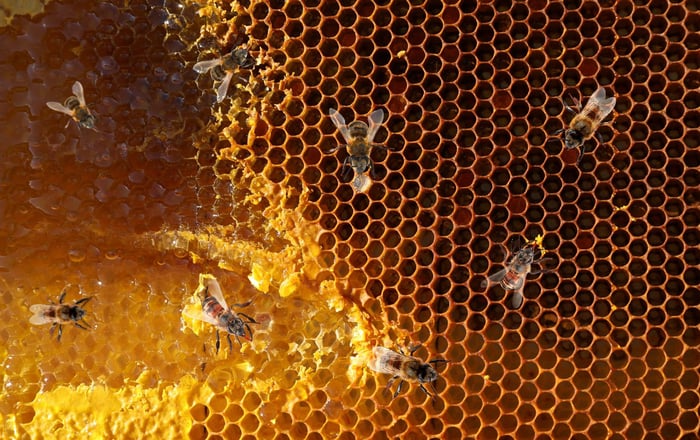
Yes, you can sometimes harvest uncapped honey, but the absence of a wax capping does not tell you the honey's exact moisture content. When there is uncertainty, measuring representative samples with a honey refractometer provides much stronger evidence than relying on appearance alone.
Key Takeaways
- Uncapped honey is not automatically unripe. Some uncapped cells may contain honey that has already reached a suitable moisture level.
- A honey refractometer is the most reliable practical tool for checking the moisture content of questionable honey.
- The shake test is useful as a screening test, not a moisture measurement. Honey that sprays from a frame is clearly thin, but honey that stays in the cells is not automatically proven dry.
- Higher moisture increases fermentation risk. Storage temperature, yeast levels, and other conditions also affect whether fermentation develops.
- Honey can sometimes be dried before extraction. Low relative humidity and good air movement can help remove additional moisture from exposed honey.
- Harvest only surplus honey. Even ripe honey should remain with the colony when bees need those food reserves.
Can You Harvest Uncapped Honey?
Harvesting honey is one of the most rewarding parts of beekeeping, but open cells can make the decision more complicated. A frame does not have to be completely capped for every cell of honey on that frame to be ripe. At the same time, substantial amounts of uncapped nectar may contain enough water to create storage problems after extraction.
The useful distinction is between capping status and moisture content. Capping status describes whether bees have covered a cell with wax. Moisture content tells you how much water remains in the honey. Those measurements are related, but they are not interchangeable.
For that reason, a beekeeper who wants to harvest uncapped honey should evaluate the actual honey rather than relying on a fixed rule such as harvesting only when a certain percentage of the frame is capped.
Why Do Bees Cap Honey?
Moisture Reduction
Fresh nectar contains considerably more water than finished honey. Worker bees process nectar and move it within the colony while evaporation removes water. Air movement inside the hive, including fanning by worker bees, assists the ripening process.
Once stored honey has ripened sufficiently, bees commonly seal the cells with a thin layer of wax. Those cappings are valuable visual evidence that the colony has moved the stored food into a long-term storage stage.
However, bees do not necessarily cap every honey cell at one exact human-defined moisture percentage. Weather, nectar flow, colony conditions, location within the comb, and other factors can affect ripening and capping. This is why the presence or absence of wax should not be treated as a laboratory moisture measurement.
Preservation
Cappings also protect stored honey from the surrounding hive environment. Once the wax layer covers the cells, the honey is less directly exposed to changes in atmospheric humidity, debris, and other contaminants.
This storage system is especially important because honey is not simply a product for the beekeeper. It is the colony's carbohydrate reserve. Bees depend on stored honey when nectar is unavailable and during periods when weather limits foraging.
When Can You Harvest Uncapped Honey?
Most beekeepers prefer substantially capped honey because the cappings provide a convenient visual indication of ripening. In practice, however, supers may contain a mixture of capped honey, uncapped but sufficiently ripened honey, and newer nectar with significantly more moisture.
University of Alaska Fairbanks Cooperative Extension specifically notes that frames with uncapped cells do not necessarily contain thin honey. That distinction is useful because it prevents beekeepers from treating every open cell as a failed or unfinished product.
When a meaningful portion of the crop remains uncapped, moisture testing gives the beekeeper much more useful information than appearance alone and helps determine whether it is appropriate to harvest uncapped honey from those frames.
How Do You Test Uncapped Honey for Moisture?
The USDA's standards for extracted honey determine soluble solids and moisture using refractometry, with the standard method referencing measurements at 20°C, or 68°F. For everyday beekeeping, a honey refractometer offers a practical way to estimate the moisture content of a small sample before extraction or storage.
1. Refractometer
A refractometer measures how light bends as it passes through a sample. Because the refractive properties of honey change with its water content, the instrument can be used to estimate moisture.
Follow the calibration and temperature instructions supplied with the specific refractometer. Place the required amount of honey on the clean prism, close the cover if the model uses one, and read the indicated moisture value.
If a super contains substantial uncapped honey, consider sampling more than one location. One dry cell does not necessarily represent every frame that will be mixed together during extraction.
| Reference Point | What It Means |
|---|---|
| Capped cells | Useful visual evidence that bees have ripened and sealed stored honey, but not an exact moisture measurement. |
| Uncapped cells | May contain either sufficiently ripened honey or wetter nectar. The cell's appearance alone cannot establish the moisture percentage. |
| Codex moisture benchmark | Current Codex honey standards use moisture limits as a quality criterion, with the applicable maximum depending on the honey type and standard provisions. |
| Refractometer reading | Provides objective evidence of moisture and is more useful for uncertain frames than capping percentage alone. |
Important distinction: Standards such as the Codex moisture limit or USDA grading requirements should not be interpreted as a magical fermentation line. A honey sample slightly below one percentage is not guaranteed never to ferment, and one slightly above it is not guaranteed to ferment immediately.
2. The Shake Test
The traditional shake test offers a useful first check when you encounter open honey cells. Hold the frame securely and give it a firm downward movement. If watery droplets or thin nectar shake from the cells, the contents are clearly still wet enough to deserve caution.
University of Alaska Fairbanks Cooperative Extension describes this technique as a way to identify thin, unripe honey. The limitation is equally important: honey staying in the cells does not prove that it contains a specific moisture percentage.
Temperature also affects viscosity, which is another reason not to turn the shake test into a numerical moisture test. Think of it as a screening method. A refractometer remains the better choice when the storage quality of the crop matters.
3. Controlled Drying Room
Partially uncapped honey can sometimes be dried further before extraction, but simply putting supers in an airtight room is not enough. The useful conditions are low relative humidity, clean air movement, controlled surroundings, and adequate time.
Supers can be arranged so dry air moves through the frames, while a dehumidifier may be used to keep room humidity lower. Frames should also be protected from insects, robbing bees, dust, and other contamination.
Avoid assuming that a particular number of hours automatically makes every batch ready. Starting moisture, room humidity, airflow, temperature, honey characteristics, and frame arrangement can all change the drying rate. Retest representative honey before extracting it.
When Is the Best Time to Harvest Honey?
A strong nectar flow can result in large amounts of recently stored nectar appearing in supers before the bees have finished ripening and capping it. Conversely, after a nectar flow ends, bees may have additional time to reduce the moisture content of stored nectar.
Local weather also matters. Humidity, temperature, forage availability, colony population, and hive ventilation can influence how quickly nectar is processed.
Instead of harvesting according to the calendar alone, examine the colony and the honey itself. Capping patterns, the shake test, actual moisture readings, and the colony's remaining food reserves together create a more useful picture than any one sign by itself.
What Are the Risks of Harvesting Wet Honey?
Fermentation
Honey's high concentration of sugars and relatively low water availability help make it stable compared with many other foods. When the water content rises, however, osmophilic or osmotolerant yeasts can have more favorable conditions for growth.
Fermentation can produce alcohol and carbon dioxide and may create sour, alcoholic, yeasty, or otherwise undesirable flavors and aromas. A fermenting batch can also affect other honey if it is mixed together during extraction.
For this reason, uncertain high-moisture honey should not automatically be blended into a larger batch of known dry honey. If questionable frames are harvested, consider testing or handling them separately until their condition is understood.
Spoilage
Honey that develops fermentation or other quality problems may no longer have the flavor, aroma, texture, or stability expected from properly ripened honey. Preventing the problem is generally easier than trying to correct a questionable batch after extraction.
Clean extraction equipment, appropriate food-safe containers, moisture control, and good storage practices all contribute to protecting honey quality. Keep containers tightly closed because honey is hygroscopic, meaning it can absorb moisture from the surrounding environment when exposed.
What Else Should You Consider Before Harvesting?
Deciding whether to harvest uncapped honey is not simply a matter of determining whether the beekeeper can extract it. The condition of the colony, time of year, local forage, and intended use of the honey all belong in the decision.
Local Conditions
Honey production varies significantly by location. Climate, humidity, floral sources, nectar flow timing, drought, rainfall, and temperature can change both how quickly a colony fills supers and how quickly nectar ripens.
Beekeepers should learn the normal nectar flows in their region while still evaluating each colony individually. Local beekeeping associations, university extension programs, and experienced area beekeepers can be useful sources of region-specific information.
Bees’ Needs
Honey is first and foremost food for the colony. Removing a frame because its honey is technically ready does not necessarily mean removing it is good colony management.
Before harvest, evaluate how much food remains in the brood boxes and other supers, the size and strength of the colony, the time remaining before winter, expected fall nectar flows, and the likelihood that supplemental feeding will be required.
There is no single nationwide reserve number that is appropriate for every colony. Bees wintering in a long, cold climate can face very different food requirements from colonies in warmer regions.
Quality Over Quantity
An extra few pounds of extracted honey are rarely worth creating a larger batch with questionable storage stability. When uncertain honey is encountered, measure it, dry it when appropriate, or keep it separate rather than relying on guesswork.
This is especially important for honey that will be bottled, stored for an extended period, given to others, or sold to customers. Consistency and careful handling help protect the flavor, aroma, appearance, and overall quality of the finished honey.
How Should You Check Uncapped Honey Before Harvest?
- Confirm that the honey is surplus. Evaluate whether the colony has adequate remaining food reserves before removing supers.
- Inspect the capping pattern. Capped honey provides useful evidence of ripening, while widespread open cells deserve closer evaluation.
- Use the shake test as an initial screen. If watery nectar readily leaves the cells, do not treat that frame as storage-ready honey.
- Take representative samples. Test more than one location if the super contains a significant mixture of capped and uncapped honey.
- Measure moisture with a refractometer. Follow the instrument manufacturer's calibration and temperature instructions.
- Dry questionable frames when appropriate. Use controlled low humidity and good air circulation, then test again.
- Keep uncertain honey separate. Avoid immediately combining questionable high-moisture honey with a known dry crop.
- Store extracted honey carefully. Use clean food-safe containers and keep them properly closed to limit exposure to outside moisture.
What Is the Bottom Line on Harvesting Uncapped Honey?
Uncapped does not automatically mean unripe. Moisture testing, colony needs, and intended storage should determine whether partially uncapped honey belongs in the harvest.
Cappings remain one of the most useful visual clues available to a beekeeper, but they should not be mistaken for a precise moisture reading. When a meaningful amount of honey remains uncapped, a refractometer takes much of the guesswork out of the decision. If you plan to harvest uncapped honey, combine moisture testing with sensible harvest timing and adequate colony reserves to protect the quality of the finished crop.
Frequently Asked Questions
Can you extract honey if some cells are still uncapped?
Yes. Some uncapped honey may already be sufficiently ripened, but moisture testing is the best way to evaluate uncertain frames before they are mixed into a larger harvest.
Does uncapped honey always mean the honey is unripe?
No. An uncapped cell has not yet been sealed with wax, but capping status alone does not establish the honey's actual moisture content.
What is the best way to test uncapped honey?
A properly calibrated honey refractometer provides a practical moisture measurement and is more reliable than estimating ripeness from capping percentage alone.
Is the shake test accurate for honey moisture?
The shake test can identify obviously thin nectar that readily leaves the cells, but it cannot tell a beekeeper the actual percentage of moisture in the honey.
Why can high-moisture honey ferment?
Additional water can make conditions more favorable for moisture-tolerant yeasts. Fermentation risk is also influenced by yeast levels, temperature, and storage conditions.
Is honey below 20% moisture guaranteed not to ferment?
No. Moisture is a major factor in fermentation risk, but no single moisture percentage creates an absolute guarantee under every storage condition.
Can uncapped honey be dried before extraction?
Yes. Partially uncapped frames can sometimes lose additional moisture when kept under clean conditions with low relative humidity and adequate air circulation.
Does honey need to be 100% capped before harvesting?
No. Complete capping is not an absolute requirement when representative moisture testing shows that the honey is appropriately ripened for extraction and intended storage.
Should questionable wet honey be mixed with dry honey?
Questionable high-moisture honey is better evaluated or handled separately instead of immediately mixing it into an otherwise dry batch.
Should you harvest honey if the colony needs it for winter?
No. Harvest only surplus honey after considering the colony's remaining stores, climate, season, expected forage, colony strength, and winter requirements.
Sources and Further Reading
The following authoritative references provide additional information about honey moisture, grading, ripening, testing, and quality.
- Extracted Honey Grades and Standards — U.S. Department of Agriculture, Agricultural Marketing Service.
- United States Standards for Grades of Extracted Honey — U.S. Department of Agriculture, Agricultural Marketing Service.
- Standard for Honey, CXS 12-1981 — Codex Alimentarius Commission, Food and Agriculture Organization of the United Nations and World Health Organization.
- Beekeeping in Alaska — University of Alaska Fairbanks Cooperative Extension Service.
- Comb Honey Grades and Standards — U.S. Department of Agriculture, Agricultural Marketing Service.
Editorial Standards
Lappe's Bee Supply educational content is written to help beekeepers make practical, informed management decisions. Technical claims are reviewed against authoritative government standards, university extension guidance, standards organizations, and other reputable primary sources when available. Beekeeping conditions vary by colony, climate, nectar flow, season, and management system, so numerical standards are identified as standards or reference points rather than presented as universal biological rules.
FAQs
Can you extract honey if some cells are still uncapped?
Yes. Some uncapped honey may already be sufficiently ripened, but moisture testing is the best way to evaluate uncertain frames before they are mixed into a larger harvest.
Does uncapped honey always mean the honey is unripe?
No. An uncapped cell has not yet been sealed with wax, but capping status alone does not establish the honey's actual moisture content.
What is the best way to test uncapped honey?
A properly calibrated honey refractometer provides a practical moisture measurement and is more reliable than estimating ripeness from capping percentage alone.
Is the shake test accurate for honey moisture?
The shake test can identify obviously thin nectar that readily leaves the cells, but it cannot tell a beekeeper the actual percentage of moisture in the honey.
Why can high-moisture honey ferment?
Additional water can make conditions more favorable for moisture-tolerant yeasts. Fermentation risk is also influenced by yeast levels, temperature, and storage conditions.
Is honey below 20% moisture guaranteed not to ferment?
No. Moisture is a major factor in fermentation risk, but no single moisture percentage creates an absolute guarantee under every storage condition.
Can uncapped honey be dried before extraction?
Yes. Partially uncapped frames can sometimes lose additional moisture when kept under clean conditions with low relative humidity and adequate air circulation.
Does honey need to be 100% capped before harvesting?
No. Complete capping is not an absolute requirement when representative moisture testing shows that the honey is appropriately ripened for extraction and intended storage.
Should questionable wet honey be mixed with dry honey?
Questionable high-moisture honey is better evaluated or handled separately instead of immediately mixing it into an otherwise dry batch.
Should you harvest honey if the colony needs it for winter?
No. Harvest only surplus honey after considering the colony's remaining stores, climate, season, expected forage, colony strength, and winter requirements.