Welcome to Lappe's Bee Supply's blogs section. We are a trusted beekeeping company in the USA. We give relevant insights, seasonal guidance, and professional advice for beekeepers of all experience levels. From hive management and bee wellness to honey production and equipment guides, we have it all that you will require to thrive. Get updated, motivated, and connected with the beekeeping community through regular news from Lappe's Bee Supply.
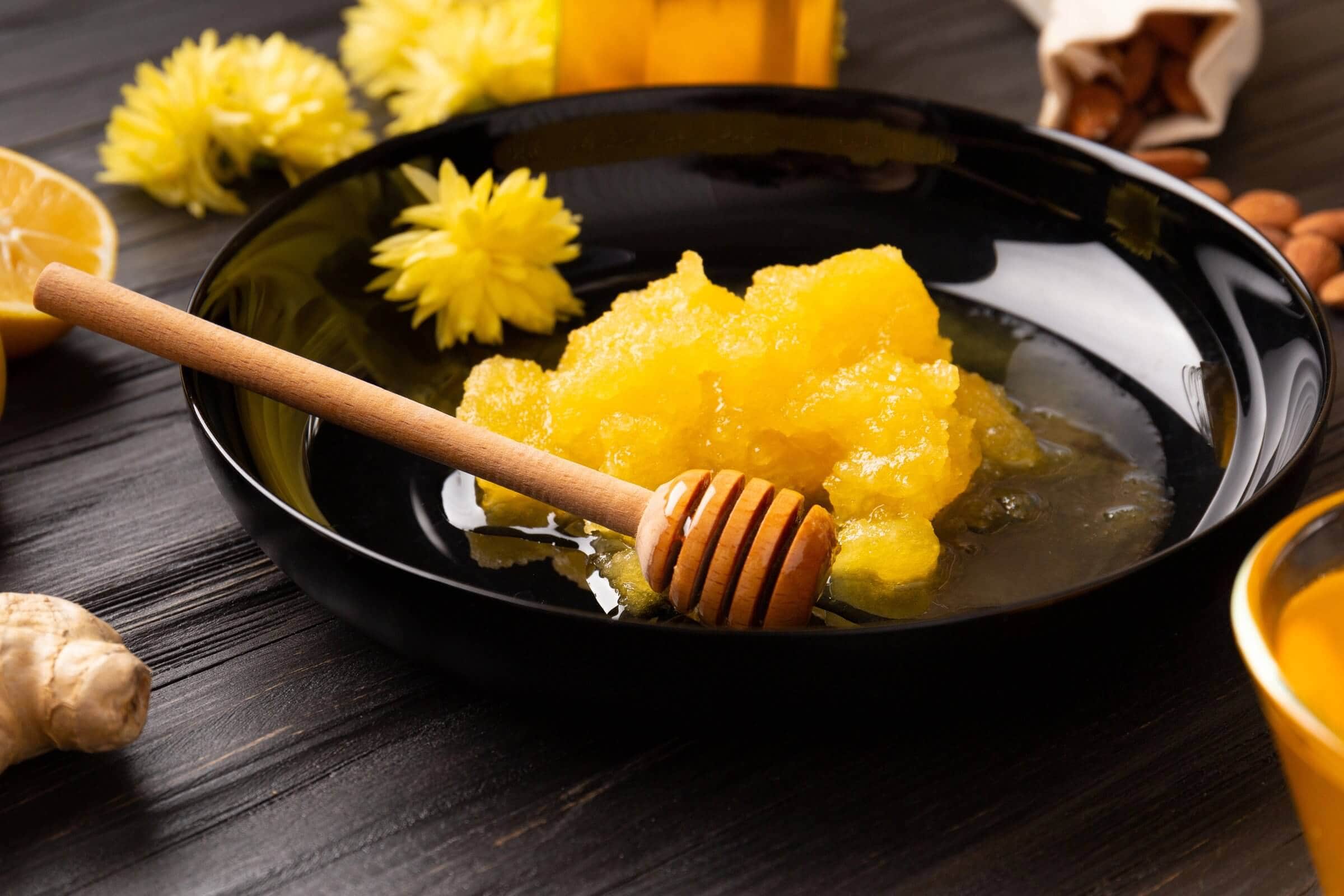
Embracing Crystallized Honey: A Natural Transformation
The Buzz About This Post
- Table of Contents
- Key Takeaways
- What is honey crystallization?
- Why does honey crystallize?
- What does it mean when honey crystallizes?
- Why does honey crystallize over time?
- What factors cause honey to crystallize?
- Does crystallized honey mean the honey is spoiled?
- Which types of honey crystallize faster?
- How can you turn crystallized honey back into liquid?
- What are the benefits of crystallized honey?
- How do liquid and crystallized honey compare?
- Frequently Asked Questions
- Is crystallized honey safe to eat?
- Why does raw honey crystallize faster?
- Can refrigeration make honey crystallize?
- Does crystallized honey mean the honey is bad?
- Can you turn crystallized honey back into liquid?
- Which honey varieties crystallize faster?
- Does crystallization change honey's flavor?
- How should honey be stored to slow crystallization?
- What causes crystals to start forming in honey?
- Is crystallized honey a sign of fake honey?
- Sources
- FAQs
Why Does Honey Crystallize? What Grainy Honey Means and How to Fix It
Honey can change from smooth and pourable to crystallized honey without being ruined. Understanding why honey crystallizes makes it easier to recognize normal changes, store honey properly, and gently return it to liquid when desired.
Published: | Last updated:
Author: Lappe's Bee Supply
Editorial standards: This article is reviewed for clarity and alignment with recognized honey standards, food-science research, and practical honey-handling principles.
Honey does not stay perfectly smooth forever. A jar that looked clear and pourable when it was purchased may eventually become cloudy, thick, grainy, creamy, or nearly solid. That appearance can be surprising, especially if you are used to commercial honey that remains liquid for long periods.
In most cases, the change is completely normal. Honey crystallization is the natural process in which glucose separates from the liquid portion of honey and forms solid sugar crystals. It primarily changes texture and appearance. Crystallization by itself does not mean the honey is spoiled, fake, contaminated, or unsafe.
Key Takeaways
- Honey crystallization occurs primarily when dissolved glucose separates from the liquid portion of honey and forms crystals.
- Crystallization changes texture and appearance but does not by itself mean honey has spoiled.
- Sugar composition, moisture, temperature, microscopic particles, and existing crystals can influence how quickly granulation occurs.
- Botanical origin matters because different nectar sources produce honey with different sugar profiles.
- Crystallization alone cannot prove whether honey is raw, pure, minimally processed, or authentic.
- Gentle warming can usually dissolve crystals when a liquid consistency is preferred.
What is honey crystallization?
Glucose can leave solution and form crystals in honey, changing its texture and appearance without automatically meaning the honey has spoiled.
- Honey contains a concentrated mixture of sugars and water.
- Glucose is less soluble in water than fructose.
- Honey crystals may be fine, creamy, coarse, or firm.
- Crystallization is primarily a physical texture change.
Honey contains substantial amounts of natural sugars, particularly fructose and glucose, dissolved in a relatively small amount of water. Because the mixture contains so much dissolved sugar, honey is commonly described as a supersaturated sugar solution.
Glucose is especially important to crystallization because it is less soluble than fructose. Under suitable conditions, glucose begins leaving the liquid phase and arranging itself into a solid crystal structure. As more crystals form, the honey may become lighter in appearance, less transparent, thicker, and eventually grainy or firm.
The exact texture depends partly on crystal size. Very small crystals can produce a smooth, creamy consistency, while larger crystals create a noticeably grainier mouthfeel. This same principle is used intentionally when producers make controlled-crystallization products such as creamed honey.
Why does honey crystallize?
Honey crystallizes when glucose leaves its concentrated sugar solution and gradually forms solid crystals during normal storage.
- Glucose is less soluble than fructose.
- Honey contains relatively little water compared with its sugar concentration.
- Crystal formation can begin around microscopic particles or existing crystals.
- Crystallization speed differs substantially among honey batches.
The simplest explanation is that honey naturally contains a large amount of sugar and comparatively little water. Glucose cannot remain dissolved as easily as fructose, so it is more likely to separate from the liquid portion over time.
When this happens, glucose molecules arrange themselves into crystals. Tiny existing crystals, microscopic particles, and other nucleation sites can give this process a place to begin. Once crystal growth starts, additional glucose can join those crystals.
This explains why a jar can remain apparently unchanged for weeks or months and then begin looking cloudy. The process may have started on a microscopic level before enough crystals developed to become visible.
The relative proportions of glucose, fructose, and water are therefore more informative than simply asking how old the honey is. Research examining botanical origin and sugar composition has found strong relationships between fructose-to-glucose ratios, glucose-to-water ratios, and crystallization behavior. [2]
What does it mean when honey crystallizes?
Crystallized honey means glucose crystals have formed; the texture changes, but crystallization alone does not show that the honey is spoiled.
- The honey may become lighter, cloudier, or opaque.
- The texture may become creamy, thick, coarse, or grainy.
- Flavor usually changes much less than texture.
- Crystallization alone does not establish spoilage or authenticity.
Seeing crystals does not automatically tell you anything negative about the honey. The most obvious differences are physical. Honey that once flowed freely may become difficult to pour, and transparent honey may become cloudy or pale as crystals scatter light.
Crystallization should also not be treated as a test for authenticity. Genuine honey can crystallize rapidly, slowly, or sometimes remain liquid for long periods. Botanical source, processing, filtration, moisture content, storage temperature, and sugar composition can all influence its behavior.
Why does honey crystallize over time?
Crystals appear gradually as nucleation and crystal growth continue during storage, with timing shaped by sugar composition and storage conditions.
- Crystal formation can begin before crystals are visible.
- Nucleation creates starting points for crystal growth.
- Existing crystals can encourage further crystallization.
- Fructose-to-glucose ratio is associated with crystallization tendency.
Crystallization is a process rather than a single event. Small nuclei form first. Glucose then continues accumulating around these points until the crystals become large or numerous enough to affect the honey's appearance and texture.
Research has frequently examined the fructose-to-glucose ratio, sometimes abbreviated F/G, as one indicator of whether honey is likely to crystallize quickly or remain liquid longer. Lower ratios generally indicate a greater tendency to crystallize, while higher ratios are commonly associated with slower granulation. [2]
These ratios are useful for describing tendencies, but they should not be treated as an exact timer. Two honey batches with similar sugar profiles can still behave differently if moisture content, storage temperature, crystal seeding, or handling differs.
What factors cause honey to crystallize?
Crystallization rate depends on sugar ratios, moisture, temperature, and tiny particles or existing crystals that provide sites for crystal growth.
| Factor | Typical Effect |
|---|---|
| Higher glucose relative to fructose | Generally favors faster crystallization. |
| Higher fructose-to-glucose ratio | Often helps honey remain liquid longer. |
| Existing crystals | Can provide seeds for additional crystal growth. |
| Fine suspended particles | May provide nucleation surfaces. |
| Water content | Changes the relationship between dissolved glucose and available water. |
| Storage temperature | Can strongly influence nucleation and crystal growth. |
| Botanical origin | Influences natural sugar composition and physical properties. |
No single factor controls crystallization in every jar. Sugar chemistry, moisture, temperature, and physical seed points work together.
Temperature deserves particular attention because the relationship is not simply “the colder the honey, the faster it crystallizes.” Research examining natural crystallization in different unifloral honeys found especially rapid crystallization near 14°C, or approximately 57°F, under the tested conditions. [3]
This is one reason refrigeration is generally unnecessary when the goal is to keep honey liquid. Very cold temperatures can eventually slow molecular movement, while certain cool-but-not-frozen ranges may strongly favor crystal development.
Does crystallized honey mean the honey is spoiled?
Properly stored crystallized honey is usually still safe to eat, but fermentation, contamination, excess moisture, or unusual odors require separate evaluation.
- Crystallization itself is not evidence of microbial spoilage.
- Honey normally has relatively low water activity.
- Honey's acidity and concentrated sugars contribute to its stability.
- Fermentation and crystallization are different processes.
Honey's relatively low water availability is one reason it is naturally resistant to many microorganisms. Water activity is different from total water content because it describes how much water is available for biological and chemical activity. The U.S. Food and Drug Administration discusses water activity as an important factor in food stability and microbial growth. [4]
That does not mean every jar of honey is incapable of fermentation. Certain yeasts can tolerate high-sugar environments, and honey with excessive moisture can be more susceptible. Crystallization can also change the distribution of water between solid crystals and the remaining liquid portion.
Normal crystallization generally produces thickening, cloudiness, or graininess. Persistent bubbling, unusual pressure, obvious fermentation odors, contamination, or other abnormal changes should be evaluated separately.
Which types of honey crystallize faster?
Honey containing relatively more glucose generally crystallizes faster, while a higher fructose-to-glucose ratio usually delays visible crystal formation.
- Botanical source influences the natural sugar profile of honey.
- Lower fructose-to-glucose ratios are generally associated with faster crystallization.
- Higher fructose-to-glucose ratios are generally associated with longer liquid stability.
- Individual batches can behave differently even when they share a broad floral description.
It is tempting to make a simple list of “fast” and “slow” floral varieties, but sugar composition gives a more scientifically useful explanation. A named floral source does not guarantee one exact crystallization time because nectar composition, weather, geography, moisture, blending, processing, and storage can all vary.
Researchers commonly use fructose-to-glucose and glucose-to-water relationships when studying crystallization tendency. [2] That makes measured composition more reliable than assuming every jar carrying the same floral name will behave identically.
How can you turn crystallized honey back into liquid?
Crystallized honey can be liquefied with slow, gentle warming that dissolves glucose crystals while limiting unnecessary exposure to high heat.
Gentle Warm-Water Method
- Prepare warm water. Fill a bowl or pan with warm water rather than boiling water.
- Place the honey container in the water. Keep the container closed while it warms.
- Warm slowly. Allow the heat to move gradually through the honey.
- Stir when practical. Gentle stirring can distribute heat and help crystals dissolve evenly.
- Refresh the water. Replace cooled water with fresh warm water if necessary.
- Stop once the desired texture returns. More heat is not automatically better.
The goal is simply to dissolve the glucose crystals. Aggressive heating is unnecessary for normal household reliquefaction.
The Codex Standard for Honey states that honey should not be heated or processed to an extent that changes its essential composition or impairs its quality. [1]
Research also shows that heating conditions can influence heat-sensitive honey characteristics, including enzyme activity. Both temperature and length of exposure matter. [5]
Once liquefied, the honey may crystallize again. Reliquefaction changes its current physical state; it does not permanently change the honey's natural sugar balance.
What are the benefits of crystallized honey?
Crystallized honey offers a thicker, less-drippy texture for spreading and measuring, even when the honey is never returned to liquid.
- It can spread more neatly on toast, biscuits, and bread.
- Its thicker consistency can make measuring less messy.
- Fine crystals can create a smooth or creamy mouthfeel.
- It remains useful in cooking, baking, and warm beverages.
- Reliquefaction is optional if you like the texture.
Crystallized honey does not need to be “fixed” simply because its texture changed. Many people actually prefer it because it stays where it is spread instead of immediately dripping.
Controlled crystallization is also the principle behind creamed honey. In that product, producers intentionally encourage the formation of many very small crystals so the finished honey develops a smooth, uniform, spreadable consistency instead of forming large, coarse crystals.
Crystallized honey can also be added directly to warm oatmeal, tea, sauces, marinades, or baked recipes. Heat and moisture in the recipe will usually dissolve the crystals during use.
How do liquid and crystallized honey compare?
Liquid and crystallized honey differ mainly in texture and handling; crystallization alone does not establish quality, purity, or authenticity.
| Feature | Liquid Honey | Crystallized Honey |
|---|---|---|
| Texture | Smooth and pourable | Creamy, thick, grainy, or firm |
| Appearance | Usually clear to translucent | Often cloudy or opaque |
| Drizzling | Easy | Less convenient |
| Spreading | May drip | Usually easier to spread neatly |
| Baking | Suitable | Suitable |
| Safety | Depends on storage and condition | Depends on storage and condition |
| Authenticity proof | No | No |
| Can texture change? | May crystallize naturally | Can usually be reliquefied |
Neither state should automatically be considered better. Liquid honey is convenient when you want to drizzle, pour, or mix quickly. Crystallized honey can be more convenient when you want to spread it or measure it with less dripping.
The important point is that these are often two physical states of the same food. Honey can move naturally from liquid to crystallized and, with careful warming, from crystallized back toward liquid again.
Frequently Asked Questions
Is crystallized honey safe to eat?
Yes. Crystallization is normally a physical texture change and does not by itself mean honey has spoiled.
Why does raw honey crystallize faster?
Raw honey may contain pollen, fine wax particles, or existing crystals that can provide nucleation sites, although sugar composition and storage conditions remain major factors.
Can refrigeration make honey crystallize?
Temperature strongly influences crystallization, but colder is not always faster. Crystal formation is especially favorable within certain cool temperature ranges.
Does crystallized honey mean the honey is bad?
No. Crystallization alone does not mean honey is spoiled, contaminated, or unsafe.
Can you turn crystallized honey back into liquid?
Yes. Slow, gentle warming can dissolve glucose crystals and return crystallized honey to a more liquid texture.
Which honey varieties crystallize faster?
Honey containing relatively more glucose generally crystallizes faster, while honey with a higher fructose-to-glucose ratio often remains liquid longer.
Does crystallization change honey's flavor?
Crystallization usually changes texture more noticeably than flavor, although the thicker mouthfeel can affect how the honey is perceived.
How should honey be stored to slow crystallization?
Keep honey tightly sealed under stable room-temperature storage conditions and avoid refrigeration when a liquid texture is preferred.
What causes crystals to start forming in honey?
Crystals begin when glucose leaves solution and organizes around nucleation sites such as microscopic particles, existing crystals, or other small surfaces.
Is crystallized honey a sign of fake honey?
No. Genuine honey commonly crystallizes, but crystallization alone cannot prove whether honey is pure, raw, authentic, or adulterated.
Sources
The scientific explanations in this guide are based on recognized honey standards, food-science research, and government food-safety references.
- Codex Alimentarius Commission. Standard for Honey, CXS 12-1981. Food and Agriculture Organization of the United Nations and World Health Organization. View Codex standards
- Escuredo, O., et al. Contribution of Botanical Origin and Sugar Composition of Honeys on the Crystallization Phenomenon. Food Chemistry. View research
- Ji, P., Liu, X., Yang, C., Wu, F., Sun, J., Cao, W., & Zhao, H. Natural Crystallization Properties of Honey and Seed Crystals-Induced Crystallization Process for Honey Performance Enhancing. Food Chemistry, 405 (Part B), Article 134972, 2023. View research
- U.S. Food and Drug Administration. Water Activity (aw) in Foods. View FDA guidance
- Kędzierska-Matysek, M., Florek, M., Wolanciuk, A., Skałecki, P., & Litwińczuk, A. Characterisation of Viscosity, Colour, 5-Hydroxymethylfurfural Content and Diastase Activity in Raw Rape Honey (Brassica napus) at Different Temperatures. Journal of Food Science and Technology, 53(4), 2092–2098, 2016. View research
- Tappi, S., Glicerina, V., Ragni, L., Dettori, A., Romani, S., & Rocculi, P. Physical and Structural Properties of Honey Crystallized by Static and Dynamic Processes. Journal of Food Engineering, 292, Article 110316, 2021. View research
- Dettori, A., Tappi, S., Piana, L., Dalla Rosa, M., & Rocculi, P. Kinetic of Induced Honey Crystallization and Related Evolution of Structural and Physical Properties. LWT – Food Science and Technology, 95, 333–338, 2018. View research
- Pląder, M., Sękul, J., Kot, A. M., & Pobiega, K. From Hive to Laboratory – Biotechnological Potential of Microorganisms from Honey. World Journal of Microbiology and Biotechnology, 41, Article 361, 2025. View research
FAQs
Is crystallized honey safe to eat?
Yes. Crystallized honey is safe to eat and does not mean the honey has spoiled.
Why does raw honey crystallize faster?
Raw honey often contains pollen and natural particles that help crystals form more easily.
Does crystallized honey lose nutrients?
No. Crystallization changes texture, not the basic nutritional value of the honey.
Can refrigeration cause honey to crystallize?
Yes. Cooler temperatures speed up honey crystallization.
Which honey stays liquid longest?
Honey with higher fructose levels, such as acacia honey, usually stays liquid longer.
Can I microwave crystallized honey?
It is better not to. Microwaves can create hot spots that overheat parts of the honey and reduce quality.
What temperature is best for liquefying honey?
A warm-water bath around 110°F (43°C) is a gentle way to dissolve crystals without harsh heating.
Does crystallized honey taste different?
The flavor usually stays very similar, though the thicker texture can make the honey feel creamier.