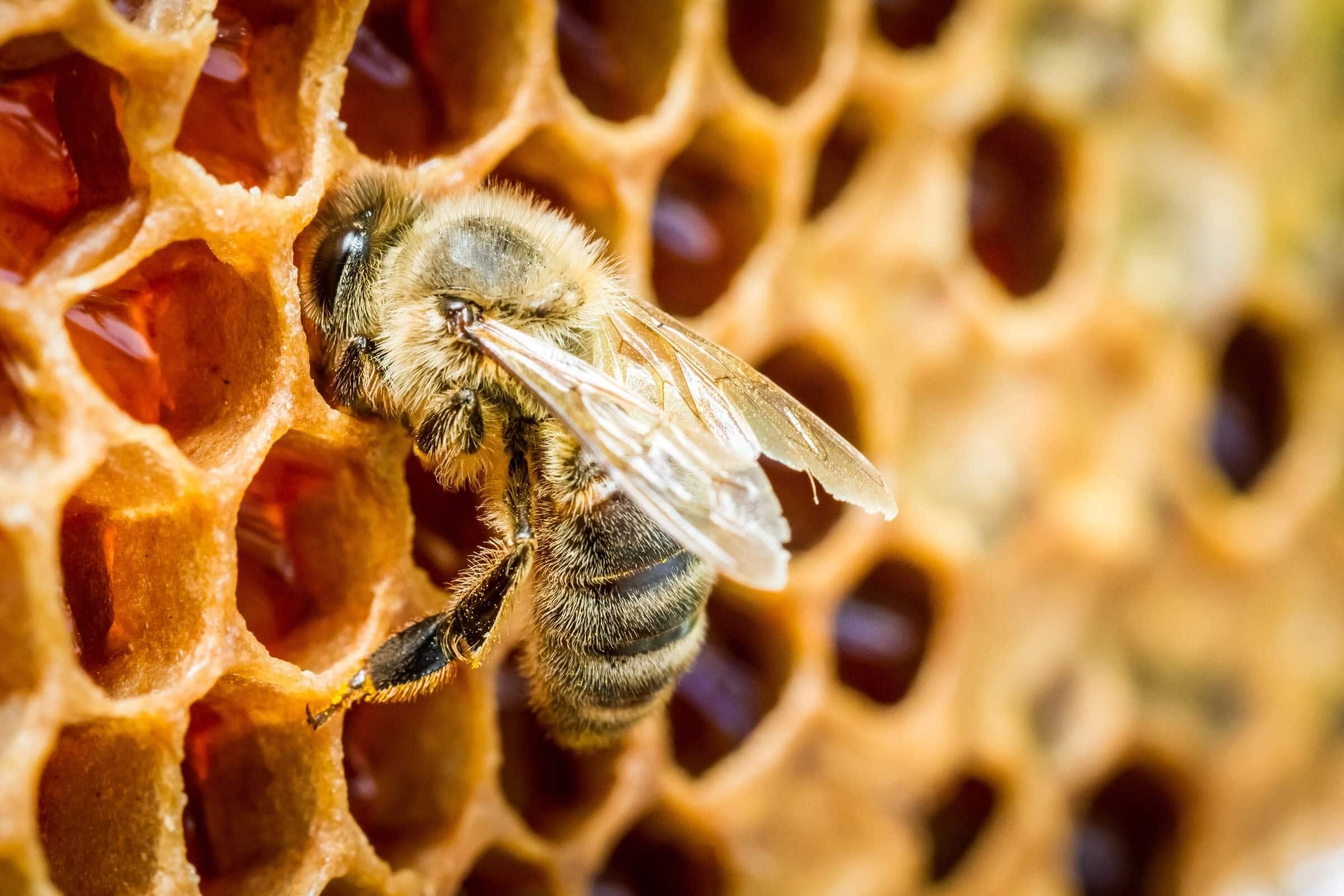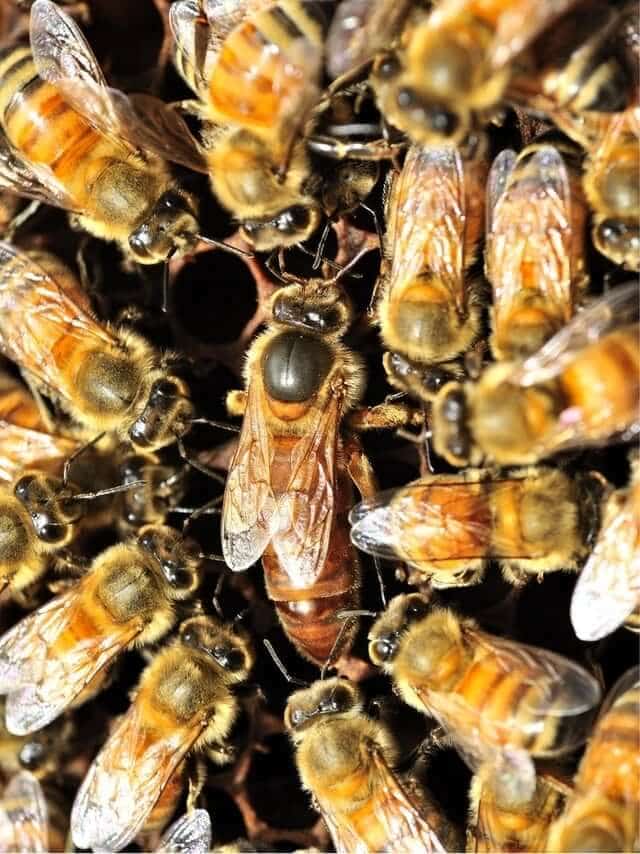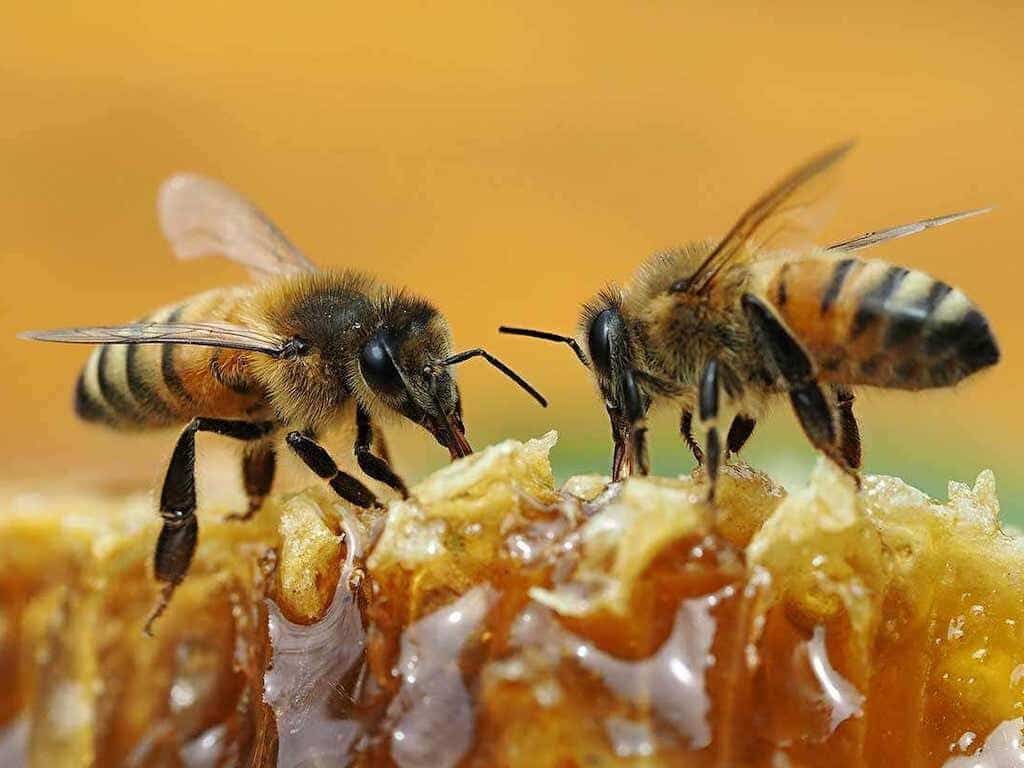
Welcome to Lappe's Bee Supply's blogs section. We are a trusted beekeeping company in the USA. We give relevant insights, seasonal guidance, and professional advice for beekeepers of all experience levels. From hive management and bee wellness to honey production and equipment guides, we have it all that you will require to thrive. Get updated, motivated, and connected with the beekeeping community through regular news from Lappe's Bee Supply.
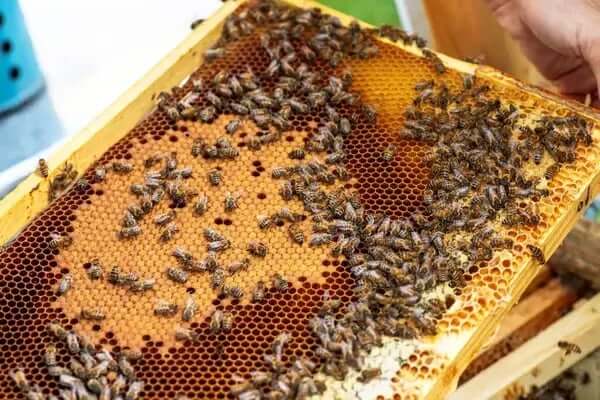
Honeybees: How Colonies Work, How Bees Make Honey & Why Pollination Matters
The Buzz About This Post
- What are honeybees, and why do they matter?
- Which U.S. state produces the most honey?
- How do honeybees turn nectar into honey?
- How many flowers does it take to make a pound of honey?
- How far can a honeybee fly in its lifetime?
- How many bees live in a honeybee colony?
- What do the queen, workers, and drones do?
- How fast do honeybees fly?
- Why can only female honeybees sting?
- How do honeybees communicate using the waggle dance?
- Can honeybees recognize human faces?
- What role do honeybees play in U.S. crop pollination?
- What are the most important honeybee facts to remember?
- What are the most frequently asked questions about honeybees?
- What is a honeybee?
- Which U.S. state produces the most honey?
- How do honeybees make honey?
- How many bees are in a hive?
- Do male honeybees sting?
- Why do honeybees sting?
- What is the waggle dance?
- Are honeybees the only pollinators?
- Can honeybees recognize human faces?
- Why are honeybees important to agriculture?
- Which sources should you cite for honeybee facts?
- FAQs
Honeybee Facts: How Colonies Work, How Bees Make Honey & Why Pollination Matters
Honeybees are far more than honey-producing insects. Their colonies function through division of labor, complex communication, seasonal population changes, food storage, reproduction, and coordinated foraging. This guide explains important bee facts while separating well-supported biology from popular estimates that can vary considerably.
Author: Lappe’s Bee Supply
Published: February 16, 2026
Last updated: September 1, 2026
Editorial standards: Biological, statistical, and behavioral claims are supported whenever possible by government agencies, scientific standards, university extension programs, and peer-reviewed research. Variable estimates are identified as estimates rather than presented as universal facts.
Key Takeaways
- Apis mellifera is a social bee species that lives in organized colonies containing a queen, female workers, and male drones.
- Honey begins as floral nectar that workers transform, dehydrate, store, and eventually cap inside wax comb.
- North Dakota produced 36.3 million pounds of honey in 2024 and ranked first nationally for the 21st consecutive year.
- Colony populations change seasonally rather than remaining at one fixed number throughout the year.
- Foragers communicate profitable food locations through the waggle dance, which conveys information about direction and distance.
- Managed colonies are important agricultural pollinators, but wild bees and other animals also provide essential pollination services.
What are honeybees, and why do they matter?
Honeybees are social Apis mellifera insects that live in colonies, produce honey, and serve as important managed pollinators for agriculture.
- The species belongs to the genus Apis.
- Apis mellifera is widely managed by beekeepers in the United States.
- A colony contains specialized reproductive and worker castes.
- Honey production and crop pollination are separate but important colony functions.
These social insects are best understood as colony-forming organisms rather than as independent individuals. A functioning colony may contain tens of thousands of bees working together to raise brood, gather nectar and pollen, build wax comb, maintain nest temperature, defend stored food, communicate resource locations, and prepare for seasonal changes.
Their agricultural importance comes partly from the fact that managed colonies can be transported and placed near flowering crops when pollination demand is high. This makes them particularly useful in commercial agriculture. They are not, however, the only pollinators. Native bees, flies, butterflies, moths, beetles, birds, and other animals also pollinate flowering plants.
Which U.S. state produces the most honey?
North Dakota ranked first in U.S. honey production in 2024, producing 36.3 million pounds and leading the nation for a 21st consecutive year.
- North Dakota produced 36.3 million pounds of honey during 2024.
- The state ranked first nationally in total honey production.
- USDA reported that 2024 marked North Dakota’s 21st consecutive year in first place.
- Production rankings should always be connected to a specific year and USDA dataset.
North Dakota’s large-scale production is supported by extensive agricultural and uncultivated forage. Depending on location and season, foragers may work clovers, alfalfa, sunflower-related forage, wildflowers, and other nectar-producing plants.
USDA Honey Report Snapshot
| Reporting year | 2024 |
|---|---|
| State | North Dakota |
| Honey produced | 36.3 million pounds |
| National ranking | #1 for the 21st consecutive year |
How do honeybees turn nectar into honey?
Bees make honey by collecting nectar, adding bee-produced substances, reducing its water content, and storing the ripened food in wax comb.
- Workers collect nectar from flowering plants.
- Nectar is transported back to the colony and transferred among bees.
- Bee-derived enzymes help change the nectar during processing.
- Water is removed as nectar is exposed within the hive.
- Mature honey is stored in wax comb and may be sealed beneath wax cappings.
Nectar is not simply carried into a hive and instantly considered honey. It undergoes both biological and physical changes. Foragers collect nectar from flowers and transport it internally back to the colony. The liquid is transferred and exposed to bee-derived enzymes while workers repeatedly handle and redistribute it.
Moisture reduction is equally important. Nectar ordinarily contains much more water than finished honey. Workers increase the liquid’s exposed surface area inside the comb and circulate air through the colony. As water evaporates, the liquid becomes increasingly concentrated. Once sufficiently ripened, it can be stored for later use.
Step-by-step: How honeybees make honey
- Collect nectar: Foragers gather nectar from flowering plants.
- Return to the hive: The collected nectar is carried back to the colony.
- Transfer and process: Nectar is transferred and mixed with substances produced by the bees.
- Spread through comb: Workers place the liquid into wax cells where greater surface exposure assists drying.
- Reduce moisture: Air circulation and evaporation concentrate the developing honey.
- Store and cap: Mature honey remains in comb and may be sealed with beeswax for storage.
Honey Standards Reference
The Codex Alimentarius Standard for Honey describes honey as a natural sweet substance produced when bees collect plant nectar or related secretions, transform them by combining them with substances of their own, deposit them, dehydrate them, store them, and leave them in comb to ripen and mature.
Under the current standard, honey generally should contain no more than 20% moisture, with specific exceptions for certain honey types such as heather honey.
Source: Codex Alimentarius Commission – Standard for Honey, CXS 12-1981
How many flowers does it take to make a pound of honey?
No fixed number of flowers produces one pound of honey because nectar yield varies by plant species, weather, bloom density, and foraging conditions.
- Nectar quantity differs among plant species.
- Nectar sugar concentration also varies.
- Weather affects both nectar secretion and foraging activity.
- Flower density changes the distance workers must travel between nectar sources.
A frequently repeated claim says bees must visit roughly two million flowers to make a pound of honey. It is memorable, but it should not be treated as a universal biological constant. One flower may provide considerably more nectar than another, and even flowers of the same species can produce different amounts depending on moisture, temperature, soil conditions, and time of day.
This is why a responsible guide should describe the number as variable rather than implying that every pound of honey requires exactly the same number of floral visits.
How far can a honeybee fly in its lifetime?
A worker can travel many miles while foraging, but total lifetime flight distance varies with lifespan, season, forage availability, and colony needs.
- Workers do not all live for the same length of time.
- Not every worker spends the same number of days as a forager.
- Foraging distance changes as nearby food becomes more or less available.
- Seasonal workers and overwintering workers have different life histories.
Lifetime mileage is therefore difficult to express as one reliable number. During good nectar flows, workers may find profitable resources relatively close to the colony. During shortages, foragers can search considerably farther from the hive. Individual flight history also depends on weather, predation, worker age, colony health, and resource availability.
For educational purposes, it is more accurate to explain these variables than to treat one dramatic lifetime-mileage estimate as true for every individual bee.
How many bees live in a honeybee colony?
A healthy colony can contain tens of thousands of bees, with population increasing during spring buildup and declining toward winter.
- Workers make up most of the adult population.
- Colony population usually expands during spring and early summer.
- Population commonly contracts as colonies prepare for winter.
- Queen performance, forage, disease, weather, and management affect colony strength.
Colony size is not fixed. A hive preparing for a strong nectar flow may contain many times more adult workers than the same colony holds during winter. More workers allow the group to raise brood, gather nectar and pollen, regulate temperature, guard the entrance, and process incoming food.
Colony Size Reference
University extension references commonly describe winter populations around the tens-of-thousands range and spring or summer colonies exceeding 60,000 bees under favorable conditions. Exact colony size depends on climate, genetics, queen performance, nutrition, pests, disease, and time of year.
What do the queen, workers, and drones do?
The queen lays eggs, female workers perform most colony tasks, and male drones primarily serve the reproductive role of mating with queens.
| Colony Member | Sex | Primary Role | Typical Activities |
|---|---|---|---|
| Queen | Female | Reproduction | Lays eggs and produces pheromonal signals that influence colony organization. |
| Worker | Female | Colony labor | Nursing, cleaning, comb building, guarding, food processing, ventilation, and foraging. |
| Drone | Male | Reproduction | Seeks opportunities to mate with queens. |
This division of labor allows the colony to operate efficiently. Workers normally change tasks as they age, beginning with duties inside the nest before eventually becoming guards or foragers. Drones do not collect nectar or pollen, while the queen normally does not perform routine worker tasks.
How fast do honeybees fly?
Worker flight speed changes with wind, temperature, direction, and load, so figures such as 15 mph should be considered approximate.
- A forager carrying nectar or pollen may fly differently from an unloaded worker.
- Headwinds and tailwinds change ground speed.
- Temperature can influence insect flight activity.
- No single flight speed describes every foraging trip.
Workers are strong and highly maneuverable fliers, but speed changes continuously according to the task and conditions. A forager returning with a heavy nectar load faces different aerodynamic demands from an unladen worker leaving the colony. Wind direction may either slow or assist travel over the ground.
About 15 miles per hour is a frequently repeated general estimate, but it should not be treated as a precise speed that applies to every bee under every condition.
Why can only female honeybees sting?
Females can sting because the stinging apparatus evolved from an egg-laying structure; male drones lack this anatomy and cannot sting.
- Workers are female.
- Queens are also female.
- Drones are males and do not possess a functional stinger.
- Workers use stinging primarily to defend the colony and its resources.
The stinger is evolutionarily related to the ovipositor, an egg-laying structure found in female insects. This explains why male drones cannot sting even though their larger bodies may make them look intimidating to someone unfamiliar with colony biology.
Workers account for most defensive stinging because they guard the colony, brood, queen, and stored food. Bees encountered while peacefully foraging away from the hive are generally less defensive than workers responding to a perceived threat near the nest.
How do honeybees communicate using the waggle dance?
The waggle dance communicates a resource’s direction and distance, helping workers recruit nestmates to profitable food sources.
- Foragers can recruit additional workers to productive resources.
- Dance orientation communicates direction relative to the sun.
- The waggle portion contains information associated with distance.
- Colonies also communicate through pheromones, touch, odor, vibration, and food exchange.
The waggle dance is one of the best-known examples of sophisticated animal communication. After returning from a profitable nectar or pollen source, a worker may perform repeated movements on the comb. Other workers follow the dancer and obtain information that helps them locate the advertised resource.
Waggle Dance Reference
- NC State Extension – The Honey Bee Dance Language
- von Frisch, Karl. The Dance Language and Orientation of Bees. Harvard University Press.
Can honeybees recognize human faces?
Bees can learn to distinguish images of human faces in controlled experiments, showing advanced visual pattern learning rather than human-like social recognition.
- Bees can learn complex visual discrimination tasks.
- A peer-reviewed study tested individuals using images of human faces.
- The insects learned to discriminate trained images from alternatives.
- The finding does not mean they understand human identity as people do.
The distinction is important. Saying that bees can be trained to discriminate images of human faces is scientifically different from claiming that an individual worker personally recognizes its beekeeper in the same social way one person recognizes another.
Primary Study (peer-reviewed)
Dyer, A. G., Neumeyer, C., & Chittka, L. (2005). Honeybee (Apis mellifera) vision can discriminate complex objects such as human faces. Journal of Experimental Biology.
What role do honeybees play in U.S. crop pollination?
Managed colonies are major agricultural pollinators, while native bees and other animals also provide important crop and ecosystem pollination.
- Managed colonies can be transported to flowering crops.
- Beekeepers can concentrate pollinators in an area during bloom.
- Pollinator dependence varies substantially among crops.
- Native and wild pollinators can make important contributions to agricultural production.
Managed colonies are especially useful in commercial agriculture because beekeepers can move them into production areas when crops bloom. Almond production is a well-known example of agriculture requiring very large numbers of colonies during a short flowering period.
Broad claims that one species performs a fixed percentage of “all pollination” should be treated cautiously. Pollination depends on the crop, region, pollinator community, and how the statistic is defined. A more accurate statement is that managed bees are among the world’s most important agricultural pollinators while wild insects remain essential in many ecosystems and production systems.
Pollination Services References
- USDA National Agricultural Statistics Service
- USDA Agricultural Research Service
- FAO – Global Action on Pollination Services
- National Research Council. Status of Pollinators in North America. National Academies Press.
What are the most important honeybee facts to remember?
These social insects depend on coordinated reproduction, worker labor, food storage, communication, seasonal adaptation, and foraging.
The most useful facts explain how a colony functions rather than simply presenting impressive numbers. Female workers conduct nearly all routine labor, queens specialize in reproduction, and drones primarily serve a reproductive role.
Honey itself is transformed nectar rather than unaltered flower liquid. Colony populations fluctuate throughout the year. Workers communicate profitable resource locations through recruitment dances. Managed colonies also provide valuable pollination services while sharing that ecological role with many other animals.
| Bee Fact | What It Means |
|---|---|
| Apis mellifera | The primary species managed in U.S. beekeeping. |
| Queen, workers, and drones | Different colony members perform specialized roles. |
| Nectar becomes honey | Workers transform nectar and reduce its moisture before storage. |
| Colony populations vary | Bee numbers rise and fall according to season and colony conditions. |
| Waggle dance | Workers can communicate direction and distance information about resources. |
| Managed pollination | Managed colonies support agriculture alongside wild pollinators. |
| Popular numerical facts | Flight speeds, flower counts, and lifetime mileage are often estimates rather than biological constants. |
What are the most frequently asked questions about honeybees?
What is a honeybee?
A honeybee is a social bee belonging to the genus Apis. Apis mellifera is the species most widely managed by beekeepers in the United States.
Which U.S. state produces the most honey?
North Dakota ranked first in U.S. honey production in 2024, when USDA reported that the state produced 36.3 million pounds of honey.
How do honeybees make honey?
Bees collect nectar, add substances they produce, reduce its water content, and store the ripened food inside wax comb.
How many bees are in a hive?
A strong colony can contain tens of thousands of bees, but population changes substantially according to season and colony conditions.
Do male honeybees sting?
No. Males are called drones, and drones do not possess stingers.
Why do honeybees sting?
Workers sting primarily to defend the colony, brood, queen, stored food, and other resources.
What is the waggle dance?
The waggle dance is a recruitment behavior through which workers communicate information about the direction and distance of a useful resource.
Are honeybees the only pollinators?
No. Wild bees, flies, butterflies, moths, beetles, birds, and other animals also pollinate flowering plants.
Can honeybees recognize human faces?
Bees can learn to distinguish images of human faces in controlled experiments, demonstrating visual pattern learning rather than human-like recognition.
Why are honeybees important to agriculture?
Managed colonies are valuable agricultural pollinators because they can be maintained and transported to flowering crops when concentrated pollination is needed.
Which sources should you cite for honeybee facts?
Government agencies, scientific standards, university extension programs, and peer-reviewed research provide the strongest support for specific bee-related claims.
Bee facts are most defensible when the source closely matches the claim. Production rankings should come from USDA statistics, honey composition from recognized food standards, biological explanations from research institutions, and unusual behavioral claims from primary scientific literature whenever possible.
Sources
- USDA National Agricultural Statistics Service – Honey Reports.
USDA Library / Cornell Honey Report Archive - USDA/NASS – North Dakota Bees & Honey, March 14, 2025.
View USDA Report - Codex Alimentarius Commission – Standard for Honey, CXS 12-1981.
View Codex Standard - USDA Agricultural Research Service – Honey Bee Research.
USDA Agricultural Research Service - NC State Extension – The Honey Bee Dance Language.
View NC State Extension Publication - Dyer, A. G., Neumeyer, C., & Chittka, L. (2005). Honeybee (Apis mellifera) vision can discriminate complex objects such as human faces.
Monash University Repository - University of Georgia Extension – Honey Bee Biology.
University of Georgia Honey Bee Biology - Mississippi State University Extension.
Honey Bee Colony Reference - Food and Agriculture Organization of the United Nations – Pollination Services.
FAO Pollination Resources - National Research Council. Status of Pollinators in North America. National Academies Press.
Continue learning about beekeeping
Understanding colony biology makes routine hive management easier to interpret. Explore additional Lappe’s Bee Supply resources and equipment for starting colonies, inspecting hives, protecting yourself during inspections, and supporting bees throughout the season.
FAQs
What is a honeybee?
A honeybee is a social bee belonging to the genus Apis. Apis mellifera is the species most widely managed by beekeepers in the United States.
Which U.S. state produces the most honey?
North Dakota ranked first in U.S. honey production in 2024, when USDA reported that the state produced 36.3 million pounds of honey.
How do honeybees make honey?
Honeybees collect nectar, transform it with substances produced by the bees, reduce its water content, and store the ripened honey inside wax comb.
How many bees are in a hive?
A strong honeybee colony can contain tens of thousands of bees, but colony population changes substantially according to season and colony conditions.
Do male honeybees sting?
No. Male honeybees are called drones, and drones do not possess stingers.
Why do honeybees sting?
Worker honeybees sting primarily as a defensive behavior used to protect the colony, brood, stored food, queen, and other colony resources.
What is the waggle dance?
The waggle dance is a recruitment behavior through which worker honeybees communicate information about the direction and distance of a useful resource.
Are honeybees the only pollinators?
No. Wild bees, flies, butterflies, moths, beetles, birds, and other animals also pollinate flowering plants.
Can honeybees recognize human faces?
Honeybees can learn to distinguish images of human faces in controlled experiments, but the finding demonstrates visual pattern learning rather than human-like social recognition.
Why are honeybees important to agriculture?
Honeybees are valuable managed pollinators because entire colonies can be maintained and transported to flowering crops when concentrated pollination is needed.