Welcome to Lappe's Bee Supply's blogs section. We are a trusted beekeeping company in the USA. We give relevant insights, seasonal guidance, and professional advice for beekeepers of all experience levels. From hive management and bee wellness to honey production and equipment guides, we have it all that you will require to thrive. Get updated, motivated, and connected with the beekeeping community through regular news from Lappe's Bee Supply.
Italian Honey Bees-The Sweet Buzz of Nature’s Gentle Workers
The Buzz About This Post
- What are Italian bees?
- Why is Italian stock popular with beekeepers?
- How does Italian stock support pollination and honey production?
- What challenges are common with Italian-type colonies?
- How should Italian-type colonies be managed?
- How does Italian stock compare with other honey bee stocks?
- What should you look for before buying Italian stock?
- Frequently Asked Questions
- Are Italian bees good for beginners?
- Are Italian bees aggressive?
- Can Italian colonies produce a large honey crop?
- Can Italian colonies survive cold winters?
- Does Italian stock have Varroa resistance?
- What color are Italian bees?
- What is the scientific name for Italian honey bees stock?
- Is Italian honey bees stock better than Carniolan honey bees stock?
- Are Russian honey bees more resistant to Varroa than Italian honey bee stock?
- What should I ask before buying Italian stock?
- Sources & Further Reading
- FAQs
Italian Honey Bees (Apis mellifera ligustica): Traits, Pollination, Care, and Buying Guide
By Lappe’s Bee Supply Team
Published: December 5, 2025 | Last Updated: September 2, 2026
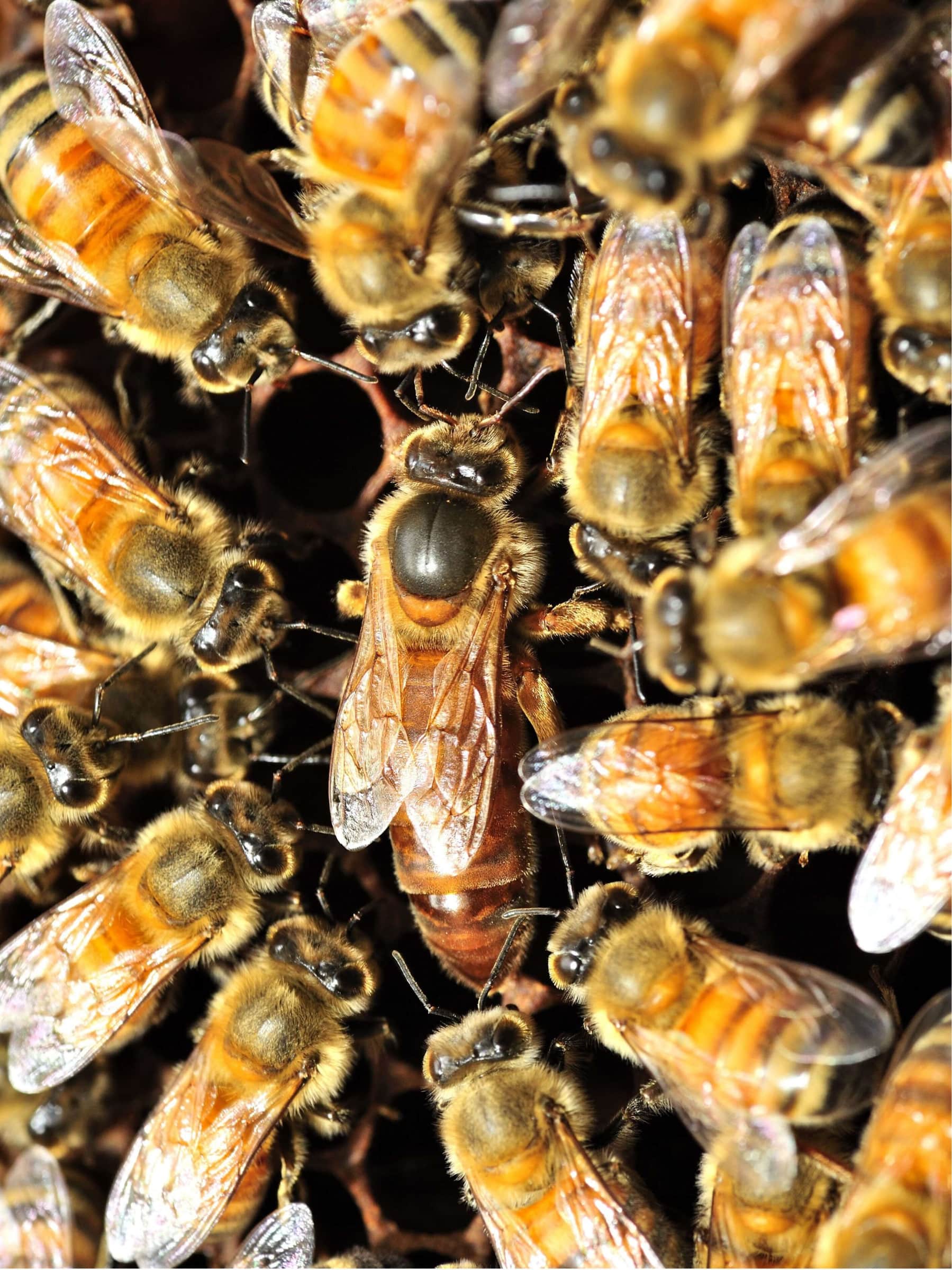
Italian honey bees are among the most familiar stocks used in modern managed beekeeping. Scientifically, the subspecies is known as Apis mellifera ligustica. Italian-type bees are commonly associated with comparatively gentle handling, active foraging, lighter coloration, strong colony populations, and sustained brood production during the active season.
Those characteristics help explain why Italian honey bees genetics have remained popular with hobby, sideline, and commercial beekeepers. A stock name should never be treated as a guarantee, however. Queen genetics, mating, climate, nectar and pollen availability, colony health, Varroa pressure, weather, and beekeeper management can all change how an individual colony performs.
There is also an important distinction between the biological subspecies Apis mellifera ligustica and bees sold commercially as Italian, Italian-type, or Italian hybrid stock. Commercial breeding populations may include deliberate selection or genetic crosses. A responsible comparison therefore describes common tendencies while recognizing variation between individual breeder lines and colonies.
- Italian Honey bees stock is generally associated with gentle handling, active foraging, and sustained brood production.
- Large worker populations can support pollination and honey production when forage and weather are favorable.
- Continued brood production can increase food demand when nectar availability declines.
- Italian honey bees ancestry alone should not be treated as evidence of Varroa resistance.
- Commercial Italian, Carniolan, Russian, and hybrid stocks can vary substantially among breeders.
- Local climate, forage, winter conditions, queen quality, and beekeeper management all influence colony performance.
What are Italian bees?
Italian bees are Apis mellifera ligustica, a managed subspecies valued for gentle handling, active foraging, and sustained brood production.
- The recognized subspecies name is Apis mellifera ligustica.
- The subspecies is historically associated with the Italian Peninsula.
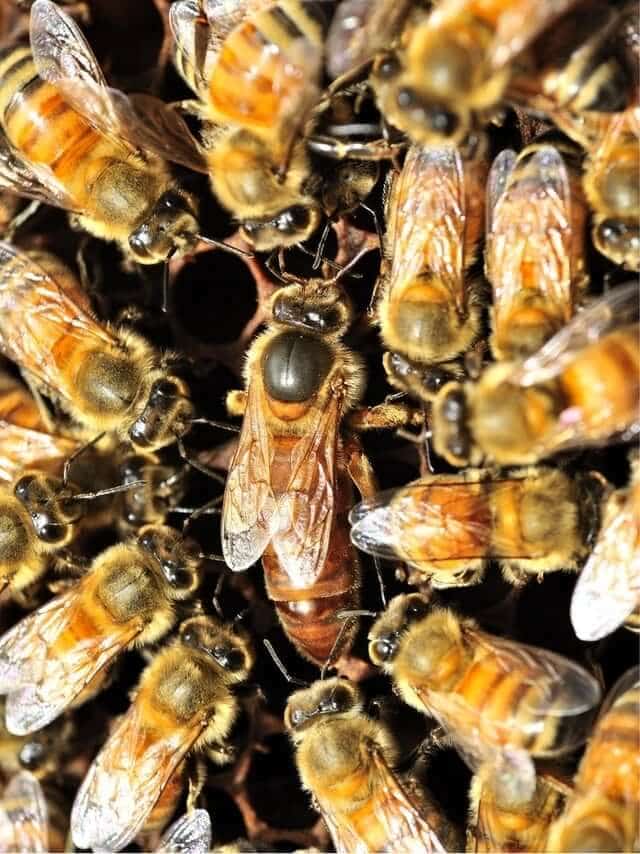
- Workers are commonly lighter in color than many darker European honey bee stocks.
- Italian stock is commonly associated with active foraging and comparatively gentle handling.
- Commercial Italian bees may be selected or hybrid breeder populations rather than genetically isolated representatives of the subspecies.
This subspecies has been used in North American beekeeping for generations. The University of Missouri Extension describes Italian stock as originating on the Italian Peninsula south of the Alps and notes its long history in American apiculture. Light coloration, active colony growth, and manageable temperament have helped make these genetics familiar to many beekeepers.
Color alone is not a reliable way to determine a colony’s full genetic background. Workers within an Italian-type colony may show variations in yellow, golden, brown, and darker banding. Queen mating also matters because workers receive genetic material from both the queen and the drones with which she mated.
For practical beekeeping, the most useful question is not whether every worker perfectly matches a textbook description of the subspecies. It is whether the breeder line provides the temperament, population pattern, seasonal behavior, and management characteristics the beekeeper needs.
Why is Italian stock popular with beekeepers?
Italian stock remains popular because calm handling, productive colonies, active foraging, and strong brood growth suit many managed beekeeping operations.
- Italian stock is commonly described as comparatively gentle during routine inspections.
- Strong brood production can build substantial worker populations.
- Large healthy populations can provide significant foraging capacity.
- These bees are commonly associated with good comb-building activity under favorable conditions.
- Temperament and productivity still vary among colonies and breeder populations.
Temperament is one reason many beekeepers choose this stock. A comparatively manageable colony can make routine inspections, queen checks, brood evaluations, feeding, supering, and other seasonal work easier. This can be particularly useful for beginning beekeepers who are still developing careful frame-handling skills.
Population growth is another important characteristic. Colonies capable of producing substantial numbers of workers can have many bees available for nursing brood, building comb, guarding the entrance, processing nectar, and foraging. When those populations coincide with a strong nectar flow, they can be useful for honey production.
These advantages should still be viewed as tendencies rather than guarantees. Even queens from the same breeder can head colonies that behave differently. Nutrition, queen age, weather, brood health, disease, mites, colony strength, and local drone genetics can all influence what a beekeeper sees during an inspection.
How does Italian stock support pollination and honey production?
Italian colonies support pollination and honey production through large worker populations when forage, weather, queen quality, and colony health are favorable.
- Worker bees move pollen while visiting flowers for nectar and pollen.
- Large healthy colonies can place substantial numbers of foragers into the field.
- Managed honey bees contribute to pollination of numerous agricultural crops.
- Honey production depends on nectar availability, weather, population, and colony health.
- Italian genetics cannot guarantee a particular honey yield.
Pollination happens as workers move among flowers while gathering nectar and pollen. Pollen grains can be transferred between compatible flowers during these visits, supporting reproduction in many flowering plants. The USDA Natural Resources Conservation Service recognizes managed honey bees as important agricultural pollinators.
A large Italian-type colony may have a substantial workforce available when major crops, trees, wildflowers, or other nectar-producing plants begin blooming. That does not mean every worker is foraging simultaneously or that more bees always equal better results. Bloom density, temperature, wind, rainfall, competition from other colonies, distance to forage, and nectar secretion all influence foraging activity.
The same principle applies to honey production. Strong populations can be an advantage during a nectar flow, but genetics are only one part of the equation. A colony headed by an excellent queen cannot store a large surplus if drought, cold weather, poor bloom conditions, colony disease, or other environmental limitations prevent nectar from entering the hive.
What challenges are common with Italian-type colonies?
Italian-type colonies face Varroa mites, disease, seasonal food shortages, and increased resource demand when they maintain large brood populations.
- Varroa mites remain a major health threat to managed honey bee colonies.
- Varroa can reproduce in capped brood and contribute to virus transmission.
- Sustained brood production requires substantial nutritional resources.
- Large populations can consume stored food rapidly when nectar becomes scarce.
- Robbing, drifting, queen problems, and environmental stress can also affect colony health.
Varroa destructor is one of the most important health concerns facing managed colonies. The Honey Bee Health Coalition recommends regular monitoring and evidence-based management because mite pressure cannot be accurately judged simply by looking at adult bees during an ordinary inspection.
These colonies can also present a nutritional tradeoff. Continued brood production supports a strong workforce, but brood requires food. Nurse bees need access to adequate nutrition, and developing larvae depend on resources brought into or stored within the colony. If a large population continues consuming food after a nectar flow slows, stored honey can disappear more quickly than a beekeeper expects.
This does not mean Italian-type colonies are unsuitable for areas with cold winters. It means winter preparation should be based on the actual colony rather than assumptions about its stock name. Colony weight, food distribution, brood level, queen condition, weather, and expected length of winter all deserve consideration.
How should Italian-type colonies be managed?
These colonies need regular inspections, adequate food stores, brood evaluation, enough hive space, and routine Varroa monitoring throughout the season.
- Check colony population. Look at how many frames are covered with bees rather than relying only on entrance activity.
- Evaluate brood. Look for eggs, larvae, capped brood, brood distribution, and signs that may warrant closer examination.
- Review food reserves. Make sure honey and pollen availability match the colony’s current population and brood demand.
- Monitor Varroa. Use an appropriate monitoring method rather than assuming mites are absent because the colony appears strong.
- Provide adequate space. Growing colonies may require additional room as brood, stored pollen, and incoming nectar expand.
- Adjust to the season. Management priorities change as colonies move from spring buildup to nectar flows, summer stress, fall preparation, and winter.
Consistency matters more than simply opening a hive often. Each inspection should have a purpose. A beekeeper might be checking queen status, assessing space, looking at food stores, monitoring swarm preparation, examining brood health, or confirming that a recent management action worked.
Varroa monitoring should be treated as part of normal colony management rather than an emergency response reserved for visibly weak colonies. The Honey Bee Health Coalition provides current guidance for monitoring and management strategies. Management decisions should take colony condition, mite level, season, local recommendations, and treatment-label requirements into account.
Food reserves are equally important. Colonies that maintain strong brood production can have considerable nutritional demand. Feeding should therefore be based on colony need, local forage conditions, time of year, and beekeeper goals rather than performed automatically according to stock name.
How does Italian stock compare with other honey bee stocks?
Italian, Carniolan, and Russian stocks can differ in seasonal brood behavior and selected health traits, but individual breeder lines vary considerably.
- Italian stock is commonly associated with sustained brood production and gentle handling.
- Carniolan stock is often associated with strong seasonal adjustment of brood production.
- Selected USDA Russian populations have demonstrated enhanced resistance to Varroa.
- Stock names do not guarantee identical genetics or behavior across breeders.
- Local performance is usually more useful than treating any stock description as universal.
| Management Characteristic | Italian Stock | Carniolan Stock | Selected Russian Stock |
|---|---|---|---|
| Temperament | Often described as gentle | Often described as gentle | Can vary by breeding line |
| Brood Pattern | Often sustained through the active season | Often adjusts strongly with seasonal forage | Often responsive to pollen and forage availability |
| Winter Food Demand | Can be higher when larger populations are maintained | Often associated with more conservative winter populations | Selected populations may maintain comparatively economical winter clusters |
| Varroa Response | Do not assume resistance based on stock name | Depends heavily on breeder selection | USDA-selected populations have demonstrated enhanced resistance |
| Best Interpretation | General tendencies, not guarantees | General tendencies, not guarantees | Selection history is especially important |
Stock comparisons are most useful when they help a beekeeper understand management tradeoffs. They become misleading when broad characteristics are presented as guaranteed rankings. For example, assigning every Italian colony “low mite resistance” and every Russian colony “high mite resistance” ignores the effects of breeder selection, mating, genetics, hybridization, and colony-level variation.
USDA Agricultural Research Service research has documented Varroa resistance in specifically selected Russian honey bee populations. That is meaningful evidence for those selected populations, but it should not be automatically applied to every colony carrying a Russian label. The same caution should be used when interpreting Italian, Carniolan, VSH, hygienic, or hybrid terminology.
What should you look for before buying Italian stock?
Before buying Italian stock, evaluate the genetic description, queen quality, breeder practices, delivery method, and readiness of the receiving colony.
- Know what you are buying. A queen, package, nucleus colony, and established colony are very different purchases.
- Read the genetic description. Italian, Italian hybrid, and selected Italian stock do not necessarily mean the same thing.
- Ask how queens are mated. Mating method and local drone genetics can influence the resulting colony.
- Understand seller evaluation practices. Learn what is checked before a queen or colony is offered for sale.
- Review delivery information. Live-bee pickup, shipping, timing, and installation requirements can differ substantially.
- Prepare before arrival. Have the receiving colony, hive equipment, feeding plan, and installation procedure ready before live bees arrive.
Buying Italian stock can refer to several completely different products. A beekeeper replacing an existing queen may need only a mated queen. A new beekeeper starting a colony may instead be considering a package or nucleus colony. Understanding exactly what is included prevents a stock name from obscuring more important practical differences.
Genetics deserve equally careful attention. A commercial queen may be described as Italian, Italian hybrid, hygienic Italian, VSH-influenced, or with another breeder-specific description. These terms can communicate useful information, but they should be interpreted according to the seller’s actual breeding program rather than assumed to describe genetically identical bees.
A reputable seller should clearly explain what the customer receives, how the bees are delivered, how the queen should be introduced when applicable, and any important timing or colony-preparation requirements. Even a high-quality queen cannot compensate for a receiving colony with severe mite pressure, inadequate food, queenlessness that was not properly confirmed, disease, or other major management problems.
Ultimately, the best Italian-type stock is not simply the lightest-colored bee or the queen with the most attractive breed label. It is a healthy, appropriately selected queen or colony whose characteristics fit the beekeeper’s climate, forage, management style, and seasonal goals.
Frequently Asked Questions
Are Italian bees good for beginners?
Italian stock is commonly chosen by newer beekeepers because it is generally associated with comparatively gentle handling. Individual colonies can still vary in temperament.
Are Italian bees aggressive?
Italian stock is generally described as comparatively gentle, but temperament depends on genetics, queen mating, colony conditions, weather, and handling.
Can Italian colonies produce a large honey crop?
Italian colonies can produce substantial honey crops when they have strong populations and favorable nectar flows. Genetics alone cannot guarantee a specific yield.
Can Italian colonies survive cold winters?
Italian colonies can overwinter successfully, but sustained brood production and larger populations may increase food consumption. Winter preparation should be based on local climate and actual colony stores.
Does Italian stock have Varroa resistance?
Italian ancestry alone should not be treated as proof of Varroa resistance. Beekeepers should monitor mite populations and manage them according to current evidence-based recommendations.
What color are Italian bees?
Italian workers are commonly pale yellow to light brown with darker abdominal bands. Color varies among individual bees and commercial breeding lines.
What is the scientific name for Italian honey bees stock?
The recognized subspecies name is Apis mellifera ligustica. Commercial bees described as Italian may include selected or hybrid breeding populations.
Is Italian honey bees stock better than Carniolan honey bees stock?
Neither stock is universally better. Italian and Carniolan bees have different typical seasonal characteristics, and the better choice depends on climate, forage, breeder line, and management goals.
Are Russian honey bees more resistant to Varroa than Italian honey bee stock?
Selected USDA Russian honey bee populations have demonstrated enhanced Varroa resistance compared with susceptible commercial stock. That finding should not be generalized to every bee marketed as Russian.
What should I ask before buying Italian stock?
Ask what form of bees you are purchasing, how the queen was bred and mated, what health checks are performed, how delivery works, and how the receiving colony should be prepared.
Sources & Further Reading
- University of Arizona Cooperative Extension — Honeybee Series: Honeybee Basic Biology. Covers honey bee biology and commonly described characteristics of Italian and Carniolan stocks. Read the University of Arizona resource .
- University of Missouri Extension — Honey Bees as Pollinators, Their Habitats and Products. Provides background on Italian bee origin, characteristics, pollination, and managed beekeeping. Read the University of Missouri resource .
- USDA Natural Resources Conservation Service — Pollinators and Honeybees. Provides agricultural context for honey bees and their role in crop pollination. Read the USDA NRCS resource .
- Honey Bee Health Coalition — Tools for Varroa Management. Provides evidence-based information about monitoring and managing Varroa destructor in managed colonies. Read the Varroa management guide .
- USDA Agricultural Research Service — Evidence of Varroa Resistance of Russian Bees. Summarizes research involving selected Russian honey bee populations and Varroa resistance. Read the USDA ARS research summary .
- USDA Agricultural Research Service — Multi-State Field Trials of Russian Honey Bees. Provides additional research context for selected Russian stock and Varroa population development. Read the USDA ARS field-trial summary .
- USDA Agricultural Research Service — Honey Bee Research. Provides additional federal research on honey bee health, genetics, parasites, diseases, and colony management. Visit USDA Agricultural Research Service .
```
FAQs
What are the main characteristics of Italian honey bees?
Italian honey bees are known for their gentle disposition, high honey yields, excellent foraging abilities, and resilience in varying climates. They have a distinctive golden-yellow color and are slightly longer and more slender than other bee species, making them effective at gathering nectar and pollen.
How do Italian honey bees communicate within their colony?
Italian honey bees communicate through various methods, including the famous "waggle dance," which conveys information about the distance and direction of food sources. This unique form of communication helps them efficiently locate and share resources within the hive.
Why are Italian honey bees important for pollination?
These bees play a crucial role in pollination by transferring pollen from one flower to another, which is essential for plant reproduction. Without them, many crops and wild plants would struggle to grow, making them vital for our food systems and biodiversity.
What challenges are facing Italian honey bees today?
Italian honey bees face several threats, including the use of harmful pesticides, habitat loss due to urbanization and monoculture farming, diseases and parasites like Varroa destructor, and the effects of climate change disrupting their food sources.
How can we support and protect Italian honey bees?
You can help by planting native flowers to provide them with food, avoiding chemical pesticides in your garden, creating bee-friendly habitats, educating others about bees, and supporting local beekeepers by purchasing their honey and products.
What makes beekeeping with Italian honey bees a rewarding hobby?
Beekeeping with Italian honey bees offers a unique opportunity to connect with nature while contributing to environmental health. Many beekeepers find joy in producing their own honey and supporting the local ecosystem, making it a fulfilling and educational experience.