Welcome to Lappe's Bee Supply's blogs section. We are a trusted beekeeping company in the USA. We give relevant insights, seasonal guidance, and professional advice for beekeepers of all experience levels. From hive management and bee wellness to honey production and equipment guides, we have it all that you will require to thrive. Get updated, motivated, and connected with the beekeeping community through regular news from Lappe's Bee Supply.
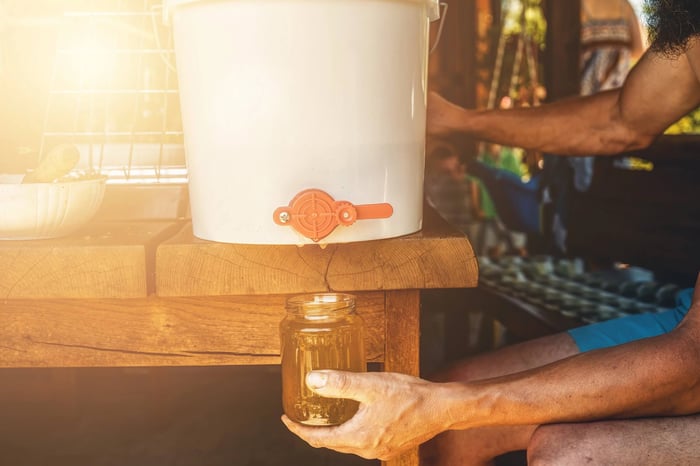
Storing Honey: Tips for Longevity and Quality
The Buzz About This Post
- What are the key points about storing honey?
- What does this honey storage guide cover?
- What is the best way to store honey?
- Why can honey remain stable for so long?
- What is the best container for storing honey?
- What temperature is best for honey storage?
- Should honey be refrigerated?
- Why does stored honey crystallize?
- How can crystallized honey become liquid again?
- Why is moisture a problem for stored honey?
- How can you recognize fermented or damaged honey?
- Can honey be frozen or stored long term?
- Which honey storage methods are recommended?
- What honey storage mistakes should be avoided?
- How should honey be handled after every use?
- What is the bottom line for storing honey?
- What do people frequently ask about storing honey?
- Does honey expire?
- What is the best temperature for storing honey?
- Should raw honey be refrigerated?
- Is crystallized honey spoiled?
- How do you make crystallized honey liquid again?
- What container is best for storing honey?
- Can honey ferment?
- Why should only dry utensils be used in honey?
- Can honey be frozen?
- How can you tell whether honey may have fermented?
- Where can readers verify honey storage information?
- FAQs
Honey Storage Guide How to Store Honey Properly: Storage, Crystallization and Shelf LifeHoney is naturally stable, but the way it is handled after opening still matters. This guide explains how to protect honey from moisture, excessive heat, light and contamination while keeping its flavor and texture as close to the original as possible. Author: Lappe's Bee Supply Team Published: Last Updated: Reviewed By: Lappe's Bee Supply Beekeeping Team Editorial Standards: This guide was reviewed for clarity and factual accuracy using recognized honey standards, government publications, university extension guidance and established honey science references. Practical observations are identified separately from published guidance. |
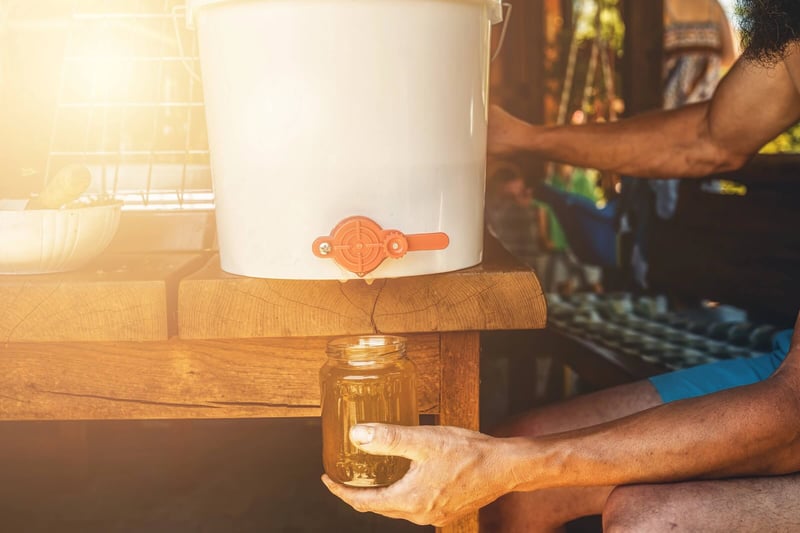
What are the key points about storing honey?Store honey tightly sealed at a stable room temperature, away from moisture, direct sunlight and excessive heat.
|
What is the best way to store honey?
Store honey in a clean, tightly sealed container at a stable room temperature, protected from water, humidity, sunlight and excessive heat.
- A tight lid limits exposure to humid air and contaminants.
- A dry cupboard or pantry is normally an appropriate location.
- Direct sunlight and heat can accelerate changes in color, aroma and flavor.
- Clean, dry utensils help prevent water from entering the honey.
Honey does not need complicated preservation equipment for ordinary household storage. Place it in a clean container with a dependable lid, close the container promptly after each use and keep it away from the stove, dishwasher, sunny windows or other sources of heat and humidity.
The goal is not to stop every natural change. Honey may slowly darken or crystallize even when it is stored correctly. Proper storage instead reduces preventable changes caused by moisture, contamination, unstable temperatures and prolonged heat exposure.
Why can honey remain stable for so long?
Honey remains stable because its concentrated sugars, relatively low moisture and natural acidity create difficult conditions for most microorganisms.
- Honey is a concentrated sugar solution with comparatively little available water.
- Its natural acidity adds another barrier to microbial growth.
- Honeybees reduce nectar moisture before mature honey is sealed in the comb.
- Storage stability can decline when honey absorbs additional water.
Honey is made when honeybees collect nectar, add enzymes and reduce its moisture through repeated handling and evaporation. This creates a concentrated food that can support the colony when nectar is unavailable.
The Codex Standard for Honey establishes internationally recognized composition and quality provisions for honey, including moisture limits that vary for certain honey types. Because honey composition differs by botanical source, region and handling, it is more accurate to describe honey as generally low in moisture than to assign every jar one universal percentage.
Long shelf life does not mean honey is completely unchanged by time. Aroma may become less pronounced, color may deepen and texture may shift from liquid to crystallized. Those changes are different from microbial spoilage.
What is the best container for storing honey?
A clean glass jar with a tight lid is an excellent honey container, while suitable food-grade plastic also works for normal storage.
- Glass is non-reactive and does not readily absorb odors.
- Food-grade plastic honey containers are practical for squeezing, shipping and retail use.
- The lid must fit correctly and remain tightly closed.
- Damaged, dirty or previously contaminated containers should not be used.
Glass jars are a popular choice because they are sturdy, easy to inspect and do not normally affect honey's flavor. Customers who need containers for bottling a harvest can view Lappe's Bee Supply's glass honey containers.
Food-grade plastic is also widely used for honey, especially when a lightweight squeeze bottle is preferred. The important distinction is that the container must be manufactured for food contact, clean and suitable for the intended filling and storage conditions. Available options can be found in our plastic honey container selection.
Avoid placing honey directly into uncoated reactive metal containers. Commercial tanks and processing equipment may use suitable food-contact stainless steel, but an unknown household metal container should not be assumed safe for long-term honey storage.
What temperature is best for honey storage?
A stable room-temperature environment is best for most household honey because it limits heat damage without intentionally encouraging crystallization.
- Choose a cool, dry cabinet or pantry.
- Avoid repeated movement between hot and cold locations.
- Do not store honey beside an oven, stove, furnace vent or sunny window.
- Heat can accelerate darkening and losses in delicate aroma compounds.
No single temperature guarantees that every variety of honey will remain liquid. Botanical source, glucose-to-fructose balance, moisture, pollen and small particles can all influence crystallization. A moderate and stable room temperature is therefore more practical than trying to hold every jar at an exact number.
Short periods of ordinary household warmth generally do not ruin honey. The greater concern is prolonged or repeated exposure to excessive heat. A pantry on an interior wall is usually preferable to a cabinet directly above a stove or beside a dishwasher.
Should honey be refrigerated?
Plain honey normally should not be refrigerated because cold temperatures encourage crystallization without providing a meaningful storage benefit.
- Honey is naturally shelf-stable when properly handled.
- Refrigeration commonly makes liquid honey crystallize sooner.
- Crystallization changes texture but does not automatically reduce safety.
- Products containing honey plus other perishable ingredients may require different storage.
Penn State Extension advises that honey does not need refrigeration and notes that cooler temperatures promote crystallization. A cool, dry pantry is therefore more practical for most plain liquid honey.
This guidance applies to honey by itself. A sauce, infused preparation, whipped spread or homemade mixture containing fruit, dairy, fresh herbs or other ingredients must be evaluated according to the most perishable ingredient. Do not assume that adding honey automatically makes another food shelf-stable.
Why does stored honey crystallize?
Honey crystallizes when glucose separates from its supersaturated sugar solution and forms solid crystals within the liquid honey.
Crystallized honey has not spoiled. Most crystallized honey can become liquid again when the container is warmed gently in warm water. |
- Crystallization is a natural physical process.
- Different floral varieties crystallize at different rates.
- Cold storage often accelerates visible crystal formation.
- Pollen grains and tiny particles can provide starting points for crystals.
- Crystallization alone is not evidence of adulteration or spoilage.
Honey contains several sugars, with fructose and glucose among the most abundant. Because honey contains more dissolved sugar than would remain stable in an ordinary diluted solution, glucose can eventually separate and organize into crystals.
The speed and texture of crystallization vary. One honey may develop fine, creamy crystals, while another may form larger, grainier crystals. Some varieties stay liquid much longer because their sugar profiles differ. Raw or minimally filtered honey may crystallize more readily because pollen and other small natural particles can act as sites where crystals begin forming.
Raw honey and filtered honey should be stored using the same basic practices. Filtering may remove some pollen and fine particles that act as crystal starting points, but it does not change the need to keep honey sealed, dry and protected from excessive heat.
Crystallized honey can be spread on toast, stirred into oatmeal or used in many recipes without being returned to liquid form. Controlled crystallization is also used to produce creamed honey with a smooth, spreadable consistency.
For a deeper explanation, read our guide to why honey crystallizes and what grainy honey means.
How can crystallized honey become liquid again?
Warm crystallized honey gradually in warm water and avoid boiling or intense direct heat that can unnecessarily damage its quality.
- Confirm that the container is suitable for gentle warming.
- Loosen or remove the lid if pressure could build inside the container.
- Place the container in a pan or bowl of warm water.
- Keep the water below boiling.
- Allow the honey to warm gradually.
- Stir the honey with a clean, dry utensil when practical.
- Replace cooling water with warm water as needed.
- Stop when the crystals have dissolved to the desired consistency.
Gentle warming is preferable because honey does not need to be cooked to dissolve crystals. Excessive heat can accelerate darkening and alter aroma and flavor. Penn State Extension recommends placing crystallized honey in hot, not boiling, water until the crystals disappear.
Use caution with plastic containers because not every plastic bottle is designed for warming. Transferring the honey to a suitable glass container may be appropriate when the original packaging cannot safely tolerate warm water.
Microwave heating can create uneven hot spots and may overheat portions of a small container before the remaining crystals dissolve. A warm-water bath gives the user more control and is generally the simplest household method.
Why is moisture a problem for stored honey?
Added moisture can reduce honey's natural storage stability and may allow osmotolerant yeasts to ferment the sugars.
- Honey can absorb moisture from humid air.
- A loose lid increases exposure to humidity.
- A wet spoon can introduce water directly into the jar.
- Honey harvested before it is sufficiently ripened may begin with excess moisture.
- Fermentation risk depends on moisture, yeast levels, temperature and storage conditions.
Moisture is one of the most important controllable factors in honey storage. Honey is hygroscopic, meaning it can absorb water from its surroundings. Leaving a container open in a humid kitchen can gradually change the moisture balance at the exposed surface.
Always use a clean, completely dry spoon or measuring utensil. Do not dip a spoon into honey after it has touched tea, water, milk, butter or another food. Close the lid after measuring rather than leaving the jar open during the entire meal or cooking process.
Beekeepers preparing a crop for bottling can find containers, filters, bottling equipment and related tools in our honey extracting and bottling supplies.
| Storage Habit | Why It Matters |
|---|---|
| Close the lid tightly | Reduces exposure to humidity, odors and airborne contaminants. |
| Use a dry utensil | Prevents water from being carried directly into the honey. |
| Store away from steam | Limits exposure to humid air near kettles, sinks and dishwashers. |
| Use a properly sized container | Reduces unnecessary headspace and repeated exposure when storing bulk honey. |
How can you recognize fermented or damaged honey?
Persistent foam, active bubbling, pressure, sour odors or alcoholic notes may indicate fermentation rather than normal crystallization.
- Crystals alone do not mean honey has spoiled.
- Normal honey aromas vary by floral source.
- Fermentation may produce gas, foam and sour or alcoholic odors.
- Visible foreign material may indicate contamination.
- Uncertain honey should not be served to customers or sold.
It is important to separate normal changes from warning signs. Honey can darken naturally during storage, and crystallized honey may become cloudy, pale or grainy. Those changes are not the same as active fermentation.
Fermenting honey may develop persistent bubbles, surface foam, pressure beneath the lid or a distinctly sour, yeasty or alcoholic smell. A few trapped air bubbles introduced during bottling are not necessarily fermentation, so consider the complete pattern rather than one isolated bubble.
When the history of a container is unknown, it has been exposed to water, or it shows obvious signs of fermentation or contamination, the safest choice is not to consume or sell it. Commercial sellers should follow applicable food-safety, labeling and processing requirements.
Can honey be frozen or stored long term?
Honey may be frozen in an appropriate airtight container, but ordinary pantry storage is sufficient for most household quantities.
- Freezing is optional rather than routinely required.
- The container must allow for safe handling at low temperatures.
- Honey should remain protected from moisture and surrounding odors.
- Thaw frozen honey gradually while the container remains closed.
- Bulk honey requires clean food-grade equipment and moisture control.
Freezing can slow physical and chemical changes, but most consumers gain little from freezing a jar that will be used normally. A sealed pantry container is easier to access and does not require thawing.
Do not use home canning as a routine preservation method for plain honey. Honey does not need boiling-water or pressure-canning treatment to become shelf-stable, and unnecessary high heat may reduce quality. Commercial packers may warm honey during processing or bottling, but those operations should use controlled food-handling procedures rather than improvised home-canning instructions.
Vacuum sealing is also unnecessary for an ordinary jar of honey. A correctly fitted lid already provides the practical barrier needed for normal storage. Vacuum equipment does not correct honey that began with excessive moisture and should not be treated as a substitute for proper harvesting, testing or handling.
Which honey storage methods are recommended?
The best honey storage method combines a food-safe container, tight lid, dry environment, moderate temperature and protection from light.
| Storage Method | Recommendation | Reason |
|---|---|---|
| Clean glass jar with tight lid | Recommended | Glass is non-reactive, reusable and easy to inspect. |
| Food-grade plastic honey bottle | Recommended | Provides lightweight, convenient packaging when used as intended. |
| Cool, dry pantry | Recommended | Protects honey from sunlight, steam and excessive temperature changes. |
| Refrigerator | Usually unnecessary | Cold temperatures commonly encourage crystallization. |
| Cabinet above a stove | Avoid | Repeated heat exposure may accelerate quality changes. |
| Open container near a sink | Avoid | Increases exposure to moisture, food particles and contamination. |
| Unknown metal container | Avoid | The material may not be suitable for acidic foods or prolonged food contact. |
| Freezer-safe airtight container | Optional | Can support long storage but is not required for most household honey. |
What honey storage mistakes should be avoided?
Avoid loose lids, wet utensils, direct sunlight, prolonged heat, unsuitable containers and unnecessary refrigeration.
- Leaving the lid loose: A poorly closed container exposes honey to humid air and kitchen odors.
- Using a wet spoon: Even a small amount of water reduces the benefit of honey's naturally low moisture.
- Storing honey beside heat: A cabinet over the stove may become much warmer than the rest of the kitchen.
- Assuming crystals mean spoilage: Crystallization is normal and can often be reversed with gentle warming.
- Boiling crystallized honey: Intense heat is unnecessary and can reduce sensory quality.
- Refrigerating plain honey: Refrigeration often produces a firmer or grainier texture without being needed for safety.
- Using an unknown container: Decorative vessels are not automatically suitable for food storage.
- Canning plain honey: Plain honey does not require conventional home-canning processing for pantry storage.
- Ignoring fermentation signs: Foam, pressure and sour odors should not be dismissed as ordinary crystallization.
How should honey be handled after every use?
Remove honey with a clean, dry utensil, wipe the rim when needed, replace the lid and return the container to a dry pantry.
- Inspect the lid and rim for honey that may prevent a complete seal.
- Do not return unused honey from a plate or cup to the original container.
- Keep the container exterior clean to discourage insects and sticky buildup.
- Label bulk or home-harvested honey with the harvest or bottling date.
A simple routine protects the entire container. Measure the amount needed, close the lid and put the honey away before steam, splashes or food particles can reach it. Dating home-harvested batches does not imply that honey expires on that date; it helps the beekeeper track floral source, harvest year, processing history and changes during storage.
What is the bottom line for storing honey?Honey stores best when it is kept clean, dry, sealed and protected from excessive heat. Choose a suitable glass or food-grade plastic container, use only clean and dry utensils, and keep the honey in a stable pantry environment. Do not refrigerate plain honey merely to extend its life, and do not mistake natural crystallization for spoilage. If crystals develop, use the honey in its crystallized form or warm it gently in a water bath. Watch for true warning signs such as persistent foam, pressure or sour odors, especially when the honey may have been exposed to water. |
What do people frequently ask about storing honey?
Does honey expire?
Properly stored honey can remain stable for a very long time, although its color, aroma, flavor and texture may gradually change.
What is the best temperature for storing honey?
Store honey at a stable room temperature in a cool, dry cupboard or pantry away from direct sunlight and heat-producing appliances.
Should raw honey be refrigerated?
Raw honey normally does not require refrigeration. Cold storage can promote crystallization without providing a meaningful storage advantage for plain honey.
Is crystallized honey spoiled?
No. Crystallization is a natural physical change in which glucose separates from the liquid portion of honey and forms crystals.
How do you make crystallized honey liquid again?
Place the honey container in warm, not boiling, water and allow the honey to warm gradually until the crystals dissolve.
What container is best for storing honey?
A clean glass jar with a tight-fitting lid is an excellent choice, although clean food-grade plastic containers designed for honey are also suitable.
Can honey ferment?
Honey can ferment when it contains or absorbs enough moisture for naturally present yeasts to become active.
Why should only dry utensils be used in honey?
A wet utensil can introduce water and contaminants into the container, reducing the storage stability of the honey.
Can honey be frozen?
Honey can be frozen in a suitable airtight container, but freezing is unnecessary for most household honey stored under normal conditions.
How can you tell whether honey may have fermented?
Possible signs include persistent bubbling, foam, pressure in the container, a sour or alcoholic odor, or an unusual fermented flavor.
Where can readers verify honey storage information?
- Standard for Honey, CXS 12-1981 — Codex Alimentarius Commission, Food and Agriculture Organization and World Health Organization.
- Storing Staple Ingredients in the Kitchen — Penn State Extension.
- Canning and Freezing Questions and Answers — Penn State Extension.
- Honey Frequently Asked Questions — National Honey Board.
- Honey: A Reference Guide to Nature's Sweetener — National Honey Board.
- Commercial Item Description: Honey — United States Department of Agriculture, Agricultural Marketing Service.
- United States Standards for Grades of Extracted Honey — United States Department of Agriculture, Agricultural Marketing Service.
FAQs
Does honey expire?
Properly stored honey can remain stable for a very long time, although its color, aroma, flavor and texture may gradually change.
What is the best temperature for storing honey?
Store honey at a stable room temperature in a cool, dry cupboard or pantry away from direct sunlight and heat-producing appliances.
Should raw honey be refrigerated?
Raw honey normally does not require refrigeration. Cold storage can promote crystallization without providing a meaningful storage advantage for plain honey.
Is crystallized honey spoiled?
No. Crystallization is a natural physical change in which glucose separates from the liquid portion of honey and forms crystals.
How do you make crystallized honey liquid again?
Place the honey container in warm, not boiling, water and allow the honey to warm gradually until the crystals dissolve.
What container is best for storing honey?
A clean glass jar with a tight-fitting lid is an excellent choice, although clean food-grade plastic containers designed for honey are also suitable.
Can honey ferment?
Honey can ferment when it contains or absorbs enough moisture for naturally present yeasts to become active.
Why should only dry utensils be used in honey?
A wet utensil can introduce water and contaminants into the container, reducing the storage stability of the honey.
Can honey be frozen?
Honey can be frozen in a suitable airtight container, but freezing is unnecessary for most household honey stored under normal conditions.
How can you tell whether honey may have fermented?
Possible signs include persistent bubbling, foam, pressure in the container, a sour or alcoholic odor, or an unusual fermented flavor.