Welcome to Lappe's Bee Supply's blogs section. We are a trusted beekeeping company in the USA. We give relevant insights, seasonal guidance, and professional advice for beekeepers of all experience levels. From hive management and bee wellness to honey production and equipment guides, we have it all that you will require to thrive. Get updated, motivated, and connected with the beekeeping community through regular news from Lappe's Bee Supply.
Steps in Harvesting Honey: A Guide for Beekeepers
The Buzz About This Post
- What are the key takeaways?
- What is honey harvesting?
- How can you tell when honey is ready to harvest?
- When is the best time to harvest honey?
- What equipment should you prepare before harvesting?
- How should you inspect the colony before removing honey?
- How do you remove honey supers without harming the bees?
- How do you uncap and extract honey?
- How should extracted honey be strained, bottled, and stored?
- What should you do for the colony after harvest?
- What are the most frequently asked questions about harvesting honey?
- What authoritative sources support this honey-harvesting guide?
- FAQs
Harvesting honey is one of beekeeping’s most satisfying milestones, but a good harvest is measured by more than the number of filled jars. The honey must be ripe, the processing area must be clean, and the colony must retain enough food for the season ahead. This guide walks through the complete process, from deciding whether honey is ready to removing supers, extracting, bottling, and caring for the colony afterward.
The Buzz About This Post: Table of Contents
What is honey harvesting?
Honey harvesting is taking ripe surplus honey from healthy colonies for extraction, straining, bottling, and storage without compromising colony needs.
- Surplus honey can be removed without depriving the colony of required food.
- A honey super is a hive box used primarily for storing harvestable honey.
- Extracted honey has been separated from comb by centrifugal force, gravity, straining, or another method.
- Strained honey retains fine particles and pollen while most wax, propolis, and visible debris are removed.
- Frames containing brood should remain with the colony and should not enter the extractor.
Harvesting involves more than lifting full frames from a hive. The beekeeper must evaluate colony health, honey ripeness, local forage conditions, and the amount of food the colony must retain. Honey intended for extraction normally comes from brood-free supers placed above the brood area. The crop then moves through bee removal, uncapping, extraction, straining, settling, bottling, labeling, and storage.
A successful harvest protects both sides of the process. The colony retains the resources it needs, while the finished honey is protected from excessive moisture, dirt, pests, and cross-contamination. That balance is the foundation of responsible honey harvesting.
How can you tell when honey is ready to harvest?
Ripe honey is sufficiently dehydrated for stable storage; confirm readiness through capping patterns and, when uncertain, a calibrated honey refractometer.
- Wax cappings indicate that bees have finished processing the honey in those cells.
- Capping percentage is a useful field indicator, but it is not a direct moisture measurement.
- Uncapped honey can sometimes be ripe, while humid air can affect exposed honey.
- A honey refractometer estimates moisture from a sample’s refractive index.
- Sour-smelling, foaming, fermenting, or visibly contaminated honey should not be bottled.
Choose frames that are mostly capped and free of brood. If a frame contains a substantial amount of uncapped honey, test a representative sample with a calibrated honey refractometer instead of relying on appearance alone. USDA Grade A and Grade B standards for extracted honey use a minimum of 81.4% soluble solids, equivalent to approximately 18.6% moisture. That grading threshold is a useful quality reference, but applicable regulations or buyer requirements may differ.
When is the best time to harvest honey?
Harvest timing depends on local nectar flows, weather, colony strength, and winter needs—not a universal calendar date or temperature threshold.
- Honey-flow dates differ by region, elevation, weather, and available flowering plants.
- A harvest can occur whenever sufficient ripe surplus honey is available.
- Calm, dry weather generally makes opening and handling colonies easier.
- Removing honey during a nectar dearth can increase robbing pressure.
- The colony’s remaining food matters more than a fixed harvest month.
Many northern beekeepers harvest after a major summer nectar flow, but late summer is not a universal rule. Some regions provide spring, summer, and autumn crops, and migratory operations may harvest several times. Choose a day when conditions allow a safe inspection and bees are flying normally. Avoid opening colonies during severe weather or when robbing behavior is already active.
Before removing supers, estimate what the colony will need until dependable forage returns. Because overwintering demands vary greatly, ask a local Extension specialist or an experienced regional beekeeper for an appropriate reserve target instead of applying one nationwide weight recommendation.
What equipment should you prepare before harvesting?
Prepare protective gear, bee-removal tools, clean extraction equipment, covered food-grade containers, and a bee-tight room before opening the hive.
- Protective equipment should match the colony’s temperament and the beekeeper’s experience.
- Cool, clean smoke can help reduce defensive behavior during hive manipulation.
- Food-contact tools must be clean, food-grade, and completely dry.
- Harvested supers need clean covers above and below during transport.
- The extraction room should exclude bees, pets, dust, and other contamination sources.
Prepare a veil or bee suit, gloves if needed, smoker, hive tool, bee brush or bee-removal system, super covers, uncapping equipment, extractor, strainers, settling bucket, and food-grade containers. The processing space should have washable surfaces, good lighting, and protection from bees and contaminants.
Wash suitable equipment according to its manufacturer’s instructions, rinse when required, and allow every food-contact surface to dry fully. Water left inside buckets, valves, or jars can add unwanted moisture. Lappe’s collection of honey-harvesting and extracting supplies includes equipment for uncapping, extracting, straining, and bottling.
How should you inspect the colony before removing honey?
Harvest only from healthy colonies with enough food reserves, using ripe, brood-free frames and clean food-contact equipment at every processing step.
- Confirm that the colony is queenright or otherwise functioning normally.
- Keep brood frames out of the harvesting and extraction process.
- Investigate abnormal brood patterns, odors, sunken cappings, or diseased larvae.
- Assess Varroa mites with an accepted monitoring method, not visual inspection alone.
- Do not redistribute questionable comb or extracted honey among colonies.
Inspect the brood area and food stores before deciding how much honey is truly surplus. Visual observation cannot determine a colony’s Varroa mite level, so use an accepted monitoring method as part of the apiary’s management program. Record the colony, date, supers removed, and anything unusual.
How do you remove honey supers without harming the bees?
Remove bees gently, keep harvested supers covered, exclude brood frames, and prevent robbing while moving ripe honey into the processing room.
- Bee escapes, gentle brushing, and properly used blowers are common bee-removal options.
- Excessive smoke can affect honey aroma and should not be directed into open honey cells.
- Supers should be covered immediately after removal.
- Exposed honey can attract bees and trigger robbing.
- Any chemical repellent must be legally permitted and used exactly according to its label.
Remove the outer and inner covers carefully, separate the selected super with a hive tool, and use a bee-removal method suited to the size of the harvest. A bee escape normally requires advance placement, while brushing can work for a small number of frames. A blower may be practical for a larger operation when used carefully.
Place each cleared super on a clean bottom cover or transport board and cover its top immediately. Keep supers off bare soil and move them to the processing area promptly. Work steadily without crushing bees or leaving wet comb exposed. If robbing begins, cover exposed honey, close containers, reduce entrances as appropriate, and finish or suspend the harvest.
How do you uncap and extract honey?
Uncap both frame faces, spin frames in a balanced extractor, strain out wax particles, and allow trapped air and foam to rise.
- An uncapping knife or fork opens sealed honey cells without destroying the frame.
- Cappings should fall into a clean tray or tank so recoverable honey can drain.
- Extractor baskets must be loaded evenly to reduce vibration.
- Reversing extractors require frames to be turned during the extraction cycle.
- Radial extractors remove honey from both sides without manually reversing each frame.
Place each frame over an uncapping tank and remove only the thin wax covering the cells. An uncapping fork can open low spots missed by a knife. Lappe’s selection of honey-uncapping supplies includes manual and heated options for different harvest sizes.
Load frames of similar weight opposite one another and begin spinning slowly. Increase speed gradually as honey leaves the comb; starting too fast can damage heavy comb. Follow the extractor manufacturer’s instructions, especially for basket capacity, frame orientation, speed, and cleaning. Lappe’s range of honey extractors includes manual and electric configurations.
What are the complete honey-harvesting steps?
- Assess colony health and food stores. Select only honey the colony can spare.
- Select brood-free honey frames. Exclude frames containing eggs, larvae, or capped brood.
- Confirm ripeness. Evaluate capping and measure moisture when ripeness is uncertain.
- Remove bees gently. Use a bee escape, brush, blower, or another appropriate method.
- Cover and transport supers. Protect honey from bees, dust, soil, and moisture.
- Uncap both sides. Open sealed cells without removing unnecessary comb.
- Balance and operate the extractor. Start slowly and increase speed as frames become lighter.
- Strain and settle the honey. Remove wax particles and allow bubbles and foam to rise.
- Bottle and label the batch. Use dry food-grade containers and create traceable records.
- Reassess the colony. Review food stores, pests, queen status, and seasonal management needs.
| Processing stage | Primary goal | Common mistake to avoid |
|---|---|---|
| Frame selection | Choose ripe, brood-free surplus honey | Removing food the colony still needs |
| Bee removal | Clear supers with minimal disruption | Leaving exposed honey where robbing can begin |
| Uncapping | Open sealed cells while preserving comb | Cutting too deeply into the comb |
| Extraction | Remove honey without damaging frames | Starting too fast or loading the basket unevenly |
| Straining | Remove most wax and visible debris | Using wet or non-food-grade equipment |
| Bottling | Protect and identify the finished batch | Filling damp containers or omitting traceability |
How should extracted honey be strained, bottled, and stored?
Bottle strained honey in clean, dry, food-grade containers; seal promptly, label accurately, and follow every food-sale rule that applies locally.
- Straining removes most pieces of wax, propolis, and other visible debris.
- Fine pollen and very small particles can remain in strained honey.
- Containers must be food-grade, clean, dry, and capable of sealing securely.
- Crystallization is a natural physical change and does not by itself indicate spoilage.
- Retail labels must comply with applicable federal, state, and local requirements.
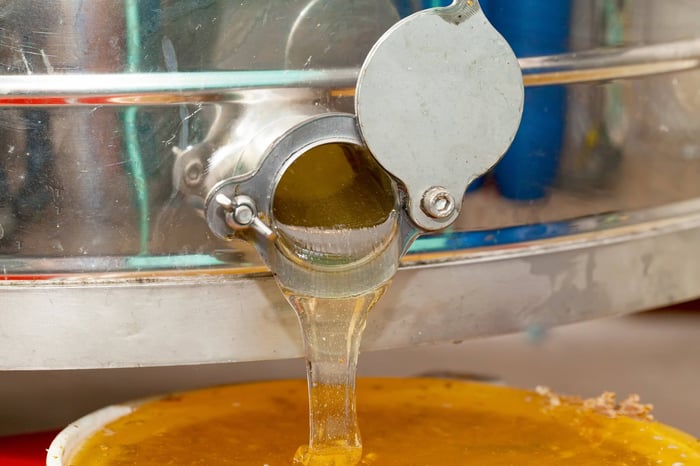
Drain extracted honey through an appropriate food-grade strainer into a covered settling bucket. Allow bubbles and foam to rise, then fill clean, dry containers through a honey gate or bottling valve. Lappe’s plastic honey containers are available in several formats for bottling a finished crop.
Record the harvest or bottling date and assign a batch identifier. Store sealed honey away from direct sunlight, excessive heat, moisture, and strong odors. Ordinary pure honey does not require refrigeration, and cooler storage often accelerates crystallization. Crystallized honey remains usable unless it also shows evidence of fermentation or contamination.
Anyone selling honey should review current FDA guidance along with state and local food, labeling, licensing, and inspection requirements. A label identifying honey as coming from a particular floral source should be supported by the product and applicable labeling rules.
What should you do for the colony after harvest?
After harvest, verify food reserves, assess pests and queen status, return equipment properly, and complete the winter preparations recommended for your region.
- Food requirements differ by climate, colony population, hive size, and winter duration.
- Empty wet supers can trigger robbing if left exposed.
- Extracted comb can be returned carefully for cleanup when conditions are appropriate.
- Post-harvest Varroa assessment informs the colony’s seasonal management plan.
- Feeding decisions should be based on measured stores and regional recommendations.
Return to each harvested colony and document its remaining stores, population, brood condition, queen status, and pest-management needs. Do not assume that one reserve weight fits every location. Compare measured hive weight or frame estimates with recommendations for the region and hive configuration.
If extracted supers are returned for cleanup, place them so robbing can be controlled and remove or store them after the bees have cleaned the comb. Use approved feeding practices only when the colony requires additional food. Complete Varroa monitoring and any legally permitted treatment early enough to support the development of healthy winter bees.
What are the most frequently asked questions about harvesting honey?
How much capped honey should a frame have before harvest?
Mostly capped comb is a useful field indicator, but no universal percentage guarantees ripeness. Test uncertain or substantially uncapped honey with a calibrated refractometer.
What moisture level should honey have before bottling?
USDA Grade A and Grade B standards use at least 81.4% soluble solids, equivalent to approximately 18.6% moisture or less. Applicable regulations and buyer specifications may establish additional requirements.
Can uncapped honey be extracted?
Uncapped honey may be ripe, but appearance alone cannot confirm its moisture. Test a representative sample before combining it with a larger batch.
Can frames containing brood go into a honey extractor?
No. Brood frames should remain with the colony and be excluded from honey-processing equipment.
Why is smoke used during a honey harvest?
Cool smoke can temporarily reduce defensive behavior and interfere with alarm communication. Use it sparingly and avoid directing excessive smoke into open honey cells.
Should honey be refrigerated?
Pure honey ordinarily does not require refrigeration. Cooler storage often speeds crystallization, which is a natural physical change rather than evidence of spoilage.
How much honey should a colony keep for winter?
The required amount varies by climate, winter length, colony size, hive configuration, and forage availability. Follow regional guidance rather than one nationwide number.
Can fermented honey be bottled for sale?
Honey with sour odors, active foaming, or other signs of fermentation should not be included in a normal retail batch. Investigate the cause and follow applicable food-safety requirements.
How should wet supers be returned after extraction?
Return wet supers in a controlled manner that limits robbing, then remove or store them after the bees clean the comb. Do not leave exposed honey accessible around the apiary.
What records should a small honey producer keep?
Record the apiary or hive group, harvest date, batch identifier, moisture reading, processing date, and container lot. Traceable records make quality problems easier to investigate.
What authoritative sources support this honey-harvesting guide?
- United States Standards for Grades of Extracted Honey — USDA Agricultural Marketing Service.
- Extracted Honey Grades and Standards — USDA Agricultural Marketing Service.
- Standard for Honey, CXS 12-1981 — Codex Alimentarius Commission, FAO and WHO.
- Guidance for Industry: Proper Labeling of Honey and Honey Products — U.S. Food and Drug Administration.
- Guidance for Industry: Food Labeling Guide — U.S. Food and Drug Administration.
- Beekeeping Basics — Penn State Extension.
- Honey Bee Management Throughout the Seasons — Penn State Extension.
- Honey Extraction and Wax Handling Equipment — Oregon State University Extension Service.
FAQs
How much capped honey should a frame have before harvest?
Mostly capped comb is a useful field indicator, but no universal percentage guarantees ripeness. Test uncertain or substantially uncapped honey with a calibrated refractometer.
What moisture level should honey have before bottling?
USDA Grade A and Grade B standards use at least 81.4% soluble solids, equivalent to approximately 18.6% moisture or less. Applicable regulations and buyer specifications may establish additional requirements.
Can uncapped honey be extracted?
Uncapped honey may be ripe, but appearance alone cannot confirm its moisture. Test a representative sample before combining it with a larger batch.
Can frames containing brood go into a honey extractor?
No. Brood frames should remain with the colony and be excluded from honey-processing equipment.
Why is smoke used during a honey harvest?
Cool smoke can temporarily reduce defensive behavior and interfere with alarm communication. Use it sparingly and avoid directing excessive smoke into open honey cells.
Should honey be refrigerated?
Pure honey ordinarily does not require refrigeration. Cooler storage often speeds crystallization, which is a natural physical change rather than evidence of spoilage.
How much honey should a colony keep for winter?
The required amount varies by climate, winter length, colony size, hive configuration, and forage availability. Follow regional guidance rather than one nationwide number.
Can fermented honey be bottled for sale?
Honey with sour odors, active foaming, or other signs of fermentation should not be included in a normal retail batch. Investigate the cause and follow applicable food-safety requirements.
How should wet supers be returned after extraction?
Return wet supers in a controlled manner that limits robbing, then remove or store them after the bees clean the comb. Do not leave exposed honey accessible around the apiary.
What records should a small honey producer keep?
Record the apiary or hive group, harvest date, batch identifier, moisture reading, processing date, and container lot. Traceable records make quality problems easier to investigate.