Welcome to Lappe's Bee Supply's blogs section. We are a trusted beekeeping company in the USA. We give relevant insights, seasonal guidance, and professional advice for beekeepers of all experience levels. From hive management and bee wellness to honey production and equipment guides, we have it all that you will require to thrive. Get updated, motivated, and connected with the beekeeping community through regular news from Lappe's Bee Supply.
The Best Ways for Filtering Honey: A Comprehensive Guide
The Buzz About This Post
- Who should read this filtering honey guide?
- What are the key points to know about filtering honey?
- Table of Contents
- What is honey filtering?
- Why should extracted honey be filtered?
- How are straining, filtering and ultrafiltration different?
- What equipment is needed to filter honey?
- What is the best way to filter honey?
- Which honey filtering method should you choose?
- How do you filter honey step by step?
- Should honey be heated before filtering?
- Why is honey moving slowly through the filter?
- What mistakes should be avoided when filtering honey?
- How should filtered honey be stored?
- What has Lappe's Bee Supply learned from filtering honey?
- Frequently Asked Questions
- Does filtering honey remove pollen?
- Is filtered honey still raw honey?
- Can cheesecloth be used to filter honey?
- Should honey be filtered more than once?
- How long should honey settle before bottling?
- Can crystallized honey be filtered?
- Does filtering stop honey from crystallizing?
- Does filtering prevent honey from fermenting?
- What is the best filter for a beginning beekeeper?
- Can water be added to honey to make it easier to filter?
- What is the best overall approach to filtering honey?
- What sources support this honey filtering guide?
- How is this guide reviewed for accuracy?
- FAQs
The Best Ways for Filtering Honey: A Comprehensive Guide
Written by: Lappe's Bee Supply TeamPublished: June 13, 2025
Last updated: July 27, 2026
This educational guide is based on practical beekeeping experience and information from recognized food standards, honey-industry organizations and university extension resources. Beekeepers who sell honey should also follow applicable federal, state and local food-handling requirements while filtering honey.
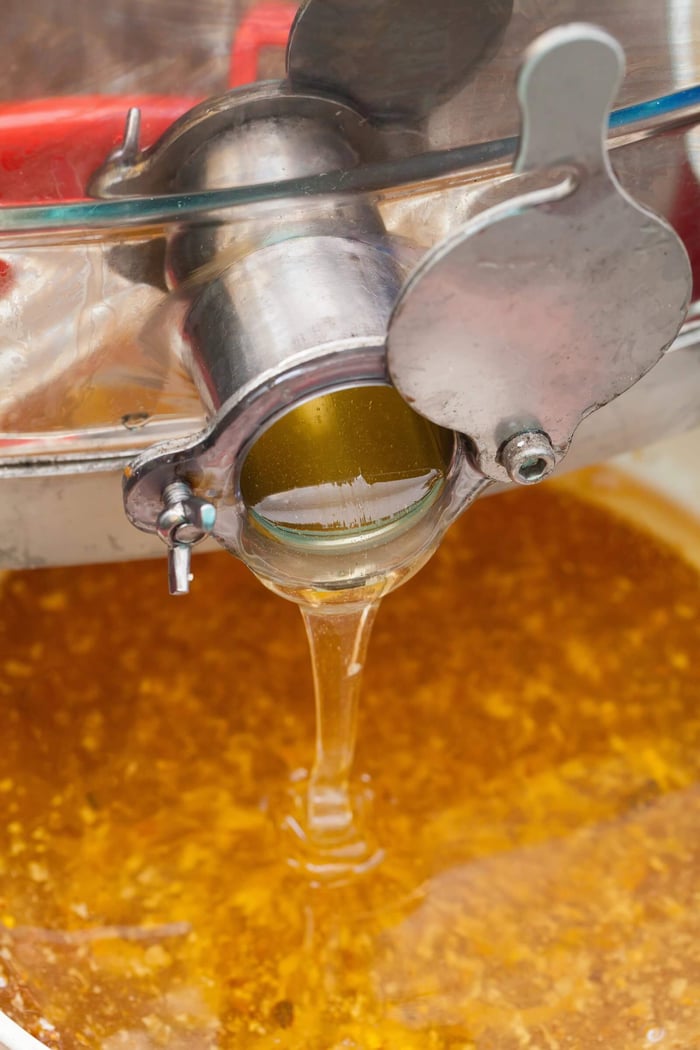
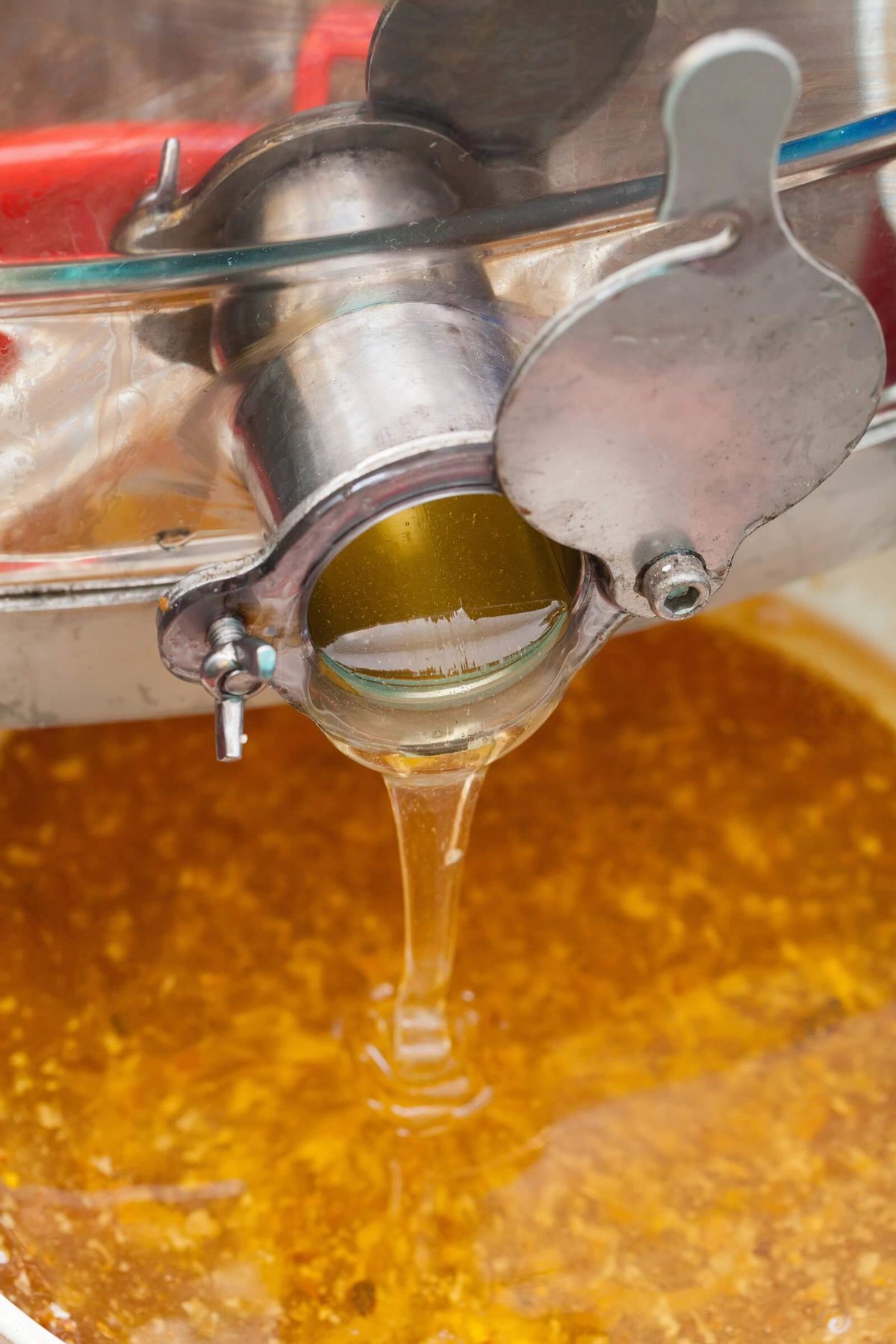
Filtering honey is one of the final steps between extracting a crop and filling clean jars for storage, gifts or sale. The process removes pieces of beeswax, bee parts, propolis and other visible debris that may enter the honey during uncapping and extraction.
Proper filtering honey improves the appearance of honey while preserving its natural characteristics. The best filtering method depends on the amount of honey being processed, the desired clarity and the equipment available.
A good filtering honey process should make honey cleaner and easier to bottle without unnecessarily changing its natural character. For many small-scale beekeepers, that means allowing freshly extracted honey to pass through a coarse or two-stage food-grade sieve and then giving it time to settle before bottling.
Filtering Honey should not be confused with ultrafiltration. Ordinary straining removes visible solids from extracted honey. Ultrafiltration is a much finer industrial process that can remove particles such as pollen and is not normally needed for a beekeeper preparing a seasonal honey crop.
Who should read this filtering honey guide?This guide is ideal for:
|
What are the key points to know about filtering honey?
Quick Answer: Honey filtering removes wax, bee parts and other visible debris from extracted honey. The best method depends on harvest size, honey temperature and clarity goals. |
| At a Glance | |
|---|---|
| Best for | Hobby, sideline and commercial beekeepers |
| Main goal | Remove wax, bee parts and other visible debris |
| Difficulty | Beginner-friendly |
| Processing time | Varies by batch size, honey temperature and filter fineness |
| Best general equipment | Food-grade double honey sieve and bottling bucket |
| Heat required | Usually no, unless the honey is cool or partially crystallized |
Key Takeaways
|
What is honey filtering?
Quick Answer: Honey filtering is the process of passing extracted honey through food-grade mesh to remove wax, bee parts, propolis and other unwanted solids. |
- Filtering normally takes place after honey is extracted from uncapped comb.
- Visible debris may include wax cappings, bee parts, wood fragments or pieces of propolis.
- Filter fineness affects both honey clarity and flow speed.
- Filtering does not prevent natural crystallization.
Freshly extracted honey may look clean as it leaves the extractor, but small pieces of wax and other hive material can remain suspended in it. Passing the honey through a clean sieve removes much of this material before the honey enters a settling or bottling bucket.
The objective is not necessarily to remove every naturally occurring particle. Many beekeepers want to retain the recognizable character of their seasonal honey while removing the debris customers would not expect to find in a finished jar. The appropriate level of filtering therefore depends on how the honey will be used and presented.
Why should extracted honey be filtered?
Quick Answer: Beekeepers filter extracted honey to remove unwanted debris, improve clarity, create a smoother texture and make the crop easier to bottle consistently. |
- Clean honey is more visually appealing in a clear retail jar.
- Removing wax fragments creates a smoother eating experience.
- Filtering can reduce clogging at the honey gate during bottling.
- Consistent processing helps one batch look uniform from jar to jar.
- Filtering alone does not correct honey with excessive moisture.
Filtering improves the presentation of honey, but it should not be described as a guaranteed way to extend shelf life. Honey stability is influenced more directly by factors such as moisture content, sanitation, storage conditions and protection from added water.
The Codex Alimentarius Standard for Honey establishes internationally recognized composition and quality provisions for honey. It also states that honey should not contain objectionable matter inconsistent with good manufacturing practices. Filtering is one practical way to remove visible harvesting debris while preparing honey for storage or sale.
Lappe's Field Note: Give freshly filtered honey time to settle before filling retail jars. Air bubbles, foam and very light wax fragments often rise to the surface, where they can be skimmed away. |
How are straining, filtering and ultrafiltration different?
Quick Answer: Straining removes larger debris, ordinary filtering removes smaller visible solids, and ultrafiltration is an industrial process capable of removing much finer particles. |
- Beekeepers often use the terms straining and filtering interchangeably.
- Coarse mesh captures large wax fragments and bee parts.
- Fine mesh improves clarity but slows the movement of thick honey.
- Ultrafiltration is not the same as normal beekeeper-level filtering.
The table below compares ordinary straining, fine filtering and industrial ultrafiltration.
| Process | What It Removes | Typical User | Common Purpose |
|---|---|---|---|
| Coarse straining | Large wax pieces, bee parts and obvious debris | Hobby and sideline beekeepers | Fast initial cleanup after extraction |
| Fine filtering | Smaller visible particles that pass through coarse mesh | Hobby, sideline and commercial beekeepers | Improved clarity before settling and bottling |
| Ultrafiltration | Extremely fine suspended material, potentially including pollen | Specialized industrial processors | Specialized commercial processing |
The National Honey Board specifically distinguishes ordinary honey filtration from ultrafiltration. A beekeeper using a stainless-steel sieve or food-grade nylon filter is not performing the same process as an industrial facility using specialized pressure-based filtration equipment.
What equipment is needed to filter honey?
Quick Answer: Most beekeepers need a food-grade sieve, clean receiving bucket, secure support, honey gate and dry containers to filter and bottle honey successfully. |
- Every surface that touches honey should be food-grade, clean and completely dry.
- A two-stage sieve can reduce premature clogging of the fine screen.
- A bucket with a honey gate simplifies controlled jar filling.
- A lid protects filtered honey while bubbles and wax rise.
The table below explains the purpose and best use of common honey filtering equipment.
| Equipment | Purpose | Best Use |
|---|---|---|
| Coarse honey strainer | Captures large wax pieces and bee parts | First-stage filtering |
| Fine honey strainer | Removes smaller visible particles | Final filtering for improved clarity |
| Double honey sieve | Combines coarse and fine screens | Convenient two-stage filtering |
| Food-grade pail | Receives or stores filtered honey | Small and medium harvests |
| Bottling bucket with honey gate | Controls the flow of honey into jars | Settling and bottling |
| Food-grade nylon filter | Provides replaceable filtering for larger volumes | Pail or tank systems |
| Clean scraper or spoon | Moves accumulated wax away from a blocked screen | Maintaining filter flow |
| Food-safe warming cabinet or water bath | Gently warms honey when necessary | Cool or partially crystallized honey |
Cheesecloth may be used for a small amount of honey, but it can be difficult to secure, may collapse into the receiving container and can retain more honey than a purpose-built sieve. A reusable stainless-steel or food-grade nylon filter is usually easier to support, clean and use consistently.
Beekeepers can find compatible honey filters, pails and honey gates for processing and bottling different harvest sizes.
Buying Tip: A double sieve is often easier to manage than a single fine filter because the upper screen catches large wax pieces before they can cover the finer lower mesh. |
What is the best way to filter honey?
Quick Answer: The most practical methods are gravity filtering, two-stage sieving, settling and gentle warm filtering when cool or crystallized honey will not flow freely. |
- Gravity filtering is simple and requires no pump.
- Two-stage sieving balances debris removal with reasonable flow.
- Settling complements filtering but does not replace it.
- Press systems are more useful for crushed comb than ordinary extracted honey.
Cold gravity filtering
Cold gravity filtering means allowing liquid honey to flow through a sieve without deliberately heating it. This method requires patience because honey viscosity increases as its temperature falls. It works best when the honey is already liquid and the extracting room is comfortably warm.
Place the sieve securely over a clean food-grade pail. Pour the honey slowly enough to keep it from overflowing. Avoid continuously stirring the honey through the filter because aggressive movement can introduce more air and force soft wax into the mesh.
Two-stage filtering
A two-stage filter uses a coarse upper screen and a finer lower screen. The upper screen removes larger material first, protecting more of the fine screen's surface area. This arrangement is practical for most hobby and sideline harvests because it improves clarity without requiring specialized equipment.
Settling and skimming
After filtering, cover the receiving bucket and leave the honey undisturbed. Air bubbles, foam and very light wax particles tend to rise, while some heavier particles may settle. Skim the surface before bottling and avoid drawing material from the very bottom of the container.
Settling is helpful, but it should not be relied on as the only cleanup method when extracted honey contains substantial wax or bee debris.
Gentle warm filtering
Cool or partially crystallized honey may move too slowly through fine mesh. Gentle, controlled warming can reduce viscosity and improve flow. The goal is to warm only as much as necessary for handling, not to boil or expose the honey to uncontrolled direct heat.
Pressing crushed comb
A honey press can separate liquid honey from crushed comb. This method is useful for beekeepers who do not use an extractor or who harvest cut comb remnants and damaged comb. The resulting honey may still need to pass through a sieve before settling and bottling.
Which honey filtering method should you choose?
Quick Answer: Choose a method by matching the honey's condition and batch size with the desired clarity, available equipment and amount of processing time. |
The table below compares the most common honey filtering methods by best use, main advantage and primary limitation.
| Method | Best For | Main Advantage | Main Limitation |
|---|---|---|---|
| Single coarse sieve | Small, clean harvests | Fast flow and easy cleanup | May leave smaller particles |
| Double sieve | Most hobby and sideline harvests | Coarse and fine filtering in one setup | Fine screen can clog with cool honey |
| Nylon filter bag | Larger pails or tanks | Large filtering surface area | Requires secure support and careful cleaning |
| Settling and skimming | Final clarification after filtering | Removes foam and floating material | Requires additional time |
| Gentle warm filtering | Cool or partly crystallized honey | Improves flow through the filter | Requires controlled temperature management |
| Honey press | Crush-and-strain harvesting | Separates honey from crushed comb | More cleanup and wax handling |
For a typical home honey harvest, a double stainless-steel sieve placed over a covered food-grade bottling bucket is usually the most straightforward option. Larger operations may use nylon filter systems, settling tanks or pumps designed specifically for food handling.
How do you filter honey step by step?
Quick Answer: Filter honey by preparing clean equipment, removing large debris first, allowing gravity to move the honey, settling the batch and bottling it in dry containers. |
- Prepare a clean processing area.
Choose a dry, enclosed space protected from dust, insects and unnecessary foot traffic. Clean all food-contact equipment and allow it to dry completely.
- Inspect the extracted honey.
Remove unusually large pieces of comb, wood or other debris before the honey reaches the fine filter.
- Secure the filter over a food-grade container.
Make sure the sieve cannot tip or slide when it becomes heavy. The receiving bucket should be large enough to prevent overflow.
- Pour the honey slowly.
Add honey at a rate the filter can handle. Do not fill above the safe working depth of the sieve.
- Protect the fine mesh from large debris.
Use a coarse upper screen or remove accumulated wax periodically with a clean food-grade tool.
- Allow gravity to do the work.
Avoid squeezing debris or forcing it through the mesh. Forced material may cloud the honey or push soft wax into the lower filter.
- Cover and settle the filtered honey.
Place a clean lid on the receiving container and allow bubbles, foam and light wax particles to rise.
- Skim the surface if needed.
Use a clean utensil to remove foam and floating material without stirring it back into the honey.
- Fill clean, dry jars.
Use a honey gate or controlled pouring method and leave an appropriate amount of headspace.
- Seal and label the jars.
Record the harvest date, floral source or apiary location when known, and any batch information needed for traceability.
Lappe's Field Note: Record each batch separately rather than combining every harvest immediately. Batch records make it easier to compare flavor, color, moisture readings and customer feedback from different apiaries or harvest dates. |
Should honey be heated before filtering?
Quick Answer: Honey does not always need heating before filtering, but gentle, controlled warming can improve the flow of cool or partially crystallized honey. |
- Liquid honey at a comfortable room temperature may filter without added heat.
- Direct contact with a burner or exposed heating element can create hot spots.
- A warm room, controlled cabinet or water bath provides more even warming.
- Water must not enter the honey during a water-bath process.
- Time and temperature should be minimized when preserving fresh honey characteristics is the goal.
There is no need to warm every batch simply because it is being filtered. Fresh honey often flows well when extracted and processed in a warm room. Warming becomes useful when low room temperature, natural crystallization or a particularly thick floral source causes the filter to stall.
Use a thermometer and process control rather than guessing. Avoid boiling honey or placing a plastic pail directly on a hot surface. Commercial sellers should establish handling procedures appropriate for their product claims and applicable regulations.
The Codex Standard for Honey states that honey sold as such should not be heated or processed to the extent that its essential composition is changed or its quality impaired. This supports using controlled, purpose-driven handling rather than unnecessary high heat.
Why is honey moving slowly through the filter?
Quick Answer: Honey usually filters slowly because it is cool, partially crystallized, unusually viscous or blocked by wax covering too much of the screen. |
- Cool honey is more viscous than warm honey.
- Fine filters naturally move honey more slowly than coarse filters.
- Wax can seal the open surface of a filter.
- A small sieve may not provide enough surface area for a large crop.
- Crystals can accumulate in fine mesh and restrict flow.
First inspect the filter surface. If wax has covered it, move the wax aside with a clean food-grade scraper or replace the clogged filter with a clean one. Do not press the wax through the mesh.
If the screen is clear but the honey barely moves, the honey may be too cool or partially crystallized. Move the covered container to a warmer processing area or use a controlled warming method. For recurring large harvests, increase filter surface area rather than trying to force more honey through a small household strainer.
What mistakes should be avoided when filtering honey?
Quick Answer: The most common mistakes are introducing water, using dirty equipment, overheating honey, overloading the sieve and forcing wax through clogged mesh. |
- Never use wet jars, pails or filters for finished honey.
- Do not add water to thin honey.
- Do not assume filtering can correct excessive moisture.
- Do not use equipment that is not approved for food contact.
- Do not leave uncovered honey exposed to insects or dust.
- Do not force wax and debris through fine mesh.
Adding water to improve flow
Water should not be mixed into honey to make filtering easier. Honey is hygroscopic, meaning it can absorb moisture from its surroundings. Increased moisture may create conditions more favorable to fermentation by moisture-tolerant yeasts.
Filtering with damp equipment
Equipment that appears clean can still introduce water if it was not fully dried after washing. Plan cleaning early enough for filters, buckets and jars to air-dry before the harvest begins.
Using uncontrolled direct heat
A burner, hot plate or exposed element can overheat the bottom or side of a container before the rest of the honey warms. Controlled, indirect warming is safer and more uniform.
Confusing clarity with moisture control
Clear honey is not automatically shelf-stable honey. A refractometer is the appropriate tool for checking moisture. Beekeepers selling honey should understand the relevant moisture expectations and regulations for their market.
How should filtered honey be stored?
Quick Answer: Filtered honey should be stored in clean, dry, tightly sealed food-grade containers protected from excess heat, direct sunlight, moisture and strong odors. |
- Use containers designed for food storage.
- Seal containers promptly to limit moisture absorption.
- Keep honey away from strong-smelling chemicals and foods.
- Protect packaged honey from prolonged direct sunlight.
- Label each batch for identification and traceability.
- Expect natural crystallization in many varieties of honey.
Glass and food-grade plastic are both commonly used for honey when the containers are suitable for the intended storage period. Lids should fit securely and remain free from residue that could prevent a proper seal.
Crystallization does not mean honey has spoiled. It is a natural physical change influenced by sugar composition, temperature and the presence of particles that act as crystal-forming sites. Some floral sources crystallize sooner than others.
Store bulk honey in tightly covered food-grade pails or tanks. Retail jars should be checked for clean rims, secure lids and accurate labels before they are packed for display, shipment or sale.
Lappe's Tip: Label bulk containers before filling them. A useful batch label can include the extraction date, apiary, floral source when known, moisture reading and number of jars produced. |
What has Lappe's Bee Supply learned from filtering honey?
Lappe's Field Experience: For most small and medium honey harvests, a double stainless-steel honey sieve followed by a covered settling bucket provides a practical balance of clarity, speed and ease of use. The coarse upper screen captures larger wax pieces before they reach the fine lower screen, while settling gives bubbles, foam and light wax particles time to rise before bottling. |
Honey generally filters more efficiently when it is processed soon after extraction in a comfortably warm room. Allowing large amounts of wax to accumulate on the screen slows the process, so the upper sieve should be checked and cleared as needed.
Clean, completely dry equipment is just as important as the filter itself. Water left inside a bucket, sieve or jar can affect the finished honey, while uncovered containers may collect dust or attract insects during processing.
For beekeepers preparing honey for retail sale, separating harvests into identifiable batches makes it easier to track color, flavor, moisture readings and customer response. This also helps preserve the identity of honey collected from different apiaries, dates or floral sources.
Frequently Asked Questions
Does filtering honey remove pollen?Coarse filtering mainly removes larger debris, while very fine filtration may remove some pollen. The amount removed depends on the filter and processing method. |
Is filtered honey still raw honey?Filtered honey may still be described as raw when it has not received processing inconsistent with the seller's definition, but the United States does not have one universally applied federal definition of raw honey. |
Can cheesecloth be used to filter honey?Clean cheesecloth can filter small batches, but a supported food-grade honey sieve is generally easier to secure, clean and use consistently. |
Should honey be filtered more than once?Honey may be filtered in two stages when greater clarity is desired. A coarse first stage helps prevent large wax pieces from clogging the finer filter. |
How long should honey settle before bottling?Settling time varies with the batch, container and room temperature. Honey is ready when much of the foam and suspended air has risen and the honey can be bottled cleanly. |
Can crystallized honey be filtered?Fully crystallized honey will not pass efficiently through a fine sieve. It must first be gently and evenly warmed until it flows freely enough for filtering. |
Does filtering stop honey from crystallizing?No. Filtering may remove some particles that act as crystallization sites, but the honey's natural sugar composition and storage temperature remain major factors. |
Does filtering prevent honey from fermenting?No. Filtering removes debris but does not correct excessive moisture. Moisture management, sanitation and sealed storage are more important for reducing fermentation risk. |
What is the best filter for a beginning beekeeper?A food-grade double sieve is a practical choice because it provides coarse and fine filtering in one setup and fits over many standard honey pails. |
Can water be added to honey to make it easier to filter?No. Adding water raises the honey's moisture content and may increase fermentation risk. Use patience, a larger filter or controlled gentle warming instead. |
What is the best overall approach to filtering honey?
Quick Answer: Most beekeepers can produce clean, attractive honey by using a double food-grade sieve, allowing the filtered honey to settle and bottling it with clean, dry equipment. |
Filtering honey is one of the simplest ways to improve the appearance of a honey harvest while removing unwanted wax, bee parts and other visible debris. Choosing the right combination of sieves, settling time and clean food-grade equipment helps produce attractive honey without unnecessary processing.
Most hobby and sideline beekeepers achieve excellent results with a double honey sieve placed over a covered settling or bottling bucket. Honey that is already liquid may be filtered without added heat, while cool or partially crystallized honey may require gentle, controlled warming.
The best process is one that removes unwanted debris, protects the honey from water and contamination, and preserves the natural character of the harvest.
What sources support this honey filtering guide?
Quick Answer: This guide uses recognized food standards, honey-industry references and university extension information to support its definitions and processing recommendations. |
- Standard for Honey, CXS 12-1981 — Codex Alimentarius Commission, Food and Agriculture Organization of the United Nations and World Health Organization.
- Honey Frequently Asked Questions — National Honey Board.
- How Honey Is Made — National Honey Board.
- The Effect of Processing on Honey — National Honey Board.
- Effects of Processing on the Pollen and Nutrient Content of Honey — National Honey Board research report.
- Beekeeping and Honey Bees — Penn State Extension.
- Beekeeping Basics — Penn State Extension.
- Honey Filters, Pails and Honey Gates — Lappe's Bee Supply.
FAQs
Does filtering honey remove pollen?
Coarse filtering mainly removes larger debris, while very fine filtration may remove some pollen. The amount removed depends on the filter and processing method.
Is filtered honey still raw honey?
Filtered honey may still be described as raw when it has not received processing inconsistent with the seller's definition, but the United States does not have one universally applied federal definition of raw honey.
Can cheesecloth be used to filter honey?
Clean cheesecloth can filter small batches, but a supported food-grade honey sieve is generally easier to secure, clean and use consistently.
Should honey be filtered more than once?
Honey may be filtered in two stages when greater clarity is desired. A coarse first stage helps prevent large wax pieces from clogging the finer filter.
How long should honey settle before bottling?
Settling time varies with the batch, container and room temperature. Honey is ready when much of the foam and suspended air has risen and the honey can be bottled cleanly.
Can crystallized honey be filtered?
Fully crystallized honey will not pass efficiently through a fine sieve. It must first be gently and evenly warmed until it flows freely enough for filtering.
Does filtering stop honey from crystallizing?
No. Filtering may remove some particles that act as crystallization sites, but the honey's natural sugar composition and storage temperature remain major factors.
Does filtering prevent honey from fermenting?
No. Filtering removes debris but does not correct excessive moisture. Moisture management, sanitation and sealed storage are more important for reducing fermentation risk.
What is the best filter for a beginning beekeeper?
A food-grade double sieve is a practical choice because it provides coarse and fine filtering in one setup and fits over many standard honey pails.
Can water be added to honey to make it easier to filter?
No. Adding water raises the honey's moisture content and may increase fermentation risk. Use patience, a larger filter or controlled gentle warming instead.