Welcome to Lappe's Bee Supply's blogs section. We are a trusted beekeeping company in the USA. We give relevant insights, seasonal guidance, and professional advice for beekeepers of all experience levels. From hive management and bee wellness to honey production and equipment guides, we have it all that you will require to thrive. Get updated, motivated, and connected with the beekeeping community through regular news from Lappe's Bee Supply.
Is Beekeeping Right for You?
The Buzz About This Post
- Is beekeeping right for you?
- What should you know before becoming a beekeeper?
- What does this guide cover?
- What signs suggest that beekeeping right for you?
- What is beekeeping?
- Why are bees important to food production and ecosystems?
- Why do you want to become a beekeeper?
- How much time does beekeeping require?
- How much space do you need for a beehive?
- What makes a good location for a beehive?
- What should you budget for beekeeping?
- What should you learn before buying bees?
- How physically demanding is beekeeping?
- What should you consider about bee stings and allergies?
- Why is a beekeeping community valuable for beginners?
- What does responsible beekeeping involve?
- How can you decide whether is beekeeping right for you?
- What do beginners frequently ask about beekeeping?
- Is beekeeping difficult for a beginner?
- How much time does beekeeping require?
- How much space do I need for a beehive?
- Can I keep bees in a residential neighborhood?
- Should a beginner start with one hive or two?
- Do I need to be physically strong to keep bees?
- Can someone with a bee-sting allergy become a beekeeper?
- Will a new beehive produce honey during its first year?
- Can beekeeping be profitable?
- What should I learn before buying bees?
- Which sources support this beekeeping guide?
- FAQs
Beginning Beekeeping Guide
Is Beekeeping Right for You?
Beekeeping can be fascinating, useful and deeply rewarding, but owning a hive also means accepting responsibility for a living colony. This guide explains the time, space, expense, physical work, education and ongoing management involved so you can decide whether beekeeping is right for you.

Is beekeeping right for you?
Beekeeping suits people prepared for continuing education, regular inspections, seasonal management, responsible pest control and ongoing colony expenses.
It may not be a good fit if a hive would be left unattended, local rules prohibit bees or the startup budget depends on immediate honey income.
What should you know before becoming a beekeeper?
Successful beekeeping requires regular observation, seasonal management, continuing education and a willingness to respond when colony conditions change.
- A honey bee colony is livestock that requires responsible, continuing care.
- The amount of work changes with the season, weather and condition of each colony.
- Hive placement must account for laws, neighbors, access, drainage and bee flight paths.
- Startup costs include more than the hive because bees, protective clothing, tools and health management are also needed.
- Varroa mite monitoring is a core part of modern honey bee management.
- Honey production is a possible benefit, not a guaranteed first-year outcome.
What signs suggest that beekeeping right for you?
Prospective beekeepers are better prepared when they have suitable space, realistic expectations, reliable time, local support and a plan for colony health.
| Readiness question | Ready to proceed | Needs more planning |
|---|---|---|
| Can you inspect colonies regularly during spring and summer? | Yes, time is available. | No reliable schedule yet. |
| Have you checked local laws and property restrictions? | Rules have been confirmed. | Requirements are still unknown. |
| Do you have a safe, accessible hive location? | The site has working room and clear flight paths. | Placement may conflict with people, animals or access. |
| Are you prepared for ongoing expenses? | The budget includes bees, equipment and health management. | The plan depends on immediate honey income. |
| Will you learn how to monitor Varroa mites? | Monitoring is part of the management plan. | No pest-management plan has been created. |
| Do you have access to reliable education or mentoring? | A course, club, mentor or research guide is available. | Learning will rely mainly on unverified advice. |
What is beekeeping?
Beekeeping, also called apiculture, is the managed care of honey bee colonies for colony health, pollination, honey or other hive products.
- A managed colony contains a queen, worker bees, developing brood and seasonally produced drones.
- The beekeeper provides suitable equipment and monitors the colony’s condition.
- Management decisions change with the weather, season, nectar flow and colony strength.
- A hive cannot be treated as a decoration that is installed and then ignored.
Beekeeping includes much more than collecting honey. A beekeeper learns how to interpret brood patterns, food stores, population changes, queen performance, pest levels and signs of disease. The goal is not to control every action inside the colony. It is to understand what the bees are doing, recognize conditions that require attention and make timely management decisions.
Some people maintain a few colonies as a hobby, while others manage bees for honey production, pollination, queen rearing or agricultural income. The scale may differ, but every beekeeper assumes responsibility for the health and management of the colonies in their care.
Why are bees important to food production and ecosystems?
Bees transfer pollen among flowers, supporting plant reproduction, crop production, diverse food systems and the ecosystems surrounding agricultural land.
- Honey bees are important managed agricultural pollinators.
- Native bees and other animals also provide essential pollination services.
- Pollination supports many fruits, vegetables, nuts, seeds and flowering plants.
- Keeping honey bees does not replace the need to protect native pollinators and habitat.
The Food and Agriculture Organization reports that about 75% of global food crop types depend at least partly on pollinators. USDA explains that animal pollinators contribute to the reproduction of many flowering plants and roughly 35% of the world’s food crops. These figures describe the contribution of all relevant pollinators, not honey bees alone.
Becoming a beekeeper can strengthen your understanding of pollination and seasonal bloom cycles. However, owning honey bee colonies is not automatically the same as conserving every bee species. Responsible land management also includes supporting diverse flowering plants, reducing unnecessary pesticide exposure and preserving nesting habitat for wild pollinators.
For a closer look at the role honey bees play in agriculture, read Honey Bee Pollination: How Bees Pollinate Flowers and Crops.
Why do you want to become a beekeeper?
A clear purpose helps determine how many colonies you need, what equipment to buy and how much time and education to invest.
- Honey production requires different planning than keeping a single educational hive.
- Pollination goals depend on the crops, bloom period and number of colonies involved.
- Commercial expectations require detailed cost, labor and market calculations.
- Interest in bees must be matched by a willingness to perform routine management.
People begin beekeeping for many reasons. Some want to produce honey for their families. Others are interested in pollination, self-sufficiency, beeswax, education or the challenge of learning how a colony functions. A few eventually develop a farm business, but income should not be assumed before realistic expenses and colony losses are understood.
Write down your primary goal
Complete this sentence before buying equipment: “I want to keep bees because ______.” Then ask whether you would remain interested during a year with little surplus honey, a queen problem or an unexpected colony loss.
Your answer does not need to be complicated. It should simply be strong enough to support the learning, inspections and problem-solving that beekeeping requires.
How much time does beekeeping require?
Beekeeping follows a seasonal rhythm, with frequent management during colony growth and less direct hive work during cold winter weather.
- Spring often requires close attention to growth, food stores, queen status and swarm risk.
- Summer work may include inspections, super management, pest monitoring and honey removal.
- Fall management focuses on colony health, food reserves, pests and winter preparation.
- Winter is often used for equipment work, education, planning and limited external checks.
There is no universal weekly time requirement. A quick external observation may take only a few minutes, while a full inspection, mite assessment, equipment change or honey harvest takes longer. Travel time also matters when hives are located away from home.
The important question is whether you can respond when the colony needs attention. Bees do not follow a convenient calendar. Weather can delay an inspection, nectar flows can begin unexpectedly and strong colonies can outgrow their available space. Prospective beekeepers should be able to make time during the active season rather than postponing every task until a free weekend appears.
| Season | Typical colony activity | Common beekeeper priorities |
|---|---|---|
| Spring | Brood rearing and population growth increase as forage becomes available. | Check food, queen performance, brood health, space, swarm signs and mite levels. |
| Summer | Colonies may reach peak population and collect nectar during local flows. | Manage space, inspect colony health, monitor mites and remove ripe honey when appropriate. |
| Fall | Brood rearing and forage often decline as colonies prepare for winter. | Evaluate colony strength, food reserves, queen status, pests and winter equipment. |
| Winter | The colony clusters during cold conditions and consumes stored food. | Limit disturbance, watch hive entrances, assess food risk and prepare equipment for spring. |
How much space do you need for a beehive?
A beehive needs a stable footprint plus safe working room, clear flight paths, equipment access and separation from frequently occupied areas.
- The hive footprint is only part of the space requirement.
- The beekeeper needs room to stand, lift boxes and place removed components.
- Bee flight should be directed away from doors, sidewalks, play areas and livestock paths.
- Equipment and vehicles must be able to reach the apiary when needed.
A small property may support a hive when it is arranged carefully, while a larger property may still contain unsuitable locations. Evaluate how people and animals use the area throughout the day. A quiet back corner may become busy during mowing, gardening or outdoor gatherings.
Fences, shrubs or other barriers can encourage bees to gain altitude after leaving the entrance, but a barrier does not eliminate the need for thoughtful placement. You also need enough room to approach the hive from behind or from the side without standing directly in the bees’ main flight path.
What makes a good location for a beehive?
A practical apiary site combines legal placement, stable footing, drainage, access, forage, water and safe bee flight away from routine activity.
- Local laws and property restrictions must be checked before bees are ordered.
- Hive stands should remain stable when equipment becomes tall and heavy.
- Low, wet areas can make access and hive maintenance difficult.
- Bees need access to seasonally available nectar, pollen and water.
- The beekeeper needs dependable access in changing weather conditions.
Begin by checking city, county, homeowners association, landlord or other property rules that may apply. Regulations can address hive numbers, registration, setbacks, barriers or water sources. Because requirements vary by location and can change, general online advice should not replace verification with the appropriate local authority.
Next, observe sunlight, wind, drainage and human traffic. Morning sunlight may encourage earlier activity, while protection from severe prevailing winds can be helpful. Avoid assuming that one orientation is correct for every climate. The best arrangement is the one that keeps the equipment stable, gives the colony reasonable protection and allows safe, dependable management.
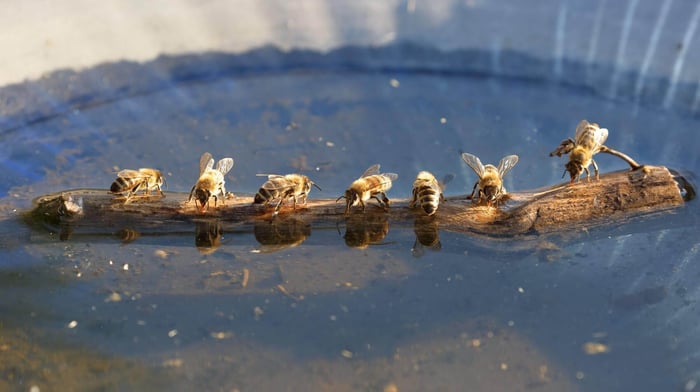
Bees also need a dependable water source. Learn more in The Critical Role of Water for Honey Bees.
A colony can forage well beyond the immediate yard, but nearby forage still influences convenience and seasonal food availability. Read How Far Honey Bees Travel to Forage for more context.
What should you budget for beekeeping?
A realistic beekeeping budget includes bees, hive equipment, protective clothing, tools, health management, feeding, replacement parts and honey processing.
- Prices vary by equipment style, colony source, shipping method and region.
- The lowest initial price may not include everything needed for safe management.
- Ongoing expenses continue after the hive and bees are purchased.
- A honey crop should not be treated as guaranteed repayment of startup costs.
Fixed dollar estimates quickly become outdated and may leave out important items. Build a current budget using the actual products and bees available in your area. Include protective clothing, a smoker, hive tool, feeders if needed, mite-monitoring supplies and additional boxes or frames for colony growth.
Honey harvesting can create another group of expenses. Depending on your plans, you may need food-safe containers, strainers, uncapping tools, an extractor, labels and storage space. Some local clubs lend or rent extraction equipment, which may reduce first-year costs.
| Budget category | Possible items | When the expense may occur |
|---|---|---|
| Colony | Package bees, nucleus colony or established colony | Before or during installation |
| Hive equipment | Bottom, boxes, frames, foundation, covers and hive stand | Before bees arrive and as colonies expand |
| Personal equipment | Veil or suit, gloves, smoker and hive tools | Before the first inspection |
| Colony management | Feeders, feed, mite tests, approved treatments and replacement queens | As colony conditions require |
| Honey handling | Uncapping equipment, extractor access, strainers and containers | When a harvestable surplus exists |
| Replacement and growth | Extra frames, boxes, foundation and repaired components | Throughout the life of the apiary |
What should you learn before buying bees?
Beginners should study bee biology, equipment, inspections, nutrition, swarming, queen problems, diseases and Varroa management before bees arrive.
- Equipment is easier to assemble and correct before a live colony is waiting.
- Inspection skills depend on recognizing normal brood, food and population patterns.
- Varroa management requires monitoring rather than visual guessing alone.
- Local seasonal knowledge helps determine when colonies normally grow, swarm and store honey.
Begin with a structured course, research-based guide or experienced instructor rather than disconnected tips from social media. Learn the names and functions of hive components, how to light and use a smoker, how to remove frames safely and what healthy brood generally looks like.
Varroa destructor deserves special attention. USDA APHIS identifies Varroa as one of the most damaging challenges facing honey bee colonies, and EPA warns that an infested colony left unmanaged is likely to die. Beginners should learn a reliable monitoring method, understand local action guidance and use only lawful treatments according to their labels.
Lappe’s Bee Supply offers a selection of beekeeping books and educational resources that can help new beekeepers build a foundation before their colonies arrive.
Beginner learning checklist
- Identify the queen, workers, drones, eggs, larvae, pupae, brood and stored food.
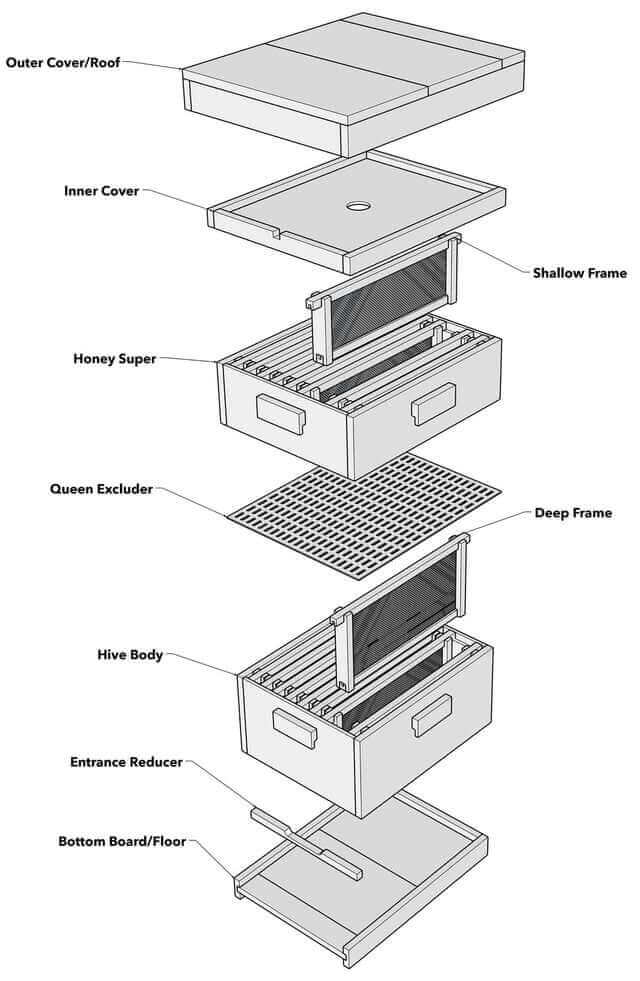
- Understand how every hive component is assembled and used.
- Practice using protective clothing, a smoker and hive tools.
- Learn how to conduct an inspection without leaving the hive open unnecessarily.
- Learn an accepted Varroa sampling method and how to interpret the result.
- Create a seasonal plan appropriate for your climate and local forage.
- Know whom to contact when a problem exceeds your experience.
How physically demanding is beekeeping?
Beekeeping can involve lifting boxes, bending, standing outdoors, handling tools and working carefully while wearing protective clothing in warm weather.
- Hive components become heavier as bees store nectar and honey.
- Inspections require controlled movements while boxes and frames are being handled.
- Protective clothing may increase heat and fatigue during warm conditions.
- Equipment choices and lifting plans can reduce physical strain.
You do not need exceptional strength to become a beekeeper, but you do need a safe method for handling equipment. Smaller hive boxes, frame-by-frame removal, carts, lifting aids and help from another person can make management more accessible. Place hives at a comfortable working height and keep the surrounding ground reasonably level.
Prospective beekeepers should also consider heat tolerance, balance, mobility and the ability to work calmly around flying bees. Rushing because a box feels too heavy or protective clothing feels too hot can increase the likelihood of dropped equipment, crushed bees or incomplete inspections.
What should you consider about bee stings and allergies?
Bee stings are an occupational risk of beekeeping, and anyone with a known or suspected venom allergy needs professional medical guidance.
- Protective clothing reduces exposure but cannot guarantee that a beekeeper will never be stung.
- Sting reactions can range from localized discomfort to a severe allergic emergency.
- A history of severe reaction requires individualized advice from a qualified healthcare professional.
- Family members and nearby helpers should know how to contact emergency services.
Medical safety notice
This guide does not provide medical diagnosis or treatment. Anyone who has experienced a severe reaction to an insect sting, suspects a venom allergy or has been prescribed emergency medication should speak with a qualified healthcare professional before working with bees.
The CDC notes that stinging insects can cause serious allergic reactions requiring immediate emergency care. Do not rely on a bee suit as your only safety plan. Properly fitted protective clothing, calm handling, suitable weather and sound equipment can reduce avoidable exposure, but they do not remove the inherent possibility of being stung.
Why is a beekeeping community valuable for beginners?
Local mentors and beekeeping associations provide regional knowledge, practical demonstrations and experienced help when a colony presents an unfamiliar problem.
- Local beekeepers understand regional weather, forage and nectar-flow patterns.
- Hands-on demonstrations can clarify inspection techniques that are difficult to learn from text alone.
- Associations may offer classes, mentoring, speakers or shared extraction equipment.
- A mentor can provide context without replacing the beekeeper’s own observation and study.
Local knowledge is especially useful because colony development does not occur on the same schedule everywhere. Bloom periods, winter length, drought, rainfall and agricultural land use all influence hive management. Advice that works in one region may be poorly timed in another.
Look for a club or mentor before your bees arrive. Attend meetings, observe an experienced beekeeper and ask how local colonies are monitored for Varroa. A reliable support network can help you distinguish between a true emergency and a normal stage of colony development.
What does responsible beekeeping involve?
Responsible beekeeping means monitoring colony health, managing pests lawfully, preventing avoidable nuisance and acting when bees lack adequate resources.
- Colonies should be inspected often enough to recognize meaningful changes.
- Varroa levels must be assessed with a dependable monitoring method.
- Pesticide products must be used according to their legal labels.
- Weak, queenless, diseased or starving colonies should not be knowingly ignored.
- Hive placement and management should reduce conflicts with neighbors and animals.
Responsible management is based on evidence rather than labels such as “natural,” “chemical-free” or “treatment-free.” A management choice should be evaluated by what it does to colony health, neighboring colonies, bee products and the surrounding environment.
Varroa mites feed on honey bees and transmit viruses. A colony with uncontrolled mites can weaken, die and contribute mites to nearby colonies through drifting, robbing and other bee movement. For this reason, mite monitoring is not an optional advanced skill. It belongs in every beginner’s management plan.
Responsibility also includes maintaining sound equipment, replacing damaged comb when appropriate, supplying food when management conditions require it and avoiding unnecessary disruption. Good beekeeping does not mean that every colony will survive. It means decisions are made carefully, promptly and with the welfare of the colony in mind.
How can you decide whether is beekeeping right for you?
Beekeeping may be a good fit when you can provide suitable space, continuing education, seasonal attention, safe handling and an ongoing budget.
- Interest in honey alone may not sustain the work required during difficult seasons.
- Reliable availability matters more than a precise estimate of weekly minutes.
- A suitable property must be both legally permitted and practically manageable.
- Beginners need a plan for education, Varroa monitoring and local support.
- Colony losses are possible even when a beekeeper works carefully.
Beekeeping is likely worth exploring when observing bees excites you, continual learning feels appealing and routine inspections can fit your seasonal schedule. It may not be the right choice when the hive would be left unattended for long periods, the property cannot support safe placement or the budget depends on immediate honey sales.
Final readiness checklist
- I have checked local laws, property rules and placement restrictions.
- I have identified a safe, accessible and stable apiary location.
- I understand that honey production is not guaranteed.
- I can purchase the necessary equipment without relying on immediate income.
- I can perform or arrange safe lifting and physical hive work.
- I have considered sting risks and any relevant medical concerns.
- I will learn how to monitor and manage Varroa mites.
- I have located a reliable course, club, mentor or research-based guide.
- I can make time for seasonal inspections and unexpected colony needs.
- I am willing to keep learning after the first hive is installed.
You do not need to know everything before beginning. No beekeeper reaches a point where weather, bees and changing conditions stop creating new lessons. You do, however, need enough preparation to recognize your responsibilities and enough humility to seek help when you encounter something you do not understand.
Starting carefully, learning continuously and developing local support are more valuable than rushing to own many colonies. When the responsibilities described in this guide sound interesting rather than burdensome, beekeeping may be a rewarding next step.
What do beginners frequently ask about beekeeping?
New beekeepers commonly ask about difficulty, time, space, costs, allergies, hive numbers, honey production and the knowledge required to begin.
Is beekeeping difficult for a beginner?
Beekeeping is learnable, but beginners must study colony behavior, inspect regularly and respond to pests, food shortages and seasonal changes.
How much time does beekeeping require?
The workload changes throughout the year. Active seasons require regular inspections, while winter usually involves fewer hive visits and more planning.
How much space do I need for a beehive?
A hive needs a stable location plus enough surrounding space for safe inspections, clear bee flight and separation from frequently used areas.
Can I keep bees in a residential neighborhood?
Residential beekeeping may be possible, but local ordinances, property rules, setbacks and neighbor safety must be checked before installing hives.
Should a beginner start with one hive or two?
One hive costs less, while two colonies allow side-by-side comparisons and may provide resources for correcting certain colony problems.
Do I need to be physically strong to keep bees?
Beekeeping involves lifting and moving hive components, but equipment choices, smaller boxes, mechanical aids and assistance can reduce strain.
Can someone with a bee-sting allergy become a beekeeper?
Anyone with a known or suspected sting allergy should consult a qualified healthcare professional before considering beekeeping.
Will a new beehive produce honey during its first year?
First-year honey production is not guaranteed because colony strength, weather, forage, installation date and winter food needs vary.
Can beekeeping be profitable?
Beekeeping can generate revenue, but equipment, bees, feed, health management, packaging, labor and colony losses must be included in the calculation.
What should I learn before buying bees?
Learn basic bee biology, hive equipment, inspection methods, seasonal management, swarm prevention, nutrition and Varroa monitoring before bees arrive.
Which sources support this beekeeping guide?
This guide uses government and university resources covering pollination, colony health, seasonal management, education, Varroa mites and sting safety.
- Global Action on Pollination Services for Sustainable Agriculture — Food and Agriculture Organization of the United Nations.
- The Importance of Pollinators — United States Department of Agriculture.
- Pollinators — United States Department of Agriculture.
- Beekeeping Basics — Penn State Extension.
- Honey Bee Management Throughout the Seasons — Penn State Extension.
- National Honey Bee Surveys — USDA Animal and Plant Health Inspection Service.
- National Honey Bee Pests and Diseases Survey: Questions and Answers — USDA Animal and Plant Health Inspection Service.
- Advisory on Pesticides Used to Control Varroa Mites in Beehives — United States Environmental Protection Agency.
- Insects and Scorpions at Work — Centers for Disease Control and Prevention, National Institute for Occupational Safety and Health.
- Beginning Beekeeping Videos — Iowa State University Extension and Outreach.
FAQs
Is beekeeping difficult for a beginner?
Beekeeping is learnable, but beginners must study colony behavior, inspect regularly and respond to pests, food shortages and seasonal changes.
How much time does beekeeping require?
The workload changes throughout the year. Active seasons require regular inspections, while winter usually involves fewer hive visits and more planning.
How much space do I need for a beehive?
A hive needs a stable location plus enough surrounding space for safe inspections, clear bee flight and separation from frequently used areas.
Can I keep bees in a residential neighborhood?
Residential beekeeping may be possible, but local ordinances, property rules, setbacks and neighbor safety must be checked before installing hives.
Should a beginner start with one hive or two?
One hive costs less, while two colonies allow side-by-side comparisons and may provide resources for correcting certain colony problems.
Do I need to be physically strong to keep bees?
Beekeeping involves lifting and moving hive components, but equipment choices, smaller boxes, mechanical aids and assistance can reduce strain.
Can someone with a bee-sting allergy become a beekeeper?
Anyone with a known or suspected sting allergy should consult a qualified healthcare professional before considering beekeeping.
Will a new beehive produce honey during its first year?
First-year honey production is not guaranteed because colony strength, weather, forage, installation date and winter food needs vary.
Can beekeeping be profitable?
Beekeeping can generate revenue, but equipment, bees, feed, health management, packaging, labor and colony losses must be included in the calculation.
What should I learn before buying bees?
Learn basic bee biology, hive equipment, inspection methods, seasonal management, swarm prevention, nutrition and Varroa monitoring before bees arrive.