Welcome to Lappe's Bee Supply's blogs section. We are a trusted beekeeping company in the USA. We give relevant insights, seasonal guidance, and professional advice for beekeepers of all experience levels. From hive management and bee wellness to honey production and equipment guides, we have it all that you will require to thrive. Get updated, motivated, and connected with the beekeeping community through regular news from Lappe's Bee Supply.
The Remarkable Role of Honey Bee Pollination
The Buzz About This Post
- What is the quick answer about honey bee pollination?
- What should readers know about honey bee pollination?
- Table of Contents
- What is pollination?
- What are the main types of pollination?
- How do honey bees pollinate flowers?
- How do honey bees locate flowers?
- Why do honey bees collect nectar and pollen?
- Which members of a honey bee colony pollinate?
- How does the honey bee life cycle support pollination?
- Why is honey bee pollination important?
- Which crops benefit from insect pollination?
- Are honey bees the only important pollinators?
- How do common pollinators compare?
- What threatens honey bee colony health?
- How can people support honey bees and other pollinators?
- What do beekeepers observe during active pollination periods?
- Why does protecting pollination matter?
- Honey Bee Pollination Glossary
- Related Beekeeping Guides
- Frequently Asked Questions
- What is honey bee pollination?
- Why do honey bees pollinate flowers?
- Which honey bees perform pollination?
- Do honey bees intentionally pollinate plants?
- What crops are pollinated by honey bees?
- Are honey bees the only important pollinators?
- How does pollen stick to a honey bee?
- What threatens honey bee colony health?
- How can homeowners help pollinators?
- Does every flower require honey bee pollination?
- Why are honey bees important to agriculture?
- Can honey bees pollinate during cold or rainy weather?
- Do honey bees pollinate every flower they visit?
- What is flower constancy?
- Do drone honey bees pollinate flowers?
- What is buzz pollination?
- What happens when a flower is not pollinated?
- How far do honey bees travel to find flowers?
- Sources and Further Reading
- About This Guide
- FAQs
Honey Bee Pollination: How Bees Pollinate Flowers and Crops
Written by: Lappe's Bee Supply Team
Reviewed by: Lappe's Bee Supply Beekeeping Team
Published: June 9, 2025
Last updated: July 21, 2026
Honey bees do much more than produce honey. As worker bees move among flowers gathering nectar and pollen, they also help many plants produce seeds, fruits, nuts and vegetables.
What is the quick answer about honey bee pollination?
Honey bee pollination occurs when worker bees carry pollen between flower structures while gathering food, helping compatible plants produce seeds and fruit.
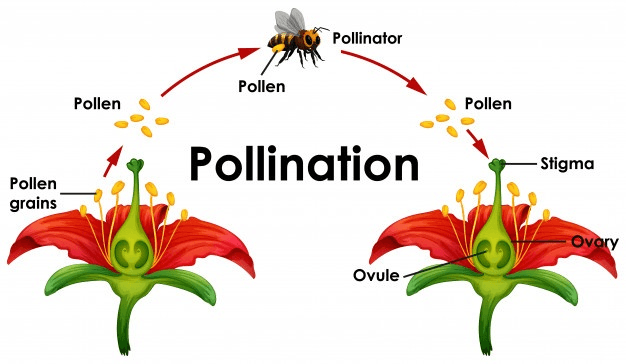
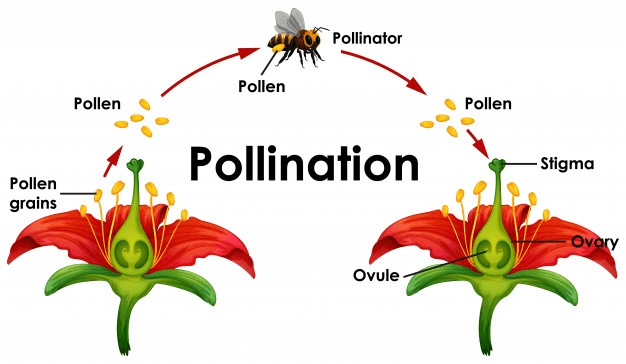
Pollination is the movement of pollen from the male anther of a flower to a receptive female stigma. When compatible pollen reaches the stigma, fertilization may follow. This process allows many flowering plants to form seeds, fruits or both.
Honey bees do not visit flowers because they are trying to pollinate them. They visit to gather nectar and pollen for their colony. Pollination is the valuable result of pollen clinging to their bodies and being deposited during later flower visits.
Visit the Lappe's Bee Supply Beekeeping Blog for additional educational guides about honey bee biology, colony health, seasonal hive management and beginning beekeeping.
What should readers know about honey bee pollination?
What is pollination?
Pollination is the transfer of pollen from a flower's anther to a receptive stigma, making fertilization and seed development possible in compatible plants.
- Anthers are the flower structures that produce pollen.
- The stigma is the receptive surface that receives compatible pollen.
- Successful pollination can lead to fertilization, seed formation and fruit development.
- Pollen may be moved by animals, wind, water or contact within a flower.
Pollination and fertilization are related, but they are not identical. Pollination describes the arrival of pollen at the stigma. Fertilization occurs later when male genetic material joins with an ovule inside the flower. A flower may receive pollen without producing a mature seed or fruit if the pollen is incompatible, weather conditions are poor or another part of the reproductive process fails.
Animal pollination connects natural ecosystems with agricultural production. The Food and Agriculture Organization of the United Nations describes pollination as a critical process for food production, livelihoods and functioning ecosystems. Honey bees are one part of a much larger pollinator community that also includes native bees, flies, beetles, butterflies, moths, birds and bats.
What are the main types of pollination?
Pollination may occur within one flower, between flowers on the same plant or between separate plants of a compatible species.
| Pollination type | What happens | Why it matters |
|---|---|---|
| Self-pollination | Pollen reaches a receptive stigma within the same flower or another flower on the same plant. | It allows reproduction without requiring pollen from a separate plant, although the exact process varies by species. |
| Cross-pollination | Pollen moves between flowers on genetically different plants of a compatible species. | It can increase genetic variation and may be required for certain plant varieties to set fruit. |
| Wind pollination | Air currents move lightweight pollen between flowers. | It is common in crops and plants such as corn, grasses and many trees. |
| Animal-assisted pollination | Bees or other animals carry pollen while visiting flowers. | It supports reproduction in many wild plants and agricultural crops. |
Not every plant depends on honey bees. Some plants self-pollinate readily, while others depend largely on wind. Certain flowers are better served by native bees or other specialized pollinators. The importance of honey bees therefore depends on the crop, cultivar, location, weather and availability of other pollinating animals.
How do honey bees pollinate flowers?
Honey bees pollinate when loose pollen clings to their branched hairs and transfers to receptive flower stigmas during later foraging visits.
- A worker locates a flower. She uses color, contrast, scent and learned information to identify a potential food source.
- The worker lands and begins feeding. She may extend her proboscis to reach nectar within the flower.
- Her body contacts the anthers. Pollen grains cling to the branched hairs covering much of her body.
- She grooms collected pollen. The worker uses her legs to move much of it toward the pollen baskets, or corbiculae, on her hind legs.
- Some pollen remains loose. Not every grain is packed into a pollen load.
- She visits another flower. Loose pollen may brush onto a receptive stigma, allowing pollination to occur.
Flower constancy makes honey bees particularly useful to many plants. A forager often continues visiting the same general kind of flower during a trip when that resource remains rewarding. Repeated visits to compatible flowers increase the chance that useful pollen will be moved within the same plant species.
Pollination is not guaranteed every time a bee lands. The bee must carry compatible pollen, contact the correct flower structures and visit while the flower is receptive. Weather, flower shape, bee behavior and plant genetics all affect the final result.
How do honey bees locate flowers?
Honey bees use color, ultraviolet patterns, scent, location and information shared by nestmates to find rewarding flower patches.
- Honey bees can detect ultraviolet light that people cannot see.
- Some flowers display ultraviolet patterns that guide bees toward pollen or nectar.
- Floral scents help bees recognize and relocate rewarding plants.
- Experienced foragers can communicate useful food locations through movement and odor cues inside the hive.
A flower must offer enough value to justify the energy required to visit it. Bees may assess nectar concentration, pollen availability, travel distance, competition and weather. A highly rewarding patch can attract repeated visits until the supply declines or a better source becomes available.
Honey bees do not see flowers exactly as people do. Their vision is sensitive to ultraviolet, blue and green wavelengths, while red appears differently to them. Their ability to learn colors, shapes, scents and locations helps colonies use changing food sources throughout the growing season.
Why do honey bees collect nectar and pollen?
Honey bees collect nectar primarily for carbohydrates and pollen for protein, fats and other nutrients needed to raise brood and sustain the colony.
| Resource | Primary colony use | How workers transport it |
|---|---|---|
| Nectar | Provides sugars used for energy and can be processed into honey. | Carried internally in the honey stomach, also called the crop. |
| Pollen | Provides protein, fats, vitamins, minerals and other nutrients. | Packed primarily into pollen baskets on the hind legs. |
| Water | Supports cooling, food preparation and colony needs. | Carried internally by water-foraging workers. |
| Plant resins | Used to make propolis for sealing and maintaining the nest. | Carried on the hind legs in a manner similar to pollen. |
After nectar reaches the colony, workers pass and process it while reducing its moisture content. Honey is a concentrated food reserve that can sustain the colony when flowers are unavailable. Pollen is processed and stored as a protein-rich food used especially by nurse bees that produce brood food.
The quality and diversity of forage matter. A landscape with only a brief flowering period may provide an abundance of food temporarily but leave colonies with limited options before or after the bloom. Diverse, overlapping bloom periods can provide a more dependable seasonal food supply.
Which members of a honey bee colony pollinate?
Adult worker bees perform pollination because they are the colony members that routinely leave the hive to collect nectar and pollen.
- Queen
- The queen is the colony's primary egg-laying female. She normally remains inside the nest and does not perform routine crop pollination.
- Workers
- Workers are female bees that clean cells, feed brood, build comb, guard the entrance, regulate the nest and forage. Foraging workers perform nearly all honey bee pollination.
- Drones
- Drones are male honey bees whose biological role is mating with virgin queens. They do not collect nectar or pollen for the colony and are not regular pollinators.
A worker's duties generally change as she ages, although colony needs can alter the schedule. Younger adults usually perform work inside the nest. Older workers are more likely to guard or forage. This flexible division of labor helps the colony respond to changing brood levels, food availability, weather and worker losses.
Learn more about the three types of honey bees in a colony, including the queen, workers and drones.
How does the honey bee life cycle support pollination?
Continuous brood development produces new adult workers that can replace aging foragers and maintain the colony's food-gathering workforce.
- Egg: The queen lays an egg in a prepared cell.
- Larva: A larva hatches and is fed by nurse bees.
- Pupa: Workers cap the cell while the developing bee transforms into an adult.
- Adult: The adult emerges and begins performing tasks that change as she matures.
A worker honey bee normally develops from egg to adult in about 21 days under typical colony conditions. Queens and drones follow different developmental schedules, and the timing of larval and pupal development varies among the three honey bee castes.
Pollination capacity depends on more than the number of adult bees. A colony must also maintain brood, nutrition, queen function and enough healthy workers to support foragers. Colonies weakened by parasites, disease, starvation or pesticide exposure may have fewer effective foragers available when crops bloom.
Why is honey bee pollination important?
Honey bee pollination supports the production of many fruits, nuts, vegetables and seeds while contributing to plant reproduction and agricultural output.
- Pollination can improve fruit or seed formation in compatible plants.
- Managed colonies can be moved to agricultural areas during bloom.
- Large colonies can place many foragers into a crop at the same time.
- Pollinated plants provide food and habitat for many other organisms.
- Pollination supports dietary variety, not simply the total volume of staple foods.
The United States Department of Agriculture reports that more than 100 crops grown in the United States depend on pollination by honey bees and other pollinators. These services are especially visible in crops that produce fruits, nuts, berries, melons and squash.
Honey bees are particularly useful in commercial agriculture because colonies can be managed, inspected and transported. Growers can bring colonies into orchards or fields when flowers are receptive. This does not make honey bees the best pollinator for every crop, but it makes them one of the most practical managed pollinators at agricultural scale.
Which crops benefit from insect pollination?
Many fruit, nut, vegetable and seed crops benefit from insect visits, although each crop has its own pollination requirements and level of dependence.
| Crop group | Examples | General role of insect pollination |
|---|---|---|
| Tree fruits | Apples, cherries, pears and plums | Compatible pollen must often move among blossoms or cultivars for good fruit set. |
| Berries | Blueberries, raspberries, blackberries and strawberries | Bee visits can support fruit set, shape, size or seed development, depending on the crop. |
| Nuts | Almonds | Commercial production depends heavily on timely transfer of compatible pollen during bloom. |
| Cucurbits | Cucumbers, pumpkins, squash and watermelons | Pollen must move from male flowers or flower structures to receptive female structures. |
| Seed crops | Some clovers, vegetables and specialty seed crops | Pollinator visits help plants produce viable seed for future planting. |
| Oilseeds and forage | Canola, sunflower and certain forage plants | The benefit varies by crop and variety, but insect visitation can support seed production. |
This table is a general guide rather than a crop-specific pollination prescription. Growers should follow current recommendations for their exact crop, cultivar, acreage and region. Colony placement, bloom stage, weather and competing flowers can all affect how bees use an agricultural field.
Are honey bees the only important pollinators?
Honey bees are important managed pollinators, but native bees and other animals also provide essential pollination in farms, gardens and natural areas.
- The United States has thousands of native bee species.
- Some native bees are especially effective on particular flowers or crops.
- Flies, beetles, butterflies, moths, birds and bats can also carry pollen.
- A diverse pollinator community can make pollination more resilient under changing conditions.
The western honey bee, Apis mellifera, is not native to North America. It became deeply connected to North American agriculture because people can keep it in movable colonies and transport those colonies to blooming crops.
Native pollinator conservation should not be treated as competition with responsible beekeeping. Habitat improvements can support many kinds of pollinators when plant selection, pesticide practices and nesting needs are considered carefully. A diverse landscape may provide a more reliable pollination system than dependence on a single species.
How do common pollinators compare?
Different pollinators serve different plants, and no single pollinating animal is the best choice for every crop, flower or environmental condition.
| Pollinator | Can it be managed? | General pollination strength | Important limitation or distinction |
|---|---|---|---|
| Honey bee | Yes, in movable colonies | Large colonies can provide many foragers for commercial crops during bloom. | Honey bees do not perform buzz pollination and are not equally effective on every flower. |
| Bumble bee | Some species can be commercially managed | Many bumble bees can forage under cooler conditions and perform buzz pollination. | Colony size and availability differ from managed honey bee colonies. |
| Mason bee | Can be encouraged or managed in nesting structures | Mason bees can be effective visitors to spring-blooming orchard flowers. | They are solitary bees and do not form large perennial colonies like honey bees. |
| Mining bee | Usually supported through habitat rather than hive management | Ground-nesting species can pollinate many wild plants and agricultural crops. | They require suitable soil and nesting habitat. |
| Hover fly | Generally not managed like bees | Adults visit many open flowers and can contribute to pollen transfer. | Pollination effectiveness varies widely among fly species and plants. |
| Butterfly or moth | Generally supported through habitat | Some species transfer pollen while feeding on nectar from suitable flowers. | Their bodies and feeding behavior differ from bees, so their effectiveness depends heavily on flower structure. |
This comparison describes broad tendencies rather than universal rules. Pollination effectiveness depends on the pollinator species, plant, flower structure, weather, season, landscape and number of visits.
What threatens honey bee colony health?
Honey bee health is shaped by interacting pressures that include Varroa mites, viruses, diseases, poor nutrition, pesticide exposure and severe weather.
Varroa mites and viruses
Varroa destructor is a parasitic mite that feeds on developing and adult honey bees and transmits damaging viruses. USDA research identifies Varroa as one of the most serious challenges facing managed honey bees. Colonies require regular monitoring and an appropriate management plan rather than assumptions based only on visual appearance.
Nutrition and habitat
Honey bees need adequate nectar and nutritionally useful pollen. Habitat loss, drought, prolonged dearths and large areas with limited floral diversity can reduce forage availability. Supplemental feed can help in certain circumstances, but it does not replace every nutritional benefit of diverse natural pollen.
Pesticide exposure
Pesticide risk depends on the product, dose, formulation, exposure route and timing. Insecticides are not the only products that can affect bees, and pesticide discussions should avoid treating every chemical as equally hazardous. Applying products according to the label and avoiding unnecessary exposure during bloom can reduce risk.
Weather and climate
Cold, rain, wind, heat and drought can limit foraging or alter flower production. Changing seasonal conditions may also affect when plants bloom and when colonies can use them. The effects vary by region and should not be reduced to one universal pattern.
Diseases and queen problems
Honey bee colonies may also face bacterial, fungal and viral diseases, including American foulbrood, European foulbrood and Nosema-related disease. Queen loss, poor queen performance and unsuccessful replacement can reduce brood production and weaken a colony's future workforce.
It is more accurate to discuss colony losses and colony health pressures than to claim that honey bees are simply disappearing everywhere. Managed colony numbers, seasonal losses and local pollinator abundance are different measurements and should not be treated as interchangeable.
How can people support honey bees and other pollinators?
People can support pollinators by growing diverse flowers, protecting habitat, following pesticide labels and encouraging responsible colony management.
Pollinator Support Checklist
- Plant for multiple seasons. Select flowers that bloom in spring, summer and fall rather than relying on one short flowering period.
- Choose locally suitable plants. Native plants can be valuable, but the best choices depend on site conditions, bloom periods and local pollinators.
- Provide variety. Different flower colors, shapes and sizes can serve different pollinating insects.
- Use pesticides carefully. Read and follow the label, avoid unnecessary treatments and consider whether pollinators are actively visiting blooms.
- Protect nesting areas. Some native bees nest in bare soil, hollow stems, dead wood or natural cavities.
- Provide clean water safely. Shallow water with landing surfaces can help prevent bees from drowning.
- Support responsible beekeeping. Healthy managed colonies require mite monitoring, nutrition, inspections and informed seasonal management.
Buying local honey can support beekeepers, but purchasing honey alone does not prove that local pollinator habitat is healthy. The strongest approach combines responsible beekeeping with thoughtful land management, diverse forage and protection for native pollinators.
Anyone planning a large pollinator planting should consult regional Extension or Natural Resources Conservation Service guidance. Plant performance, bloom timing and invasive-species concerns differ across the United States.
What do beekeepers observe during active pollination periods?
Beekeepers often see increased entrance activity and incoming pollen when colonies have suitable weather, strong populations and rewarding flowers nearby.
Why does protecting pollination matter?
Protecting pollination helps flowering plants reproduce, supports diverse food production and strengthens the ecological relationships built around those plants.
Honey bees are remarkable agricultural partners, but their importance is best understood accurately. Worker bees pollinate while gathering food, managed colonies support many crops, and healthy plants provide resources for bees and other wildlife. At the same time, honey bees are not the only pollinators, and not every plant depends on them.
Protecting pollination requires more than one solution. Beekeepers must manage colony health and Varroa mites. Growers must plan crop pollination and pesticide use carefully. Homeowners can provide season-long flowers and nesting habitat. Researchers, Extension educators and government agencies can continue improving guidance through field observations and controlled studies.
The next time you see a bee moving among flowers, remember that the visible visit is only one step in a larger biological process. When compatible pollen reaches the correct flower structure, that brief contact may help produce the next generation of plants—and the fruits, seeds and habitats that follow.
Honey Bee Pollination Glossary
These definitions explain important flower, bee and pollination terms used throughout this guide.
- Anther
- The pollen-producing structure of a flower.
- Corbicula
- A smooth, specialized area on a worker honey bee's hind leg used to carry packed pollen or plant resins. It is commonly called a pollen basket.
- Cross-pollination
- The movement of pollen between flowers on separate, genetically different plants of a compatible species.
- Flower constancy
- The tendency of a foraging bee to continue visiting the same general kind of flower during a foraging trip while that source remains rewarding.
- Forager
- An adult worker honey bee that leaves the colony to collect nectar, pollen, water or plant resins.
- Nectar
- A sugar-containing liquid produced by flowers or other plant structures and collected by honey bees as an energy source.
- Pollen
- Microscopic grains containing male reproductive material from seed-producing plants. Honey bees also collect pollen as a source of protein, fats and other nutrients.
- Pollination
- The transfer of pollen from an anther to a receptive stigma.
- Pollinator
- An animal that transfers pollen while visiting flowers. Bees, flies, beetles, butterflies, moths, birds and bats can act as pollinators.
- Self-pollination
- The transfer of pollen to a receptive stigma within the same flower or between flowers on the same plant.
- Stigma
- The receptive flower surface on which compatible pollen may germinate.
- Buzz pollination
- A behavior in which certain bees vibrate a flower to release pollen from specialized anthers. Honey bees generally do not perform buzz pollination.
Frequently Asked Questions
What is honey bee pollination?
Honey bee pollination is the transfer of pollen between flower structures as worker bees gather nectar and pollen. Successful transfer can allow fertilization and the production of seeds or fruit.
Why do honey bees pollinate flowers?
Honey bees visit flowers to collect nectar and pollen for their colony. Pollination occurs as loose pollen moves from a bee's body to the receptive stigma of a compatible flower.
Which honey bees perform pollination?
Adult worker honey bees perform the colony's foraging and pollination work. Queens remain in the colony to lay eggs, while drones do not routinely forage for nectar or pollen.
Do honey bees intentionally pollinate plants?
Honey bees forage to obtain food rather than to fertilize plants. Pollination is a valuable result of their repeated contact with flower anthers and stigmas.
What crops are pollinated by honey bees?
Honey bees contribute to the pollination of many fruit, nut, vegetable, oilseed and seed crops. Examples include almonds, apples, blueberries, cucumbers, melons, pumpkins and squash.
Are honey bees the only important pollinators?
No. Native bees, flies, beetles, butterflies, moths, birds and bats also pollinate plants. The most effective pollinator depends on the plant, location and environmental conditions.
How does pollen stick to a honey bee?
Pollen grains become caught among the bee's branched body hairs as the bee brushes against a flower's anthers. The bee may groom some pollen into baskets on her hind legs.
What threatens honey bee colony health?
Honey bee colonies can be affected by Varroa mites, viruses, diseases, poor nutrition, pesticide exposure, queen problems, severe weather and other interacting stressors.
How can homeowners help pollinators?
Homeowners can grow diverse flowers, provide blooms across multiple seasons, follow pesticide labels and preserve suitable nesting and foraging habitat for local pollinators.
Does every flower require honey bee pollination?
No. Some plants self-pollinate, some rely on wind or other animals, and some can reproduce through more than one method. Pollination requirements vary among plant species and cultivars.
Why are honey bees important to agriculture?
Honey bees can be managed in large colonies and transported to blooming crops. Their many foragers help move compatible pollen among flowers during important crop-bloom periods.
Can honey bees pollinate during cold or rainy weather?
Cold temperatures, rain and strong wind usually reduce honey bee flight and flower visitation. Exact foraging conditions vary with colony strength, sunlight, wind and local weather.
Do honey bees pollinate every flower they visit?
No. Pollination requires compatible pollen to reach a receptive stigma. A bee may visit a flower without carrying suitable pollen or contacting the structures needed for successful transfer.
What is flower constancy?
Flower constancy is the tendency of a foraging bee to continue visiting the same general kind of flower during a trip while that floral source remains rewarding.
Do drone honey bees pollinate flowers?
Drones do not collect nectar or pollen for the colony and are not regular crop pollinators. Worker honey bees perform the colony's routine foraging and pollination work.
What is buzz pollination?
Buzz pollination occurs when certain bees vibrate flowers to release pollen from specialized anthers. Bumble bees can perform this behavior, but honey bees generally cannot.
What happens when a flower is not pollinated?
A flower that requires pollination may fail to produce normal seeds or fruit when compatible pollen does not reach a receptive stigma. Results vary according to the plant species and cultivar.
How far do honey bees travel to find flowers?
Honey bee foraging distance varies with landscape, weather, colony needs and food availability. Bees generally use profitable nearby forage when available but can travel farther when necessary.
Sources and Further Reading
- Pollinators — United States Department of Agriculture.
- The Importance of Pollinators — United States Department of Agriculture.
- Carl Hayden Bee Research Center — USDA Agricultural Research Service.
- The Buzz About Bees — USDA Agricultural Research Service.
- Global Action on Pollination Services for Sustainable Agriculture — Food and Agriculture Organization of the United Nations.
- Pollination Services for Sustainable Agriculture — Food and Agriculture Organization of the United Nations.
- Pollination and Pollinators — Penn State Extension.
- Beekeeping and Honey Bees — Penn State Extension.
- Pollinator Myths — Penn State Extension.
- Bee Pollination — United States Forest Service.
FAQs
What is honey bee pollination?
Honey bee pollination is the transfer of pollen between flower structures as worker bees gather nectar and pollen. Successful transfer can allow fertilization and the production of seeds or fruit.
Why do honey bees pollinate flowers?
Honey bees visit flowers to collect nectar and pollen for their colony. Pollination occurs as loose pollen moves from a bee's body to the receptive stigma of a compatible flower.
Which honey bees perform pollination?
Adult worker honey bees perform the colony's foraging and pollination work. Queens remain in the colony to lay eggs, while drones do not routinely forage for nectar or pollen.
Do honey bees intentionally pollinate plants?
Honey bees forage to obtain food rather than to fertilize plants. Pollination is a valuable result of their repeated contact with flower anthers and stigmas.
What crops are pollinated by honey bees?
Honey bees contribute to the pollination of many fruit, nut, vegetable, oilseed and seed crops. Examples include almonds, apples, blueberries, cucumbers, melons, pumpkins and squash.
Are honey bees the only important pollinators?
No. Native bees, flies, beetles, butterflies, moths, birds and bats also pollinate plants. The most effective pollinator depends on the plant, location and environmental conditions.
How does pollen stick to a honey bee?
Pollen grains become caught among the bee's branched body hairs as the bee brushes against a flower's anthers. The bee may groom some pollen into baskets on her hind legs.
What threatens honey bee colony health?
Honey bee colonies can be affected by Varroa mites, viruses, diseases, poor nutrition, pesticide exposure, queen problems, severe weather and other interacting stressors.
How can homeowners help pollinators?
Homeowners can grow diverse flowers, provide blooms across multiple seasons, follow pesticide labels and preserve suitable nesting and foraging habitat for local pollinators.
Does every flower require honey bee pollination?
No. Some plants self-pollinate, some rely on wind or other animals, and some can reproduce through more than one method. Pollination requirements vary among plant species and cultivars.
Why are honey bees important to agriculture?
Honey bees can be managed in large colonies and transported to blooming crops. Their many foragers help move compatible pollen among flowers during important crop-bloom periods.
Can honey bees pollinate during cold or rainy weather?
Cold temperatures, rain and strong wind usually reduce honey bee flight and flower visitation. Exact foraging conditions vary with colony strength, sunlight, wind and local weather.
Do honey bees pollinate every flower they visit?
No. Pollination requires compatible pollen to reach a receptive stigma. A bee may visit a flower without carrying suitable pollen or contacting the structures needed for successful transfer.
What is flower constancy?
Flower constancy is the tendency of a foraging bee to continue visiting the same general kind of flower during a trip while that floral source remains rewarding.
Do drone honey bees pollinate flowers?
Drones do not collect nectar or pollen for the colony and are not regular crop pollinators. Worker honey bees perform the colony's routine foraging and pollination work.
What is buzz pollination?
Buzz pollination occurs when certain bees vibrate flowers to release pollen from specialized anthers. Bumble bees can perform this behavior, but honey bees generally cannot.
What happens when a flower is not pollinated?
A flower that requires pollination may fail to produce normal seeds or fruit when compatible pollen does not reach a receptive stigma. Results vary according to the plant species and cultivar.
How far do honey bees travel to find flowers?
Honey bee foraging distance varies with landscape, weather, colony needs and food availability. Bees generally use profitable nearby forage when available but can travel farther when necessary.