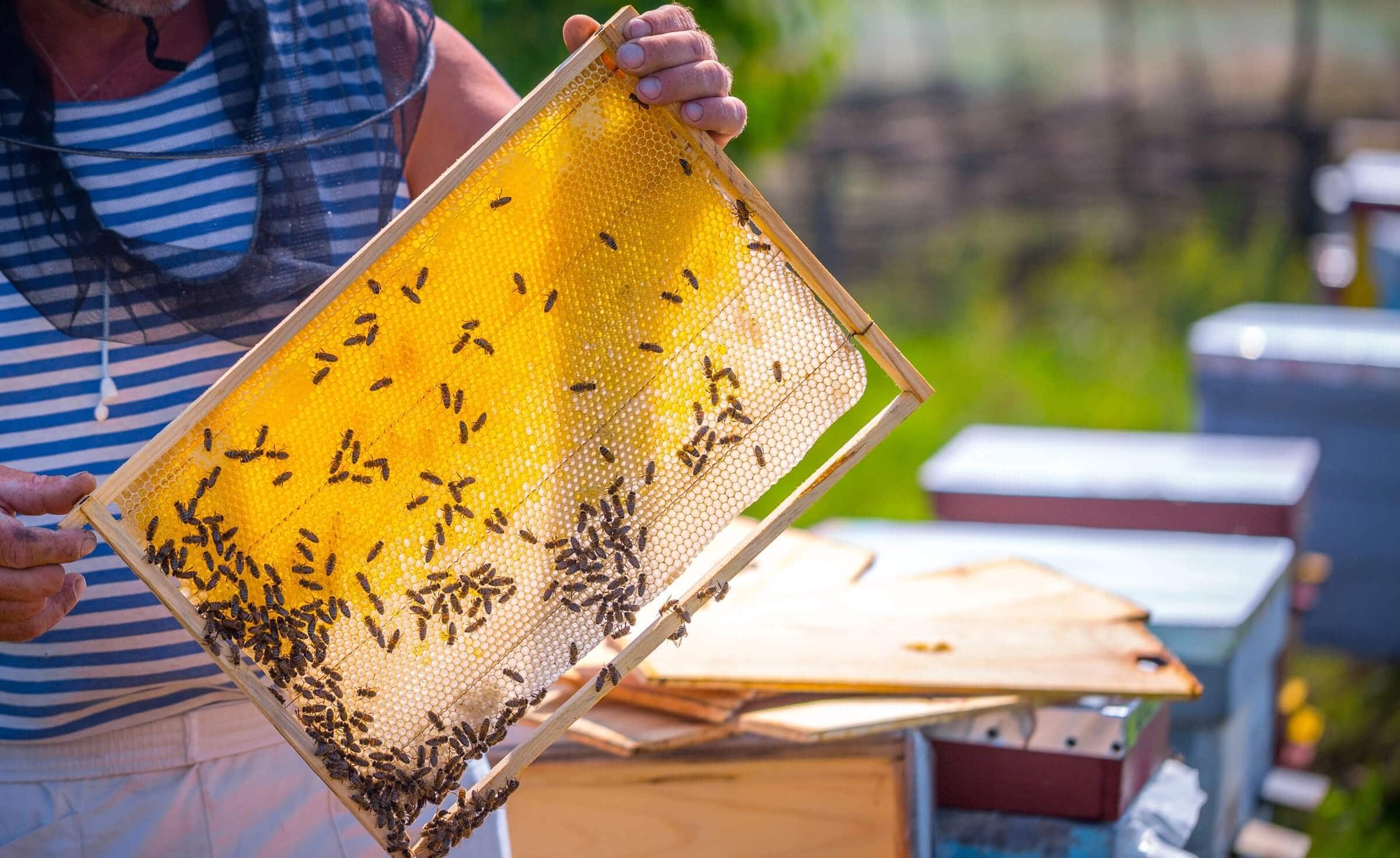
Welcome to Lappe's Bee Supply's blogs section. We are a trusted beekeeping company in the USA. We give relevant insights, seasonal guidance, and professional advice for beekeepers of all experience levels. From hive management and bee wellness to honey production and equipment guides, we have it all that you will require to thrive. Get updated, motivated, and connected with the beekeeping community through regular news from Lappe's Bee Supply.
When to Add a Honey Super to Your Hive: A Guide for Beekeepers
The Buzz About This Post
- When to Add a Honey Super to a Beehive
- What is the quick answer?
- What is a honey super?
- Why does the timing of a honey super matter?
- What signs show that a colony is ready for a honey super?
- What should be considered before adding a honey super?
- How should a honey super be added?
- Should a honey super contain foundation or drawn comb?
- When should another honey super be added?
- What common supering mistakes should be avoided?
- What is the honey-super decision checklist?
- Frequently Asked Questions
- What is a honey super?
- When should I add the first honey super?
- Should I wait until every frame is full?
- Can I add a honey super too early?
- Does adding a honey super prevent swarming?
- Should a honey super contain foundation or drawn comb?
- Where does the honey super go?
- Do I need a queen excluder?
- When should I add a second honey super?
- Why are the bees ignoring the honey super?
- Sources and Further Reading
Hive Management Guide
When to Add a Honey Super to a Beehive
Knowing when to add a honey super helps a strong colony make use of an active nectar flow without running short of storage space. A honey super provides additional comb where bees can store incoming nectar and surplus honey. Add one when a healthy colony is using most of its available comb, fresh nectar is entering the hive and local plants can support continued foraging.
Published by Lappe's Bee Supply | June 20, 2025
What is the quick answer?
Add a honey super when a strong colony needs storage space and a reliable nectar flow is beginning or already underway.
- The colony should be healthy, queenright and populous enough to occupy additional space.
- Bees should cover or actively use most of the frames in the upper occupied box.
- Fresh nectar should be visible in cells, or a major local bloom should be approaching.
- Nectar or honey should not be crowding the queen out of the central brood area.
- Another super should be added before the current honey-storage space becomes completely packed.
For many beekeepers, honey harvest is one of the most gratifying parts of managing a colony. That harvest begins well before extraction day, however. Bees need enough room to receive watery nectar, move it among cells, reduce its moisture content and store the finished honey.
Supering at the right time gives a productive colony usable storage space without asking a small or struggling colony to defend and regulate an unnecessarily large hive. Calendar dates can offer clues, but the final decision should be based on the individual colony, the condition of its comb and the nectar-producing plants within flight range.
What is a honey super?
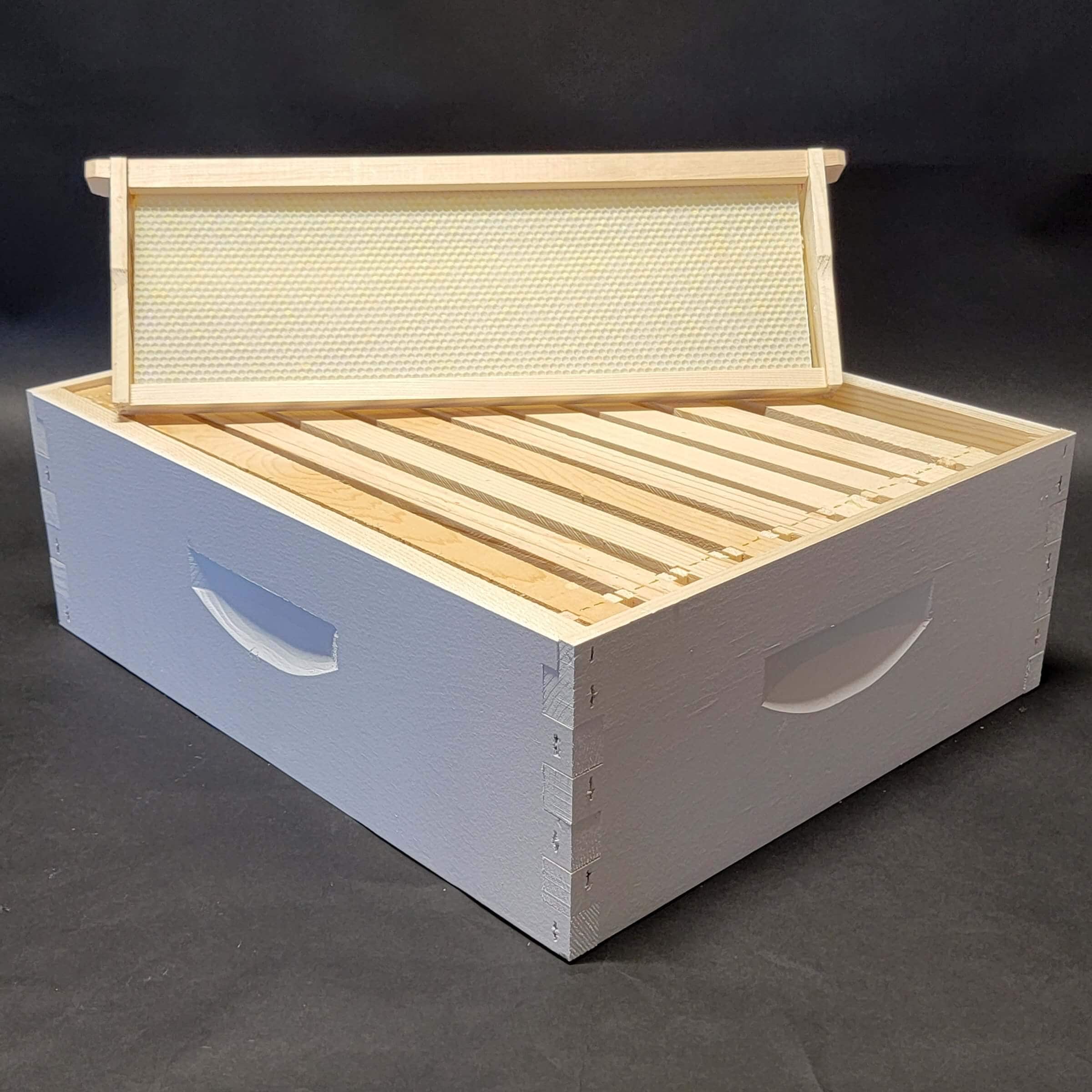
A honey super is a hive box placed above the brood area to provide comb where a colony can store surplus honey.
- “Supering” means adding one or more boxes for incoming nectar and honey storage.
- Honey supers are normally installed above the brood boxes in a Langstroth hive.
- A super may be shallow, medium or deep when it matches the hive and management system.
- The frames may contain foundation, partially drawn comb or fully drawn comb.
- The purpose of the super is honey storage, not routine brood production.
The word super refers to the box's position above the main brood area rather than to one required depth. Many beekeepers prefer shallow or medium supers because a box of capped honey can be heavy. Keeping surplus honey in dedicated supers also allows the beekeeper to inspect or harvest those frames with less disruption to the central brood nest.
A queen excluder may be installed between the brood chamber and the first honey super to restrict the queen from moving upward. It is a management option rather than a universal requirement, and its use depends on colony condition, equipment and beekeeper preference.
Why does the timing of a honey super matter?
Correct timing provides room for incoming nectar without giving a weak colony more hive space than its workers can effectively manage.
- A productive colony needs open comb before a strong nectar flow fills its remaining storage space.
- Severe congestion can contribute to swarm preparation and restrict usable brood-nest space.
- An empty super does not create a nectar flow when few nectar-producing plants are blooming.
- A weak colony may not have enough workers to draw, fill, protect and regulate extra comb.
- The correct decision combines colony condition with current and expected forage conditions.
During a strong nectar flow, foragers may return faster than nectar can be processed into finished honey. The colony uses open cells as temporary receiving and ripening space, so a box should not have to be completely capped before additional room is provided.
Adding space alone is not a complete swarm-control program. A colony that has already committed to swarming may contain charged queen cells or other advanced signs of swarm preparation. The beekeeper must inspect the brood area and address the colony's actual condition rather than assuming that an empty super will reverse the process.
What signs show that a colony is ready for a honey super?
A colony is ready when it is healthy, populous, using most available comb and receiving enough nectar to justify more storage space.
- Bees occupy most frames in the upper brood box during suitable inspection weather.
- Fresh, shiny nectar is appearing in cells throughout the occupied part of the hive.
- White wax or new comb appears along frame edges or between hive components.
- Honey and nectar are beginning to reduce open laying space around the brood nest.
- Forager traffic is strong and nectar-producing plants are blooming nearby.
- The colony has enough adult bees to occupy and protect another box.
Do not rely on one sign alone. Large numbers of bees at the entrance may reflect normal traffic, warm-weather bearding or limited ventilation rather than a need for a honey super. Likewise, capped honey in the brood boxes is not automatically a problem because colonies normally maintain food around the brood nest.
The stronger signal is a combination of restricted open comb, incoming nectar, a growing adult population and a continuing bloom. Inspect several frames from the upper occupied box and the edge of the brood nest so the decision is based on actual internal conditions.
What should be considered before adding a honey super?
Check colony health, population, usable comb and local nectar conditions before increasing the hive's volume with an additional honey super.
- Seasonal calendars are planning tools, not substitutes for opening and inspecting the hive.
- Nectar-flow timing differs among regions, elevations, weather patterns and plant communities.
- A colony with disease, queen trouble or too few workers may need corrective management first.
- Undrawn foundation requires more colony resources than frames of usable drawn comb.
- The new super and frames must match the hive body's length and width.
| Inspection finding | What it may mean | Practical response |
|---|---|---|
| Strong colony, most comb occupied and nectar arriving | The colony may soon need more storage room | Add a properly prepared honey super |
| Strong colony, but little fresh nectar and few blooms | A nectar dearth may be limiting storage activity | Monitor forage and colony stores before expanding |
| Weak population or spotty brood pattern | The colony may have a queen, nutrition, disease or mite problem | Diagnose the colony before adding unnecessary space |
| Current super is heavily occupied and filling rapidly | Storage capacity may soon become limited | Prepare and add the next super before space runs out |
| Bees ignore a newly added super | The colony may not need it, the flow may be weak or the foundation may be difficult to start | Reassess colony strength, nectar flow and comb condition |
In temperate areas, spring is often the primary buildup period, but there is no nationwide month that tells every beekeeper when to super. Fruit bloom, clover, tulip poplar, basswood, alfalfa, goldenrod and other nectar sources peak at different times. Local Extension resources, experienced nearby beekeepers and your own inspection records can help identify the major flows in your location.
How should a honey super be added?
Inspect the colony first, prepare matching equipment and place the honey super directly above the brood boxes without leaving frame gaps.
- Confirm colony health. Look for a laying queen or evidence of a queen, a suitable brood pattern, adequate adult bees and no urgent pest or disease issue.
- Check available space. Determine whether bees are using most of the existing frames and whether incoming nectar is reducing open comb.
- Confirm forage conditions. Look for fresh nectar, active foraging and a current or approaching bloom that can support storage.
- Prepare the equipment. Use a box and full set of correctly spaced frames that match the hive.
- Open the hive calmly. Use protective clothing, a smoker and a hive tool according to normal safe inspection practices.
- Install the super. Place it above the brood boxes and below the covers. Add a queen excluder only when it is part of your management plan.
- Record and monitor. Note the date, bloom conditions and frame use so you can judge when another inspection or super may be needed.
Frames should be pushed together correctly in the center of the box unless a specialty spacing system is being used. Irregular spacing can encourage burr comb or comb that extends beyond the intended frame boundaries.
Avoid leaving a partly assembled box or an incorrect number of standard frames in the hive. The colony needs consistent spacing so it can build manageable comb that can later be inspected and extracted.
Should a honey super contain foundation or drawn comb?
Drawn comb gives bees immediate storage cells, while foundation must be drawn into comb before it can hold substantial incoming nectar.
- Drawn comb is immediately available for nectar receiving, ripening and storage.
- Foundation provides a guide but still requires wax construction by the colony.
- Strong colonies are more likely to draw foundation during an active nectar flow.
- A super of foundation may be ignored when the colony lacks nectar, population or expansion pressure.
- Clean, properly stored drawn comb is a valuable resource for future honey flows.
Foundation and drawn comb are different. Foundation is a flat sheet or molded base that guides comb construction, while drawn comb contains completed wax cells built outward from the foundation or frame.
When only foundation is available, place the super on a colony that is genuinely strong and experiencing a nectar flow. Giving a small colony a large box of foundation does not guarantee that bees will move upward or build it promptly.
When should another honey super be added?
Add another super while bees are actively occupying and filling the current one, before usable storage space becomes severely restricted.
- Do not wait for every cell in the existing super to be capped during a heavy nectar flow.
- The rate at which frames are filling matters more than a rigid nationwide percentage.
- A strong nectar flow may require shorter inspection intervals than a light or interrupted flow.
- Drawn comb can be added later than foundation because bees can use it immediately.
- Additional boxes should match the colony's actual storage demand and workforce.
Some regional guides use frame-count rules, such as adding a super when seven frames are full in a ten-frame box. Such numbers can be useful local operating guidelines, but they should not be presented as universal biological thresholds. Equipment size, comb condition, colony population and the intensity of the nectar flow all affect the decision.
Inspect often enough to understand the filling rate without opening the hive unnecessarily. A colony that has changed little during a nectar dearth should not be managed the same way as one rapidly whitening comb and filling open cells during a major bloom.
What common supering mistakes should be avoided?
Avoid supering by calendar alone, adding excessive empty space, overlooking colony health and waiting until all usable comb is packed.
- Using a fixed date: Bloom timing and colony development change with location, weather and season.
- Supering a weak colony: More boxes do not correct queen failure, disease, high mite levels or inadequate population.
- Waiting too long: A strong nectar flow can fill open comb quickly and leave the brood area congested.
- Adding too many boxes: Excess volume can leave a colony with more comb than it can occupy or protect.
- Confusing bearding with congestion: Bees may gather outside because of heat, humidity or ventilation conditions.
- Ignoring frame spacing: Missing or poorly spaced frames encourage irregular comb construction.
- Expecting foundation to perform like drawn comb: Bees must invest resources before foundation becomes usable storage.
Honey production depends on more than the number of boxes on a hive. Colony population, queen performance, food resources, weather, pest management and available drawn comb all influence the result. Supering works best as one part of a complete seasonal management plan.
What is the honey-super decision checklist?
Add a super when colony health, bee population, existing comb use and nectar conditions all support immediate or near-term expansion.
Before installing the super, confirm:
- ☐ The colony has a queen or clear evidence that it is queenright.
- ☐ The brood pattern and adult population appear suitable for the season.
- ☐ Most existing comb is occupied or actively used.
- ☐ Fresh nectar is entering the hive or a dependable bloom is beginning.
- ☐ The brood area is not being severely restricted by nectar storage.
- ☐ No urgent disease, mite, pest or queen problem needs attention first.
- ☐ The new box and frames match the hive dimensions.
- ☐ The super contains the correct number of properly spaced frames.
- ☐ You have a plan for follow-up inspection during the nectar flow.
- ☐ The colony needs the space rather than receiving it solely because of a calendar date.
No two colonies develop at exactly the same rate. Even hives standing beside one another may differ in population, brood production, forage use and storage demand. Let the condition of each colony guide the decision, and keep written records so your timing becomes more accurate from season to season.
Frequently Asked Questions
What is a honey super?
A honey super is a hive box placed above the brood area to provide frames where a colony can store surplus honey.
When should I add the first honey super?
Add the first honey super when a healthy colony occupies most of its available comb and an active or approaching nectar flow can support expansion.
Should I wait until every frame is full?
No. Waiting until every frame is completely full may leave too little storage space during a strong nectar flow.
Can I add a honey super too early?
Yes. A weak colony may not have enough bees or incoming nectar to occupy and protect unnecessary additional space.
Does adding a honey super prevent swarming?
Adding space can reduce congestion, but it cannot reverse advanced swarm preparation or correct every cause of swarming.
Should a honey super contain foundation or drawn comb?
Either can be used, but drawn comb provides immediate storage space while foundation requires bees to build comb before storing substantial nectar.
Where does the honey super go?
In a standard Langstroth hive, the honey super is placed above the brood boxes and below the inner and outer covers.
Do I need a queen excluder?
A queen excluder is optional management equipment used to restrict the queen from entering honey supers, but beekeepers differ in how and when they use one.
When should I add a second honey super?
Add another super while the current super is actively being occupied and filled, before the colony runs out of usable storage space.
Why are the bees ignoring the honey super?
Bees may ignore a super when the colony is weak, the nectar flow is limited, the brood area still has room or the new foundation is unattractive.
Sources and Further Reading
The management guidance in this article is supported by university Extension resources. Regional recommendations may differ because nectar flows, colony development and seasonal conditions vary.
- Maximizing Honey Production, Mississippi State University Extension
- Colony Growth and Seasonal Management of Honey Bees, Mississippi State University Extension
- Honey Bee Management Throughout the Seasons, Penn State Extension
- Beekeeping Basics, Penn State Extension
- Beekeeping Annual Calendar, Utah State University Extension
- Beekeeping Education Resources, Utah State University Extension