Welcome to Lappe's Bee Supply's blogs section. We are a trusted beekeeping company in the USA. We give relevant insights, seasonal guidance, and professional advice for beekeepers of all experience levels. From hive management and bee wellness to honey production and equipment guides, we have it all that you will require to thrive. Get updated, motivated, and connected with the beekeeping community through regular news from Lappe's Bee Supply.
Foundationless Beekeeping: Embracing a Natural Approach to Apiculture
The Buzz About This Post
- What should beekeepers know about foundationless beekeeping?
- What does this foundationless beekeeping guide cover?
- What is foundationless beekeeping?
- How does a foundationless frame work?
- How does foundationless comb compare with wax or plastic foundation?
- What are the benefits of foundationless?
- What are the disadvantages of foundationless?
- Does foundationless improve colony health?
- How do you start foundationless frame?
- How can beekeepers prevent cross-comb?
- How should foundationless comb be inspected?
- Can foundationless comb be used in a honey extractor?
- Is foundationless suitable for beginners?
- What is the best way to decide whether foundationless is right for a hive?
- What are the most common questions?
- What is foundationless beekeeping?
- Do foundationless frames need a starter strip?
- Why do bees build cross-comb?
- Can foundationless frames be used in a Langstroth hive?
- Does foundationless comb control Varroa mites?
- Does foundationless increase genetic diversity?
- Is this beeswax free from pesticides?
- Can this honeycomb be extracted?
- How do you repair cross-comb?
- Is foundationless better for honey bees?
- Which sources support this way of beekeeping?
- FAQs
Foundationless Beekeeping: Benefits, Challenges and How to Start
Published: June 17, 2025
Last updated: July 28, 2026
Author: Lappe's Bee Supply Team
Reviewed by: Lappe's Bee Supply Beekeeping Team
Editorial standards: This guide combines practical beekeeping experience with information from university extension programs, government research and established apiculture references. Claims that are not consistently supported by research are identified and explained carefully.
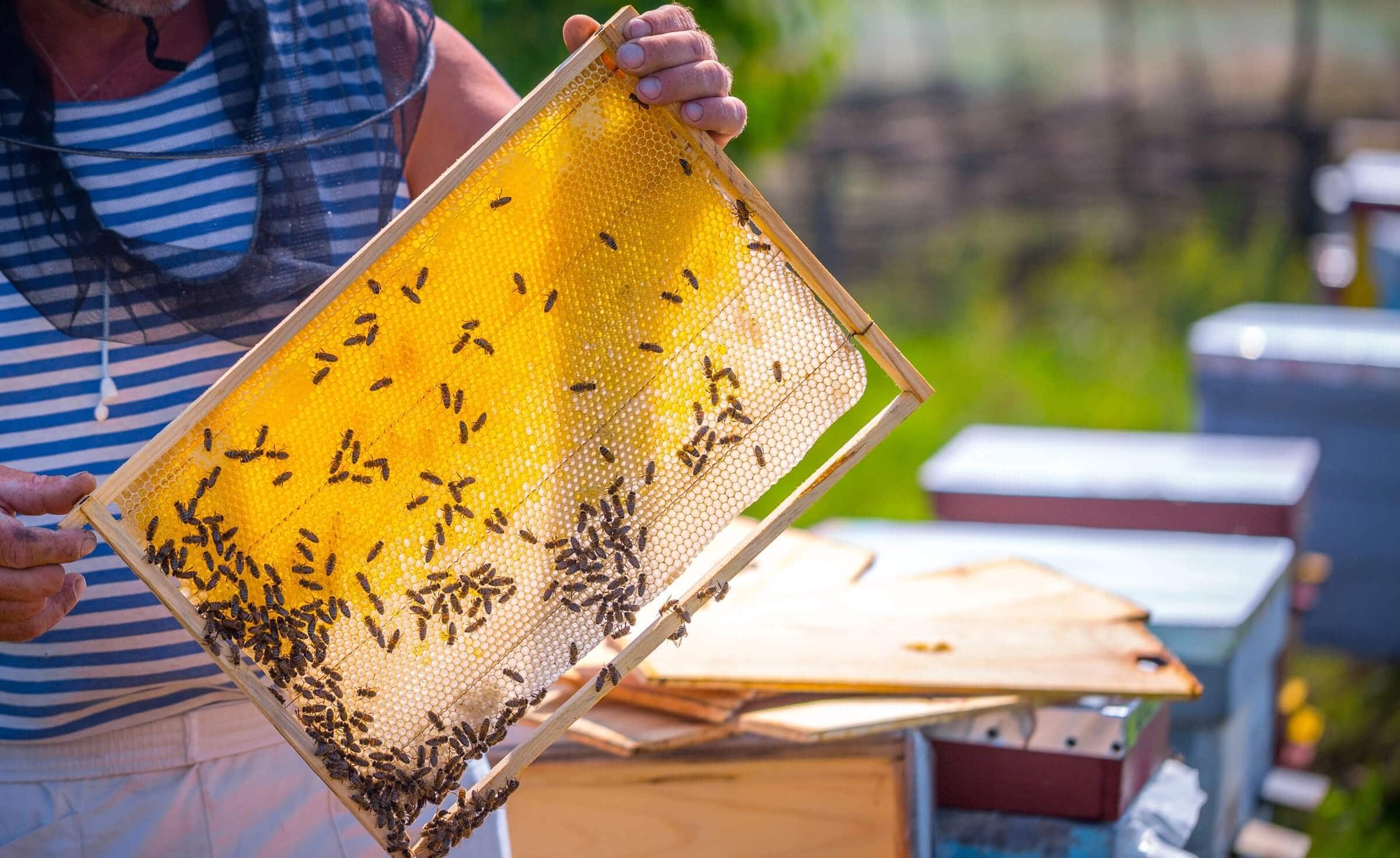
Foundationless beekeeping is a hive-management method in which honey bees build comb without full sheets of wax or plastic foundation. The beekeeper normally provides an empty frame, top bar, starter strip or wooden comb guide that shows the bees where to begin building.
This approach gives the colony greater control over the placement and size of its comb cells. It can also reduce the amount of manufactured foundation introduced into the hive. However, foundationless equipment is not maintenance-free or automatically healthier. The beekeeper must keep the hive level, guide the bees toward straight construction and handle newly drawn comb with exceptional care.
This guide explains how foundationless frames work, what benefits they may provide, which claims require caution, and how to manage the most common problems.
What should beekeepers know about foundationless beekeeping?
Foundationless beekeeping lets bees build their own comb, but successful management depends on straight guides, level equipment and careful handling.
- Foundationless frames contain no full sheet of wax or plastic foundation.
- A wooden guide or wax starter strip helps bees begin comb in the correct location.
- New natural comb is fragile until it is fully attached and reinforced.
- Cross-comb is easier to correct when discovered during early construction.
- Foundationless equipment does not replace routine Varroa mite monitoring or colony-health management.
- Comb-building requires wax production and dependable access to nectar or supplemental feed.
- Foundationless management can be used in Langstroth, top-bar and other movable-comb hives.
What is foundationless beekeeping?
Foundationless uses movable frames or top bars without full foundation sheets, allowing honey bees to construct comb from wax they produce.
- The bees determine the arrangement of worker, drone and food-storage cells.
- The beekeeper may provide a narrow wax strip or a wooden starting guide.
- The frames must remain removable to permit normal inspections.
- Foundationless does not mean unmanaged or inspection-free beekeeping.
Conventional Langstroth frames commonly hold wax or plastic foundation embossed with repeating cell patterns. Foundation gives bees a broad construction surface and helps encourage straight, evenly positioned comb. A foundationless frame removes that full sheet while retaining the surrounding wooden frame.
Honey bees can build comb without manufactured foundation because comb construction is a natural colony behavior. The beekeeper's challenge is not persuading bees to produce wax; it is directing that construction so each frame remains separate, straight and removable.
How does a foundationless frame work?
A foundationless frame uses a centered top guide to direct the first line of wax so bees build one removable comb inside the frame.
- A triangular wooden guide can be built into or attached beneath the top bar.
- A narrow strip of wax foundation may serve as a starter strip.
- Melted beeswax can be applied to a wooden guide, but wax is not always necessary.
- Properly spaced frames encourage comb to remain centered.
Bees generally begin at the highest point available and build downward. A centered guide creates a clear starting line beneath the top bar. As the comb grows, bees normally attach it to the top bar and may later connect portions to the side or bottom bars.
Lappe's Field Note: A starter guide is more reliable than a completely flat top bar. Giving the colony one clear construction line can reduce corrective work during the first inspections.
Fishing line, wire or other horizontal supports are sometimes installed across deeper frames. Support does not guide the initial direction of the comb, but it may help reinforce comb after bees build around it.
How does foundationless comb compare with wax or plastic foundation?
Foundation improves comb alignment and handling, while foundationless frames allow natural construction but require closer supervision during early comb development.
| Feature | Foundationless Frames | Wax Foundation | Plastic Foundation |
|---|---|---|---|
| Comb guidance | Starter guide directs construction | Full embossed sheet guides construction | Rigid embossed surface guides construction |
| Cross-comb risk | Higher during initial construction | Usually lower when installed correctly | Usually lower when frames are properly spaced |
| New-comb stability | Fragile until attached and reinforced | Wax sheet and wire may add support | Rigid plastic core provides support |
| Natural cell placement | Colony determines the pattern | Pattern is largely directed by the foundation | Pattern is largely directed by the foundation |
| Extractor use | Possible after comb is mature and well attached | Commonly extracted | Well suited to repeated extraction |
| Initial beekeeper oversight | High | Moderate | Moderate |
| Comb replacement | Bees must build a complete new comb | Bees draw wax over the installed sheet | Bees draw wax over the plastic base |
No frame system is best for every beekeeper. Conventional foundation can make inspections and extraction more predictable. Foundationless equipment may appeal to beekeepers who want bees to construct the complete comb pattern or who want to limit their use of purchased foundation.
What are the benefits of foundationless?
Foundationless frames allow colony-built comb, reduce reliance on purchased foundation and let bees allocate worker, drone and storage cells according to current needs.
- Bees construct the full comb from newly secreted wax.
- The colony can vary cell use across the comb.
- The beekeeper buys less foundation for each new frame.
- Fresh comb can be cut for comb honey or harvested beeswax.
- Foundationless frames can be integrated gradually into an established hive.
The most defensible benefit is freedom of comb construction. Bees can build worker cells, larger drone cells, transition cells and storage areas without following one uniformly embossed pattern. This does not increase the colony's genetic diversity; genetics are determined by the queen, drones and mating history.
Foundationless management also avoids adding a full sheet of purchased wax foundation. That may be desirable when the origin or treatment history of purchased wax is unknown. It does not guarantee residue-free comb, however, because contaminants can enter a colony through forage, in-hive treatments, reused equipment and other environmental pathways.
What are the disadvantages of foundationless?
Foundationless increases the risk of cross-comb, fragile new wax and difficult inspections when construction is not corrected early.
- Bees may build across two or more frames.
- Fresh comb can bend or break during warm weather.
- Poorly drawn frames can prevent normal hive inspections.
- The beekeeper may need to cut and reposition incorrect comb.
- Colonies require sufficient food and wax-producing workers to draw new comb.
- Radial extraction may damage weak or incompletely attached comb.
Cross-comb is the most common management concern. Once one comb is angled away from the frame guide, neighboring combs may follow the same line. Delayed correction can produce several connected frames that cannot be removed separately.
New comb also lacks the strength of older comb that has held brood and developed reinforcing cocoons. Warm, nectar-filled comb can tear under its own weight if a frame is tilted flat. Careful frame orientation is therefore essential.
Common beginner mistake: Turning a new foundationless frame horizontally like a steering wheel can place the full weight of the comb against its attachment point and cause it to collapse.
Does foundationless improve colony health?
Foundationless comb changes how bees build inside the hive, but it has not been proven to prevent Varroa mites, disease, swarming or colony loss.
- Foundationless frames are not a substitute for Varroa mite monitoring.
- Natural cell construction does not create genetic diversity.
- Swarming is influenced by congestion, queen condition, genetics, forage and season.
- Fresh wax is not automatically free from environmental contaminants.
- Colony health depends on nutrition, pest pressure, pathogens, weather and management.
Foundationless is sometimes presented as a treatment for Varroa mites or a guaranteed path to stronger colonies. Those conclusions go beyond the available evidence. Small-cell or naturally sized comb should not be used as the colony's only mite-control strategy.
Beekeepers should continue to measure mite levels and use an integrated pest-management plan appropriate for their region and colony conditions. According to Penn State Extension's integrated Varroa mite management guidance, cultural controls should be used as part of a broader management program rather than treated as a stand-alone guarantee.
USDA Agricultural Research Service studies have documented pesticide residues in honeycomb and beeswax. Removing commercial foundation eliminates one possible input, but it cannot prevent residues that arrive through forage, previous comb, contaminated equipment or hive treatments. Research also shows that pesticide residues incorporated into older beeswax may be difficult to remove completely. Review the USDA Agricultural Research Service study of ozone treatment and pesticide residues in honeycomb.
How do you start foundationless frame?
Start with level equipment, centered comb guides and frequent early inspections, placing empty frames beside straight drawn comb whenever practical.
- Choose a movable-comb hive. Langstroth and top-bar hives can both support foundationless management when each comb remains individually removable.
- Prepare a visible guide. Use a triangular wooden edge, grooved top bar or narrow starter strip centered beneath the top bar.
- Level the hive. Keep the hive level from side to side so gravity helps the bees build vertically within each frame.
- Use straight comb as a guide. Place a foundationless frame between two straight, fully drawn combs when colony conditions and management needs allow.
- Maintain correct frame spacing. Push brood-box frames tightly together and leave excess space near the outer walls rather than between individual frames.
- Inspect early construction. Check developing comb before a small alignment problem spreads across several frames.
- Correct mistakes promptly. Cut misaligned soft comb, reposition it within the frame and secure it until the bees reattach it.
- Expand gradually. Add manageable amounts of empty space rather than asking a small colony to control a large empty box.
Comb production is strongest when a colony has wax-producing workers, warm weather and incoming food. A colony experiencing cold weather, population loss or a nectar dearth may draw little comb regardless of the frame system.
Lappe's Field Note: A single empty foundationless frame between two straight drawn combs is usually easier for bees to align than an entire empty box without reference comb.
How can beekeepers prevent cross-comb?
Prevent cross-comb by leveling the hive, centering each guide, keeping frames tightly spaced and correcting angled wax before it hardens.
- Confirm that each guide runs straight through the center of the frame.
- Keep the hive level from left to right.
- Avoid leaving irregular gaps between frames.
- Place empty frames next to straight comb whenever possible.
- Inspect active comb construction more frequently than mature comb.
- Correct the first angled section rather than waiting for a complete frame.
A hive does not necessarily need to be perfectly level from front to back. A slight forward tilt can help rainwater drain away from the entrance. Side-to-side level is especially important because comb hangs vertically in response to gravity.
If a small section begins at the wrong angle, gently move it beneath the correct guide while the wax remains pliable. Larger sections may need to be cut free and secured inside the frame with rubber bands. Bees can attach the repaired comb to the frame and may later remove or work around the bands.
How should foundationless comb be inspected?
Keep foundationless frames vertical, rotate them along their supported plane and avoid sudden movements that place sideways pressure on warm new comb.
- Loosen the frame carefully without twisting the top bar.
- Lift the frame straight upward until the comb clears neighboring frames.
- Keep the frame upright while viewing the first side.
- Rotate the frame around a vertical axis to view the second side.
- Avoid holding a heavy new comb flat above the hive.
- Return the frame to its original position and spacing.
Comb that has held several brood cycles is generally more rigid than pale, newly drawn wax because silk from developing bees remains within the cells. However, older brood comb should still be replaced periodically as part of responsible comb management.
Honey-filled comb can still be heavy, particularly during hot weather. Inspection frequency should reflect colony conditions rather than a rigid schedule. During rapid comb construction, a beekeeper may need to check alignment sooner than during a dearth when little wax is being drawn.
Every inspection should also evaluate brood pattern, food stores, queen status, disease signs and pest levels.
Can foundationless comb be used in a honey extractor?
Mature foundationless comb can be extracted when fully attached, adequately reinforced and spun gently, but weak new comb may break under centrifugal force.
- Inspect each comb for complete attachment before extraction.
- Begin at a low extractor speed.
- Reverse tangential frames gradually rather than emptying one side at full speed.
- Support wires may improve durability in deep frames.
- Cut-comb or crush-and-strain harvesting avoids centrifugal stress.
Foundationless comb does not automatically require crush-and-strain harvesting. Many well-drawn combs can be reused after extraction. Success depends on the comb's age, attachment, depth, temperature, honey weight and extractor design.
Uncapped honey should not be judged by appearance alone. Capping is useful evidence that bees have reduced the moisture level, but partially uncapped honey may also be ripe. When moisture is uncertain, test representative honey with a properly calibrated refractometer before storing or bottling it.
Harvesting tip: Start the extractor slowly and increase speed only after a portion of the honey has left both sides of the comb.
Is foundationless suitable for beginners?
Beginners can use foundationless frames successfully, but they must recognize developing cross-comb and confidently handle fragile new wax during inspections.
Foundationless may be a good fit for a beginner who:
- Can inspect the colony regularly during active comb construction.
- Has access to a local mentor or experienced bee club.
- Understands how to cut and reposition incorrect comb.
- Wants to learn how bees naturally organize worker, drone and storage cells.
- Is comfortable accepting some damaged or irregular comb while learning.
Conventional foundation may be a better starting choice for a beekeeper who:
- Cannot inspect frequently during the colony's first weeks.
- Plans to rely heavily on mechanical extraction.
- Needs highly interchangeable, uniform combs.
- Is not comfortable repairing cross-comb.
- Must transport hives frequently over rough roads.
A mixed system is often the most forgiving introduction. A beekeeper can begin with mostly straight foundation-supported comb and add selected foundationless frames between drawn combs. This approach allows the colony to build complete natural comb while reducing the risk of an entire box being drawn at the wrong angle.
What is the best way to decide whether foundationless is right for a hive?
Choose foundationless frames when their natural-comb benefits match your goals and you can provide the inspection time needed to keep construction removable.
Foundationless is a management choice, not a requirement for responsible or natural-minded beekeeping. It provides an opportunity to observe complete comb construction and reduce dependence on purchased foundation. It also places more responsibility on the beekeeper during the earliest and most fragile stage of comb development.
The best system is the one that allows you to inspect every frame, monitor colony health, manage Varroa mites, protect food stores and respond to seasonal needs. For some beekeepers, that will be a completely foundationless hive. For others, it will be conventional foundation or a combination of both systems.
Start with a limited number of foundationless frames, keep careful notes and evaluate the results under your own climate, forage and management conditions. The colony's response will provide more useful guidance than treating one frame style as universally superior.
What are the most common questions?
What is foundationless beekeeping?
Foundationless uses frames or top bars without full wax or plastic foundation sheets. Bees construct the complete comb from wax they produce.
Do foundationless frames need a starter strip?
A starter strip is not always required, but a centered wax strip or wooden guide helps direct straight comb construction beneath the top bar.
Why do bees build cross-comb?
Cross-comb develops when bees build at an angle across frames, often because guides are unclear, frames are unevenly spaced or the hive is not level.
Can foundationless frames be used in a Langstroth hive?
Yes. Standard Langstroth frames can be used without full foundation when they include a centered guide and remain properly spaced.
Does foundationless comb control Varroa mites?
Foundationless comb has not been proven to control Varroa mites reliably. Colonies still require regular mite monitoring and an appropriate management plan.
Does foundationless increase genetic diversity?
No. Foundationless comb may contain varied cell sizes, but colony genetics are determined by the queen, the drones she mates with and subsequent reproduction.
Is this beeswax free from pesticides?
Not necessarily. Bees produce the wax themselves, but residues can still enter through forage, hive treatments, reused comb and environmental exposure.
Can this honeycomb be extracted?
Yes. Mature, well-attached foundationless comb can often be extracted successfully when the beekeeper begins slowly and avoids placing excessive force on the wax.
How do you repair cross-comb?
Cut the misaligned section, reposition it beneath the correct frame guide and secure it with rubber bands until the bees attach it to the frame.
Is foundationless better for honey bees?
Foundationless equipment allows natural comb construction, but research has not established that it is universally healthier than properly managed foundation-supported equipment.
Which sources support this way of beekeeping?
- Beekeeping Basics — Penn State Extension
- Beekeeping and Honey Bees — Penn State Extension
- Honey Bee Management Throughout the Seasons — Penn State Extension
- Methods to Control Varroa Mites: An Integrated Pest Management Approach — Penn State Extension
- Honey Bee Health and Colony Collapse Disorder Research — USDA Agricultural Research Service
- Pesticide Drift May Endanger Pollinators — USDA Agricultural Research Service
- Ozone Treatment of Pesticide Residues in Honeycomb — USDA Agricultural Research Service
FAQs
What is foundationless beekeeping?
Foundationless beekeeping uses frames or top bars without full wax or plastic foundation sheets. Bees construct the complete comb from wax they produce.
Do foundationless frames need a starter strip?
A starter strip is not always required, but a centered wax strip or wooden guide helps direct straight comb construction beneath the top bar.
Why do bees build cross-comb?
Cross-comb develops when bees build at an angle across frames, often because guides are unclear, frames are unevenly spaced or the hive is not level.
Can foundationless frames be used in a Langstroth hive?
Yes. Standard Langstroth frames can be used without full foundation when they include a centered guide and remain properly spaced.
Does foundationless comb control Varroa mites?
Foundationless comb has not been proven to control Varroa mites reliably. Colonies still require regular mite monitoring and an appropriate management plan.
Does foundationless beekeeping increase genetic diversity?
No. Foundationless comb may contain varied cell sizes, but colony genetics are determined by the queen, the drones she mates with and subsequent reproduction.
Is foundationless beeswax free from pesticides?
Not necessarily. Bees produce the wax themselves, but residues can still enter through forage, hive treatments, reused comb and environmental exposure.
Can foundationless honeycomb be extracted?
Yes. Mature, well-attached foundationless comb can often be extracted successfully when the beekeeper begins slowly and avoids placing excessive force on the wax.
How do you repair cross-comb?
Cut the misaligned section, reposition it beneath the correct frame guide and secure it with rubber bands until the bees attach it to the frame.
Is foundationless beekeeping better for honey bees?
Foundationless equipment allows natural comb construction, but research has not established that it is universally healthier than properly managed foundation-supported equipment.