Welcome to Lappe's Bee Supply's blogs section. We are a trusted beekeeping company in the USA. We give relevant insights, seasonal guidance, and professional advice for beekeepers of all experience levels. From hive management and bee wellness to honey production and equipment guides, we have it all that you will require to thrive. Get updated, motivated, and connected with the beekeeping community through regular news from Lappe's Bee Supply.
Why Honey Bees Kill Their Queen: An Exploration of Colony Dynamics
The Buzz About This Post
- What should beekeepers know first?
- What will this guide cover?
- Why do honey bees kill their queen?
- What is a queen bee?
- What are the main types of bees in a honey bee colony?
- How do worker bees usually replace a queen?
- Why do workers kill or remove a queen?
- How do queen pheromones affect queen replacement?
- Is queen killing the same as supersedure?
- How is supersedure different from swarming?
- How can beekeepers tell if a colony is replacing its queen?
- What can go wrong during queen replacement?
- Should beekeepers destroy queen cells?
- When should a beekeeper consider buying or introducing a new queen?
- What questions do beekeepers ask about queen replacement?
- Which sources support this guide?
- FAQs
Why Do Honey Bees Kill Their Queen?Author: Lappe’s Bee Supply Team Published: May 19, 2025 Last Updated: July 9, 2026 Reviewed by: Lappe’s Bee Supply Beekeeping Team Editorial Note: This guide is written for beginning and intermediate beekeepers. Biological claims are checked against extension, USDA, university, and peer-reviewed sources when available. Lappe’s Bee Supply field notes are labeled separately from published research. Quick Summary: Honey bees sometimes kill, remove, or replace their queen, but the behavior is not random. In most cases, it is part of a colony survival process called queen replacement or supersedure. Worker bees monitor the queen’s egg laying, pheromone signal, brood pattern, health, and overall fit for the colony. When the queen no longer supports the hive well, the workers may raise a new queen and remove the old one. This guide explains why honey bees may kill their queen, how queen replacement works, what signs beekeepers should watch for, and when a colony needs help. |

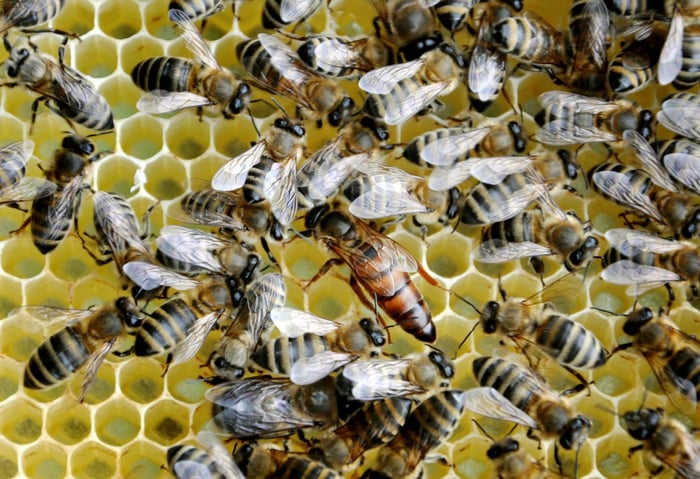
Honey bee colonies monitor queen performance through brood production, pheromone signals, and colony behavior.
What should beekeepers know first?Key Takeaways
|
What will this guide cover?
Why do honey bees kill their queen?
Worker bees may replace or kill a queen when her egg laying, pheromone signal, health, or mating quality no longer supports colony survival. |
- Queen killing is usually part of queen replacement, not random aggression.
- The biological process is often called supersedure.
- Workers may respond to poor brood pattern, weak queen signal, disease, injury, or mating failure.
- A queen may be killed, removed, ignored, or gradually replaced.
- Some colonies temporarily tolerate both an old queen and a daughter queen.
Honey bees do not kill their queen out of anger or betrayal. A honey bee colony works as a living system, and worker bees respond to signals that affect colony survival. If the queen’s egg laying slows, her pheromone signal changes, or her brood pattern becomes unreliable, workers may begin raising a replacement queen. The old queen may later disappear, be balled by workers, be killed by a new queen, or simply be removed from the colony.
What is a queen bee?
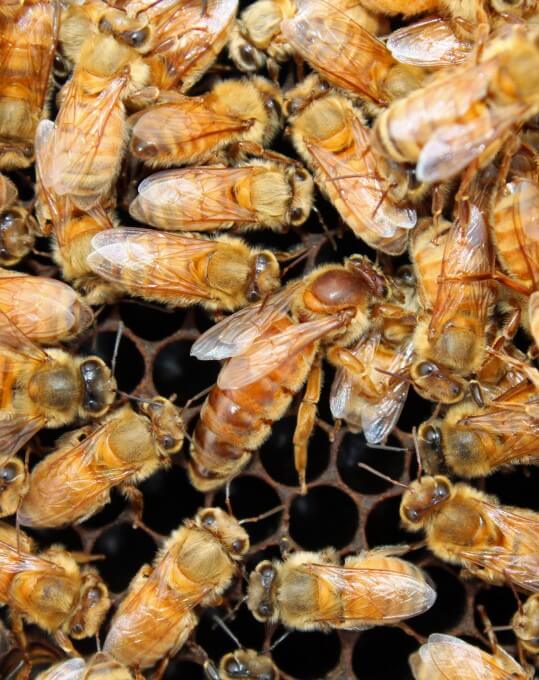
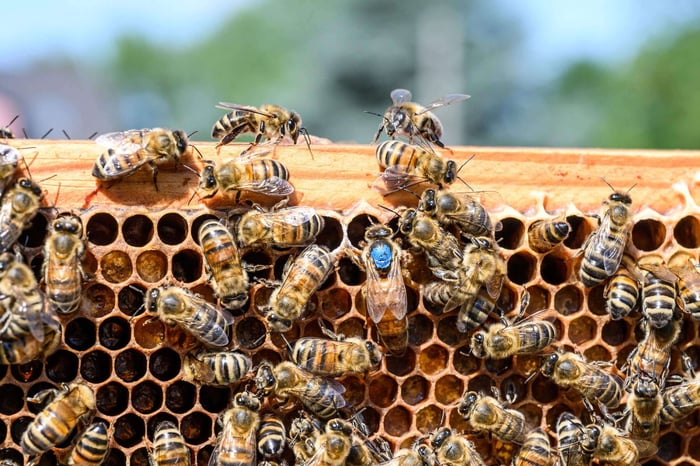
A queen bee is the colony’s main fertile female, laying eggs and producing pheromones that help workers coordinate hive behavior. |
- A queen bee is the primary egg-laying female in a honey bee colony.
- Her main jobs are reproduction and chemical communication.
- A healthy queen supports brood production and colony stability.
- Worker bees feed, groom, and monitor the queen through retinue behavior.
- Queen quality affects hive strength, population growth, and requeening decisions.
The queen is not a ruler in the human sense. She is the colony’s main reproductive bee and one of its most important sources of chemical communication. Her pheromones help worker bees recognize that a functioning queen is present. Her egg laying helps maintain the colony population. When either of those functions weakens, workers may begin behaving as though the colony needs a replacement.
What are the main types of bees in a honey bee colony?
A honey bee colony has one queen, many worker bees, and seasonal drones, with each caste serving a different survival role. |
| Bee Type | Main Role | Why It Matters |
|---|---|---|
| Queen | Lays eggs and produces queen pheromones. | Her performance shapes colony growth, stability, and queen replacement decisions. |
| Worker bees | Raise brood, forage, clean, guard, build comb, and manage the hive. | Workers monitor queen quality and raise replacement queens when needed. |
| Drones | Mate with virgin queens during mating flights. | Drone availability can affect whether a new queen mates successfully. |
A honey bee colony contains three main castes: queen, workers, and drones. The queen lays fertilized and unfertilized eggs. Workers are female bees that perform nearly all colony labor, including brood care, comb building, guarding, cleaning, feeding the queen, and foraging. Drones are male bees whose primary biological role is to mate with virgin queens. Understanding these castes helps explain why workers can replace a queen: they are the bees that feed larvae, build queen cells, tend the queen, and respond to colony-level problems.
How do worker bees usually replace a queen?
Worker bees usually replace a queen through supersedure, emergency queen rearing, or swarm preparation, not random aggression. |
- Supersedure is a quiet replacement of a failing queen.
- Emergency queen rearing happens after sudden queen loss.
- Swarm queen cells are built before colony reproduction by swarming.
- Workers choose young female larvae and feed them as future queens.
- The old queen may remain, leave with a swarm, disappear, or be killed.
The phrase “bees kill their queen” often makes the process sound simpler than it really is. Worker bees may raise a new queen for several different reasons. In supersedure, the colony quietly replaces a queen that appears to be failing. In emergency queen rearing, workers raise queen cells after the queen is suddenly lost. In swarming, the colony prepares to divide and reproduce. These situations can look similar to a beginner because all three may involve queen cells, but the colony conditions and beekeeper response can be very different.
Why do workers kill or remove a queen?
Workers may kill or remove a queen when her pheromone signal weakens, her brood pattern fails, or a better queen is developing. |
- Poor brood pattern can signal queen trouble.
- Reduced egg laying can trigger queen replacement.
- Injury, disease, or age can reduce queen performance.
- A poorly mated queen may fail earlier than a well-mated queen.
- Workers may replace a queen before the beekeeper notices a major problem.
Worker bees evaluate a queen through multiple colony signals. A weak or spotty brood pattern may suggest that the queen is injured, poorly mated, aging, diseased, or otherwise failing. A reduction in queen pheromone quality may also affect worker response. In some cases, the old queen is still alive when workers begin raising a new queen. In other cases, the queen is gone before the beekeeper notices the problem. The safest inspection approach is to evaluate the full brood nest instead of making a decision from one sign.
| Possible Trigger | What Beekeepers May See | What It May Mean |
|---|---|---|
| Aging queen | Reduced egg laying or uneven brood pattern | The colony may be preparing to supersede her. |
| Poor mating | Patchy brood, drone-heavy brood, or early queen failure | The queen may not have enough stored sperm for strong worker production. |
| Disease or injury | Weak queen movement, declining brood nest, or poor colony growth | Workers may respond by raising replacement queen cells. |
| Pheromone disruption | Queen cells, unsettled behavior, or reduced retinue attention | Workers may no longer receive a strong queenright signal. |
| Swarm preparation | Large population, crowding, backfilled brood nest, and multiple queen cells | The colony may be preparing to reproduce by swarming. |
How do queen pheromones affect queen replacement?
Queen pheromones signal presence and queen quality, helping worker bees regulate brood care, egg laying, and organization through chemical cues. |
- Queen pheromones help workers recognize a functioning queen.
- Pheromone changes can affect worker behavior around the queen.
- Queen signal is not the only factor in replacement.
- Disease, nutrition, season, and brood condition can influence colony response.
- A weak queen signal can lead workers to start queen cells.
Queen mandibular pheromone is one of the best-known queen signal systems in honey bees. It communicates queen presence and can be associated with reproductive quality. Workers use queen signals along with other hive information, including brood condition, nutrition, season, and colony population. This means queen replacement should not be blamed on pheromones alone. A colony can have several overlapping reasons for replacing a queen, and those reasons may not be visible from one inspection.
Is queen killing the same as supersedure?
Supersedure is quiet queen replacement, while queen killing is only one possible ending when workers accept a new queen. |
- Supersedure means replacing a queen.
- Queen killing may happen during or after replacement.
- Some old queens disappear without obvious fighting.
- Some colonies may briefly keep two queens.
- The new queen must mate successfully before the colony fully recovers.
Supersedure is the process of replacing a queen, and queen killing is only one possible part of that process. In many supersedure cases, a beekeeper simply finds queen cells and later finds a new laying queen. The old queen may have been killed, but she also may have been ignored, lost, or gradually displaced. Some colonies may temporarily contain both an old queen and a daughter queen. Because the transition is not always visible, beekeepers should describe what they actually observe rather than assuming the old queen was killed.
How is supersedure different from swarming?
Supersedure is quiet queen replacement, while swarming is colony reproduction that usually prepares a new queen before the old queen leaves. |
- Supersedure usually replaces a failing or aging queen.
- Swarming is a colony-level reproductive event.
- Swarm cells are often numerous and may appear near comb edges.
- Supersedure cells are often fewer and may appear within the brood area.
- Emergency queen cells are raised after sudden queen loss.
Beekeepers should avoid treating all queen cells the same. Queen cell location, number, timing, colony population, eggs, larvae, and swarm conditions all matter. A colony preparing to swarm may still have a productive queen, while a colony building supersedure cells may be trying to replace a queen that is no longer performing well. Misreading the reason can lead to poor decisions, such as destroying cells the colony needs.
| Queen Cell Situation | Common Trigger | Typical Beekeeper Concern | Best First Response |
|---|---|---|---|
| Supersedure | Failing queen | Temporary brood gap | Confirm eggs, larvae, queen status, and brood pattern. |
| Emergency replacement | Sudden queen loss | Colony may become queenless | Confirm young larvae and viable queen cells. |
| Swarming | Crowding or reproductive impulse | Colony may divide | Assess space, population, nectar flow, and swarm risk. |
| Poor queen acceptance | New queen rejected | Queen loss after introduction | Review queen introduction timing and colony condition. |
How can beekeepers tell if a colony is replacing its queen?
Beekeepers should inspect brood pattern, queen cells, eggs, young larvae, colony behavior, and timing carefully before deciding whether to intervene. |
- Look for eggs to confirm recent queen activity.
- Check larvae age before assuming the colony can requeen itself.
- Evaluate brood pattern across multiple frames.
- Count queen cells and note their location.
- Watch colony temperament, population, and food conditions.
- Record inspection dates so queen timing can be tracked.
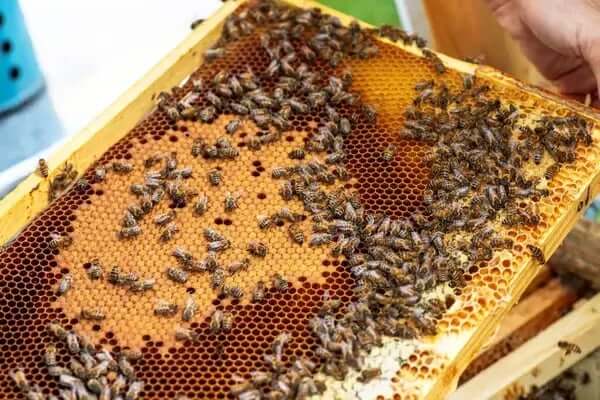
A single queen cell does not tell the whole story. Before acting, inspect the brood nest carefully and record what you see. Eggs suggest the queen was present recently. Young larvae show whether workers have the material needed to raise a new queen. A spotty brood pattern may indicate queen failure, disease, poor mating, chilled brood, or other stress. The best inspection decisions come from the whole colony picture.
Queen Replacement Inspection Checklist
|
What can go wrong during queen replacement?
Queen replacement can fail if poor weather, scarce drones, disease, timing, or beekeeper disruption prevents a virgin queen from mating successfully. |
- A virgin queen must mate before becoming a productive laying queen.
- Bad weather can delay mating flights.
- Drone availability affects mating success.
- Queen cells can be damaged during inspections.
- Colonies can become queenless if replacement fails.
- A laying worker problem can develop after extended queenlessness.
Queen replacement creates a vulnerable window. The colony may pause normal egg production while a queen develops, emerges, mates, and begins laying. Weather, drone availability, nutrition, disease, beekeeper disruption, and timing can all affect success. If the new queen fails to mate or begin laying, the colony can weaken quickly. This is why beekeepers often track queen events by date rather than guessing from memory.
Should beekeepers destroy queen cells?
Do not destroy queen cells automatically; first identify whether they signal swarming, supersedure, or emergency queen replacement in the colony. |
- Destroying queen cells can leave a colony unable to replace its queen.
- Queen cells may be necessary after queen loss.
- Swarm cells may require a different management response.
- Supersedure cells may indicate workers are correcting a queen problem.
- Beekeeper notes should record cell type, date, and colony condition.
Removing queen cells without understanding why they are present is one of the easiest ways to harm a colony. If the colony is queenless and has no young larvae, destroying queen cells may remove its only chance to recover naturally. If the colony is preparing to swarm, removing cells alone may not fix the underlying swarm impulse. If the colony is superseding a failing queen, those cells may be part of the colony’s repair process.
Beginner Beekeeper Warning: Do not remove queen cells just because they look alarming. First confirm whether the colony has eggs, young larvae, a laying queen, and enough time to raise a replacement queen. |
When should a beekeeper consider buying or introducing a new queen?
A beekeeper may introduce a queen when the colony is queenless, has a failing queen, or cannot raise a well-mated queen in time. |
- A purchased queen can shorten the brood gap.
- Requeening may help when a queen is failing.
- Colonies must be prepared correctly before queen introduction.
- Existing queen cells can affect queen acceptance.
- Queen acceptance depends on timing, colony condition, and handling.
A purchased queen can be helpful when a colony is queenless, has a failing queen, lacks young larvae, or is unlikely to raise a strong queen in time. Before introducing a queen, confirm the colony’s status and remove conflicting causes of rejection. For managed apiaries, having a reliable queen source can reduce downtime during the season.
Need a replacement queen? |
What questions do beekeepers ask about queen replacement?
Frequently Asked Questions
Do honey bees really kill their queen?Yes. Honey bees can kill, remove, or replace a queen, but the more accurate term is often supersedure or queen replacement. |
Why would worker bees replace a queen?Worker bees may replace a queen when her egg laying, pheromone signal, health, mating quality, or brood pattern no longer supports the colony. |
Is queen killing bad for the hive?Not always. Queen replacement can protect the colony, but it can become risky if the new queen fails to mate or begin laying. |
What is supersedure?Supersedure is the process of a honey bee colony quietly replacing an old, injured, poorly mated, diseased, or failing queen. |
How can I tell if my hive is superseding its queen?Look for a small number of queen cells, a questionable brood pattern, eggs or young larvae, and a colony that is not showing strong swarm signs. |
Should I remove queen cells from my hive?Do not remove queen cells automatically. First determine whether they are swarm cells, supersedure cells, or emergency queen cells. |
Can a colony have two queens at once?Yes. Some colonies may temporarily tolerate an old queen and a new queen during supersedure, although this is not always seen. |
What happens if the new queen does not mate?If the new queen fails to mate, the colony may remain queenless, develop laying workers, or require beekeeper intervention. |
Can a beekeeper prevent queen replacement?A beekeeper cannot prevent every queen replacement, but good inspections, strong nutrition, mite control, and timely requeening can reduce avoidable queen failure. |
When should I buy a replacement queen?Consider buying a queen when the colony is queenless, has a failing queen, lacks young larvae, or cannot raise a replacement queen in time. |
Which sources support this guide?
- UBC researchers reveal why honey bees overthrow their queen — University of British Columbia
- Honey bee retinue workers and Queen Mandibular Pheromone — USDA Agricultural Research Service
- Beekeeping Basics — Penn State Extension
- Honey Bee Genetics Basics — Penn State Extension
- Honey bee retinue workers respond similarly to queens despite seasonal differences in Queen Mandibular Pheromone signaling — PLOS ONE / PubMed Central
- Honey Bee Queen Reproductive Potential Affects Queen Mandibular Gland Chemistry and Worker Behavior — Scientific Reports / PubMed Central
- The Hive and the Honey Bee — Dadant & Sons
- Honey Bee Biology and Beekeeping — Dewey M. Caron and Lawrence John Connor
- First Lessons in Beekeeping — Keith S. Delaplane
- Tools for Varroa Management — Honey Bee Health Coalition
FAQs
Do honey bees really kill their queen?
Yes. Honey bees can kill, remove, or replace a queen, but the more accurate term is often supersedure or queen replacement.
Why would worker bees replace a queen?
Worker bees may replace a queen when her egg laying, pheromone signal, health, mating quality, or brood pattern no longer supports the colony.
Is queen killing bad for the hive?
Not always. Queen replacement can protect the colony, but it can become risky if the new queen fails to mate or begin laying.
What is supersedure?
Supersedure is the process of a honey bee colony quietly replacing an old, injured, poorly mated, diseased, or failing queen.
How can I tell if my hive is superseding its queen?
Look for a small number of queen cells, a questionable brood pattern, eggs or young larvae, and a colony that is not showing strong swarm signs.
Should I remove queen cells from my hive?
Do not remove queen cells automatically. First determine whether they are swarm cells, supersedure cells, or emergency queen cells.
Can a colony have two queens at once?
Yes. Some colonies may temporarily tolerate an old queen and a new queen during supersedure, although this is not always seen.
What happens if the new queen does not mate?
If the new queen fails to mate, the colony may remain queenless, develop laying workers, or require beekeeper intervention.
Can a beekeeper prevent queen replacement?
A beekeeper cannot prevent every queen replacement, but good inspections, strong nutrition, mite control, and timely requeening can reduce avoidable queen failure.
When should I buy a replacement queen?
Consider buying a queen when the colony is queenless, has a failing queen, lacks young larvae, or cannot raise a replacement queen in time.