Welcome to Lappe's Bee Supply's blogs section. We are a trusted beekeeping company in the USA. We give relevant insights, seasonal guidance, and professional advice for beekeepers of all experience levels. From hive management and bee wellness to honey production and equipment guides, we have it all that you will require to thrive. Get updated, motivated, and connected with the beekeeping community through regular news from Lappe's Bee Supply.
The Carniolan Honey Bee: An In-Depth Exploration
The Buzz About This Post
- Key Takeaways
- Table of Contents
- What Is a Carniolan Bee?
- Historical Background and Geographic Origin
- Distinct Physical Attributes
- Unique Behavioral Traits
- Advantages of Raising Carniolan Bees
- Challenges in Beekeeping with Carniolan Bees
- Effective Management Strategies for Carniolan Bees
- Carniolan Honey Bee Comparison Table
- Frequently Asked Questions
- Are Carniolan bees good for beginners?
- Where do Carniolan bees come from?
- Are Carniolan bees aggressive?
- Do Carniolan bees survive winter well?
- Do Carniolan bees swarm more than other bees?
- What color are Carniolan bees?
- Are Carniolan bees resistant to Varroa mites?
- Are Carniolan bees better than Italian bees?
- Sources and Further Reading
- Editorial Standards
- FAQs
The Carniolan Bee: An In-Depth Exploration
Author: Lappe’s Bee Supply
Date Published: April 28, 2025
Last updated: June 30, 2026
The Carniolan bee, Apis mellifera carnica, is one of the best-known European honey bee subspecies used by beekeepers. Carniolans are valued for their gentle temperament, strong spring buildup, efficient winter clustering, and ability to respond quickly when nectar and pollen become available.
This guide explains where Carniolan bees come from, what they look like, how they behave, why beekeepers choose them, and what management habits help these colonies perform well.
Key Takeaways
- Carniolan honey bees are a European honey bee subspecies known for gentle behavior and strong cold-weather adaptation.
- Carniolans often build up quickly in spring, making swarm prevention and early space management important.
- Their dark gray to brown-gray appearance helps distinguish them from lighter Italian honey bees.
- Carniolan colonies can overwinter efficiently, but they still require adequate food stores and mite monitoring.
- No honey bee breed is naturally immune to Varroa mites, American foulbrood, starvation, or poor management.
Table of Contents
- What Is a Carniolan Bee?
- Historical Background and Geographic Origin
- Distinct Physical Attributes
- Unique Behavioral Traits
- Advantages of Raising Carniolan Bees
- Challenges in Beekeeping with Carniolan Bees
- Effective Management Strategies for Carniolan Bees
- Carniolan Bee Comparison Table
- Frequently Asked Questions
- Sources and Further Reading
What Is a Carniolan Bee?
Carniolan bees are dark European honey bees valued for calm handling, winter efficiency, and rapid spring colony growth.
- The scientific name is Apis mellifera carnica.
- Carniolans are a subspecies of the western honey bee.
- They are commonly associated with Slovenia, southern Austria, and nearby Balkan regions.
- Beekeepers often choose them for gentleness, cold tolerance, and responsive spring buildup.
A Carniolan bee is not a separate bee species. It is a recognized subspecies of the western honey bee, Apis mellifera. In practical beekeeping, the term “Carniolan” usually refers to breeding lines selected for darker coloration, calm temperament, wintering ability, and fast spring expansion. These traits can vary by queen source, local mating, climate, and management, so Carniolan behavior should be understood as a tendency rather than a guarantee.
Historical Background and Geographic Origin
Carniolan bees developed in southeastern Europe, where cool winters and seasonal nectar flows shaped their colony behavior.
- Carniolan bees are closely tied to the historic Carniola region of Slovenia.
- Their native range includes parts of southeastern Europe and the northern Balkans.
- Cooler climates likely influenced their efficient winter clustering habits.
- Their popularity expanded as beekeepers selected gentle, productive breeding lines.
The Carniolan bee has its roots in the landscapes of Slovenia, southern Austria, and surrounding Balkan areas. In these regions, colonies adapted to seasonal weather, cool winters, and periods when food could be scarce. Over time, beekeepers noticed that Carniolans could overwinter well, remain manageable on the comb, and build quickly when spring forage returned.
Modern Carniolan bees are now used far beyond their native range. In North America, they are especially popular with beekeepers who want a gentle colony that can handle cooler spring weather and expand quickly during early nectar flows. However, imported or commercially raised Carniolan stock may differ from native populations because queen breeding, local mating, and hybridization can influence final colony traits.
Distinct Physical Attributes
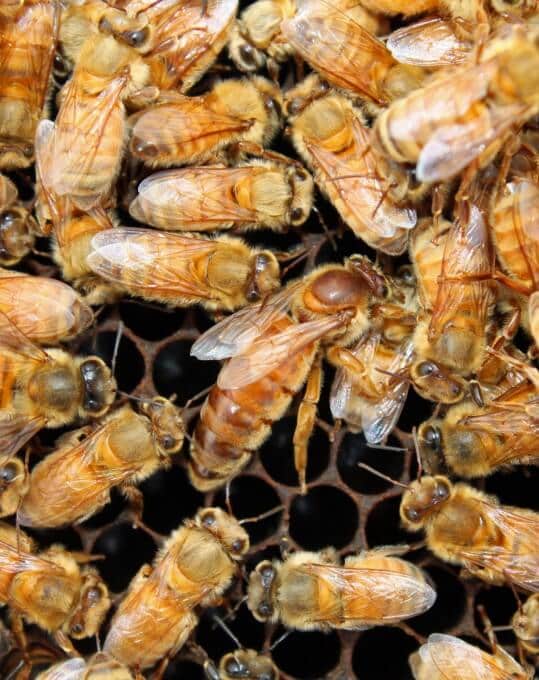
Carniolan bees usually appear dark gray to brown-gray, with lighter abdominal bands and a medium European honey bee build.
- Carniolans are typically darker than many Italian honey bees.
- Workers often show gray or brown-gray banding on the abdomen.
- Their body size is generally medium for European honey bee subspecies.
- Physical identification is helpful, but genetics and behavior provide better confirmation.
Carniolan bees are usually recognized by their darker appearance. Workers often look gray, brown-gray, or dark with pale hair bands along the abdomen. Compared with many Italian honey bees, which are often lighter and more golden, Carniolans tend to have a cooler, darker tone.
Color alone should not be treated as absolute proof of breed. Honey bee queens mate with multiple drones, and open-mated queens can produce colonies with mixed traits. For beekeepers, appearance is best used as one clue alongside temperament, wintering style, spring buildup, and the reputation of the queen breeder.
Practical Identification Tip
If a colony is dark, calm, conservative in winter, and quick to expand in spring, it may show strong Carniolan influence. If precise breed identity matters, purchase queens from a reputable breeder with documented stock.
Unique Behavioral Traits
Carniolan bees are known for calm handling, efficient winter clustering, quick spring buildup, and strong seasonal responsiveness.
- Carniolans are widely described as gentle and manageable during inspections.
- Colonies often overwinter with efficient clusters when food stores are adequate.
- Spring brood expansion can happen quickly when forage and weather improve.
- Fast buildup can increase swarm pressure if the beekeeper does not add space in time.
One of the main reasons beekeepers favor Carniolan bees is their behavior in the hive. Well-bred Carniolans are often calm on the comb and easier to inspect than more defensive colonies. This makes them appealing for beginning beekeepers, backyard apiaries, and locations where calm handling is important.
Carniolans are also known for matching colony growth to seasonal conditions. They may keep a smaller winter cluster, conserve stores efficiently, and then expand rapidly when spring pollen and nectar become available. That responsiveness can be a major advantage during early nectar flows, but it also means the beekeeper must watch colony strength closely in spring.
Advantages of Raising Carniolan Bees
Carniolan bees can be a strong choice for beekeepers who want gentle colonies, cold tolerance, and fast spring growth.
- Gentle temperament can make inspections easier and more comfortable.
- Cold-weather adaptation can benefit beekeepers in northern or variable climates.
- Rapid spring buildup helps colonies take advantage of early nectar flows.
- Efficient winter clustering can help conserve food when colonies are properly prepared.
- Productivity depends on forage, queen quality, mite control, weather, and management.
The practical benefits of Carniolan bees are strongest when their natural tendencies match the beekeeper’s climate and goals. A beekeeper in a cooler region may appreciate their wintering style, while a beekeeper managing spring honey flows may value their fast buildup. Their gentleness also makes them a common choice for new beekeepers who are still learning inspection skills.
Carniolans are sometimes described as strong honey producers, but honey yield should never be promised from breed alone. Nectar flow, colony health, queen quality, disease pressure, hive equipment, and timing all affect production. A strong Carniolan colony can perform very well, but only when paired with sound apiary management.
Lappe’s Field Note
In strong spring conditions, fast-building colonies often need added space sooner than beginners expect. For many first-year colonies, a second deep may be needed within about 3–4 weeks when weather, queen quality, and forage are favorable.
Challenges in Beekeeping with Carniolan Bees
Carniolan colonies can swarm quickly in spring if fast population growth is not matched with timely hive management.
- Rapid spring buildup can create crowding before the beekeeper notices.
- Swarm prevention is especially important during early spring expansion.
- Open-mated queens may produce colonies with mixed Carniolan and local traits.
- Carniolans still require Varroa monitoring and disease prevention.
- Gentle temperament does not remove the need for protective gear and calm handling.
The biggest management challenge with Carniolan bees is often spring timing. A colony that expands rapidly can become crowded, raise queen cells, and prepare to swarm if the beekeeper waits too long to inspect or add space. This is not a flaw in the bee; it is a natural reproductive behavior that must be managed.
Another concern is genetic consistency. If queens are open-mated, their daughters may show mixed traits depending on nearby drone populations. A colony sold as Carniolan may still show variation in color, temperament, buildup speed, or defensiveness. Beekeepers who need predictable traits should buy from reliable queen producers and replace queens when colony behavior does not match apiary goals.
Important Disease Note
No Carniolan colony should be considered naturally resistant to all bee diseases or pests. Varroa mites remain one of the most serious threats to managed honey bee colonies, regardless of breed.
Effective Management Strategies for Carniolan Bees
Manage Carniolan bees with early spring inspections, timely space, mite monitoring, balanced nutrition, and winter preparation.
- Inspect early enough in spring to track brood growth and available space.
- Add boxes or supers before the brood nest becomes crowded.
- Monitor Varroa mites using reliable testing methods, not guesswork.
- Confirm adequate winter stores before cold weather arrives.
- Use local forage patterns and weather to guide feeding decisions.
Carniolans reward attentive management. Because they can grow quickly when spring conditions improve, beekeepers should inspect colonies before crowding becomes severe. Look for brood pattern, queen performance, food reserves, available comb space, queen cells, and signs of pests or disease.
Apiary location also matters. Choose a dry, well-drained site with morning sun, wind protection, and nearby forage when possible. During periods of nectar shortage, feeding may be necessary to support colony growth or winter preparation. In late summer and fall, mite monitoring is especially important because untreated mite pressure can damage winter bees and weaken the colony before cold weather begins.
Carniolan Bee Management Checklist
- Check colonies early in spring before population growth peaks.
- Add a second brood box or honey super before the colony becomes crowded.
- Watch for queen cells during swarm season.
- Use mite washes, sugar rolls, or other accepted monitoring methods to measure Varroa levels.
- Confirm the colony has enough food before winter.
- Reduce entrances when needed to help protect against robbing, mice, and drafts.
- Replace queens when temperament, brood pattern, or colony performance declines.
Carniolan Honey Bee Comparison Table
Carniolans are often darker, gentler, and more winter-efficient than Italians, but they may require earlier swarm control.
| Trait | Carniolan Honey Bee | Italian Honey Bee | Beekeeper Takeaway |
|---|---|---|---|
| Scientific name | Apis mellifera carnica | Apis mellifera ligustica | Both are subspecies of the western honey bee. |
| Typical color | Dark gray to brown-gray | Golden to yellow-brown | Color helps with field recognition but is not perfect proof of breed. |
| Temperament | Often gentle and calm | Often gentle and productive | Actual temperament depends on queen genetics and mating. |
| Spring buildup | Very rapid when conditions improve | Steady to strong buildup | Carniolans may need earlier spring space management. |
| Wintering style | Known for efficient winter clustering | Can maintain larger winter clusters | Food stores and mite control matter more than breed alone. |
| Swarm tendency | Can increase quickly with spring crowding | Can swarm when crowded or unmanaged | Both require swarm prevention during buildup season. |
Frequently Asked Questions
Are Carniolan bees good for beginners?
Yes. Carniolan bees can be a good beginner choice because they are often gentle, calm on the comb, and manageable during inspections.
Where do Carniolan bees come from?
Carniolan bees are associated with southeastern Europe, especially Slovenia, southern Austria, and nearby Balkan regions.
Are Carniolan bees aggressive?
Well-bred Carniolan colonies are usually known for gentleness, but any colony can become defensive during poor weather, queenlessness, robbing, or stress.
Do Carniolan bees survive winter well?
Carniolan bees are known for efficient winter clustering, but winter survival still depends on food stores, mite control, ventilation, and colony strength.
Do Carniolan bees swarm more than other bees?
Carniolans can swarm quickly when spring buildup creates crowding. Early inspections and timely added space help reduce swarm risk.
What color are Carniolan bees?
Carniolan bees are usually dark gray to brown-gray with lighter abdominal bands, though color can vary in open-mated colonies.
Are Carniolan bees resistant to Varroa mites?
No honey bee breed should be treated as Varroa-proof. Carniolan colonies still require mite monitoring and responsible management.
Are Carniolan bees better than Italian bees?
Carniolans are often preferred for cooler climates and fast spring buildup, while Italians are often valued for steady brood rearing and honey production.
Sources and Further Reading
- The mitochondrial genome of the Carniolan honey bee, Apis mellifera carnica — National Library of Medicine
- Apis mellifera carnica taxonomy record — NCBI
- Varroa Management Resources — Honey Bee Health Coalition
- Tools for Varroa Management, 9th Edition — Honey Bee Health Coalition
- Honey Bee Health and Colony Loss Resources — USDA Agricultural Research Service
- Beekeeping Resources — Penn State Extension
- Beekeeping Resources — University of Minnesota Extension
Editorial Standards
This guide was written by Lappe’s Bee Supply to help beekeepers understand Carniolan honey bees using clear definitions, practical field context, and reputable beekeeping references. Breed traits are described as common tendencies, not guarantees, because colony behavior can vary by queen genetics, local mating, forage, weather, disease pressure, and management.
FAQs
Are Carniolan honey bees good for beginners?
Yes. Carniolan honey bees can be a good beginner choice because they are often gentle, calm on the comb, and manageable during inspections.
Where do Carniolan honey bees come from?
Carniolan honey bees are associated with southeastern Europe, especially Slovenia, southern Austria, and nearby Balkan regions
Are Carniolan honey bees aggressive?
Well-bred Carniolan colonies are usually known for gentleness, but any colony can become defensive during poor weather, queenlessness, robbing, or stress.
Do Carniolan bees survive winter well?
Carniolan bees are known for efficient winter clustering, but winter survival still depends on food stores, mite control, ventilation, and colony strength.
Do Carniolan honey bees swarm more than other bees?
Carniolans can swarm quickly when spring buildup creates crowding. Early inspections and timely added space help reduce swarm risk.
What color are Carniolan honey bees?
Carniolan honey bees are usually dark gray to brown-gray with lighter abdominal bands, though color can vary in open-mated colonies.
Are Carniolan bees resistant to Varroa mites?
No honey bee breed should be treated as Varroa-proof. Carniolan colonies still require mite monitoring and responsible management.
Are Carniolan bees better than Italian bees?
Carniolans are often preferred for cooler climates and fast spring buildup, while Italians are often valued for steady brood rearing and honey production.