Welcome to Lappe's Bee Supply's blogs section. We are a trusted beekeeping company in the USA. We give relevant insights, seasonal guidance, and professional advice for beekeepers of all experience levels. From hive management and bee wellness to honey production and equipment guides, we have it all that you will require to thrive. Get updated, motivated, and connected with the beekeeping community through regular news from Lappe's Bee Supply.
Wax Moths: Intriguing Creatures of the Beekeeping World
The Buzz About This Post
- What are wax moths in beekeeping?
- Why do wax moths damage honey bee hives and comb?
- What is the wax moth life cycle?
- What are the signs of a wax moth infestation?
- Why are weak colonies more vulnerable?
- How should beekeepers protect stored comb?
- How can they be controlled without harming honey bees?
- How do problems differ between live hives and stored equipment?
- What checklist helps prevent comb damage?
- Do wax moths kill honey bee colonies?
- What is the difference between greater wax moths and lesser wax moths?
- What does wax moth damage look like?
- Can bees remove wax moth larvae?
- Is wax moth webbing safe for honey?
- Should wax moth damaged comb be reused?
- How do I prevent wax moths in stored supers?
- Are chemical treatments necessary?
- Why are these pests worse in old brood comb?
- What should I check when I find moths in a live hive?
- FAQs
Author: Lappe’s Bee Supply
Published: May 2, 2025
Last updated: July 1, 2026
Key Takeaways
- Wax moths are usually a serious problem when colonies are weak, queenless, undersized, or unable to patrol exposed comb.
- The larvae cause the most visible damage by tunneling through comb and leaving webbing, frass, and weakened wax structure.
- Stored brood comb is more vulnerable than new foundation because old comb contains cocoons, pollen residues, and bee debris.
- Strong colonies are the best defense inside a hive; clean, dry, airy storage protects equipment outside the hive.
- Freezing, ventilation, light exposure, and routine inspection are core non-chemical controls for stored comb.
- These pests are often a symptom of colony decline, not the original cause of the colony’s failure.
The Buzz About This Post
- What are wax moths in beekeeping?
- Why do they damage honey bee hives and comb?
- What is their life cycle?
- What are the signs of an infestation?
- Why are weak colonies more vulnerable?
- How should beekeepers protect stored comb?
- How can they be controlled without harming honey bees?
- How do problems differ between live hives and stored equipment?
- What checklist helps prevent comb damage?
- Frequently Asked Questions
Core Definitions
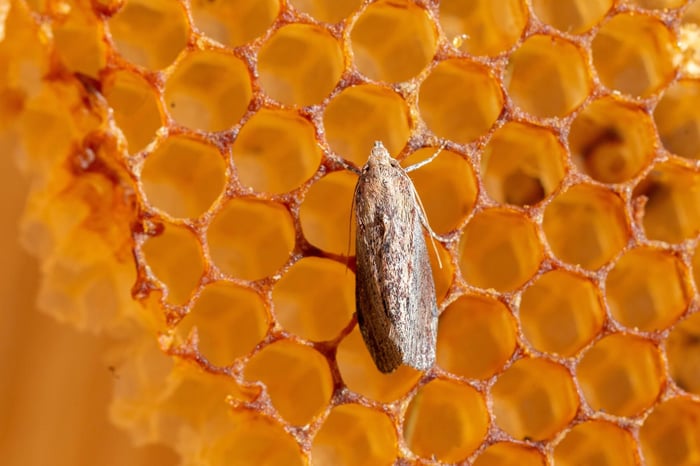
Wax moths are moths whose larvae live in or around honey bee comb and feed on wax-associated materials, especially old brood comb, pollen residues, cocoons, and hive debris.
Greater wax moth means Galleria mellonella, the larger and usually more destructive species in managed beekeeping equipment.
Lesser wax moth means Achroia grisella, a smaller species that can also damage weak colonies and stored comb.
Frass means insect droppings. In comb infestations, frass often appears with webbing, tunnels, and shredded wax.
What are wax moths in beekeeping?
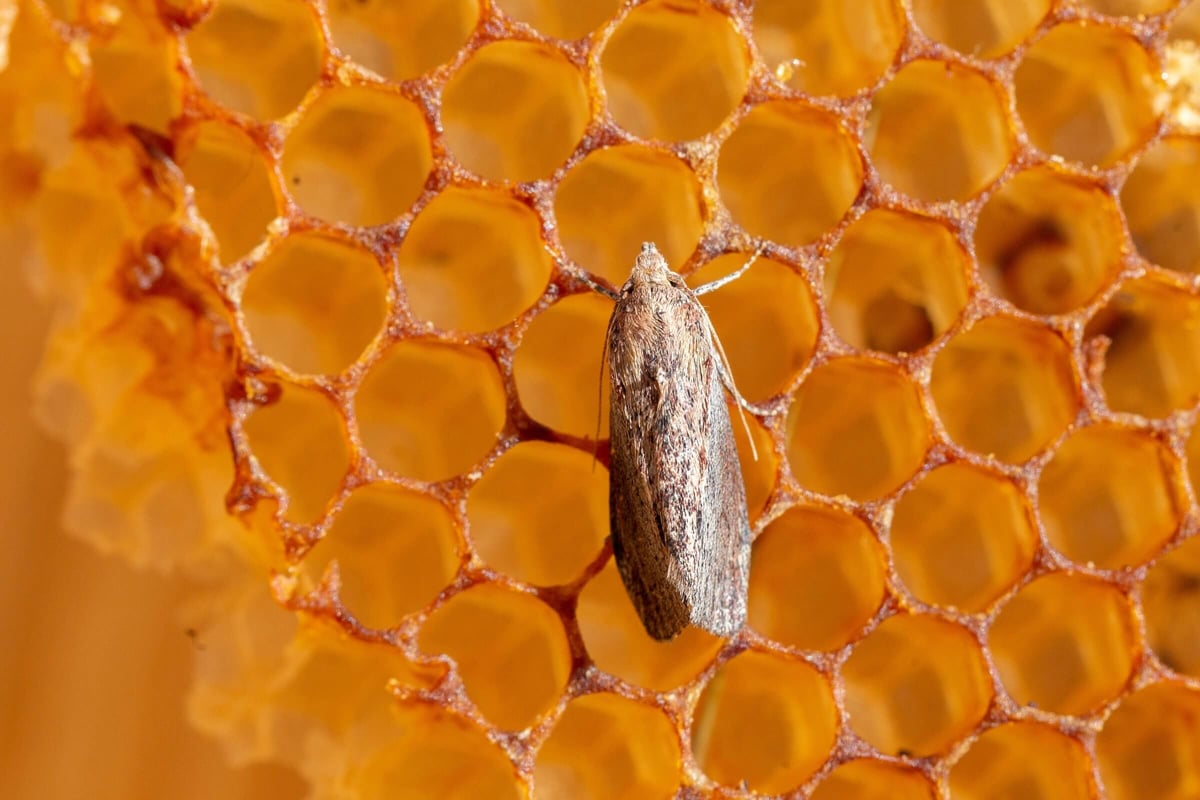
Wax moths are hive pests whose larvae tunnel through comb, feeding on wax-linked debris, pollen, cocoons, and weakened hive equipment.
- Two common beekeeping species are the greater wax moth and the lesser wax moth.
- Adult moths are not the main damaging stage; larvae cause the visible comb destruction.
- Old brood comb is usually more attractive to these insects than new foundation.
- They recycle abandoned comb in nature but damage stored or under-defended beekeeping equipment.
These insects are not bees, mites, or beetles. They are moths adapted to use honey bee nests as a larval food source. In unmanaged settings, that behavior helps break down abandoned comb. In a beekeeping operation, however, the larvae can turn valuable drawn comb into webbed, tunneled, unusable equipment. The most important beekeeping distinction is between adult moths and larvae. Adults enter weak colonies or stored equipment to mate and lay eggs. Larvae hatch, feed, tunnel, and leave behind webbing and frass. A beekeeper may see the adult moth first, but the larval stage is what causes the financial and management problem.
Why do wax moths damage honey bee hives and comb?
The larvae damage comb while feeding and tunneling through wax, pollen residue, brood cocoons, silk, and hive debris.
- The larval feeding stage causes holes, tunnels, webbing, and shredded comb.
- Dark brood comb is often at higher risk because it contains old cocoons and residues.
- Damage can make frames difficult or impossible for bees to reuse.
- Heavy infestations can contaminate comb with silk, frass, and dead larvae.
The larvae are not simply eating clean beeswax like a candle. They are feeding through a mixture of wax, pollen residues, larval cocoons, propolis traces, and organic material left in used comb. That is why old brood comb can be so vulnerable in storage. As larvae grow, they create silk-lined galleries through the comb. The webbing can bind frames together, protect larvae from bees, and make cleanup difficult. In severe cases, the comb loses structure and collapses or becomes too contaminated for practical use. The damage is especially frustrating because drawn comb is valuable: it represents time, nectar, colony energy, and beekeeper investment.
What is the wax moth life cycle?
These insects develop through egg, larva, pupa, and adult stages, with warm, protected comb helping infestations build quickly.
- Female moths lay eggs in protected cracks, crevices, comb, or stored equipment.
- Larvae are the destructive stage and may feed for weeks under favorable conditions.
- Pupae are often hidden in cocoons attached to wood, frames, or hive corners.
- Adults mate and lay eggs, repeating the cycle when conditions remain favorable.
Development depends heavily on temperature, food supply, and protection from bees. Warm, dark stacks of used supers can create ideal conditions because eggs and larvae are sheltered and food is close by. In a live hive, bees can remove eggs, chase adult moths, and patrol comb when the colony is strong enough for the space it occupies. In storage, those defenses are absent. That is why prevention focuses on interrupting the life cycle before larvae can become established. Freezing comb, improving airflow, exposing frames to light, reducing debris, and inspecting stored equipment all make it harder for eggs and larvae to survive unnoticed.
What are the signs of a wax moth infestation?
Common signs include webbing, tunnels, frass, ragged comb, larvae, cocoons, and adult moths hiding in dark hive spaces.
- Webbing is one of the easiest visible signs of larval activity.
- Frass may appear as small dark pellets or debris within damaged comb.
- Comb may look shredded, tunneled, collapsed, or bound together with silk.
- Cocoons may be attached to woodenware, frame corners, or hive walls.
- Adult moths often hide in corners and may run or fly when equipment is opened.
Early signs can be subtle. A beekeeper may first notice a small patch of webbing, a tunnel across a frame, or a few larvae when moving stored supers. In a live colony, these pests may be seen in unused corners, empty boxes, deadouts, or brood frames not covered by bees. Heavy damage is much easier to identify: frames may be webbed together, comb may crumble, and larvae may be visible throughout the box. The key diagnostic question is not only “Are they present?” but also “Why was this comb undefended?” In a living hive, this damage should prompt a broader inspection for queen failure, starvation, varroa pressure, disease, or an oversized hive setup.
Lappe’s Field Note
When these pests appear in a live colony, check bee population, queen status, food stores, and mite pressure before blaming moths alone.
Why are weak colonies more vulnerable?
Weak colonies are vulnerable because too few bees patrol the comb, remove eggs, protect corners, and defend stored hive resources.
- A strong colony can usually defend occupied comb from larval buildup.
- Queenless, starving, diseased, or mite-stressed colonies may leave comb unprotected.
- Too much empty space gives adult moths more dark, quiet places to lay eggs.
- These pests often appear after a colony has already declined.
They are often blamed for killing a hive, but they are frequently a secondary problem. A thriving colony has enough workers to cover comb, remove debris, guard cracks, and keep larvae from gaining a foothold. When the bee population drops, empty comb becomes exposed. That open space gives adult moths access and gives larvae time to grow. For this reason, prevention inside a hive begins with colony strength. Beekeepers should match box space to colony size, correct queen problems quickly, manage varroa mites, maintain adequate food stores, and avoid leaving unused brood comb above or beside a small cluster.
How should beekeepers protect stored comb?
Stored comb is best protected by freezing risky frames, removing debris, improving airflow, using light, and checking stacks often.
- Stored supers with old brood comb are among the highest-risk pieces of equipment.
- Freezing can kill eggs and larvae when exposure is long enough for the frame mass.
- Airflow and light make storage conditions less favorable for pest buildup.
- Sealed, warm, dark stacks can allow infestations to spread before detection.
- Clean equipment before storage to reduce pollen, dead bees, and wax debris.
Stored comb needs a different plan than live colonies because there are no bees to defend it. Beekeepers should sort frames before storage. New foundation and clean white comb are lower risk. Old brood comb, pollen frames, deadout frames, and comb with debris deserve extra attention. Freezing is a common non-chemical method, but frames must stay cold long enough for the entire comb and wooden frame to reach lethal temperatures. After freezing, storage should prevent reinfestation. Good options include airy stacks with light exposure, regular inspection, and clean equipment handling. Avoid storing dark brood comb in warm, sealed, neglected stacks unless a proven control plan is in place.
How can they be controlled without harming honey bees?
Control works best through strong colonies, right-sized hive space, clean storage, freezing, airflow, and regular inspection.
- Inside live colonies, colony strength is the main defense.
- In storage, prevention is easier than cleaning up a mature infestation.
- Chemical controls require label compliance and should not contaminate honey equipment.
- Old, heavily damaged comb may be better discarded than repaired.
- Equipment from deadouts should be evaluated before being placed on another hive.
The safest plan is integrated pest management, not one emergency treatment. In live hives, reduce extra space and correct the colony problem that allowed larvae to expand. In stored equipment, remove debris, freeze risky comb, and store frames where moths are less comfortable. Some beekeepers use approved storage products in certain situations, but labels, local regulations, ventilation requirements, and honey safety must be followed exactly. Do not put questionable chemicals in equipment that will return to bees or honey production without verifying that the product is legal and appropriate for that use. When damage is severe, scraping, melting, or discarding the worst comb may save labor and reduce reinfestation risk.
How do problems differ between live hives and stored equipment?
Live-hive problems usually signal weak bees, while stored-comb problems usually signal poor storage protection.
- In a live hive, moth activity often points to a colony strength problem.
- In stored equipment, infestation usually points to an equipment protection problem.
- Live hives require colony diagnosis before comb cleanup alone.
- Stored comb requires prevention before larvae spread across stacked boxes.
The same insect can mean two different management problems. Larvae in a living hive should make a beekeeper ask why bees were not covering the comb. The answer may be population loss, queen failure, mites, disease, robbing, starvation, or excess space. Larvae in storage usually mean the comb was attractive and unprotected long enough for the life cycle to advance. The response should match the setting: strengthen and right-size colonies in the apiary; clean, freeze, ventilate, and monitor equipment in storage.
| Situation | Most likely meaning | Best first response | Common mistake |
|---|---|---|---|
| Moths in a strong hive | Small presence or isolated larvae may be controlled by bees. | Inspect, verify colony strength, and remove heavily damaged comb. | Panicking before checking whether bees are actually losing control. |
| Moths in a weak hive | The colony is not covering or defending its comb. | Diagnose queen status, food stores, mites, disease, and box size. | Treating pests while ignoring the reason the colony weakened. |
| Moths in a deadout | They are recycling undefended comb after colony loss. | Determine cause of colony death and salvage usable equipment quickly. | Assuming these pests were the original cause of death. |
| Moths in stored supers | Stored comb was attractive and not protected well enough. | Freeze, air out, sort, clean, and inspect stored frames routinely. | Stacking old brood comb in warm, dark, sealed storage. |
What checklist helps prevent comb damage?
Prevent damage by keeping colonies strong, removing excess space, sorting comb, freezing risky frames, and inspecting storage.
- Keep hive space proportional to the number of bees available to defend it.
- Do not leave old brood comb unattended in warm, dark storage.
- Inspect deadouts quickly before larvae spread through usable frames.
- Freeze or isolate high-risk frames before long-term storage.
- Keep storage areas dry, clean, ventilated, and easy to inspect.
Preventing infestations is a seasonal habit. In spring, avoid giving small colonies more comb than they can cover. In summer, inspect weak colonies before pests take advantage of exposed comb. In fall, sort equipment before storage and prioritize old brood comb for freezing or close monitoring. After a deadout, act quickly. The longer comb sits undefended, the more likely moths, beetles, mice, mold, or robbing will complicate cleanup. A simple written checklist helps beekeepers protect drawn comb before the problem becomes expensive.
Prevention Checklist
- Confirm each colony has enough bees to cover the comb it occupies.
- Remove extra boxes from weak colonies until the colony can defend the space.
- Inspect queen status, brood pattern, food stores, and mite pressure when moths appear in a live hive.
- Sort stored frames by risk: new foundation, white comb, brood comb, pollen comb, and deadout comb.
- Freeze high-risk comb before storage when possible.
- Store equipment with airflow, light exposure, and regular access for inspection.
- Discard or melt comb that is heavily webbed, collapsed, or contaminated.
- Record when stored supers were inspected so neglected stacks do not become breeding sites.
Editorial Standards
This guide was written for beekeepers using evidence-led terminology, practical field context, and source recommendations from extension, institutional, and beekeeping education resources. Product claims, treatment claims, and pesticide guidance should be checked against current labels, state rules, and local extension recommendations before publication.
Frequently Asked Questions About Wax Moths
Do wax moths kill honey bee colonies?
Wax moths usually do not kill strong colonies. They more often take over comb after a colony is weak, queenless, dead, or unable to defend its space.
What is the difference between greater wax moths and lesser wax moths?
Greater wax moths are larger and usually cause more serious comb damage. Lesser wax moths are smaller but can still damage weak hives and stored comb.
What does wax moth damage look like?
Damage often includes webbing, tunnels, frass, shredded comb, larvae, and cocoons attached to frames or woodenware.
Can bees remove wax moth larvae?
Strong colonies can remove eggs and small larvae before damage spreads. Weak colonies may not have enough bees to patrol exposed comb.
Is wax moth webbing safe for honey?
Comb contaminated with heavy webbing, frass, larvae, or debris should not be used for harvest honey. When in doubt, remove and evaluate the comb carefully.
Should wax moth damaged comb be reused?
Lightly damaged comb may sometimes be cleaned and reused if it is not contaminated. Severely webbed, collapsed, or dirty comb is often better discarded or melted.
How do I prevent wax moths in stored supers?
Sort frames, remove debris, freeze high-risk comb, provide airflow and light, and inspect stored equipment regularly during warm conditions.
Are chemical treatments necessary?
Not always. Many beekeepers rely on freezing, sanitation, airflow, and strong colonies; any chemical product must be legal, labeled, and safe for the intended equipment use.
Why are these pests worse in old brood comb?
Old brood comb contains cocoons, residues, pollen traces, and organic debris that make it more attractive and useful to larvae.
What should I check when I find moths in a live hive?
Check colony population, queen status, brood pattern, food stores, mite pressure, disease signs, and whether the hive has too much empty space.
FAQs
Do wax moths kill honey bee colonies?
Wax moths usually do not kill strong colonies. They more often take over comb after a colony is weak, queenless, dead, or unable to defend its space.
What is the difference between greater wax moths and lesser wax moths?
Greater wax moths are larger and usually cause more serious comb damage. Lesser wax moths are smaller but can still damage weak hives and stored comb.
What does wax moth damage look like?
Wax moth damage often includes webbing, tunnels, frass, shredded comb, larvae, and cocoons attached to frames or woodenware.
Can bees remove wax moth larvae?
Strong colonies can remove eggs and small larvae before damage spreads. Weak colonies may not have enough bees to patrol exposed comb.
Is wax moth webbing safe for honey?
Comb contaminated with heavy webbing, frass, larvae, or debris should not be used for harvest honey. When in doubt, remove and evaluate the comb carefully.
Should wax moth damaged comb be reused?
Lightly damaged comb may sometimes be cleaned and reused if it is not contaminated. Severely webbed, collapsed, or dirty comb is often better discarded or melted.
How do I prevent wax moths in stored supers?
Sort frames, remove debris, freeze high-risk comb, provide airflow and light, and inspect stored equipment regularly during warm conditions.
Are chemical treatments necessary for wax moths?
Not always. Many beekeepers rely on freezing, sanitation, airflow, and strong colonies; any chemical product must be legal, labeled, and safe for the intended equipment use.
Why are wax moths worse in old brood comb?
Old brood comb contains cocoons, residues, pollen traces, and organic debris that make it more attractive and useful to wax moth larvae.
What should I check when I find wax moths in a live hive?
Check colony population, queen status, brood pattern, food stores, mite pressure, disease signs, and whether the hive has too much empty space.