Welcome to Lappe's Bee Supply's blogs section. We are a trusted beekeeping company in the USA. We give relevant insights, seasonal guidance, and professional advice for beekeepers of all experience levels. From hive management and bee wellness to honey production and equipment guides, we have it all that you will require to thrive. Get updated, motivated, and connected with the beekeeping community through regular news from Lappe's Bee Supply.
Understanding Hive Inspections and Record Keeping: A Beekeeper's Guide
The Buzz About This Post
- Why are regular hive inspections important?
- How often should a beekeeper inspect a hive?
- What should a beekeeper look for during a hive inspection?
- What information should be included in hive inspection records?
- How should hive inspections change through the seasons?
- How should Varroa mites be monitored during hive inspections?
- What should a beekeeper do when an inspection finds a possible disease or serious problem?
- How can inspection records improve beekeeping decisions over time?
- What are the most common hive inspection and record-keeping mistakes?
- What are the frequently asked questions about hive inspections and record keeping?
- FAQs
Hive Inspections and Record Keeping: A Practical Guide for Beekeepers
Regular hive inspections and consistent record keeping help beekeepers understand what is happening inside each colony, recognize changes over time, and make better-informed management decisions.
Published:
Last updated:
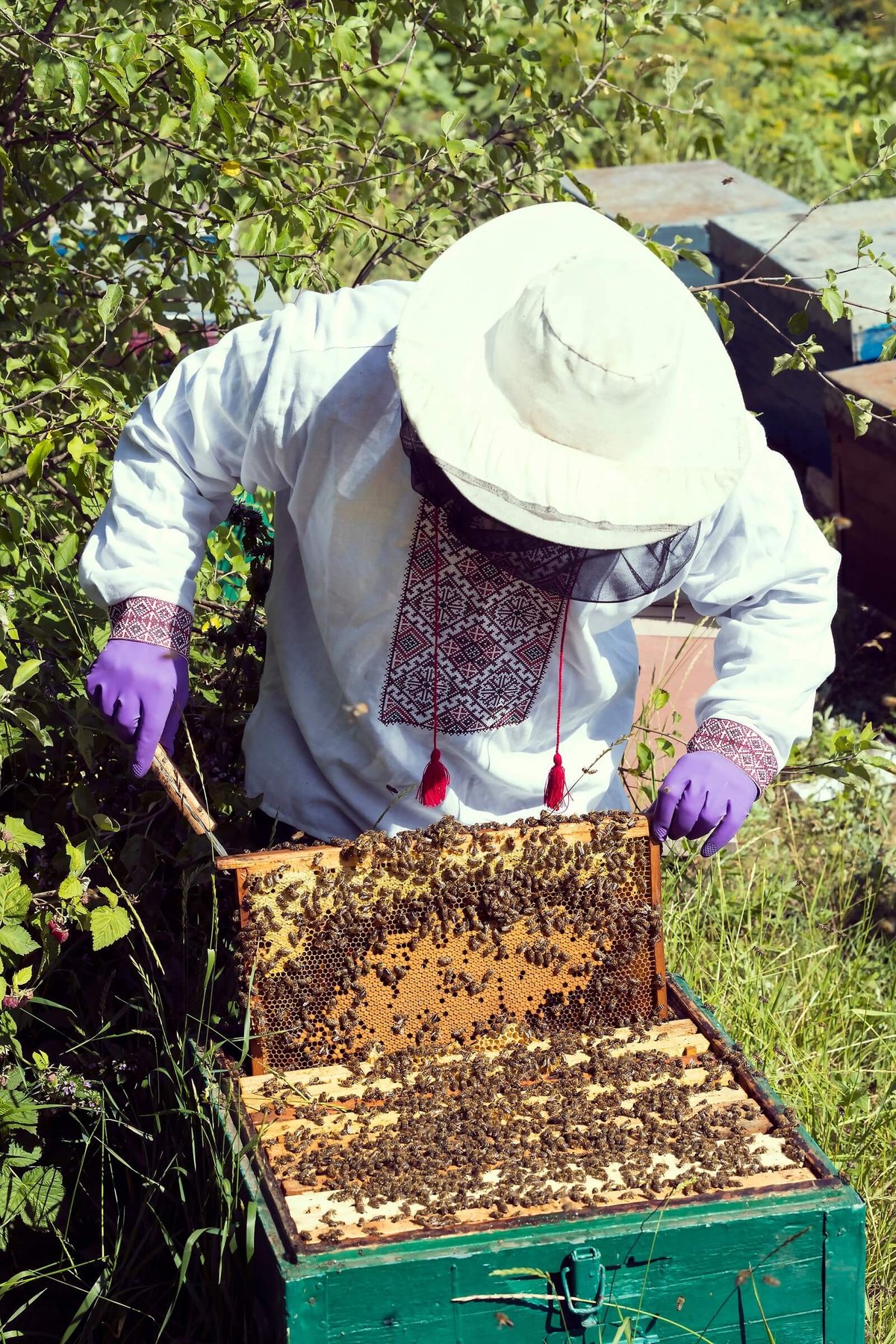
Beekeeping requires observation, timing, and a willingness to make decisions from what the colony is actually showing rather than from assumptions. Hive inspections provide the observations. Record keeping gives those observations context.
Together, inspections and records create a history of each colony. Instead of relying on memory, a beekeeper can compare queen activity, brood development, food stores, pest measurements, treatments, equipment changes, and other conditions from one inspection to the next.
Varroa monitoring deserves special distinction. Looking through a hive can reveal many colony conditions, but simply looking at adult bees does not provide a reliable measurement of a colony's Varroa mite level. A repeatable sampling method is needed when the goal is to estimate infestation.
Why are regular hive inspections important?
- Inspections help reveal changes in brood production, adult bee population, food stores, available space, and colony behavior.
- Regular visual inspection can help identify brood disease symptoms, pest problems, queen issues, and unusual population changes.
- Hive conditions are more useful when compared with previous inspections instead of being judged from one observation alone.
- An inspection can identify management needs such as feeding, adding space, monitoring mites, or investigating suspected disease.
- Finding the queen is not required during every inspection if eggs or very young brood provide adequate evidence of recent queen activity.
Regular inspections give beekeepers a repeatable way to determine what is happening inside a colony before making management decisions. The goal is not simply to open the hive and look around. A useful inspection should answer specific questions about colony condition.
Before opening the hive, decide what you need to learn. Is the colony growing? Does it have enough food? Is there space for brood expansion or incoming nectar? Is there evidence of recent queen activity? Does the brood appear normal? Are pests or unusual symptoms present?
The Honey Bee Health Coalition recommends visual inspection of the apiary, colony exterior, and brood frames as part of identifying brood disease, pests, queen problems, population changes, and other irregularities. A consistent inspection process makes it easier to recognize when a colony begins moving away from its previous condition.
How often should a beekeeper inspect a hive?
- There is no universal inspection interval that is appropriate for every colony or season.
- Rapid spring growth and swarm preparation may justify closer observation than periods of slow colony change.
- Extreme heat, cold, rain, or other poor conditions may make opening a colony unnecessarily disruptive.
- Inspection frequency should reflect the management question being answered rather than an arbitrary calendar schedule.
- Follow-up timing should be recorded whenever an inspection identifies a condition that needs reassessment.
Inspection frequency changes with colony development and management goals. Colonies can change rapidly during spring buildup, nectar flows, queen events, periods of food shortage, or increasing pest pressure. Other times of year may require considerably less manipulation.
A Penn State-managed research apiary has described inspecting colonies every two weeks for queen status, pest and disease concerns, and food stores. That schedule is useful context, but it should not be treated as a universal rule for every beekeeper, climate, or management system.
A better approach is to give each inspection a purpose. When a colony needs reassessment, write down the reason and the expected follow-up date. This creates a management schedule based on colony conditions instead of habit alone.
What should a beekeeper look for during a hive inspection?
- Observe the entrance and colony behavior before opening the hive.
- Check adult bee population, brood amount and appearance, food stores, and usable space.
- Look for eggs or young brood when assessing recent queen activity.
- Examine brood for abnormal appearance rather than assuming every irregular pattern represents disease.
- Check for pest evidence and perform quantitative Varroa monitoring when appropriate.
- Record actions and follow-up needs before leaving the apiary.
Consistency makes inspections more useful because the same colony features are examined repeatedly. Start with observations outside the hive. Entrance activity, unusual numbers of dead bees, signs of robbing, and the overall behavior of the colony can provide information before a frame is removed.
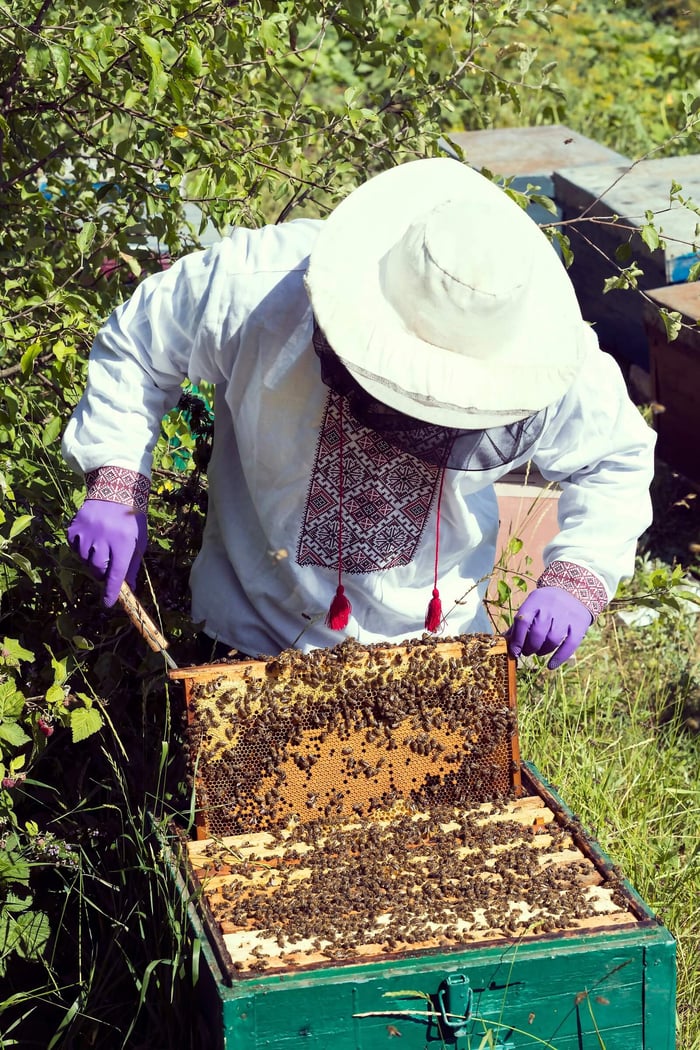
Open the hive calmly using the normal protective equipment, smoker, and hive tools appropriate for your operation. Work through the colony methodically while avoiding unnecessary manipulation.
Healthy-looking brood, sufficient food, adequate space, and evidence of recent queen activity all provide useful information, but no single observation should be interpreted alone. Nutrition problems, queen events, pesticide exposure, pest pressure, and disease may sometimes produce overlapping signs.
Hive Inspection Checklist
| Inspection Area | What to Observe | What to Record |
|---|---|---|
| Entrance | Flight activity, unusual mortality, possible robbing, overall behavior | Normal or abnormal, plus notes |
| Colony population | Frames occupied by bees and obvious population changes | Estimated colony strength |
| Queen status | Queen seen, eggs present, or young brood present | Evidence observed |
| Brood | Amount, developmental stages, general pattern, suspicious symptoms | Estimated frames of brood and notes |
| Food | Honey, nectar, and pollen availability | Approximate amount or condition |
| Available space | Comb available for brood expansion and incoming nectar | Whether additional space is needed |
| Varroa | Results from the monitoring method used | Method, result, and date |
| Other pests | Small hive beetles, wax moth evidence, and other abnormalities | Observation and action |
| Disease concerns | Suspicious brood or adult-bee symptoms | Description and next step |
| Management action | Feed, equipment changes, treatment, or other work | Exact action performed |
| Follow-up | Condition requiring another inspection | Date or trigger for rechecking |
What information should be included in hive inspection records?
- Every record should identify the colony and inspection date.
- Record observations separately from management actions whenever possible.
- Queen evidence, brood condition, food stores, colony strength, pests, and treatments are useful recurring fields.
- Quantitative measurements are more comparable than vague descriptions such as “good” or “bad.”
- Treatment records should include the product, date, and other information required by the product label or applicable regulation.
- A follow-up field turns inspection notes into an actionable management record.
The best record-keeping system is one the beekeeper can use consistently. A waterproof notebook, printed inspection sheet, spreadsheet, or beekeeping app can all work. Complexity is less important than repeatability.
Specific observations are usually more useful than general impressions. Writing “five frames substantially covered with brood” creates a stronger comparison point than writing only “brood looks good.” Similarly, record the actual result of a Varroa sample rather than simply writing that mites were checked.
Treatments deserve especially careful documentation. Record the product, application date, and other information needed to follow the product label and applicable requirements. Do not rely on memory to reconstruct treatment history months later.
Simple Hive Record Template
How should hive inspections change through the seasons?
- Spring inspections commonly emphasize food supply, colony growth, queen activity, swarm preparation, and space.
- Summer management may include monitoring colony strength, honey storage, pests, mites, and available space.
- Late-summer and fall inspections should include Varroa monitoring and preparation for winter conditions.
- Winter management generally favors minimal disturbance while monitoring food availability and external hive condition.
- Seasonal priorities vary with climate, forage, colony genetics, equipment, and management system.
A seasonal inspection should answer the colony's most important questions at that point in the year. Spring commonly brings attention to queen performance, colony growth, available food, swarm preparations, mite levels, disease concerns, and the need for additional space.
Summer conditions depend heavily on local forage and weather. During periods of colony expansion or honey storage, beekeepers may need to pay particular attention to usable space, food movement through the hive, colony strength, and pest pressure.
Late summer and fall are important periods for assessing colony condition before winter. Varroa monitoring, food stores, robbing pressure, and winter preparation become increasingly important.
Winter usually calls for less invasive management. Local climate matters greatly, so seasonal recommendations should follow colony development and local conditions rather than a single national calendar.
How should Varroa mites be monitored during hive inspections?
- Seeing no mites on adult bees does not establish that a colony has a low mite level.
- Quantitative monitoring provides a measurable result that can be compared across inspection dates.
- The same sampling procedure should be used consistently when tracking trends.
- Results should be recorded with the sampling date and method.
- Treatment decisions must account for current recommendations, timing, product labeling, and colony conditions.
- Mite management should be treated as an ongoing monitoring process rather than a one-time inspection task.
Varroa destructor is an important parasite of honey bee colonies. A colony can appear active and productive while still carrying a mite population that deserves management attention.
That is why visual inspection and Varroa monitoring should be treated as related but different activities. Looking over adult bees is not the same as measuring mite infestation.
Penn State Extension describes the alcohol wash as an effective quantitative method for monitoring Varroa mites. Whatever appropriate monitoring approach is used, following a consistent procedure makes the resulting numbers more useful for comparison over time.
Treatment decisions should be based on current guidance appropriate for the beekeeper's location and management system, together with the directions on the applicable pesticide label. A threshold copied from an unrelated article should not automatically be treated as appropriate for every apiary.
What should a beekeeper do when an inspection finds a possible disease or serious problem?
- A suspicious brood pattern by itself does not confirm a specific disease.
- Record symptoms before altering the colony so later comparisons remain possible.
- Avoid transferring suspicious brood comb or equipment into healthy colonies until the concern is understood.
- American foulbrood requires particular caution because its spores can persist and contaminated equipment can spread disease.
- State inspection, reporting, treatment, and equipment-disposal rules can differ.
- Extension specialists, apiary inspectors, veterinarians, or diagnostic laboratories may be appropriate resources depending on the problem.
Diagnosis should come before aggressive intervention whenever circumstances permit. An irregular brood pattern is a reason to investigate, not a diagnosis by itself. Several colony problems can produce overlapping signs.
American foulbrood deserves special caution because Paenibacillus larvae forms persistent spores. Equipment movement between colonies can create additional disease risk when contaminated material is involved.
Beekeeping laws, apiary inspection requirements, treatment rules, and disease-reporting requirements can vary between states and local jurisdictions. Verify the rules that apply where your colonies are located.
How can inspection records improve beekeeping decisions over time?
- One inspection shows colony condition at one moment; a series of inspections shows direction and change.
- Historical records make recurring queen, food, pest, or equipment problems easier to recognize.
- Treatment records allow post-treatment monitoring to be compared with the original measurement.
- Comparable measurements are more useful for trend analysis than changing terminology between inspections.
- Separate records for each hive prevent observations from being confused between colonies.
Records become more valuable as they accumulate. A single inspection can tell you what a colony looked like today. A sequence of records can show whether brood is expanding, food stores are declining, mite measurements are changing, queen events are recurring, or previous management actions produced the intended result.
This is why consistency matters. If colony strength is recorded differently every time, comparisons become difficult. If the same basic observations and measurements are recorded repeatedly, patterns become easier to recognize.
USDA honey bee health surveillance programs also use repeated observations to develop a longer-term picture of colony health. An individual beekeeper's records are much simpler, but the underlying principle is similar: repeated, comparable observations provide information that isolated snapshots cannot.
Reviewing the previous record before opening a hive can also make the next inspection more efficient. Instead of starting from memory, the beekeeper already knows what condition requires follow-up.
What are the most common hive inspection and record-keeping mistakes?
- Opening a hive without a management question can create disturbance without producing useful information.
- Finding the queen should not become the sole purpose of every inspection.
- “No mites seen” is not equivalent to a quantitative Varroa monitoring result.
- Vague notes make later comparisons difficult.
- Treatment details should be recorded when the action occurs rather than reconstructed later.
- Excessive manipulation can make an otherwise useful inspection unnecessarily disruptive.
A useful inspection answers specific questions and leaves behind a record that informs the next decision. Before opening the hive, decide what you need to learn. During the inspection, collect evidence. Afterward, document the important observations, actions, and follow-up needs.
For example, “queen not seen” provides limited information. “Queen not seen; eggs present; brood present in multiple stages” gives much more context.
Likewise, “mites looked fine” cannot be meaningfully compared with a later inspection. A dated result produced by a repeatable monitoring procedure can.
Record keeping does not need to become complicated. A short form that is completed consistently is generally more useful than an elaborate system that is rarely updated.
What are the frequently asked questions about hive inspections and record keeping?
What is a beehive inspection?
A hive inspection is a systematic check of colony population, brood, food stores, queen activity, pests, disease signs, available space, and other management conditions.
Do I need to find the queen during every inspection?
No. Eggs or very young brood can provide useful evidence that a queen was laying recently even when the queen herself is not seen.
How often should I inspect a beehive?
There is no single interval for every colony. Inspection frequency should reflect season, colony development, weather, swarm risk, pest-management needs, and the purpose of the inspection.
What should I record after a hive inspection?
Record the hive ID, date, colony strength, queen evidence, brood observations, food stores, pest measurements, management actions, treatments, and required follow-up.
Can I determine a colony's Varroa level just by looking at the bees?
No. Visual observation alone does not provide a reliable quantitative mite estimate; an appropriate monitoring method should be used when measuring Varroa levels.
What does an irregular brood pattern mean?
An irregular brood pattern signals that the colony deserves closer evaluation, but it does not by itself diagnose queen failure, disease, pests, or nutritional problems.
Should hive inspections continue during winter?
Winter management generally favors minimal disturbance. Beekeepers can monitor food availability and external colony conditions while avoiding unnecessary opening during unsuitable weather.
Why should treatments be written in hive records?
Treatment records document what was applied and when, make follow-up monitoring easier, and help beekeepers follow product-label and regulatory requirements.
What should I do if I suspect American foulbrood?
Avoid spreading potentially contaminated equipment, document the symptoms, and contact an appropriate apiary inspector, extension specialist, veterinarian, or diagnostic resource as applicable.
Is a notebook or an app better for hive records?
Either can work. The best record system is one that is used consistently and captures comparable observations, measurements, actions, and follow-up needs.
Sources and Further Reading
- Best Management Practices for Hive Health — Honey Bee Health Coalition.
- National Honey Bee Surveys — USDA Animal and Plant Health Inspection Service.
- Alcohol Wash for Varroa Mite Monitoring — Penn State Extension.
- How to Do an Alcohol Wash — Penn State Extension.
- Honey Bee Diseases: American Foulbrood — Penn State Extension.
- Honey Bee Health Coalition Resources — Honey Bee Health Coalition.
- Apiculture and Beekeeping — USDA National Agricultural Library.
- Pollinator Protection — U.S. Environmental Protection Agency.
FAQs
What is a beehive inspection?
A hive inspection is a systematic check of colony population, brood, food stores, queen activity, pests, disease signs, available space, and other management conditions.
Do I need to find the queen during every inspection?
No. Eggs or very young brood can provide useful evidence that a queen was laying recently even when the queen herself is not seen.
How often should I inspect a beehive?
There is no single interval for every colony. Inspection frequency should reflect season, colony development, weather, swarm risk, pest-management needs, and the purpose of the inspection.
What should I record after a hive inspection?
Record the hive ID, date, colony strength, queen evidence, brood observations, food stores, pest measurements, management actions, treatments, and required follow-up.
Can I determine a colony's Varroa level just by looking at the bees?
No. Visual observation alone does not provide a reliable quantitative mite estimate; an appropriate monitoring method should be used when measuring Varroa levels.
What does an irregular brood pattern mean?
An irregular brood pattern signals that the colony deserves closer evaluation, but it does not by itself diagnose queen failure, disease, pests, or nutritional problems.
Should hive inspections continue during winter?
Winter management generally favors minimal disturbance. Beekeepers can monitor food availability and external colony conditions while avoiding unnecessary opening during unsuitable weather.
Why should treatments be written in hive records?
Treatment records document what was applied and when, make follow-up monitoring easier, and help beekeepers follow product-label and regulatory requirements.
What should I do if I suspect American foulbrood?
Avoid spreading potentially contaminated equipment, document the symptoms, and contact an appropriate apiary inspector, extension specialist, veterinarian, or diagnostic resource as applicable.
Is a notebook or an app better for hive records?
Either can work. The best record system is one that is used consistently and captures comparable observations, measurements, actions, and follow-up needs.