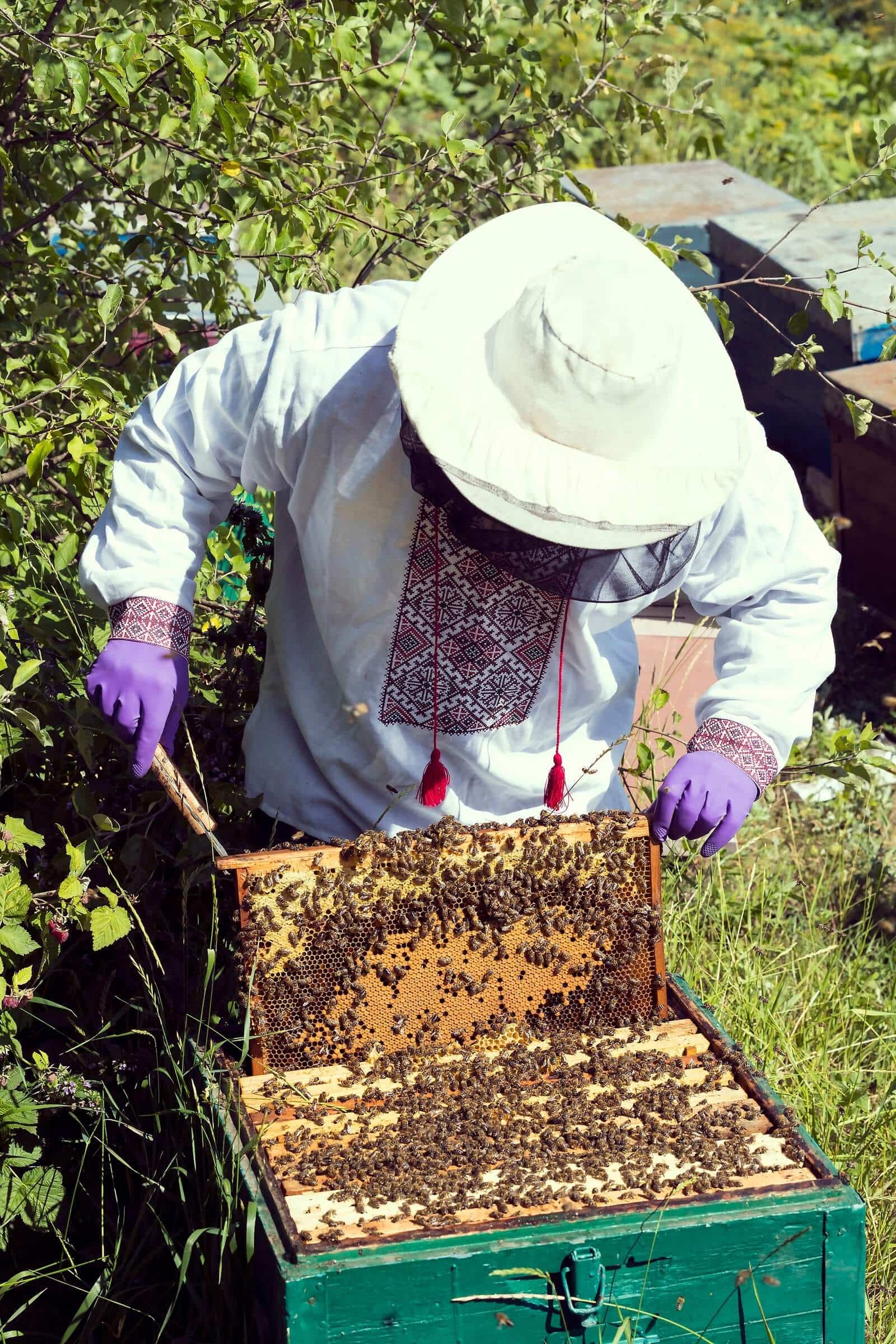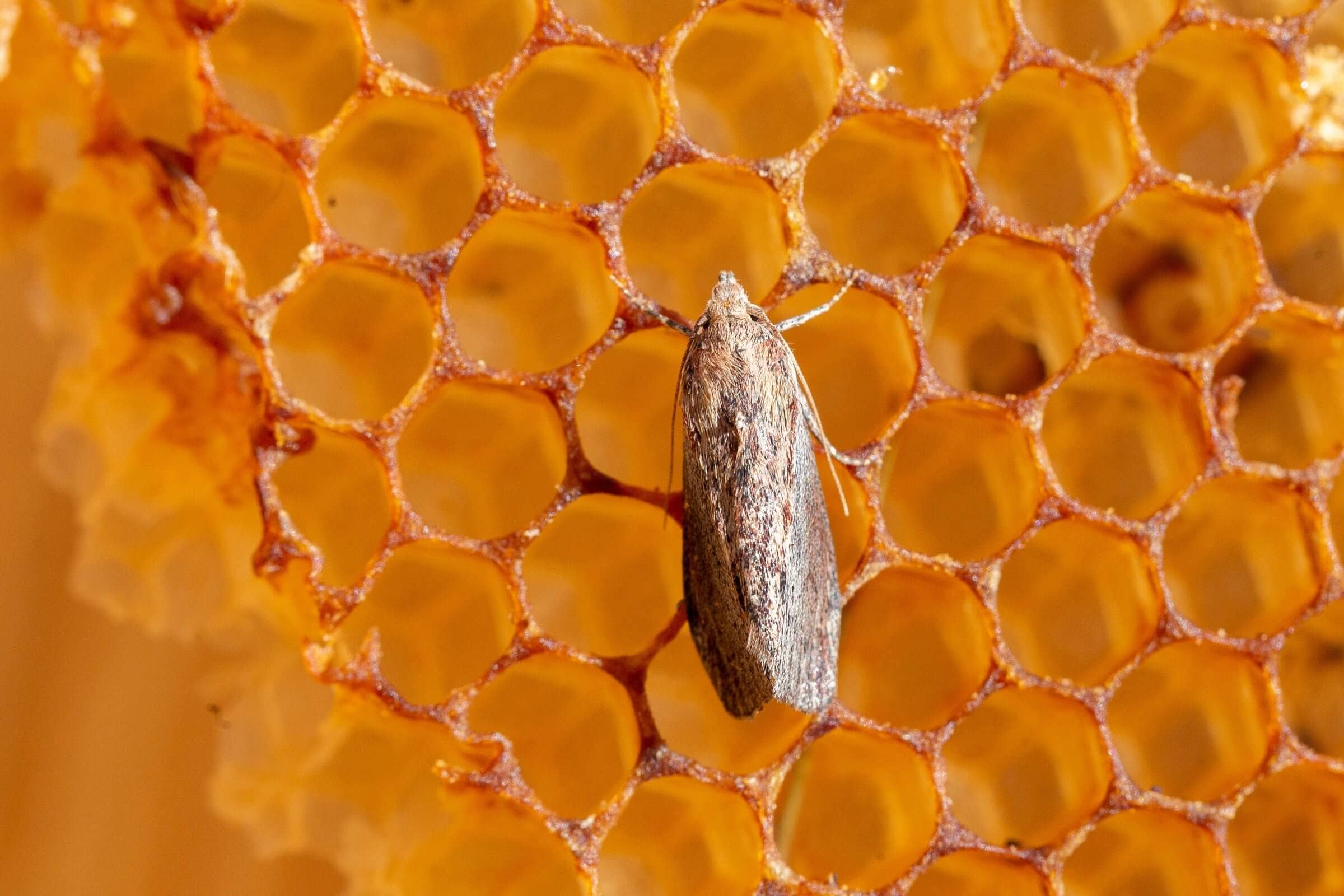
Welcome to Lappe's Bee Supply's blogs section. We are a trusted beekeeping company in the USA. We give relevant insights, seasonal guidance, and professional advice for beekeepers of all experience levels. From hive management and bee wellness to honey production and equipment guides, we have it all that you will require to thrive. Get updated, motivated, and connected with the beekeeping community through regular news from Lappe's Bee Supply.
Assessing Honeybee Colony Size: A Comprehensive Guide for Beekeepers
The Buzz About This Post
- What does honeybee colony size actually mean?
- What are the key takeaways when assessing Honeybee colony size?
- Table of Contents
- Why is assessing honeybee colony size important?
- What methods can be used for assessing honeybee colony size?
- How can frame inspection estimate colony strength?
- Can hive weight be used to assess colony size?
- Should beekeepers try to count individual bees?
- Can entrance activity indicate colony size?
- What factors influence honey bee colony size?
- What are the best practices for managing colony size?
- What should be recorded during an inspection?
- How should beekeepers interpret changes in colony size?
- What are the most common questions about honey bee colony size?
- How many bees should be in a healthy honey bee colony?
- Can colony size be determined by counting occupied frames?
- How many bees are on one frame?
- Does a heavy hive always mean a large colony?
- Can heavy entrance traffic prove a colony is strong?
- Does a large colony automatically produce more honey?
- Does a large colony automatically mean it will swarm?
- Can a strong colony still have a Varroa problem?
- How often should colony strength be recorded?
- What is the best way to estimate honey bee colony strength?
- What is the most important lesson when assessing honey bee colony size?
- What sources support this guide?
- FAQs
Assessing Honeybee Colony Size: A Comprehensive Guide for Beekeepers
Understanding the size and strength of a honeybee colony helps beekeepers recognize growth, identify unexpected decline, evaluate brood development, prepare for seasonal changes, and make better hive-management decisions.
Published: | Last updated: | Written and reviewed by: Lappe's Bee Supply Team
What does honeybee colony size actually mean?
Honeybee colony size describes the adult bees and developing brood present at a given time, usually estimated through standardized observations rather than by counting every bee.
- Adult-bee population and brood population are related but are not the same measurement.
- Colony population naturally rises and falls throughout the year.
- Frame coverage and brood area are practical measurements during normal hive inspections.
- Hive weight and entrance activity provide supporting information but are not direct population counts.
- Repeated observations are generally more useful than a single isolated estimate.
Why is assessing honeybee colony size important?
Tracking honeybee colony strength helps beekeepers identify growth or decline, evaluate brood production, judge available space, and make better seasonal management decisions.
- Population trends help show whether a colony is expanding, stable, or declining.
- Large amounts of healthy brood can indicate future population growth.
- Unexpected population losses deserve further investigation.
- Colony strength affects decisions about feeding, adding space, splitting colonies, and winter preparation.
- Population should be evaluated with food stores, brood condition, queen performance, and pest pressure.
Colony size provides context for nearly every other observation made during an inspection. A colony covering fewer frames than it did several weeks earlier may simply be undergoing a normal seasonal change, or the decline may point toward queen problems, food shortages, disease, Varroa mites, recent swarming, or poor brood survival. Likewise, a rapidly expanding colony may need additional space or closer attention for signs of swarm preparation. The goal is not merely to decide whether a hive contains “a lot” or “a few” bees. A useful assessment asks how the colony compares with its previous condition and whether the change makes sense for the season.
What methods can be used for assessing honeybee colony size?
Honeybee colony strength can be assessed through adult-bee frame coverage, brood area, hive weight, entrance observations, photography, and consistent inspection records.
- Frame coverage provides a practical visual estimate of adult bees.
- Brood area provides information about developing population.
- Hive weight is useful for tracking overall weight changes.
- Entrance observations can reveal changes in flight activity.
- Comb photographs can provide permanent records for later comparison.
No single method answers every management question. Research methods such as ColEval estimate the percentage of comb occupied by adult workers, open brood, capped brood, honey, nectar, and pollen. That type of structured approach illustrates an important principle for everyday beekeeping: define what is being measured and repeat the observation consistently. A beekeeper does not need laboratory-level precision to benefit from this approach.
| Assessment Method | Best Use | Main Advantage | Main Limitation |
|---|---|---|---|
| Adult-bee frame coverage | Estimating bees occupying comb | Practical during inspections | Visual estimates vary between observers |
| Brood assessment | Evaluating developing population | Shows reproductive activity | Brood does not equal current adult population |
| Hive weight | Following total weight changes | Useful without opening the hive | Weight includes stores and equipment |
| Entrance activity | Rapid external observation | Non-invasive | Weather and forage affect traffic |
| Frame photography | Documenting comb coverage | Creates a permanent record | Requires additional time |
How can frame inspection estimate colony strength?
Frame-by-frame estimates of adult-bee coverage and brood area provide a practical picture of colony strength during routine hive inspections.
- Estimate how much of each comb face is actually covered by adult bees.
- Record open and capped brood when greater detail is useful.
- Use a similar observation method during each inspection.
- Check brood quality as well as brood quantity.
- Avoid assigning one fixed number of bees to every occupied frame.
Simply counting “frames with bees” can be useful for a quick comparison, but it does not describe how densely those frames are occupied. One frame may be covered nearly edge to edge while another may contain only a partial cluster. Research-based colony-evaluation methods therefore estimate the proportion of comb occupied by adult bees and brood rather than assuming every occupied frame represents an identical population.
Practical Frame Inspection Checklist
- Observe entrance conditions before opening the colony.
- Locate the main cluster and brood nest.
- Estimate adult-bee coverage on substantially occupied frames.
- Estimate open brood and capped brood.
- Look for eggs or young larvae when queen status needs confirmation.
- Evaluate brood distribution and appearance.
- Note pollen, nectar, and stored food.
- Look for pest, disease, or abnormal brood signs.
- Record what was added, removed, fed, or treated.
- Compare the observations with earlier inspections of the same colony.
Can hive weight be used to assess colony size?
Hive weight tracks changes in bees, brood, food stores, moisture, and equipment together, making it useful for trends but not a direct bee count.
- Hive weight includes much more than adult bees.
- Nectar collection can rapidly increase weight without an equivalent increase in population.
- Food consumption can decrease weight while the colony remains populous.
- Adding or removing supers changes the baseline.
- Repeated measurements are more informative than one isolated weight.
A hive scale can reveal valuable seasonal trends. During a nectar flow, weight may rise quickly as incoming nectar accumulates. During periods with little forage, weight may fall as stored food is consumed. However, a scale measures the entire hive system. Woodenware, frames, bees, brood, pollen, nectar, ripe honey, water, feeders, and other equipment all contribute to the reading. USDA research that measures adult-bee weight separately demonstrates why total hive weight should not simply be converted into a bee-population number.
Should beekeepers try to count individual bees?
Exact individual bee counts are rarely necessary for routine management; standardized estimates usually provide enough information to compare colony strength.
- Honey bee colonies can contain thousands of moving individuals.
- Bee density varies across different combs.
- Visual population estimates contain observer variation.
- A repeatable method is more valuable than unsupported precision.
- Researchers use specialized procedures when precise population estimates are necessary.
Assuming that every occupied frame contains a fixed number of bees is too imprecise for a general rule. Bee density changes with temperature, season, comb contents, cluster position, frame dimensions, and time of day. For routine inspections, a beekeeper is better served by recording substantially occupied frames and estimating adult-bee coverage consistently. The objective is usually to determine whether the population is increasing, declining, or remaining reasonably stable—not to produce a census of every worker in the hive.
Can entrance activity indicate colony size?
Entrance flight activity can reflect colony strength, but weather, forage, season, and time of day can change traffic independently of population.
- Strong flight activity can accompany a populous, actively foraging colony.
- Low flight activity does not automatically indicate a weak colony.
- Rain, wind, cold, excessive heat, and poor forage can reduce foraging traffic.
- Orientation flights can temporarily create unusually heavy entrance activity.
- Entrance observations are most valuable when confirmed by conditions inside the hive.
Watching an entrance is useful because it provides information without disturbing the colony. Bees returning with pollen may indicate active brood-rearing resources, while sudden unusual behavior may encourage the beekeeper to inspect more closely. Research has also explored relationships between returning forager traffic and internal colony population. Nevertheless, flight activity is influenced by too many outside variables to serve as a universal population formula. Treat entrance observations as supporting evidence rather than a substitute for opening the colony when an internal assessment is needed.
What factors influence honey bee colony size?
Colony size changes with queen performance, brood survival, forage, nutrition, weather, swarming, pests, disease, season, and beekeeper management.
- Seasonal biology naturally changes adult and brood populations.
- Queen performance affects egg production and future workers.
- Available forage influences the colony's ability to support brood rearing.
- Swarming can substantially reduce the parent colony's adult population.
- Varroa mites and associated viruses can weaken developing and adult bees.
- Management practices can support or restrict colony growth.
Genetics and Bee Stock
Different honey bee stocks can show differences in brood-rearing patterns, overwintering behavior, population buildup, defensiveness, hygienic behavior, and other characteristics. Those differences do not mean that every colony of one stock will reach a predictable size. Queen quality, environment, forage, disease pressure, weather, and management can be just as important when evaluating a particular colony.
Queen Health and Brood Production
A productive queen contributes to colony growth by laying eggs, but brood production depends on the whole colony. Workers must prepare cells, regulate brood-nest temperature, feed larvae, gather resources, and care for the queen. During an inspection, evaluate the presence of eggs or young larvae, the amount and distribution of brood, the appearance of the brood pattern, and any unusual queen-cell activity rather than judging queen performance from population size alone.
Environmental Conditions
Weather and forage availability can strongly influence colony development. Spring and early summer commonly bring population expansion where adequate forage is available, while brood production and adult population may decline as the season progresses. Local climate matters. A colony preparing for winter should not be expected to maintain the same population structure seen during its strongest buildup period.
Nutrition
Honey bees depend primarily on nectar and pollen for the nutrients needed to maintain adult bees and rear brood. When natural resources are inadequate, supplemental feeding may be appropriate based on colony conditions, season, available stores, and management goals. Feeding should not be used as an automatic response to every small population. First determine why the colony is weak.
Beekeepers looking for feeding equipment can explore Honey Bee Feed & Feeders from Lappe's Bee Supply.
Pests and Diseases
Pests and diseases can contribute to declining colony strength, and Varroa destructor deserves particular attention. Varroa mites reproduce in capped brood and contribute to virus transmission and shortened worker longevity. Importantly, a colony can still appear large while mite pressure is increasing. Penn State Extension recommends regular monitoring rather than judging mite pressure from colony appearance alone.
Lappe's Bee Supply also carries medications and pest-control supplies . Always follow current product labels and applicable guidance when using a treatment.
What are the best practices for managing colony size?
Manage colony strength through regular inspections, brood and food checks, Varroa monitoring, appropriate space adjustments, and consistent written records.
- Manage the cause of a population change instead of reacting to size alone.
- Compare each colony with its own previous inspection records.
- Provide appropriate space when colony growth and incoming resources justify it.
- Investigate unexpected population decline promptly.
- Use a repeatable method to monitor Varroa pressure.
- Make records detailed enough to reveal changes over time.
Regular Inspections
Inspect colonies often enough to understand what is changing without opening them unnecessarily. The appropriate inspection frequency varies with season and management goals. During periods of rapid spring development, more frequent evaluations may be needed than during stable periods later in the year.
Nutritional Management
Evaluate both available forage and stored food before deciding whether supplemental feeding is necessary. A colony lacking adequate food may reduce brood rearing, but a small colony can also result from queen trouble, Varroa pressure, disease, a recent swarm, or other causes that feeding alone will not correct.
Swarm Management
Rapidly growing colonies deserve attention for congestion and signs of swarm preparation. Providing appropriate space can help when space is genuinely limiting, while making a split may be useful under the right conditions. A large population by itself does not prove that a colony is about to swarm. Queen cells, brood-nest conditions, season, resource availability, and colony behavior all provide additional evidence.
Pest and Disease Control
Monitor pests using recognized methods rather than relying on visible colony strength. Penn State Extension describes alcohol washing as an effective method for measuring Varroa on adult bees and emphasizes keeping written records before and after treatment. Treatment decisions should follow current recommendations, measured mite levels, product labels, and colony conditions.
What should be recorded during an inspection?
Good inspection records track adult-bee coverage, brood, food, queen status, pests, treatments, equipment changes, and notable population trends.
Colony Strength Record
- Inspection date and approximate weather conditions
- Frames substantially covered with adult bees
- Estimated open-brood area
- Estimated capped-brood area
- Presence of eggs or other signs of queen activity
- Brood-pattern observations
- Queen cells, if present
- Pollen and food stores
- Available hive space
- Varroa-monitoring method and result
- Feeding or treatments performed
- Equipment added or removed
- Unusual population changes
- Items to check during the next inspection
A short record that is completed consistently can be more useful than an elaborate worksheet that is rarely used. Over time, these records make it easier to recognize whether a colony's changes are expected for the season or deserve closer attention.
How should beekeepers interpret changes in colony size?
Colony measurements are most useful as repeatable trends because season, weather, brood cycles, forage, health, and management continually change hive population.
- One inspection is a snapshot; repeated inspections reveal direction.
- Seasonal decline is not automatically evidence of colony failure.
- A large adult population does not rule out developing health problems.
- Brood quantity should be interpreted together with brood quality.
- Different measurements answer different management questions.
Avoid searching for one perfect colony-size number. Adult-bee coverage describes the current worker population. Brood shows developing bees. Hive weight describes changes in the entire hive. Entrance activity describes flight behavior. Varroa sampling measures mite pressure. Together, these observations provide a much stronger picture than any one measurement can provide on its own.
What are the most common questions about honey bee colony size?
Frequently Asked Questions
How many bees should be in a healthy honey bee colony?
There is no single healthy population number for every colony. Population changes substantially with season, climate, queen performance, forage, colony age, health, and management.
Can colony size be determined by counting occupied frames?
Occupied frames provide a useful rough indicator, but bee density varies. Estimating how much of each comb is actually covered by adult bees produces a better comparison.
How many bees are on one frame?
There is no universal number for every occupied frame. Frame dimensions, bee density, comb coverage, temperature, season, and observation method all affect population estimates.
Does a heavy hive always mean a large colony?
No. Hive weight includes honey, nectar, pollen, brood, woodenware, feeders, moisture, and other equipment in addition to adult bees.
Can heavy entrance traffic prove a colony is strong?
No. Heavy flight activity may accompany a strong colony, but weather, forage, robbing, orientation flights, time of day, and season can also change entrance traffic.
Does a large colony automatically produce more honey?
No. Worker population matters, but available forage, weather, timing, colony health, space, queen performance, and management also influence surplus production.
Does a large colony automatically mean it will swarm?
No. Strong colonies can have greater swarming potential, but queen cells, congestion, brood-nest conditions, available space, resource conditions, and season should also be evaluated.
Can a strong colony still have a Varroa problem?
Yes. A colony can appear populous while mite pressure is increasing, so Varroa levels should be measured with an appropriate monitoring method.
How often should colony strength be recorded?
Record colony strength during regular inspections when conditions allow useful comparisons. The appropriate interval depends on season, colony condition, climate, and management goals.
What is the best way to estimate honey bee colony strength?
For routine management, combine adult-bee frame coverage, brood assessment, food stores, queen observations, health monitoring, and comparisons with previous inspections.
What is the most important lesson when assessing honey bee colony size?
Consistency matters more than false precision: repeat the same observations and compare trends rather than relying on one estimated population number.
Assessing honey bee colony size is a fundamental part of effective beekeeping, but it does not require counting every bee. A combination of adult-bee coverage, brood assessment, food reserves, queen observations, health monitoring, hive records, and seasonal context gives a much more useful picture.
Frame inspections provide direct information about the colony, while hive weight and entrance activity provide useful supporting evidence. Regular monitoring allows beekeepers to recognize growth, investigate decline, prepare for seasonal needs, manage swarm pressure, and respond more effectively to pests and disease. By documenting what changes from one inspection to the next, beekeepers can replace rough guesses with practical evidence and make more informed decisions for the colonies in their care.
What sources support this guide?
The following research and Extension resources provide additional information about colony-strength assessment, seasonal management, brood and adult-bee measurements, and Varroa monitoring.
- ColEval: Honeybee COLony Structure EVALuation for Field Surveys — peer-reviewed research indexed by PubMed. Describes percentage-based evaluation of adult workers, open brood, capped brood, honey, nectar, and pollen.
- Providing Rigor in Bee Colony Strength Auditing Methods — Journal of Economic Entomology. Reviews and evaluates visual methods used to assess honey bee colony strength.
- Measuring Mite Populations — USDA Agricultural Research Service. Describes methods for measuring adult bees and Varroa mites in research colonies.
- Honey Bee Management Throughout the Seasons — Penn State Extension. Covers seasonal colony development, management, swarming, and Varroa concerns.
- Methods to Control Varroa Mites: An Integrated Pest Management Approach — Penn State Extension. Discusses monitoring, mite abundance, and integrated Varroa management.
- Alcohol Wash for Varroa Mite Monitoring — Penn State Extension. Provides a standardized monitoring procedure and emphasizes written records and repeated testing.
FAQs
How many bees should be in a healthy honey bee colony?
There is no single healthy population number for every colony. Population changes substantially with season, climate, queen performance, forage, colony age, health, and management.
Can colony size be determined by counting occupied frames?
Occupied frames provide a useful rough indicator, but bee density varies. Estimating how much of each comb is actually covered by adult bees produces a better comparison.
How many bees are on one frame?
There is no universal number for every occupied frame. Frame dimensions, bee density, comb coverage, temperature, season, and observation method all affect population estimates.
Does a heavy hive always mean a large colony?
No. Hive weight includes honey, nectar, pollen, brood, woodenware, feeders, moisture, and other equipment in addition to adult bees.
Can heavy entrance traffic prove a colony is strong?
No. Heavy flight activity may accompany a strong colony, but weather, forage, robbing, orientation flights, time of day, and season can also change entrance traffic.
Does a large colony automatically produce more honey?
No. Worker population matters, but available forage, weather, timing, colony health, space, queen performance, and management also influence surplus production.
Does a large colony automatically mean it will swarm?
No. Strong colonies can have greater swarming potential, but queen cells, congestion, brood-nest conditions, available space, resource conditions, and season should also be evaluated.
Can a strong colony still have a Varroa problem?
Yes. A colony can appear populous while mite pressure is increasing, so Varroa levels should be measured with an appropriate monitoring method.
How often should colony strength be recorded?
Record colony strength during regular inspections when conditions allow useful comparisons. The appropriate interval depends on season, colony condition, climate, and management goals.
What is the best way to estimate honey bee colony strength?
For routine management, combine adult-bee frame coverage, brood assessment, food stores, queen observations, health monitoring, and comparisons with previous inspections.