Welcome to Lappe's Bee Supply's blogs section. We are a trusted beekeeping company in the USA. We give relevant insights, seasonal guidance, and professional advice for beekeepers of all experience levels. From hive management and bee wellness to honey production and equipment guides, we have it all that you will require to thrive. Get updated, motivated, and connected with the beekeeping community through regular news from Lappe's Bee Supply.
Shipped Package Honey Bees For Sale Information
The Buzz About This Post
- What Are the Key Things to Know About Shipping Package Honey Bees?
- What Will You Learn in This Guide?
- Can Package Honey Bees Be Shipped Through USPS?
- What Is a Package of Honey Bees?
- How Does USPS Transport Package Honey Bees?
- Why Do Ventilation and Temperature Matter When Bees Are Shipped?
- What Should You Check Before Ordering Shipped Package Bees?
- What Should You Do After Receiving Shipped Package Bees?
- Should You Order Package Bees as Early as Possible?
- How Are Package Bees Different From a Nuc?
- What Does Lappe's Recommend Before You Bring Package Bees Home?
- What Are Common Questions About Shipping Package Honey Bees?
- Can package honey bees be shipped through USPS?
- Can package honey bees be shipped by air through USPS?
- Can queen honey bees be shipped by air?
- What temperature range does USPS specify for mailed bees?
- Are package honey bees the same as a nuc?
- Should package bees be left inside a parked vehicle?
- What should I check before buying shipped package bees?
- Should I have my hive ready before picking up package bees?
- Is ordering package bees earlier always better?
- Does USPS mailability mean shipping package bees is risk-free?
- What Sources Support This Guide?
- FAQs
Can Package Honey Bees Be Shipped?
| Yes, package honey bees can be shipped within the continental United States, but USPS rules restrict ordinary honey bee packages to surface transportation. Queen honey bees have separate mailing rules and may qualify for air transportation under specific conditions. |
Published: August 15, 2025 | Last Updated: August 25, 2026 | By: Lappe's Bee Supply Team
What Are the Key Things to Know About Shipping Package Honey Bees?
- USPS allows Package honey bees to be mailed by surface transportation within the continental United States when applicable mailing requirements are met.
- Queen honey bees have separate USPS rules and may be shipped by air or surface transportation under specific conditions.
- USPS requires mailed bees to be securely packaged with adequate ventilation and maintained within its specified tolerable temperature range.
- Package bees should be protected from unnecessary heat, cold, direct sunlight, restricted airflow, and avoidable delays during transportation.
- Beekeepers should understand a supplier's shipping, pickup, live-arrival, reporting, and replacement policies before placing an order.
- Have the hive equipment prepared before the bees arrive so the package can be handled and installed without unnecessary delays.
One of the questions beginning beekeepers regularly ask us is, "Can you ship package honey bees?" The short answer is yes, but there is more to the answer than simply putting a cage of bees in the mail.
A package of honey bees is a ventilated shipping container holding live worker bees and normally a separate caged queen. Unlike a nucleus colony, commonly called a nuc, a package does not arrive as an established colony living on several frames of brood, food, and drawn comb.
For that reason, transportation is only one part of getting package bees off to a good start. The supplier, method of transportation, time in transit, ventilation, temperature exposure, condition of the bees when received, preparation of the hive, and care after arrival can all matter.
Can Package Honey Bees Be Shipped Through USPS?
| Yes. USPS allows ordinary honey bees to be mailed by surface transportation within the continental United States when current mailing requirements are met. |
The important detail is the phrase surface transportation. Current United States Postal Service Publication 52 states that ordinary honey bees are acceptable for mailing only by surface transportation, with an exception for queen honey bees.
Mailpieces containing ordinary honey bees must also be plainly marked with wording identifying the shipment as live bees and indicating that it is for surface transportation.
This distinction matters because customers sometimes assume that choosing a postal service with a fast delivery name means a package of worker bees will necessarily travel by airplane. USPS rules do not permit ordinary honey bee packages to travel by air through the postal system.
Shipping eligibility also does not mean that every supplier uses the same shipping process. Before ordering, ask how the bees will actually travel, where they will be delivered, whether pickup at a postal facility is required, and what the supplier expects you to do when the bees arrive.
What Is a Package of Honey Bees?
| Package honey bees are loose worker bees supplied with a queen in a ventilated shipping cage for establishing a new honey bee colony. |
Package bees are one of several ways a beekeeper can start a colony. The bees are contained in a screened or otherwise ventilated shipping cage instead of arriving inside a complete hive.
The queen is usually housed separately in a smaller queen cage within the package. This protects her during transportation and allows the worker bees time to become accustomed to her before she is released into the new colony.
University Extension guidance describes package bees as a common option for starting colonies and explains that the beekeeper transfers the package into prepared hive equipment after arrival. Because package bees begin without established brood comb and stored food from their previous colony, they have more establishment work ahead of them than a typical nuc.
How Does USPS Transport Package Honey Bees?
| USPS permits ordinary honey bee packages by surface transportation, while queen honey bees may qualify for either surface or limited air transportation. |
USPS Publication 52 separates ordinary honey bees from queen honey bees. Ordinary honey bees are limited to surface transportation. Queen honey bees may travel by either air or surface transportation when the applicable requirements are followed.
For queen honey bees traveling by air, USPS limits each mailpiece to one queen accompanied by no more than eight attendant honey bees.
USPS Honey Bee Shipping Rules at a Glance
| Type of Bee Shipment | USPS Surface Transportation | USPS Air Transportation | Important Rule |
|---|---|---|---|
| Package honey bees | Yes | No | Ordinary honey bees are surface transportation only. |
| Queen honey bee | Yes | Yes, with restrictions | An air shipment is limited to one queen and no more than eight attendants. |
Because postal rules can change, beekeepers and bee suppliers should always check the current version of USPS Publication 52 rather than relying only on older articles, forum discussions, or past shipping practices.
Why Do Ventilation and Temperature Matter When Bees Are Shipped?
| Shipping exposes live bees to handling, temperature changes, and time in transit, making ventilation, packaging, weather, and prompt handling especially important. |
USPS requires mailed bees to be securely packaged to provide adequate air and specifies a tolerable temperature range of 40°F to 100°F for mailed bees.
That USPS range should not be interpreted to mean that every temperature between 40°F and 100°F is equally desirable for maintaining a package of bees. It is a postal mailability standard. In practical handling, unnecessary temperature extremes should still be avoided.
Lappe's Bee Supply recommends keeping package bees out of direct sunlight and avoiding closed vehicles or other locations where temperatures can rise rapidly. Mississippi State University Extension similarly warns against leaving packages or nucs inside parked vehicles where temperatures can become dangerous quickly.
Practical Transportation Priorities
|
What Should You Check Before Ordering Shipped Package Bees?
| Before buying shipped bees, compare transportation, arrival procedures, guarantees, reporting deadlines, supplier reputation, and the expected installation timing. |
Price is important, but it should not be the only factor used to choose a package-bee supplier. Live bees are different from ordinary merchandise, so customers should understand exactly what happens if there is a transportation delay or a problem when the bees arrive.
Read the company's terms and conditions before placing the order. Check its live-arrival policy, reporting deadline, documentation requirements, replacement process, pickup arrangements, and what happens when transportation is delayed because of weather or other circumstances.
It can also be useful to review a bee supplier's Google reviews and other independent customer feedback. Rather than looking only at the overall rating, sort through lower-rated reviews and see whether the same issue appears repeatedly. Just as importantly, look at how the company responds when a customer reports a problem.
Package Bee Supplier Checklist
|
What Should You Do After Receiving Shipped Package Bees?
| After receiving package bees, protect them from temperature extremes, maintain airflow, inspect them promptly, and prepare for timely installation. |
The less unnecessary handling and delay that occurs after pickup, the easier it is to avoid adding more stress to the bees. Keep the package ventilated and protected from excessive heat, cold, and direct sunlight while traveling to the apiary.
Penn State Extension advises having equipment prepared in advance and recommends installing packages as soon as practical after arrival. Mississippi State University Extension likewise recommends installing package bees promptly and discusses keeping them cool and protected if a short delay cannot be avoided.
Follow the instructions provided by the bee supplier because queen cages and queen-release procedures can vary. Do not assume that instructions used for a previous package are automatically correct for the package in front of you.
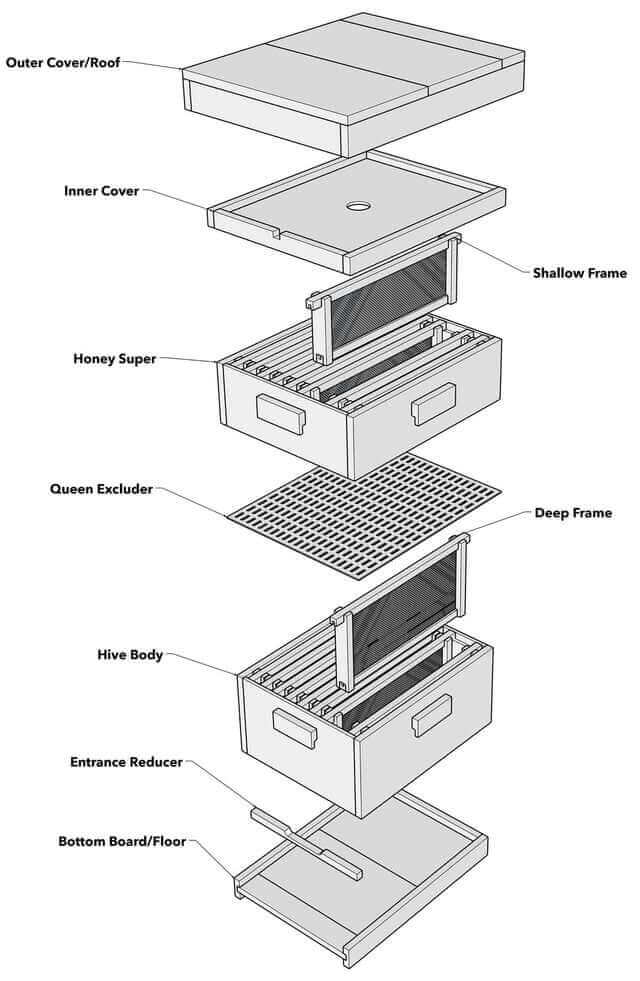
The hive body, bottom board, frames, feeder if needed, entrance reducer, cover, protective clothing, and other installation supplies should ideally be ready before you bring the bees home.
Should You Order Package Bees as Early as Possible?
| Buying package bees earlier is not automatically better; choose a reputable supplier and reserve bees for an appropriate local installation period. |
Beginning beekeepers sometimes feel pressure to purchase package bees extremely early because they are worried that all reputable suppliers will immediately sell out. Availability does vary, and popular pickup dates can fill, but there is no single nationwide date that guarantees the best package-bee purchase.
Many local and regional suppliers begin taking reservations during the winter, and university Extension recommendations can vary based on climate and local package availability. Utah State University Extension, for example, notes that orders commonly begin in January in its region, while Penn State discusses ordering by early winter for Pennsylvania spring arrivals.
This is why Lappe's recommends avoiding unnecessary pressure and instead evaluating the supplier, delivery or pickup method, bee availability, genetics, pricing, guarantee terms, and expected installation timing for your location.
Waiting indefinitely can reduce your choices, but ordering simply because a seller creates urgency is not the same as making a well-informed reservation.
How Are Package Bees Different From a Nuc?
| Package bees arrive as loose bees with a queen, while a nuc arrives as a small established colony living on frames with comb and brood. |
The difference affects what the new colony has available immediately after installation. A package typically begins without established comb, brood, or stored resources already belonging to that colony. The bees must settle into their hive and begin building their colony from that starting point.
A nuc usually arrives with several frames, an established queen, brood in different stages, stored food, and drawn comb. Because of that, comparing a package directly with a nuc based only on purchase price does not tell the whole story.
| Feature | Package Bees | Nuc Colony |
|---|---|---|
| Worker bees | Yes | Yes |
| Queen | Normally supplied in a separate queen cage | Normally established within the nuc |
| Drawn comb | No established hive frames included | Yes |
| Brood | No | Typically yes |
| Installation | Bees are transferred from the shipping cage into hive equipment | Nuc frames are transferred into the beekeeper's hive |
What Does Lappe's Recommend Before You Bring Package Bees Home?
| Have your hive ready, understand the supplier's policies, plan your transportation, and avoid unnecessary delays once the live bees are in your care. |
From our experience helping beekeepers prepare for package bees, planning ahead makes the entire process easier. Know where the hive will sit, assemble the equipment, have the necessary tools and feeding equipment available, and read the supplier's installation instructions before pickup day.
Most importantly, treat live-bee pickup as something that deserves your attention rather than another errand to fit into the day. Once the bees are in your vehicle, take them where they need to go instead of leaving them exposed to avoidable conditions while completing unrelated stops.
What Are Common Questions About Shipping Package Honey Bees?
Can package honey bees be shipped through USPS?
Yes. USPS allows ordinary honey bees to be mailed by surface transportation within the continental United States when applicable mailing requirements are met.
Can package honey bees be shipped by air through USPS?
No. Ordinary honey bees are restricted to surface transportation through USPS. Queen honey bees have separate rules that permit limited air transportation.
Can queen honey bees be shipped by air?
Yes. USPS permits queen honey bees to travel by air, with each air mailpiece limited to one queen accompanied by no more than eight attendant honey bees.
What temperature range does USPS specify for mailed bees?
USPS Publication 52 specifies a tolerable temperature range of 40°F to 100°F for mailed bees and requires packaging that provides adequate ventilation.
Are package honey bees the same as a nuc?
No. Package bees arrive as loose worker bees with a queen, while a nuc is a small established colony that normally includes frames, drawn comb, brood, food stores, and a queen.
Should package bees be left inside a parked vehicle?
Avoid leaving live bees in a parked vehicle where temperatures can rise quickly. Keep the package ventilated and protected from unnecessary temperature extremes.
What should I check before buying shipped package bees?
Review the transportation method, arrival procedures, live-arrival guarantee, reporting deadline, replacement policy, pickup requirements, and supplier reputation before ordering.
Should I have my hive ready before picking up package bees?
Yes. Assemble and position the hive equipment before receiving the bees so avoidable delays do not occur when it is time to install them.
Is ordering package bees earlier always better?
No. Good reservation timing depends on supplier availability, your local installation season, desired genetics, pickup dates, and your individual beekeeping plans.
Does USPS mailability mean shipping package bees is risk-free?
No. Live-bee transportation still involves handling, weather, temperature exposure, and time in transit, which is why supplier practices and prompt handling remain important.
What Sources Support This Guide?
Regulatory statements and general package-bee handling guidance in this article were reviewed against the following primary and university Extension resources:
- USPS Publication 52, Section 526 — Mailable Live Animals — United States Postal Service. Includes current requirements for mailing honey bees and queen honey bees.
- Installing Packaged Bees — Penn State Extension. Covers package-bee preparation, arrival, installation, queen handling, and feeding.
- Setting Up and Placing a Hive — Utah State University Extension. Provides guidance on preparing equipment, acquiring bees, package installation, and early colony management.
- Beginning Beekeeping in Mississippi — Mississippi State University Extension. Includes package-bee transportation, overheating precautions, installation, and early management.
- Honey Bees and Beekeeping — University of Georgia Cooperative Extension. Includes information on purchasing and installing packaged honey bees.
Postal requirements and state regulations can change. Always review the current USPS rules and any applicable state requirements before mailing live bees.
From all of us here at Lappe's Bee Supply —


About the Author: The Lappe's Bee Supply Team combines practical beekeeping experience with day-to-day work helping beekeepers select equipment, prepare colonies, and manage seasonal beekeeping needs.
Editorial Standards: Regulatory statements are based on authoritative sources identified above. Practical recommendations identified as Lappe's guidance reflect our beekeeping and customer-support experience and are not presented as USPS regulations.
FAQs
Can package honey bees be shipped through USPS?
Yes. USPS allows ordinary honey bees to be mailed by surface transportation within the continental United States when applicable mailing requirements are met.
Can package honey bees be shipped by air through USPS?
No. Ordinary honey bees are restricted to surface transportation through USPS. Queen honey bees have separate rules that permit limited air transportation.
Can queen honey bees be shipped by air?
Yes. USPS permits queen honey bees to travel by air, with each air mailpiece limited to one queen accompanied by no more than eight attendant honey bees.
What temperature range does USPS specify for mailed bees?
USPS Publication 52 specifies a tolerable temperature range of 40°F to 100°F for mailed bees and requires packaging that provides adequate ventilation.
Are package honey bees the same as a nuc?
No. Package bees arrive as loose worker bees with a queen, while a nuc is a small established colony that normally includes frames, drawn comb, brood, food stores, and a queen.
Should package bees be left inside a parked vehicle?
Avoid leaving live bees in a parked vehicle where temperatures can rise quickly. Keep the package ventilated and protected from unnecessary temperature extremes.
What should I check before buying shipped package bees?
Review the transportation method, arrival procedures, live-arrival guarantee, reporting deadline, replacement policy, pickup requirements, and supplier reputation before ordering.
Should I have my hive ready before picking up package bees?
Yes. Assemble and position the hive equipment before receiving the bees so avoidable delays do not occur when it is time to install them.
Is ordering package bees earlier always better?
No. Good reservation timing depends on supplier availability, your local installation season, desired genetics, pickup dates, and your individual beekeeping plans.
Does USPS mailability mean shipping package bees is risk-free?
No. Live-bee transportation still involves handling, weather, temperature exposure, and time in transit, which is why supplier practices and prompt handling remain important.