Welcome to Lappe's Bee Supply's blogs section. We are a trusted beekeeping company in the USA. We give relevant insights, seasonal guidance, and professional advice for beekeepers of all experience levels. From hive management and bee wellness to honey production and equipment guides, we have it all that you will require to thrive. Get updated, motivated, and connected with the beekeeping community through regular news from Lappe's Bee Supply.
Honey Bee Incubation Rates
The Buzz About This Post
- Key Takeaways
- Table of Contents
- What Is Honey Bee Incubation Rates?
- How Long Does Honey Bee Development Take?
- What Happens During Each Brood Stage?
- What Factors Affect Honey Bee Incubation?
- Why Does Brood Nest Temperature Matter So Much?
- How Can Beekeepers Support Healthy Brood Development?
- Why Do Honey Bee Incubation Rates Matter?
- Sources and Further Reading
- FAQs
Honey Bee Incubation Rates: How Long Bee Brood Takes to Develop
Honey bee incubation rates is one of the most useful timelines a beekeeper can learn. Once you understand when eggs hatch, when cells are capped, and when new bees emerge, brood inspections become much easier to interpret. The brood nest is the nursery of the colony, and its timing tells a clear story about queen performance, colony strength, nutrition, pest pressure, and seasonal buildup.
Key Takeaways
- Honey bee incubation rates is the development of brood from egg to adult inside colony-regulated wax cells.
- Worker bees usually emerge in about 21 days, queens in about 16 days, and drones in about 24 days.
- The brood nest is normally maintained near 94–96°F, or about 34.4–35.5°C.
- Temperature, nutrition, humidity, disease, Varroa mites, and seasonal forage all affect brood survival.
- A consistent brood pattern is one of the clearest field signs of a healthy, productive colony.
- Beekeepers can support brood development by managing Varroa, maintaining food stores, and avoiding unnecessary stress.
What Is Honey Bee Incubation Rates?
Honey bee incubation rates is the controlled development of brood from egg to adult, supported by colony temperature, nutrition, and worker care.
- Honey bee brood includes eggs, larvae, and pupae developing inside wax cells.
- Worker bees regulate brood nest temperature, humidity, ventilation, and feeding.
- Incubation success determines how many young bees enter the colony workforce.
- Healthy brood development supports pollination strength, honey production, and colony survival.
In beekeeping, “incubation” does not mean a bee sits on eggs like a bird. Honey bees incubate brood as a superorganism. Thousands of workers help maintain the nursery area of the hive, often called the brood nest. They warm it, cool it, feed larvae, remove diseased material, polish cells, and respond to seasonal changes. This cooperative care is why a strong colony can raise large amounts of brood during spring buildup.
The core term to remember is brood. Brood means developing honey bees before they emerge as adults. Open brood includes eggs and uncapped larvae. Capped brood includes pupae sealed under wax cappings. When beekeepers inspect a hive, the pattern, age, and amount of brood provide a practical field report on colony health.
How Long Does Honey Bee Development Take?
Worker bees usually emerge in 21 days, queens in 16 days, and drones in 24 days when brood nest conditions remain favorable.
- Worker bees typically need about 21 days from egg to adult emergence.
- Queen bees develop fastest and usually emerge in about 16 days.
- Drone bees develop slowest and typically emerge in about 24 days.
- Eggs usually hatch after about three days.
- Development timing may shift slightly when colony conditions are stressed.
| Bee Type | Egg Stage | Larval Stage | Pupal / Capped Stage | Typical Total Development | Why It Matters |
|---|---|---|---|---|---|
| Queen | About 3 days | About 5–6 days | About 7–8 days | About 16 days | Fast queen development helps colonies replace or raise queens quickly. |
| Worker | About 3 days | About 6 days | About 12 days | About 21 days | Worker timing helps beekeepers predict future colony population growth. |
| Drone | About 3 days | About 6–7 days | About 14–15 days | About 24 days | Drone production reflects reproductive season, colony resources, and mating readiness. |
These timelines are especially useful during inspections. If a beekeeper sees eggs, the queen was likely present within the last few days. If the hive has capped worker brood, new workers may begin emerging within roughly one to two weeks, depending on brood age. If a colony is raising queen cells, timing becomes even more important because queens emerge sooner than workers or drones.
The classic development schedule gives beekeepers a practical calendar. It helps with queen checks, split timing, swarm prevention, mite management, and evaluating whether a colony is growing normally. A single frame of capped brood can represent a near-future wave of new workers, but only if the colony has enough adult bees, food, and health to bring that brood to emergence.
What Happens During Each Brood Stage?
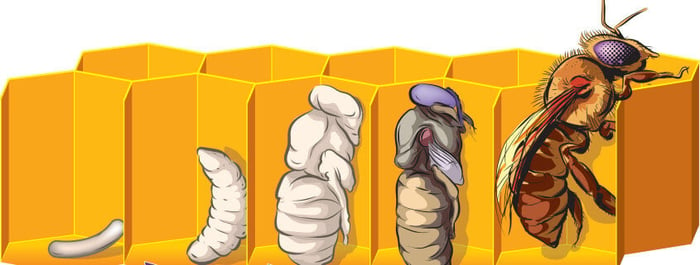
Honey bees pass through egg, larva, pupa, and adult stages, with each stage requiring precise feeding and stable nest conditions.
- The egg stage begins when the queen lays an egg in a prepared wax cell.
- Larvae are fed by nurse bees and grow rapidly before cells are capped.
- Pupae transform inside capped cells before adult bees emerge.
- Adult bees chew through the wax capping when development is complete.
The Egg Stage
The egg stage lasts about three days. Fresh eggs look like tiny white grains standing upright in the bottom of the cell. As they age, they lean and eventually lie down before hatching. Seeing eggs is one of the best signs that a queen has been laying recently, although eggs alone do not prove the queen is still alive at the exact moment of inspection.
The Larval Stage
After hatching, the larva looks like a small white curl in the bottom of the cell. Nurse bees feed young larvae intensively. All larvae receive glandular secretions early in development, and queen-destined larvae continue receiving rich royal jelly in specialized queen cells. Worker and drone larvae receive brood food that supports rapid growth before capping.
The Pupal Stage
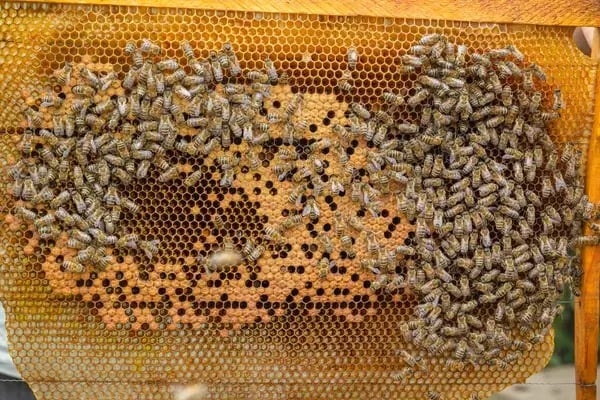
Once larvae are ready to pupate, workers cap the cells with wax. Inside the capped cell, the larva transforms into an adult bee. Wings, legs, eyes, body segments, and other adult structures form during this stage. To the beekeeper, capped worker brood usually appears as a tan or light brown patch. A tight, even brood pattern often indicates a productive queen and good brood survival.
Adult Emergence
At the end of development, the adult bee chews through the cell capping and emerges. Young worker bees usually begin with in-hive tasks, including cleaning cells, feeding larvae, tending the queen, processing nectar, producing wax, and guarding the entrance. Later, they become foragers. This age-based division of labor allows the colony to replace older foragers with younger bees as the season progresses.
What Factors Affect Honey Bee Incubation?
Temperature, nutrition, humidity, queen quality, disease pressure, Varroa mites, and season all affect brood survival and emergence.
- Brood development depends on a stable, well-regulated brood nest.
- Pollen and nectar availability influence how much brood a colony can raise.
- Varroa mites and associated viruses can damage developing and emerging bees.
- Weak colonies may struggle to cover and warm large brood areas.
- Seasonal weather and forage patterns influence queen laying and brood expansion.
Honey bee incubation is not controlled by the calendar alone. A colony may have the biological capacity to raise brood, but it still needs enough adult bees, food, and health to do the job. During spring buildup, a strong queen may lay heavily as pollen becomes available and temperatures improve. During drought, dearth, disease pressure, or poor nutrition, brood rearing can slow or become patchy.
Queen quality also matters. A productive queen lays a consistent pattern of fertilized eggs in worker cells. A failing queen may lay unevenly, skip cells, produce too much drone brood, or stop laying altogether. However, a poor-looking brood pattern is not always the queen’s fault. Chilled brood, mites, disease, pesticide stress, or lack of nurse bees can also create irregular brood.
For beekeepers, the best approach is to read brood conditions as a whole picture. Look at eggs, larvae, capped brood, food stores, adult bee coverage, mite levels, queen status, and seasonal timing together. One sign rarely tells the full story.
Why Does Brood Nest Temperature Matter So Much?
Honey bee brood develops best near 94–96°F because temperature affects growth speed, survival, and adult bee quality.
- Honey bee colonies regulate the brood nest within a narrow temperature range.
- Workers generate heat by contracting flight muscles.
- Workers cool colonies by fanning, spreading water, and increasing ventilation.
- Cold stress can slow development or kill brood.
- Heat stress can damage developing bees and reduce emergence success.
The brood nest is one of the most carefully managed areas of the hive. Worker bees cluster over brood to keep it warm when temperatures drop. When the hive becomes too hot, workers fan air, collect water, and use evaporative cooling. These behaviors require energy, coordination, and enough adult bees to cover the brood area.
Temperature is one reason beekeepers avoid overexpanding weak colonies too early. Giving too much empty space to a small colony can make it harder for bees to protect and warm brood. At the same time, crowded colonies in warm weather need ventilation and room to reduce overheating and swarm pressure. Good management keeps the brood nest protected without suffocating colony growth.
How Can Beekeepers Support Healthy Brood Development?
Beekeepers support brood by managing mites, protecting food stores, maintaining ventilation, and inspecting brood patterns regularly.
- Inspect brood patterns without keeping frames exposed longer than needed.
- Monitor Varroa levels and treat when thresholds or local guidance indicate action.
- Maintain adequate honey, nectar, syrup, pollen, or pollen substitute when needed.
- Keep hives dry, ventilated, and appropriately sized for colony strength.
- Evaluate queen performance by checking eggs, larvae, capped brood, and pattern consistency.
Brood Health Checklist for Beekeepers
- Look for eggs. Eggs suggest recent queen laying and help estimate brood timing.
- Check larval appearance. Healthy larvae usually look pearly white and moist.
- Evaluate capped brood. A solid, even pattern often suggests good queen performance and brood survival.
- Confirm food availability. Brood rearing requires carbohydrates from nectar or honey and protein from pollen.
- Monitor Varroa mites. Varroa damages bees during development and spreads harmful viruses.
- Watch colony population. Adult bees must be numerous enough to cover and care for brood.
- Adjust for season. Spring buildup, summer dearth, fall preparation, and winter clustering all change brood needs.
Healthy brood management is mostly about reducing stress and keeping the colony capable of doing what bees already do naturally. Avoid unnecessary inspections during cold or windy weather. Feed only when colonies need support, and avoid assuming every colony requires the same intervention. Strong colonies with good forage may not need supplemental feed, while new colonies, splits, nucs, or colonies in dearth may benefit from careful support.
Varroa management deserves special attention. Mites reproduce in brood cells and can harm developing bees before they ever emerge. Colonies can look strong during summer and still collapse later if mite pressure grows unchecked. A good brood management plan includes routine mite monitoring, not just visual inspection.
Why Do Honey Bee Incubation Rates Matter?
Incubation rates matter because brood timing predicts future workforce size, colony growth, pollination strength, and honey potential.
- Worker brood emerging today becomes part of the colony workforce.
- Brood timing helps estimate when a colony will expand or recover.
- Queen replacement and split timing depend on accurate development schedules.
- Brood health reflects nutrition, pest pressure, queen status, and seasonal conditions.
Beekeepers who understand brood timing can make better decisions. If a colony has many eggs and young larvae, its population increase is still several weeks away. If it has large areas of capped worker brood, new bees may emerge soon. If brood is missing at a time when it should be present, the colony may be queenless, nutritionally stressed, diseased, or responding to seasonal conditions.
Brood timing also matters for splits and queen management. A beekeeper making a walk-away split needs to understand when emergency queen cells may be started, when a virgin queen may emerge, when she may mate, and when new eggs may appear. These timelines are not exact to the hour, but they provide a practical inspection schedule.
On a larger scale, brood health connects to pollination and agriculture. A colony’s foraging force depends on the successful development of workers weeks earlier. Strong Honey Bee Incubation Rates in spring can support nectar collection, crop pollination, and colony expansion. Poor brood development can reduce workforce size before the beekeeper notices a decline at the entrance.
What is honey bee incubation?
Honey bee incubation is the development of brood from egg to adult inside colony-managed wax cells.
How long does a worker bee take to develop?
A worker honey bee usually develops from egg to adult in about 21 days.
How long does a queen bee take to develop?
A queen bee usually develops from egg to adult in about 16 days under favorable colony conditions.
How long does a drone bee take to develop?
A drone honey bee usually develops from egg to adult in about 24 days.
What temperature is best for honey bee brood?
Honey bee brood develops best near 94–96°F, or about 34.4–35.5°C.
What does capped brood mean?
Capped brood means larvae have been sealed under wax cappings so they can pupate and complete development.
Why is my brood pattern spotty?
A spotty brood pattern may indicate queen problems, disease, Varroa mites, chilled brood, poor nutrition, or normal removal of unhealthy brood.
Do honey bee larvae eat royal jelly?
Young larvae receive glandular food from nurse bees, and queen-destined larvae receive royal jelly throughout larval development.
Can cold weather kill brood?
Yes. If adult bees cannot keep brood warm enough, cold exposure can slow development or kill developing bees.
Why do incubation rates matter to beekeepers?
Incubation rates help beekeepers predict population growth, evaluate queen performance, time inspections, and identify colony stress.
Sources and Further Reading
- Thermal Impacts of Apicultural Practice and Products on the Honey Bee Brood Nest — Journal of Economic Entomology
- Honey Bee Nest Thermoregulation: Diversity Promotes Stability — Science
- Managing Varroa Mites in Honey Bee Colonies — NC State Extension
- Managing Varroa Mites in Honey Bee Colonies — Mississippi State University Extension
- Value-Added Products from Beekeeping: Royal Jelly — Food and Agriculture Organization
- Honey Bee Management and Biology Resources — University of Florida IFAS Extension
- Beekeeping and Honey Bee Health Resources — Penn State Extension
- Honey Bee Health and Colony Research — USDA Agricultural Research Service
```
FAQs
What is honey bee incubation?
Honey bee incubation is the development of brood from egg to adult inside colony-managed wax cells.
How long does a worker bee take to develop?
A worker honey bee usually develops from egg to adult in about 21 days.
How long does a queen bee take to develop?
A queen bee usually develops from egg to adult in about 16 days under favorable colony conditions.
How long does a drone bee take to develop?
A drone honey bee usually develops from egg to adult in about 24 days.
What temperature is best for honey bee brood?
Honey bee brood develops best near 94–96°F, or about 34.4–35.5°C.
What does capped brood mean?
Capped brood means larvae have been sealed under wax cappings so they can pupate and complete development.
Why is my brood pattern spotty?
A spotty brood pattern may indicate queen problems, disease, Varroa mites, chilled brood, poor nutrition, or normal removal of unhealthy brood.
Do honey bee larvae eat royal jelly?
Young larvae receive glandular food from nurse bees, and queen-destined larvae receive royal jelly throughout larval development.
Can cold weather kill brood?
Yes. If adult bees cannot keep brood warm enough, cold exposure can slow development or kill developing bees.
Why do incubation rates matter to beekeepers?
Incubation rates help beekeepers predict population growth, evaluate queen performance, time inspections, and identify colony stress.