

Product Overview
10 Frame Budget Beekeeping Starter Kit (Assembled) – Double Wax-Dipped or Painted
Start Your First Hive with Assembled Equipment and the Flexibility to Choose Your Setup
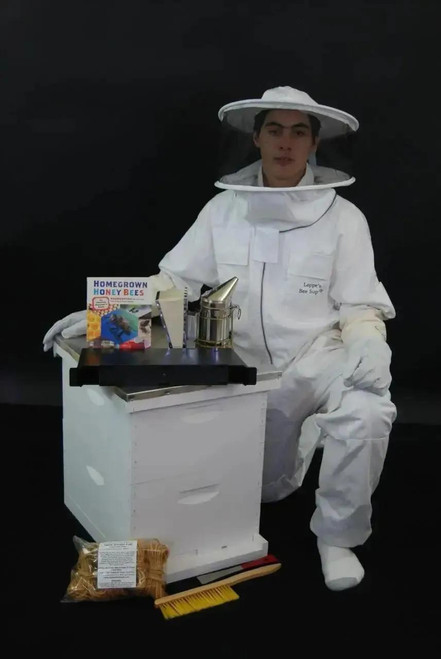
The 10 Frame Budget Beekeeping Starter Kit from Lappe's Bee Supply provides beginning beekeepers with assembled hive equipment, essential tools, and protective clothing for starting a standard 10-frame Langstroth hive. Choose your preferred woodenware finish, bottom board, and frame style to build a setup that fits your beekeeping plans.
With the brood box already assembled, you can spend less time building equipment and more time preparing your apiary and learning to manage your bees. Live honey bees are sold separately, and additional hive equipment may be needed as your colony grows.
Lappe's Bee Supply comes from a commercial beekeeping family with experience dating to 1978. Since 2017, we've served beekeepers with equipment and practical beekeeping education. This starter kit reflects an important principle of beginning beekeeping: start with compatible equipment, understand what each component does, and plan for the colony's changing needs.
10 Frame Budget Starter Kit at a Glance
- Hive configuration: Standard 10-frame Langstroth equipment.
- Brood box: One assembled deep brood box.
- Woodenware finish: Choose painted or double wax-dipped.
- Bottom board: Choose solid or screened with drawer.
- Frames: 10 deep frames; choose triple-wax-coated one-piece plastic frames or assembled wooden frames with triple-wax-coated foundation.
- Feeding Equipment: One 9-5/8" deep in-hive feeder with cap and ladders; holds up to 96 fluid ounces.
- Protective Clothing: Your selected ventilated or standard beekeeping suit or jacket, plus one pair of gloves.
- Beekeeping Tools: One smoker, one economy hive tool, one bee brush, and one bag of smoker fuel.
- Hive Covers: One inner cover and one outer hive cover (lid) included.
- Hive expansion: Supports appropriately sized, compatible 10-frame Langstroth equipment.
- Live bees: Sold separately.
Why Choose This Beekeeping Starter Kit?
Spend Less Time Assembling Woodenware
The included deep brood box arrives assembled, reducing the initial construction work required to prepare your hive. You'll still need to position the equipment, install the frames, prepare the feeder, and complete the hive setup before introducing bees.
Choose the Equipment Configuration You Prefer
Not every beekeeper wants the same woodenware finish, bottom board, or frame construction. This kit offers choices in all three areas, allowing you to select the equipment you want to begin working with rather than requiring one fixed configuration.
Build on a Standard Langstroth Hive System
A 10-frame Langstroth hive uses removable frames housed inside compatible hive boxes. Its standardized configuration makes it possible to add appropriately sized brood boxes, honey supers, and replacement components as colony needs change.
That flexibility matters because a starter kit is the beginning of a hive equipment system, not necessarily the complete equipment inventory you'll use throughout the season.
Before You Order: Is This the Right Starter Kit?
This kit is designed for beekeepers who want to start with one assembled 10-frame Langstroth deep brood box and purchase additional hive equipment as their colony develops.
- Starting with one brood box: This kit includes one deep brood box, not a complete multi-box hive setup.
- Planning to install a package or nuc: Live honey bees are sold separately. Confirm that your equipment and installation plans are appropriate for the bees you purchase.
- Using an in-hive feeder: The included feeder takes up space normally occupied by frames. Not all 10 supplied frames can be installed alongside the feeder at the same time.
- Expanding your hive: Additional brood boxes and matching frames may be needed as your colony grows.
How Lappe's Bee Supply Prepares Your Starter Kit
Before shipping the 10 Frame Budget Beekeeping Starter Kit, our team checks that the selected woodenware finish, bottom board, and frame configuration match the customer's order. We also review the included equipment to help ensure the kit contains the components specified for the selected configuration.
Choose Your Starter Kit Options
Before ordering, review the three available equipment selections. Each changes part of your hive configuration and may affect your preferred maintenance or management approach.
1. Painted or Double Wax-Dipped Woodenware
Painted woodenware has a traditional exterior protective finish. Painted hive equipment should be inspected periodically for cracking, peeling, or wear, particularly around exposed edges and joints.
Double wax-dipped woodenware uses a wax treatment instead of the traditional painted finish. Its appearance may change with exposure and use, and the wood should still be inspected for loose joints, warping, and moisture-related deterioration.
Both choices require normal equipment inspection and care. Choose based on your preferred finish, appearance, maintenance expectations, and the available purchase options rather than assuming either treatment guarantees a longer service life.
2. Solid or Screened Bottom Board with Drawer
A solid bottom board provides a continuous bottom surface beneath the hive's brood chamber.
A screened bottom board with drawer uses a screened surface and a removable drawer. This configuration offers different airflow characteristics and may support certain debris-monitoring practices. The drawer also requires periodic inspection and cleaning.
Neither configuration eliminates the need to manage hive ventilation, moisture, pests, or colony health. Your selection should reflect your preferred equipment arrangement and management practices.
3. One-Piece Plastic Frames or Assembled Wooden Frames
Both available frame configurations incorporate triple-wax-coated surfaces, but their construction differs.
- Triple-wax-coated one-piece plastic frames: A one-piece frame construction that combines the frame and foundation structure. Inspect periodically for cracks, warping, or damage to the foundation surface.
- Assembled wooden frames with triple-wax-coated foundation: Traditional wooden frame construction with wax-coated foundation. Inspect the frame joints, wood, foundation, and comb during routine maintenance.
Foundation provides a patterned starting surface on which honey bees can build comb. Wax coating is part of the supplied frame configuration, but comb construction still depends on colony strength, nutrition, forage, weather, and other conditions.
What's Included in the 10 Frame Budget Beekeeping Starter Kit?
The 10 Frame Budget Beekeeping Starter Kit includes assembled hive equipment, your choice of woodenware finish, bottom board, and frame construction, along with essential beekeeping tools and protective clothing. Each kit includes the following equipment to help you prepare for your first honey bee colony.
- 1 Assembled 10-Frame Deep Brood Box: A standard Langstroth deep hive body, supplied assembled in your selected painted or double wax-dipped finish.
- 1 Bottom Board: Choose a solid bottom board or a screened bottom board with drawer, depending on your preferred hive configuration.
- 10 Deep Frames: Choose between triple-wax-coated one-piece plastic frames or assembled wooden frames with triple-wax-coated foundation. Both options are designed for standard 10-frame Langstroth deep hive bodies.
- 1 Deep In-Hive Frame Feeder with Cap and Ladders: A 9-5/8" deep feeder that holds up to 96 fluid ounces of feed. The cap and ladder system helps reduce the risk of bees drowning, discourages unwanted comb buildup inside the feeder, and provides additional support to help reduce bowing and bending. The feeder measures 2-1/4" wide by 8-7/8" deep and may occupy approximately 1-1/2 to 2 deep frame positions, depending on the installation.
- 1 Beekeeping Suit or Jacket: Includes one protective beekeeping suit or jacket in the style and ventilation option selected when ordering. Review the available product options to confirm your preferred clothing configuration.
- 1 Pair of Beekeeping Gloves: Protective gloves for handling hive equipment and working around honey bees.
- 1 Bee Smoker: A beekeeping smoker used to produce smoke during routine hive inspections and colony management.
- 1 Economy Hive Tool: A multipurpose tool for separating hive components, loosening propolis seals, and assisting with frame removal.
- 1 Bee Brush: A brush designed to gently move bees away from frames and hive equipment during inspections.
- 1 Bag of Smoker Fuel: Fuel for use with the included bee smoker.
- 1 Inner Cover: Fits beneath the outer cover as part of the hive's upper covering system.
- 1 Outer Hive Cover (Lid): Provides the upper protective covering for the hive.
Important: Live honey bees are not included with this starter kit. Additional brood boxes, compatible frames, feeding supplies, and colony-management equipment may be needed as your colony develops.
What Will You Need Separately?
The 10 Frame Budget Beekeeping Starter Kit includes one assembled deep brood box, 10 deep frames, your selected bottom board, an inner cover, and an outer hive cover (lid) for the initial hive structure. Live honey bees are sold separately. Before introducing your colony, prepare a suitable hive location and confirm that you have the additional feeding and colony-management supplies appropriate for your setup.
Before Installing Your Bees
- Live Honey Bees: Purchase a package of bees or a nucleus colony separately.
- Hive Location and Support: Prepare a stable, accessible location and appropriate support for your hive.
- Feed and Feeding Supplies: Have suitable honey bee feed available when supplemental feeding is needed. The kit includes an in-hive feeder; check the selected product configuration for any additional feeding supplies.
- Varroa Monitoring Supplies: Plan for colony-health monitoring and an appropriate mite-management strategy.
Equipment You May Need as Your Colony Grows
- Additional Deep Brood Boxes: A growing colony may require more brood space.
- Matching Deep Frames: Additional brood boxes require compatible frames.
- Honey Supers and Frames: Add suitable honey-storage equipment when colony development and nectar conditions support expansion.
- Seasonal Equipment: Consider additional supplies based on local climate, colony condition, and management needs.
Beginner Tip: Do not assume every piece of equipment needed throughout the first season must be installed immediately. Begin with a configuration appropriate for your colony and expand as conditions require.
Helpful Beekeeping Supplies and Resources
As you prepare your first colony, consider the live bees, additional hive equipment, feeding supplies, and colony-health tools that may be needed beyond your starter kit.
- Live Honey Bees: Explore Italian Package Honey Bees for starting your colony.
- Varroa Mite Management: Explore Apivar Mite Treatment as one mite-management option. Always follow the current product label.
- Additional Brood Equipment: Explore assembled painted 10-frame deep brood boxes or double wax-dipped 10-frame deep brood boxes, along with matching deep frames and foundation, when additional brood space is needed. Confirm the 10-frame format and deep frame size before purchasing.
- Supplemental Feeding: Explore honey bee feed and feeding supplies appropriate for your colony's needs. The kit already includes an in-hive feeder, but feed is purchased separately.
Understanding 10-Frame Langstroth Compatibility
A 10-frame Langstroth hive is a removable-frame beehive system built around hive boxes designed for the standard 10-frame arrangement. Compatible boxes and components can be added or replaced as the colony grows.
Two compatibility details are especially important:
- Frame count: Eight-frame and 10-frame hive equipment have different widths and should not be treated as interchangeable.
- Frame depth: Deep brood boxes require appropriately sized deep frames. Medium frames are not direct substitutes for deep frames.
When purchasing additional equipment, confirm both the 10-frame format and the required box or frame depth. Matching the hive format alone does not guarantee that every component will fit correctly.
Getting Your Hive Ready for Bees
Before introducing your colony, prepare the hive location and check the condition and fit of the equipment.
- Prepare the hive location. Choose a stable, accessible location that allows you to inspect and maintain the colony.
- Position the bottom board. Place your selected bottom board on a stable hive support.
- Install the brood box. Position the assembled deep brood box on the bottom board and check that the components sit correctly.
- Install the frames. Use the selected frames and confirm that their depth matches the brood box.
- Prepare the In-Hive Feeder. Inspect the included feeder, cap, and ladders before use. Because the feeder occupies space normally used by frames, remove enough frames to accommodate it while maintaining proper spacing for the remaining frames. Follow the feeder's installation guidance and retain the removed frames for later use.
- Install the Included Hive Covers. Position the included inner cover above the brood box, then place the outer hive cover (lid) on top to complete the hive's upper covering system.
- Prepare for colony installation. Follow introduction guidance appropriate to the separately purchased bees, whether you're starting with a package or a nucleus colony.
Before installation, confirm that the hive is stable, the frames are properly positioned, and the equipment is free of damage that could interfere with normal use.
When Will Your Bees Need More Hive Space?
A growing colony may need additional brood space during its first season. The right time to expand depends on colony population, brood development, frame occupancy, forage availability, and weather rather than a fixed date.
Lappe's published beginner-beekeeping guidance identifies approximately three to four weeks after spring installation as a possible expansion timeframe for some strong first-year colonies under favorable conditions. This is a planning reference, not a guaranteed schedule.
During inspections, watch how much of the available comb and brood space the colony is using. A rapidly developing colony may need another appropriately sized brood box and matching frames, while a slower-developing colony may not need additional space as quickly.
Honey-storage equipment should also be added according to colony development and nectar conditions. A new hive does not automatically produce a harvestable honey surplus during its first season.
Care and Maintenance for Your Starter Kit
Routine inspection helps you identify equipment problems before they interfere with hive management.
Woodenware and Bottom Boards
Inspect woodenware for loose joints, warping, deteriorating exterior finishes, and moisture damage. Painted surfaces may require exterior finish maintenance over time. Wax-dipped woodenware should also be inspected for structural deterioration.
Remove accumulated debris from bottom boards when needed. If you select a screened bottom board with drawer, inspect and clean the drawer periodically.
Frames and Foundation
Check plastic frames for cracking, warping, or damaged foundation surfaces. Inspect wooden frames for loose joints, damaged wood, and foundation or comb deterioration.
Comb and frames may require replacement because of damage, contamination, disease concerns, or other management needs. Evaluate their condition during regular hive inspections.
Feeder and Protective Wear
Clean the feeder after use, allow it to dry before storage, and inspect it for leaks, cracks, residue, or damaged seals. Feeders containing leftover syrup should not be stored without cleaning.
Before wearing protective equipment, check the veil, seams, fabric, elastic, zippers, and closures. Damaged openings may allow bees inside. Protective beekeeping clothing reduces exposure but should never be considered sting-proof.
Common First-Year Beekeeping Mistakes to Avoid
- Assuming bees are included: Plan and purchase your colony separately.
- Mixing incompatible equipment: Match both frame count and frame depth when expanding your hive.
- Waiting too long to inspect for expansion needs: Monitor brood development and available space during the active season.
- Expecting immediate comb construction: Bees need favorable colony and environmental conditions to draw comb.
- Assuming equipment solves colony-health problems: Monitor food stores, queen activity, pests, disease indicators, and brood condition independently of equipment maintenance.
- Overlooking routine care: Inspect woodenware, frames, feeders, and protective clothing for damage and wear.
Frequently Asked Questions
Does the 10 Frame Budget Beekeeping Starter Kit include live bees?
No. Live honey bees are sold separately. The kit supplies starter equipment for preparing a 10-frame Langstroth hive.
How many brood boxes are included?
The kit includes one assembled deep brood box. Additional brood boxes and matching frames may be needed as your colony grows.
What is the difference between the two frame choices?
One option uses triple-wax-coated one-piece plastic frames. The other uses assembled wooden frames with triple-wax-coated foundation. Both provide a starting surface for comb construction, but their materials and maintenance considerations differ.
Can I use other Langstroth equipment with this starter kit?
Yes, when the additional equipment matches the standard 10-frame Langstroth format and the required component dimensions. Deep and medium frames are not interchangeable.
Can I use all 10 included frames with the in-hive feeder?
No. The included in-hive feeder occupies approximately 1-1/2 to 2 deep frame positions. Remove enough frames to accommodate the feeder while maintaining proper spacing for the remaining frames. Keep the removed frames for later use when the feeder is no longer installed.
Will I need another brood box during my first season?
You may. Strong spring colonies can require additional brood space relatively soon after installation, but expansion should be based on observed colony growth and available space rather than a fixed timetable.
Is a screened bottom board better than a solid bottom board?
Neither configuration is universally better. A screened bottom board with drawer offers different airflow and potential monitoring uses, while a solid bottom board provides a continuous bottom surface. Choose according to your equipment preferences and management practices.
Will the triple-wax-coated frames make my bees draw comb faster?
The frames include triple-wax-coated surfaces, but no specific comb-drawing speed is guaranteed. Colony strength, nutrition, forage, weather, and management conditions influence comb construction.
Does this kit provide everything needed for the entire first beekeeping season?
No. The kit includes one assembled 10-frame deep brood box, 10 deep frames, your selected bottom board, an in-hive feeder, inner and outer hive covers, protective clothing, gloves, and essential beekeeping tools. Live bees are sold separately. Feed, additional brood equipment, Varroa monitoring supplies, and other colony-management equipment may be needed depending on your colony's development and management requirements.
Start Your Beekeeping Journey with the Right Foundation
The 10 Frame Budget Beekeeping Starter Kit offers a practical starting point for establishing a Langstroth hive while allowing you to choose the equipment configuration that fits your preferences.
Select your woodenware finish, bottom board, and frame style before ordering. Prepare your hive location, arrange for live bees separately, and plan for additional equipment as your colony grows.