Welcome to Lappe's Bee Supply's blogs section. We are a trusted beekeeping company in the USA. We give relevant insights, seasonal guidance, and professional advice for beekeepers of all experience levels. From hive management and bee wellness to honey production and equipment guides, we have it all that you will require to thrive. Get updated, motivated, and connected with the beekeeping community through regular news from Lappe's Bee Supply.
What to Do When You See Queen Cells in a Bee Hive
The Buzz About This Post
- What are queen cells, and why do honey bees make them?
- How can you tell swarm, supersedure, and emergency cells apart?
- What should you inspect when you find one?
- What should you do after finding queen cells?
- How should you manage swarm cells?
- How long should you wait after queen replacement or a split?
- What mistakes should be avoided when managing cells?
- How can better records improve future queen-cell decisions?
- Frequently Asked Questions?
- Does finding cells mean my hive will swarm?
- Should I remove the cells when I find them?
- Where are swarm cells usually found?
- Where are supersedure cells usually found?
- What are emergency cells?
- How long does a queen take to develop?
- How soon will a virgin queen begin laying eggs?
- Can adding another hive box stop swarming?
- Will cutting out the cells prevent a swarm?
- How can I tell whether my colony has successfully requeened itself?
- Which sources support this guide?
- FAQs
What Should You Do When You Find Queen Cells in a Beehive?
Finding Queen cells does not automatically mean your colony is about to swarm. Honey bees raise new queens for several reasons, including swarming, supersedure, and emergency queen replacement. The best response depends on what is happening throughout the colony, not simply where one developing cell appears.
Author: Lappe's Bee Supply
About Lappe's: Lappe's Bee Supply has served beekeepers since 1978 with beekeeping equipment, live bees, practical education, and hands-on support.
Published: July 29, 2025
Last updated: August 18, 2026
Editorial standards: Educational recommendations are reviewed against hands-on beekeeping experience and reputable university, extension, government, or primary research sources.
What are queen cells, and why do honey bees make them?
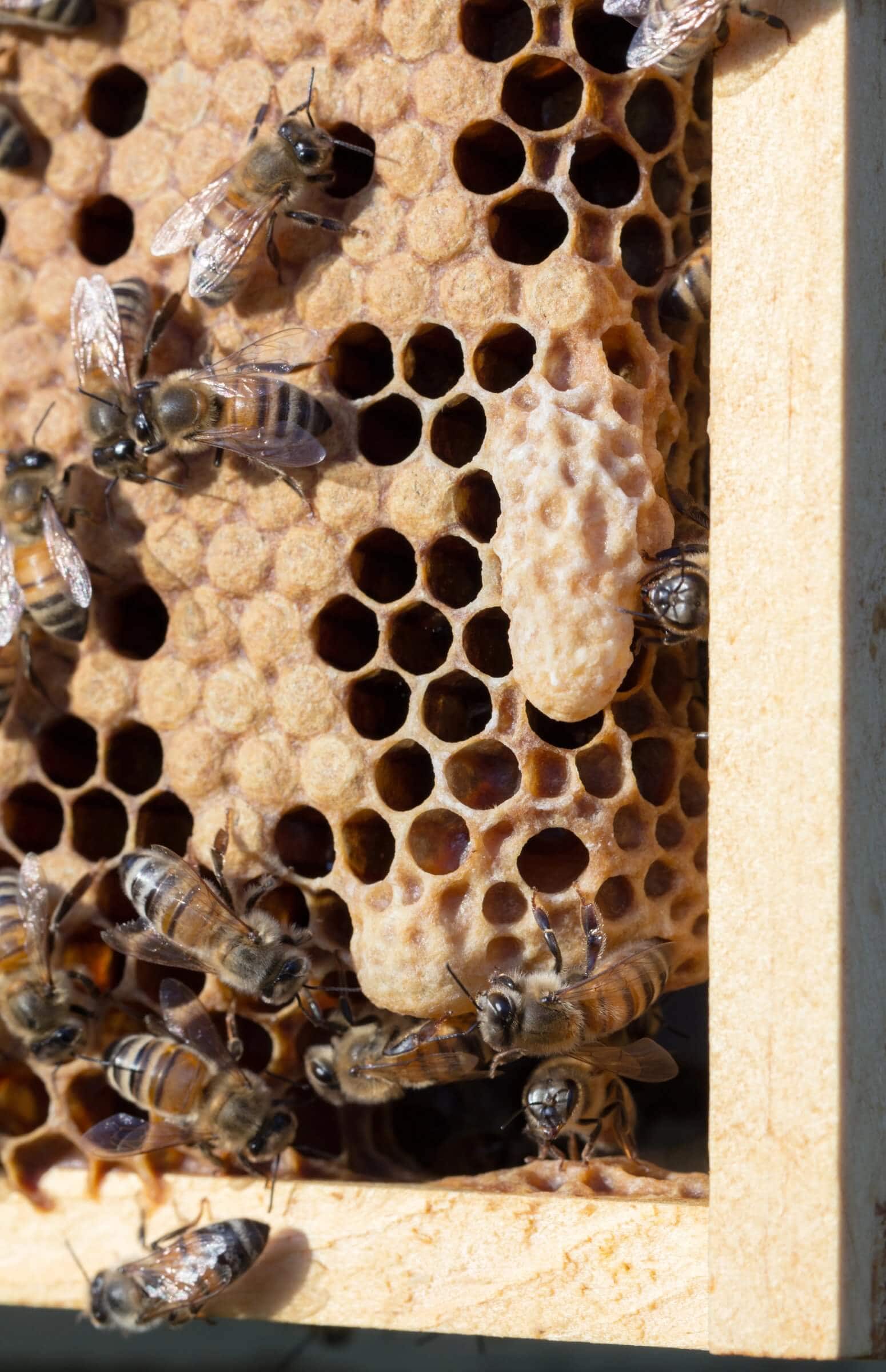
These cells are enlarged cells worker bees build to raise new queens during swarming, supersedure, or emergency queen-rearing in the colony.
- Queen-rearing cells are used specifically to raise developing queens.
- Developing cells normally hang vertically and develop a textured, peanut-like appearance.
- Colonies commonly raise replacement queens during swarming, supersedure, or emergency queen loss.
- Queen development from egg to adult normally takes about 16 days.
- An empty queen cup does not necessarily mean the colony is actively raising a queen.
Worker bees can rear a queen from a fertilized egg or sufficiently young female larva. The developing queen receives specialized nutrition and is raised in a larger vertical cell that extends outward and downward from the comb. Penn State Extension identifies three primary situations in which a colony naturally raises another queen: reproduction through swarming, replacement of a queen through supersedure, and emergency replacement after queen loss.
Beekeepers should also distinguish between an empty queen cup and an actively developing queen-rearing cell. Colonies may maintain empty queen cups without immediately raising a queen. When a cup contains an egg or developing larva with royal jelly, active queen rearing has begun.
Queen cell terminology at a glance
| Term | What It Means | What It May Indicate |
|---|---|---|
| Queen cup | A small, unfinished cup without a developing queen. | Normal preparation and not necessarily a problem. |
| Open queen cell | A developing queen-rearing cell that has not yet been capped. | Active queen rearing is underway. |
| Capped queen cell | A sealed replacement-queen cell containing a developing queen pupa. | Queen development is advanced and emergence is approaching. |
| Emerged queen cell | A queen-rearing cell opened normally near its tip. | A virgin queen may already have emerged. |
| Damaged or torn-down cell | A queen-rearing structure opened from the side or partially dismantled. | The developing queen may have been killed or the cell may have been removed by the colony. |
How can you tell swarm, supersedure, and emergency cells apart?
Swarm, supersedure, and emergency cells differ mainly by colony condition, timing, and placement, not by one visual clue alone.
- Swarm cells are often numerous and commonly occur near the lower edges or margins of brood comb.
- Supersedure cells are often fewer in number and may occur on the face of brood comb.
- Emergency queen-rearing cells are produced after queen loss and may be built around suitable young worker brood.
- The placement of replacement cells is evidence, not absolute proof, of the colony's intent.
- Eggs, brood condition, congestion, colony strength, and queen status provide important diagnostic context.
Swarm cells are commonly associated with a strong, growing colony preparing to reproduce by dividing. Mississippi State University Extension notes that swarm cells are commonly found on or near the lower portions of comb, while supersedure cells are generally seen on the face of the comb. Oregon State University Extension provides similar guidance.
Those patterns are valuable, but they should not be treated as rigid rules. A beekeeper should evaluate the entire colony before deciding what the queen-rearing structures mean. Look at cell number, developmental stage, brood pattern, available laying room, colony strength, food storage, and whether evidence of a functioning queen remains.
How do the three main cell situations compare?
| Situation | Why Bees Raise a Queen | Common Clues | Main Management Concern |
|---|---|---|---|
| Swarming | The colony is reproducing by dividing into two colonies. | Strong population, congestion, multiple swarm cells, and cells often near comb margins. | Reducing the chance of losing a large portion of the adult bee population. |
| Supersedure | The colony is replacing an existing queen. | The queen may still be present, with relatively few replacement cells. | Avoiding unnecessary interference with a natural queen replacement. |
| Emergency replacement | The colony unexpectedly lost its queen. | Queen absent, suitable young brood present, and emergency queen-rearing cells developing on brood comb. | Protecting viable replacement cells so the colony can become queenright again. |
What should you inspect when you find one?
Inspect cells by checking brood frames, cell contents, eggs, brood pattern, colony congestion, and whether the current queen is present.
- Determine whether each queen-rearing structure is an empty cup, open cell, capped cell, emerged cell, or damaged cell.
- Look for eggs and very young larvae before deciding that the colony is queenless.
- Evaluate brood pattern instead of relying entirely on physically finding the queen.
- Check whether the brood nest or honey-storage area is congested.
- Record approximately how many replacement cells are present and where they occur.
- Look for evidence that the colony may have recently swarmed.
Finding the queen can provide useful information, but it is not always necessary. A beekeeper who sees freshly laid eggs knows that a laying queen was present very recently. Young larvae and an organized worker-brood pattern provide additional information about queen status.
Inspect more than the frame containing the first queen-rearing cell. Decisions about replacement queen development should be based on what is happening throughout the brood nest. A strong colony packed with brood and adult bees tells a very different story than a small colony with a broken brood pattern and no fresh eggs.
Queen-cell inspection checklist
- Confirm whether the structure is an empty queen cup or an active queen-rearing cell.
- Record how many replacement cells are present.
- Determine whether the cells are open, capped, emerged, or damaged.
- Look for freshly laid eggs and young larvae.
- Evaluate the brood pattern for consistency and worker brood.
- Look for the existing queen if doing so can be accomplished without excessive disturbance.
- Check for brood-nest congestion and available laying space.
- Evaluate the strength and growth of the colony.
- Write down the inspection date and observations before making an irreversible decision.
What should you do after finding queen cells?
Finding cells does not automatically require removal; first identify whether the colony is swarming, replacing a queen, or queenless.
- Do not automatically destroy every replacement queen cell you see.
- A queenless colony may depend on its emergency queen-rearing cells to produce a replacement queen.
- Supersedure can occur while the original queen is still present.
- Swarm preparation requires different management than emergency queen replacement.
- Diagnosis should come before intervention.
The safest general rule is simple: diagnose first and manipulate second. Destroying replacement cells before understanding why the bees built them can create a larger problem than the one a beekeeper was trying to solve.
If the colony appears queenless and has viable emergency cells, removing those developing queen structures could eliminate its opportunity to raise a replacement queen. If a queen remains in the hive and only a small number of replacement cells are present, the colony may be attempting supersedure. If the colony is exceptionally strong, crowded, rapidly expanding, and producing many swarm cells, swarm preparation becomes more likely.
What action fits each situation?
| What You Find | Likely Concern | Practical Response |
|---|---|---|
| Empty queen cups only | No confirmed queen rearing | Continue monitoring the colony. |
| Strong colony with heavy congestion | Increasing swarm risk | Relieve congestion and reassess the colony. |
| Numerous developing swarm cells | Advanced swarm preparation | Consider a controlled split or another established swarm-management method. |
| Queen present with a few replacement cells | Possible supersedure | Evaluate queen performance and brood before interfering. |
| Queen absent with emergency queen-rearing cells | Queen replacement | Protect viable replacement cells and allow the colony an opportunity to requeen. |
| Emerged replacement queen cell but no eggs yet | Possible virgin queen | Allow sufficient time for maturation and mating before concluding that queen replacement failed. |
How should you manage swarm cells?
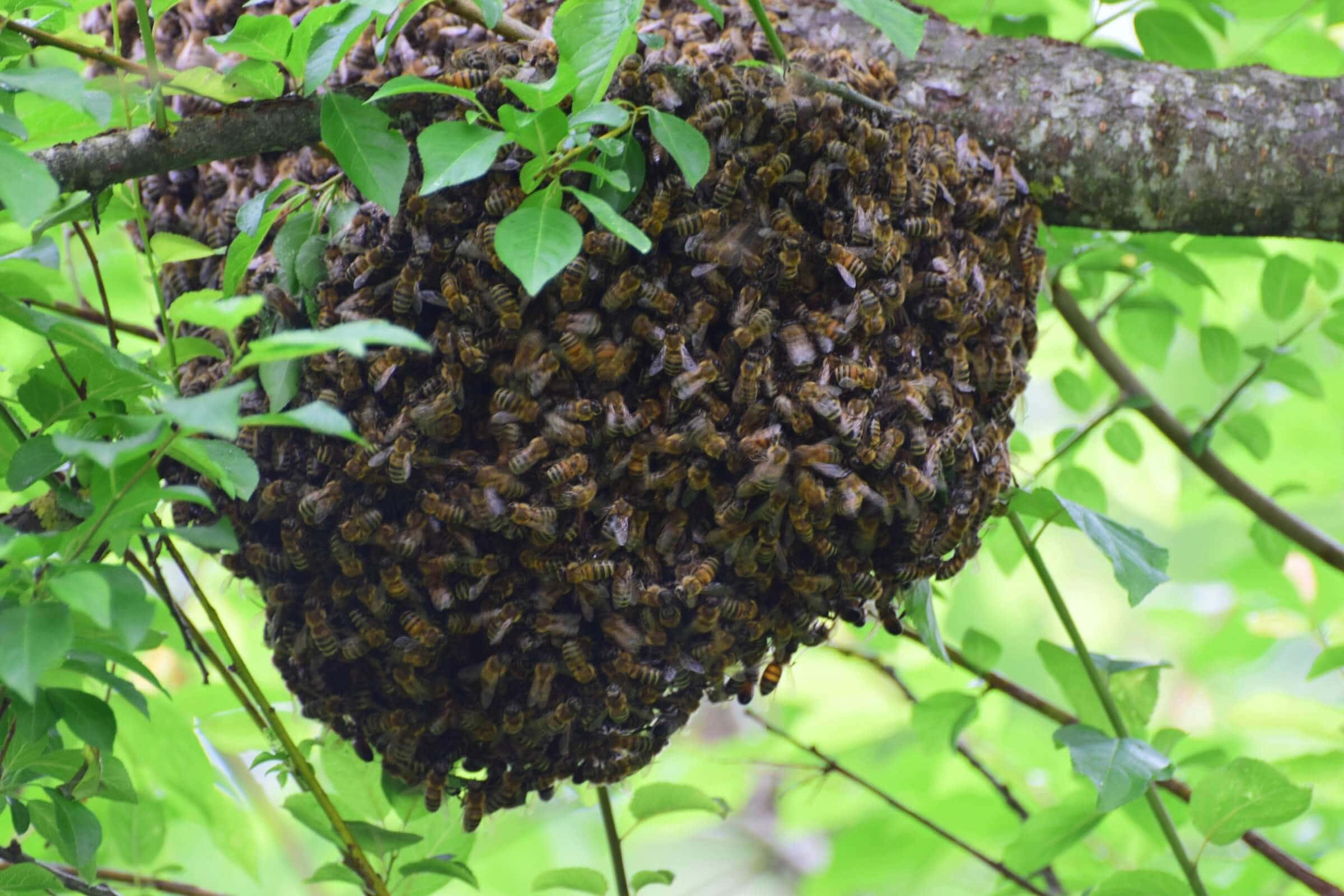
Swarm management works best by changing colony conditions, often with a split; simply cutting queen cells may only delay swarming.
- Swarming is a natural form of honey bee colony reproduction.
- Established swarm cells indicate that the colony has progressed substantially toward swarming.
- Removing replacement queen cells alone may not eliminate the colony's swarming impulse.
- Splitting a strong colony can redirect colony growth while creating another colony.
- Providing additional room is most useful before swarm preparation becomes advanced.
Simply cutting out developing swarm cells is not a dependable stand-alone swarm-control strategy. Mississippi State University Extension specifically notes that removing queen cells often delays swarming because colonies can build additional cells. Oregon State University Extension likewise cautions that queen-cell removal may not be sufficient once swarm cells have appeared.
A controlled split is one established option for a strong colony preparing to swarm. The basic goal is to divide colony resources in a planned way instead of allowing a swarm to leave unpredictably. The exact split method depends on whether the beekeeper wants to retain the original queen, raise a new queen, introduce a purchased queen, or reunite colonies later.
How long should you wait after queen replacement or a split?
After queen replacement or a split, allow time for emergence, mating, and egg laying before judging success, then confirm fresh eggs and brood.
- Honey bee queens normally develop from egg to adult in approximately 16 days.
- A virgin queen needs additional time to mature before mating.
- Weather can affect mating-flight opportunities.
- A colony raising its own replacement queen can experience a temporary brood break.
- Fresh eggs are one of the clearest indications that queen replacement succeeded.
Queen replacement requires patience because queen emergence is only one stage of the process. Penn State Extension reports a total queen-development period of about 16 days from egg to adult. After emergence, a virgin queen must mature, complete successful mating flights, and begin laying.
That means a colony raising its own replacement queen can go for a period without newly laid eggs. Weather can further affect the schedule because mating flights depend on suitable conditions. Opening the hive repeatedly does not make the queen mature or mate faster, so give the process reasonable time before declaring the colony hopelessly queenless.
Queen-replacement timeline
- Queen egg laid: Development begins.
- Queen-rearing cell capped: Development continues inside the sealed cell.
- Adult queen emerges: Normally around day 16 from the egg being laid.
- Virgin queen matures: She requires additional time before successful mating.
- Mating flights occur: Timing can vary with weather and other conditions.
- Egg laying begins: A successfully mated queen begins establishing her brood pattern.
- Beekeeper confirms success: Look for fresh eggs followed by normally developing worker brood.
What mistakes should be avoided when managing cells?
Queen-cell mistakes include destroying cells before diagnosing the colony, assuming placement proves intent, and judging a virgin queen too quickly.
- Do not destroy all replacement queen cells before confirming queen status.
- Do not assume every queen-rearing structure along the bottom of a frame guarantees an imminent swarm.
- Do not expect additional hive space alone to reverse advanced swarm preparation.
- Do not repeatedly disturb a colony while a virgin queen is maturing and mating.
- Do not immediately interpret an absence of eggs after queen emergence as queen failure.
Managing replacement queen cells becomes risky when a decision is based on a single observation. A capped cell tells you that queen development is well underway, but the sealed queen-rearing structure alone does not explain why the colony is raising that queen.
A colony that appears queenless can also contain a virgin queen that is harder to identify than a large, established laying queen. Instead of making repeated disruptive inspections, use the colony's timeline and other evidence to decide when another inspection will actually provide useful information.
Another common mistake is assuming that every colony requires the same response. Colony population, time of year, local nectar conditions, equipment configuration, queen age, brood pattern, and the beekeeper's goals can all change the appropriate management decision.
How can better records improve future queen-cell decisions?
Detailed hive records connect queen-cell observations with colony conditions and outcomes, helping beekeepers make better decisions next time.
- Record replacement-cell number, location, and developmental stage.
- Record whether fresh eggs or the existing queen were present.
- Note colony strength, brood condition, and congestion.
- Write down any intervention that was performed.
- Return later and document whether the colony successfully requeened, swarmed, or required additional management.
Inspections involving queen-rearing cells become much more valuable when the outcome is recorded. A beekeeper who documents what was seen and then returns to record the result can gradually learn how individual colonies behave.
Write down the inspection date, number and condition of replacement queen cells, brood pattern, approximate colony strength, food stores, available space, and any manipulation performed. On a later inspection, note whether the hive remained queenright, swarmed, successfully superseded its queen, successfully raised an emergency queen, or required additional intervention.
Frequently Asked Questions?
Does finding cells mean my hive will swarm?
No. They can be produced for swarming, supersedure, or emergency queen replacement, so the rest of the colony must also be evaluated.
Should I remove the cells when I find them?
Not automatically. Removing the wrong replacement cells can leave a queenless colony without a viable way to raise a new queen.
Where are swarm cells usually found?
Swarm cells are commonly found near the lower margins or edges of brood comb, although placement alone does not confirm swarming.
Where are supersedure cells usually found?
Supersedure cells are commonly found on the face of brood comb and are often fewer in number than swarm cells.
What are emergency cells?
Emergency cells are raised when workers respond to unexpected queen loss by using suitable young female brood to raise replacement queens.
How long does a queen take to develop?
A honey bee queen normally develops from egg to adult in approximately 16 days.
How soon will a virgin queen begin laying eggs?
A virgin queen must mature and mate before laying, so fresh eggs may not appear immediately after queen emergence.
Can adding another hive box stop swarming?
Additional space can reduce congestion before swarming becomes advanced, but adding a box is not a guaranteed solution after established swarm cells appear.
Will cutting out the cells prevent a swarm?
Not reliably. Colonies committed to swarming may build additional swarm cells, so removing developing cells alone may only delay the process.
How can I tell whether my colony has successfully requeened itself?
Look for freshly laid eggs followed by normally developing worker brood after allowing sufficient time for queen emergence, mating, and egg laying.
Which sources support this guide?
The queen-development, swarm-management, supersedure, and emergency queen-rearing guidance in this article is supported by university Extension resources and Lappe's existing queen-management education.
- An Introduction to Queen Honey Bee Development — Penn State Extension. Queen development, queen replacement, virgin queens, and natural queen-rearing behavior.
- Beekeeping: Cell Builder Basics — Penn State Extension. Queen-cell development and the approximately 16-day queen-development timeline.
- Colony Growth and Seasonal Management of Honey Bees — Mississippi State University Extension Service. Swarming, supersedure, queen-cell placement, colony congestion, and swarm-control methods.
- Residential Beekeeping: Best-Practice Guidelines for Nuisance-Free Beekeeping in Oregon — Oregon State University Extension Service. Swarm prevention, swarm-cell management, splitting, and queen-cell interpretation.
- Colony Division: An Easy Method to Split a Colony — Penn State Extension. Colony division, queen emergence, mating, and establishment after splitting.
- Queen Bee FAQ: Queenless Hives, Queen Cells, Requeening & Laying Workers — Lappe's Bee Supply. Practical queen diagnosis, queen-cell interpretation, requeening, and beekeeper troubleshooting.
FAQs
Does finding queen cells mean my hive will swarm?
No. Queen cells can be produced for swarming, supersedure, or emergency queen replacement, so the rest of the colony must also be evaluated.
Should I remove queen cells when I find them?
Not automatically. Removing the wrong replacement queen cells can leave a queenless colony without a viable way to raise a new queen.
Where are swarm queen cells usually found?
Swarm cells are commonly found near the lower margins or edges of brood comb, although placement alone does not confirm swarming.
Where are supersedure queen cells usually found?
Supersedure cells are commonly found on the face of brood comb and are often fewer in number than swarm cells.
What are emergency queen cells?
Emergency queen cells are raised when workers respond to unexpected queen loss by using suitable young female brood to raise replacement queens.
How long does a queen take to develop?
A honey bee queen normally develops from egg to adult in approximately 16 days.
How soon will a virgin queen begin laying eggs?
A virgin queen must mature and mate before laying, so fresh eggs may not appear immediately after queen emergence.
Can adding another hive box stop swarming?
Additional space can reduce congestion before swarming becomes advanced, but adding a box is not a guaranteed solution after established swarm cells appear.
Will cutting out queen cells prevent a swarm?
Not reliably. Colonies committed to swarming may build additional swarm cells, so removing developing queen cells alone may only delay the process.
How can I tell whether my colony has successfully requeened itself?
Look for freshly laid eggs followed by normally developing worker brood after allowing sufficient time for queen emergence, mating, and egg laying.