Welcome to Lappe's Bee Supply's blogs section. We are a trusted beekeeping company in the USA. We give relevant insights, seasonal guidance, and professional advice for beekeepers of all experience levels. From hive management and bee wellness to honey production and equipment guides, we have it all that you will require to thrive. Get updated, motivated, and connected with the beekeeping community through regular news from Lappe's Bee Supply.
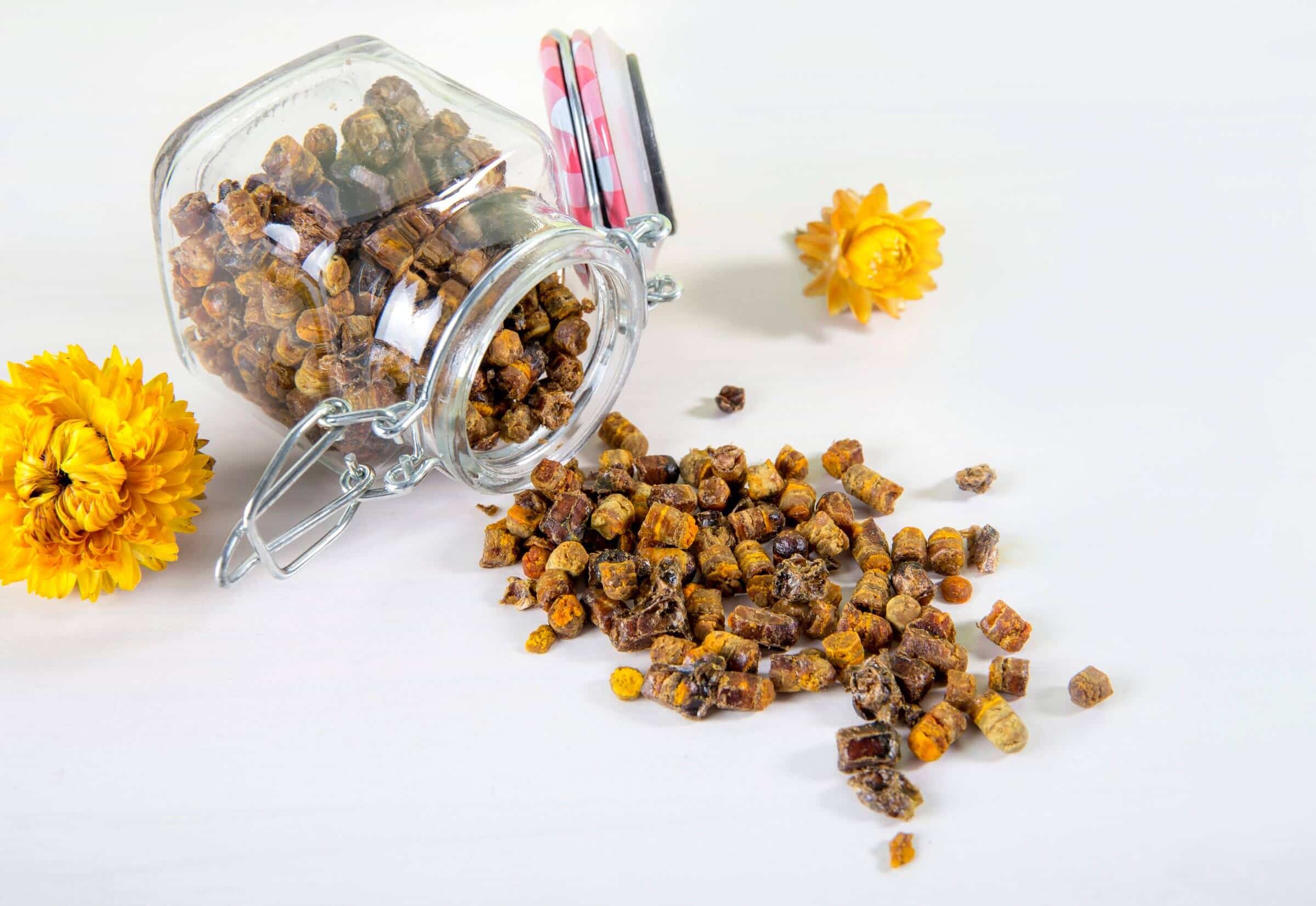
Understanding Bee Bread: The Superfood of the Hive
The Buzz About This Post
- What are the key facts about it?
- What will this guide explain?
- What is bee bread?
- How does it differ from pollen, honey and royal jelly?
- How is it made?
- Is it really fermented?
- What is the nutritional value?
- How do honey bees use it in the hive?
- Why is it important for brood rearing?
- What does it look like during a hive inspection?
- When should beekeepers be concerned about pollen stores?
- Does It have proven benefits for humans?
- Is it safe for people to eat?
- How can It be used as a food?
- How should it be stored for human use?
- How can people support bees and pollen diversity?
- Should beekeepers harvest it from their colonies?
- Frequently Asked Questions
- Which sources support this guide?
- How was this guide reviewed?
- FAQs
What Is Bee Bread? Nutrition, Benefits and Role in the Hive
It is pollen that honey bees collect, moisten with nectar or honey, pack into comb cells and store for later use. It supplies protein, lipids, vitamins and minerals that support nurse-bee development, brood-food production and overall colony nutrition.
Although the name sounds like a food made for people, it is first and foremost a food reserve for honey bees. Its composition varies with the plants the bees visit, the season, the colony and local growing conditions.
Written by: Lappe's Bee Supply Team
Published: May 27, 2025
Last updated: July 20, 2026
Editorial note: This guide separates established honey bee nutrition research from preliminary claims about bee bread as a human dietary supplement. Medical benefits should not be assumed without reliable clinical evidence.
What are the key facts about it?
It is hive-stored pollen that supplies essential protein and lipids, especially for nurse bees supporting brood development.
Key Takeaways
- It is pollen packed into honeycomb cells with nectar, honey and bee-derived secretions.
- Pollen is the colony's principal natural source of protein and an important source of lipids and micronutrients.
- Adult worker bees, particularly nurse bees, consume pollen and use its nutrients to support brood-food production.
- Stored pollen composition changes according to floral source, season, geography and the diversity of available forage.
- Hive storage helps preserve pollen, but research does not support describing every change as a major nutritional enhancement.
- Research on human consumption remains limited, and bee products can cause allergic reactions in susceptible people.
- Beekeepers should avoid removing large quantities of stored pollen from colonies that may need it for brood rearing.
This stored pollen connects the flowers outside the hive with the development taking place inside it. A colony with access to diverse, nutritious pollen sources is better positioned to raise brood than a colony experiencing a serious pollen shortage. However, the stored material is not chemically identical in every hive. Its nutrient profile depends heavily on which plants contributed the pollen.
What is bee bread?
It is flower pollen that honey bees moisten, pack into comb cells and store as a protein-rich food for the colony.
- Foragers collect pollen from flowers and carry it in pollen baskets called corbiculae.
- House bees pack the collected pollen into cells near the brood nest.
- The stored material may contain pollen, nectar, honey and bee-derived secretions.
- This packed pollen is primarily a colony food reserve rather than a form of honey.
The term bee bread usually refers to pollen stored by honey bees inside comb cells. The packed material often appears in layers because workers may add pollen from different flowers during separate foraging trips. Those layers can be yellow, orange, tan, red, brown, green or nearly black. These pollen stores are commonly found near brood because nurse bees need convenient access to them while supporting developing larvae.
How does it differ from pollen, honey and royal jelly?
It is stored pollen, honey is concentrated nectar, and royal jelly is a glandular secretion produced by young worker bees.
| Hive Food | Primary Origin | Primary Nutritional Role | Typical Location |
|---|---|---|---|
| Bee bread | Flower pollen mixed with nectar, honey and bee-derived material | Protein, lipids and micronutrients | Comb cells near the brood nest |
| Fresh pollen loads | Pollen collected from flowers | Raw material that can be stored as bee bread | Carried on a forager's hind legs |
| Honey | Primarily flower nectar processed and concentrated by bees | Carbohydrate and energy supply | Capped or uncapped comb cells |
| Royal jelly | Secretions produced by glands of young worker bees | Brood food and continuous food for queen larvae | Brood cells and queen cells during feeding |
| Pollen substitute | Feed formulated and supplied by a beekeeper | Supplemental nutrients when natural forage is inadequate | Usually placed above or near the brood nest |
This hive-stored food should not be treated as another name for raw pollen or honey. It is a distinct stored food created after bees bring pollen into the colony. Royal jelly is also different: nurse bees produce it through their glands after consuming and metabolizing nutrients. The queen does not simply eat comb-stored pollen as her primary food; attendant workers feed her glandular secretions.
How is it made?
Worker bees collect pollen, moisten it during transport, place it in comb cells and compress it into a stable colony food reserve.
- Foragers visit flowers. Pollen grains adhere to the bees' body hairs as they move among anthers.
- Bees groom the pollen. A worker transfers pollen toward the corbiculae, or pollen baskets, on her hind legs.
- The pollen is moistened. Nectar and bee-derived secretions help form compact pollen loads.
- Foragers return to the colony. The pollen is unloaded into cells, usually near brood-rearing areas.
- House bees pack the pollen. Workers compress the material into the cell and may add nectar or honey.
- The pollen is stored. Chemical and microbial changes can occur while the material remains in the humid hive environment.
The colony's stored pollen is produced through the work of multiple bees. Foragers gather the pollen, while other workers help pack and maintain the stores. A cell can contain pollen from more than one plant species, and the color layers often reveal different collection periods. Bees do not usually fill these cells to the same depth and cap them like mature honey stores.
Is it really fermented?
It undergoes microbial and chemical changes in storage, but evidence suggests preservation is more important than extensive nutrient conversion.
- Microorganisms can be present in pollen, stored pollen, nectar and the hive environment.
- Acidity, moisture, temperature and floral origin influence stored pollen chemistry.
- Some research describes this hive food as fermented pollen.
- Other research finds stronger evidence for pollen preservation than major nutritional transformation.
- The process should not be equated automatically with yogurt, sourdough or commercial controlled fermentation.
Hive-stored pollen is frequently described as fermented because microorganisms and organic acids are associated with it. That description is useful, but it can become misleading when it implies a standardized process or guaranteed increase in every nutrient. A USDA-associated study published in Molecular Ecology concluded that multiple lines of evidence were more consistent with pollen preservation than extensive nutrient conversion. The most accurate description is that hive-stored pollen undergoes biological and chemical changes while being preserved for colony use.
What is the nutritional value?
Stored pollen supplies protein, amino acids, lipids, carbohydrates, minerals and plant compounds, but its exact composition varies widely.
- Pollen is the principal natural protein source in a honey bee colony.
- Pollen also supplies lipids, sterols, vitamins, minerals and other micronutrients.
- Different plant species produce pollen with different nutritional profiles.
- A colorful pollen store does not by itself prove that every required nutrient is present.
- No single universal protein percentage accurately describes every sample of stored pollen.
Claims that this hive food always contains a fixed percentage of protein or a complete list of vitamins should be treated cautiously. A study of bee bread from 26 colonies in northwest England found that nutritional composition varied with floral origin and forage diversity. Protein was the largest measured macronutrient in that particular sample set, but those results should not be presented as a guaranteed value for all stored pollen. Weather, plant community, geography, season and sampling methods can all affect the result.
| Component | Why It Matters to Honey Bees | Important Qualification |
|---|---|---|
| Protein and amino acids | Support tissue development, gland function and brood-food production | Quantity and amino acid balance differ among pollen sources |
| Lipids and fatty acids | Support cell membranes, development and metabolic functions | Both total lipid content and fatty-acid profile can vary |
| Sterols | Provide compounds insects need but cannot always synthesize adequately | Plant species differ in sterol composition |
| Carbohydrates | Provide energy and occur naturally in pollen, nectar and added honey | Honey remains the colony's primary concentrated carbohydrate reserve |
| Vitamins and minerals | Support enzyme activity, development and normal physiological processes | Concentrations are not uniform across samples |
| Polyphenols and phytochemicals | May influence digestion, microbial interactions and stress responses | Effects depend on compound, concentration and experimental conditions |
How do honey bees use it in the hive?
Workers consume stored pollen to obtain nutrients needed for gland development, brood feeding, body maintenance and normal colony function.
- Nurse-aged workers consume substantial amounts of pollen.
- Pollen nutrition supports the glands workers use to produce brood food.
- Older workers generally consume less pollen than nurse bees.
- Colonies often store pollen close to open brood for efficient access.
- Stored pollen helps buffer short interruptions in fresh pollen availability.
Young adult workers need pollen-derived nutrition as they mature into effective nurse bees. They use those nutrients to develop glands and produce food for larvae and other colony members. Larvae are generally fed glandular secretions and progressively changing brood food rather than receiving intact chunks of packed pollen as their sole diet. This distinction matters because pollen stores support brood rearing directly through worker nutrition and indirectly through nurse-bee physiology.
Why is it important for brood rearing?
Brood rearing depends on nurse bees having adequate pollen-derived protein and lipids to produce food for developing larvae.
- Brood production increases the colony's demand for pollen.
- Nurse bees need adequate nutrition to support glandular development and brood-food production.
- Colonies may reduce brood rearing when natural pollen becomes scarce.
- Pollen quantity alone does not guarantee balanced nutrition.
- Diverse forage can provide a broader range of nutrients than a single pollen source.
A colony raising large amounts of brood can consume pollen stores rapidly. Beekeepers often notice this during spring buildup, dearth periods or extended bad weather. A shortage does not always mean that no pollen is visible; the nutritional quality of available forage also matters. Researchers have linked pollen protein and lipid characteristics with honey bee resilience under certain stress conditions, but nutrition is only one part of colony health. Varroa mites, pathogens, pesticide exposure, queen condition and weather must also be considered.
What does it look like during a hive inspection?
During an inspection, stored pollen appears as tightly packed, often multicolored material in open cells beside or above developing brood.
- Stored pollen may appear yellow, orange, red, green, tan, brown or nearly black.
- Different colors generally reflect different plant sources.
- Pollen-filled cells usually remain uncapped or may have a thin coating of nectar or honey.
- Healthy pollen stores are often arranged in an arc near brood.
- Color alone cannot identify nutritional quality, contamination or plant species reliably.
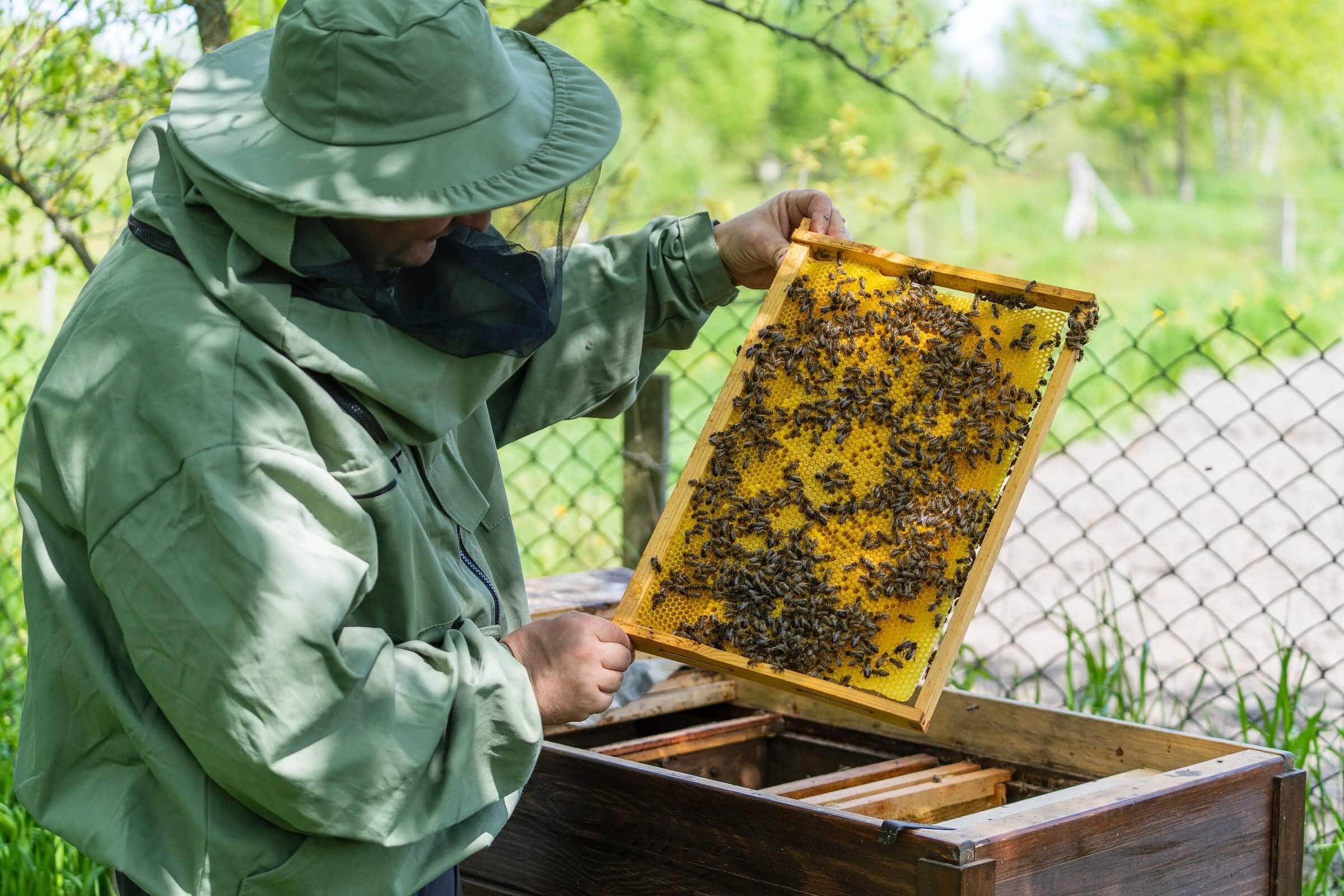
During an inspection, look for a band of colored cells between the brood and surrounding honey. The amount changes throughout the year. A rapidly expanding colony may use stores almost as quickly as foragers collect them, while a colony with little brood can accumulate more. A beekeeper should evaluate pollen stores together with brood pattern, adult population, incoming pollen, weather and available forage rather than judging colony condition from one frame.
When should beekeepers be concerned about pollen stores?
Beekeepers should investigate when a brood-rearing colony has little stored pollen, limited incoming forage or signs of nutritional stress.
- Extended cold, rain or drought can interrupt pollen collection.
- Large areas of one crop may provide abundant pollen for only a limited period.
- Colonies raising brood generally require more pollen than broodless colonies.
- Pollen feeding cannot correct problems caused by mites, disease or queen failure.
- Supplemental feed should be selected and managed carefully to avoid spoilage or pests.
A lack of pollen can contribute to reduced brood rearing, but it should not become a catch-all diagnosis. First confirm whether the colony is queenright, whether brood is present, whether Varroa levels are controlled and whether weather permits normal foraging. When natural pollen is inadequate, an appropriate pollen substitute or supplement may help, depending on colony needs and local conditions. Follow the feed manufacturer's directions and remove spoiled or uneaten material.
Does It have proven benefits for humans?
It contains nutrients and plant compounds, but strong clinical evidence for specific human health benefits remains limited.
- Laboratory analysis confirms that stored pollen can contain nutrients and bioactive plant compounds.
- Composition varies, so one sample cannot represent every product.
- Laboratory antioxidant activity does not prove a clinical benefit in people.
- Claims involving immunity, arthritis, cardiovascular disease or disease prevention require human clinical evidence.
- This food should not replace medical treatment or a balanced diet.
It is sometimes promoted as a superfood, immune booster, digestive aid, anti-inflammatory food or athletic energy supplement. These descriptions go beyond the available evidence when presented as established medical facts. Studies of bee pollen and experimentally fermented pollen have found nutrients, polyphenols and measurable laboratory activity. However, chemical composition and laboratory findings do not prove that consuming this product prevents or treats disease in humans. Product quality, dosage, contamination controls and individual health risks also vary.
Is it safe for people to eat?
It may trigger allergic reactions and can vary in purity, so susceptible people should seek medical guidance before consuming it.
- Pollen and bee products can cause allergic reactions in some people.
- A reaction may occur even when someone has eaten honey without difficulty.
- Products intended for human use require responsible harvesting, handling and storage.
- Wild-harvested or unverified hive material may contain contaminants.
- Pregnant people, children and people taking medication should seek qualified medical guidance when appropriate.
Do not assume this bee-derived food is safe simply because it is natural. People with pollen allergies, asthma, severe seasonal allergies or previous reactions to bee products should be especially cautious. Seek emergency help for trouble breathing, facial or throat swelling, faintness or other symptoms of a severe allergic reaction. This guide provides general educational information and is not medical advice.
How can It be used as a food?
Food-grade bee bread can be eaten in small amounts or added to cool foods, but it should not be treated as medicine.
Ways people commonly use food-grade bee bread
- Sprinkle a small amount over yogurt or oatmeal.
- Blend it into a smoothie after confirming personal tolerance.
- Add it to cooled cereal, granola or fruit.
- Mix it into no-bake energy bites.
- Eat a small amount alone to experience its naturally variable flavor.
How to try it cautiously
- Use only a product sold and handled for human consumption.
- Read the supplier's ingredient, storage and allergen information.
- Avoid use when pollen or bee-product allergy is known or suspected.
- Begin with less than the product's full suggested serving.
- Stop using it if itching, swelling, wheezing, hives or digestive distress occurs.
- Do not use this product to replace prescribed treatment or essential nutrition.
The flavor may be mildly sweet, earthy, floral, sour or bitter because the botanical composition varies. Adding it to extremely hot food may alter flavor and some heat-sensitive compounds, although this does not mean that cool consumption provides a proven medical benefit. Follow the seller's directions rather than relying on a universal tablespoon recommendation.
How should it be stored for human use?
It is intended for people should be kept sealed, dry and stored according to the producer's refrigeration or freezing directions.
- Moisture can encourage spoilage and quality loss.
- Heat and direct sunlight can degrade sensitive food components.
- Storage requirements differ among fresh, dried, refrigerated and frozen products.
- A clean utensil helps prevent contamination.
- Products with unusual odor, visible mold or damaged packaging should not be consumed.
Fresh and shelf-stable dried products are not handled identically. Follow the label supplied with the product. Keep the container tightly closed and avoid repeatedly introducing moisture. Refrigeration or freezing may be recommended for some products, while properly dried products may be stored in a cool, dark cabinet. When in doubt, contact the producer rather than guessing.
How can people support bees and pollen diversity?
People can support bees by planting diverse flowers, protecting nesting habitat and reducing avoidable pesticide exposure during bloom.
- Choose several flowering species that bloom at different times.
- Include regionally appropriate native plants when possible.
- Provide flowers with varied colors, shapes and bloom periods.
- Read and follow every pesticide label before application.
- Avoid spraying flowering plants when bees are actively visiting them unless the label permits that use.
- Support responsible local beekeepers and pollinator habitat projects.
Honey bees and native pollinators need more than a single patch of flowers for a few weeks. A sequence of blooms can provide forage across spring, summer and fall. Gardens should be planned for local climate, soil and plant suitability. Pesticide decisions must follow the product label, which is legally enforceable in the United States. The U.S. Environmental Protection Agency provides pollinator-protection guidance, while university Extension programs can help identify suitable plants and regional practices.
Should beekeepers harvest it from their colonies?
Beekeepers should protect colony nutrition first and harvest stored pollen only when healthy colonies have a genuine, sustainable surplus.
- Stored pollen is a working colony reserve, not unused waste.
- Removing pollen from brood-area frames can reduce food available to nurse bees.
- Food harvesting requires sanitation and contamination controls.
- Comb exposed to hive treatments may be unsuitable for food collection.
- State and federal food rules may apply when it is sold for human consumption.
Most hobby beekeepers should leave naturally stored pollen with the colony unless they have a clear management purpose and understand the consequences. Frames used in brood chambers can contain old cocoons, propolis, treatment residues and other material that consumers may not expect in a food product. Anyone selling bee bread should investigate applicable food-processing, labeling and licensing requirements rather than treating it exactly like bottled honey.
Frequently Asked Questions
Is it the same as bee pollen?
No. Bee pollen usually refers to pollen pellets collected from returning foragers, while bee bread is pollen packed and stored inside honeycomb cells.
Do honey bees make it from honey?
Honey may be added to stored pollen, but pollen remains its defining ingredient. Bee bread is not simply honey with pollen stirred into it.
Do honey bee larvae eat it directly?
Larvae are primarily fed brood food produced by nurse bees. Stored pollen supplies nutrients that nurse bees use to produce those secretions.
Does the queen bee eat it?
The queen is normally fed glandular secretions by attendant worker bees. Stored pollen supports the worker nutrition behind that feeding system.
Why is it stored near brood?
Storing pollen near brood gives nurse bees convenient access to the protein and lipids needed while larvae are being raised.
Is it always fermented?
Stored pollen undergoes microbial and chemical changes, but research suggests preservation may be more important than extensive nutrient conversion.
What is its color?
Stored pollen may be yellow, orange, red, tan, green, brown or nearly black. Color primarily reflects the plants from which pollen was collected.
Can people eat it?
Food-grade bee bread is sold for human consumption, but health claims remain limited and pollen-sensitive people may experience allergic reactions.
Is it healthier than honey?
They serve different nutritional roles and cannot be ranked universally. Honey is predominantly a carbohydrate food, while stored pollen contains more pollen-derived protein and lipids.
Can it cure inflammation or improve immunity?
There is not enough reliable human clinical evidence to claim that it cures inflammation, prevents disease or consistently improves immune function.
Which sources support this guide?
This guide relies on peer-reviewed honey bee nutrition research and educational resources from USDA, EPA, PubMed and university Extension programs.
Sources and Further Reading
- Hive-Stored Pollen of Honey Bees: Many Lines of Evidence Are Consistent With Pollen Preservation, Not Nutrient Conversion. USDA Agricultural Research Service publication record.
- Nutritional Composition of Honey Bee Food Stores Vary With Floral Composition. Peer-reviewed research indexed by the U.S. National Library of Medicine.
- A Comparison of Bee Bread Made by Africanized and European Honey Bees and Its Effects on Hemolymph Protein Titers. USDA Agricultural Research Service publication record.
- Four Nutrients in Flower Pollens Improve Honey Bee Gut Health. USDA Agricultural Research Service.
- Pollen Protein and Lipid Content Influence Resilience to Insecticides in Honey Bees. Peer-reviewed research indexed by the U.S. National Library of Medicine.
- Beekeeping: Honey Bees. Penn State Extension.
- Honey Bee Management Throughout the Seasons. Penn State Extension.
- Protecting Bees and Other Pollinators From Pesticides. U.S. Environmental Protection Agency.
- Find Best Management Practices to Protect Pollinators. U.S. Environmental Protection Agency.
- What Can We Do to Encourage Native Bees?. Penn State Extension.
Medical information notice: References describing bee pollen or fermented pollen chemistry do not establish that bee bread diagnoses, treats, cures or prevents human disease.
How was this guide reviewed?
This guide distinguishes established colony-nutrition evidence from preliminary findings and avoids unsupported medical or universal nutrient claims.
- Definitions distinguish bee bread from honey, collected pollen and royal jelly.
- Variable nutrient composition is stated rather than reduced to one universal percentage.
- Queen and larval feeding descriptions reflect the role of nurse-bee glandular secretions.
- Human health claims are limited to the strength of available evidence.
- Pollinator recommendations direct readers to Extension and government guidance.
Lappe's Bee Supply creates educational content to help beekeepers understand colony biology and make better management decisions. Sources are selected for institutional authority, relevance and scientific quality. Recommendations should still be adapted to local weather, forage, colony condition and applicable laws.
FAQs
Is bee bread the same as bee pollen?
No. Bee pollen usually refers to pollen pellets collected from returning foragers, while bee bread is pollen packed and stored inside honeycomb cells.
Do honey bees make bee bread from honey?
Honey may be added to stored pollen, but pollen remains its defining ingredient. Bee bread is not simply honey with pollen stirred into it.
Do honey bee larvae eat bee bread directly?
Larvae are primarily fed brood food produced by nurse bees. Bee bread supplies nutrients that nurse bees use to produce those secretions.
Does the queen bee eat bee bread?
The queen is normally fed glandular secretions by attendant worker bees. Bee bread supports the worker nutrition behind that feeding system.
Why is bee bread stored near brood?
Storing pollen near brood gives nurse bees convenient access to the protein and lipids needed while larvae are being raised.
Is bee bread always fermented?
Stored pollen undergoes microbial and chemical changes, but research suggests preservation may be more important than extensive nutrient conversion.
What color is bee bread?
Bee bread may be yellow, orange, red, tan, green, brown or nearly black. Color primarily reflects the plants from which pollen was collected.
Can people eat bee bread?
Food-grade bee bread is sold for human consumption, but health claims remain limited and pollen-sensitive people may experience allergic reactions.
Is bee bread healthier than honey?
They serve different nutritional roles and cannot be ranked universally. Honey is predominantly a carbohydrate food, while bee bread contains more pollen-derived protein and lipids.
Can bee bread cure inflammation or improve immunity?
There is not enough reliable human clinical evidence to claim that bee bread cures inflammation, prevents disease or consistently improves immune function.