Welcome to Lappe's Bee Supply's blogs section. We are a trusted beekeeping company in the USA. We give relevant insights, seasonal guidance, and professional advice for beekeepers of all experience levels. From hive management and bee wellness to honey production and equipment guides, we have it all that you will require to thrive. Get updated, motivated, and connected with the beekeeping community through regular news from Lappe's Bee Supply.
Spring Feeding for Honey Bees: Ensuring a Thriving Hive
The Buzz About This Post
- Table of Contents
- Key Takeaways
- What is spring feeding for honey bees?
- When should you feed honey bees in spring?
- What should you feed honey bees in spring?
- How do you feed honey bees in spring effectively?
- When should you stop spring feeding honey bees?
- Can you overfeed honey bees in spring?
- How do you know if a colony needs spring feeding?
- Which spring feeding option should you use?
- What is the safest spring feeding checklist?
- Frequently Asked Questions
- Do all honey bee colonies need spring feeding?
- What sugar syrup ratio is best for spring feeding?
- When should I stop feeding bees in spring?
- Can honey bees be overfed in spring?
- Do bees need pollen substitute in spring?
- Is dry sugar enough for spring feeding?
- What are signs that bees are starving in spring?
- Should spring feeding replace hive inspections?
- Sources and Further Reading
- FAQs
Spring Feeding for Honey Bees: When, What, and How to Feed for Strong Colonies
Supplemental feeding can help a honey bee colony bridge the period between declining winter stores and dependable spring forage. The goal is not to feed every colony according to a calendar. Instead, determine what the colony actually needs, provide appropriate nutrition when necessary, and stop when natural resources can reliably support the bees.
Published: March 1, 2026
Last Updated: September 2, 2026
Author: Lappe’s Bee Supply Team
Editorial Review: Reviewed for practical beekeeping accuracy and alignment with established honey bee nutrition and university extension guidance.
Key Takeaways
- Spring feeding should respond to colony condition and forage availability rather than a fixed calendar date.
- Brood expansion increases nutritional demand, so a colony can become short on food even after successfully surviving winter.
- Light sugar syrup is commonly used when a colony needs supplemental carbohydrates during spring.
- Protein supplements are most useful when adequate natural pollen is unavailable or difficult for bees to collect.
- Exposed syrup can contribute to robbing, especially when natural nectar is limited.
- Supplemental feed should be reduced or discontinued when dependable natural forage is meeting colony needs.
Spring feeding is the targeted use of supplemental carbohydrates, protein, or both when a honey bee colony’s stored food and available natural forage are not sufficient for its current needs. Sugar syrup is primarily a carbohydrate supplement. Pollen, pollen supplements, and pollen substitutes address different nutritional needs associated with brood rearing. Supplemental nutrition works best when it responds to an identified shortage rather than becoming an automatic seasonal routine.
What is spring feeding for honey bees?
Spring feeding adds carbohydrates or protein when colony stores are low and natural forage cannot meet the nutritional demands of brood rearing.
- Supplemental feed can provide carbohydrates, protein, or both.
- Nectar and honey are major carbohydrate sources for honey bees.
- Pollen supplies protein, lipids, vitamins, minerals, and other nutrients.
- Brood rearing can increase colony food demand before spring forage becomes dependable.
Supplemental feeding is temporary nutritional support, not a replacement for natural forage. A colony may begin expanding its brood nest while weather is still inconsistent and nectar-producing plants are only beginning to bloom. At the same time, winter honey stores may be declining quickly. That combination can leave a colony with many mouths to feed but little incoming food.
The Honey Bee Health Coalition recommends considering brood status, nutritional requirements, season, and existing food reserves when making supplemental feeding decisions. That inspection-based approach is more useful than assuming every colony needs the same feed on the same date.
When should you feed honey bees in spring?
Feed honey bees in spring when stores are low, brood is expanding, and weather or bloom conditions limit dependable natural forage.
- Check colony food stores instead of relying only on the calendar.
- Brood production increases carbohydrate and protein demand.
- Cold, rain, or strong wind can temporarily restrict foraging.
- Different colonies in the same apiary can have different nutritional needs.
- Colonies with adequate food and dependable forage may not need supplementation.
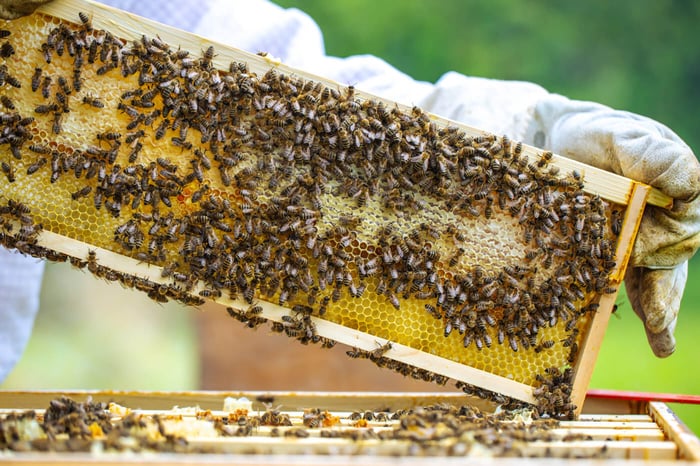
Begin by estimating how much food remains. Experienced beekeepers often lift the rear of a hive to get a quick sense of weight, but opening the colony during suitable weather provides more information. Look for capped honey, stored pollen, brood, adult bee population, fresh nectar, and incoming pollen.
Spring conditions can change quickly. A warm period may bring strong pollen collection, followed by several cold or rainy days that keep bees confined. For that reason, nutrition decisions should be reassessed as colony conditions and weather change. Penn State Extension provides additional seasonal beekeeping guidance for evaluating colony resources and management needs.
What should you feed honey bees in spring?
For spring carbohydrates, use light sugar syrup made with white granulated sugar; provide protein supplementation when usable natural pollen is inadequate.
- A 1:1 sugar-to-water syrup by weight is a commonly recommended light syrup for spring.
- Sugar syrup supplies carbohydrates rather than complete honey bee nutrition.
- Pollen supplies protein and lipids needed for brood production.
- Protein supplements can help when usable natural pollen is inadequate.
- Dry sugar is generally better suited to emergency carbohydrate support when liquid feed is impractical.
Light syrup is commonly prepared with approximately equal parts white granulated sugar and water by weight. Avoid assuming that syrup and pollen substitute solve the same problem: syrup primarily supplies carbohydrates, while protein feeds address nutritional needs associated with brood production.
Natural pollen remains an important food because it contains a complex mixture of nutrients. A pollen supplement or substitute can be useful during shortages, but it should be used for a reason rather than simply because the season has changed.
Beekeepers looking for nutritional support can review Lappe’s selection of prepared bee syrup and AP23 dry pollen substitute. Choose the feed that matches the colony’s actual nutritional shortage.
How do you feed honey bees in spring effectively?
Inspect first, use a protected feeder when practical, prevent spills, monitor consumption, and adjust supplemental feed as forage conditions change.
- Inspect before deciding which supplemental nutrition is needed.
- Protected or internal feeders can reduce access by neighboring colonies.
- Avoid spilling syrup around the entrance or apiary.
- Monitor consumption rather than refilling automatically.
- Remove spoiled, fermented, or moldy feed promptly.
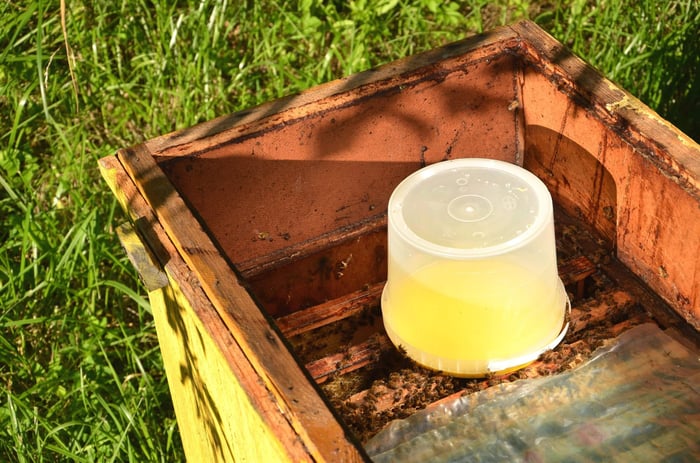
Feeder choice matters because sugary feed can attract bees from outside the intended colony. When robbing pressure is a concern, keeping syrup protected inside or close to the colony can be preferable to leaving it openly accessible. Stronger colonies can overwhelm weaker colonies when easily accessible syrup becomes a target.
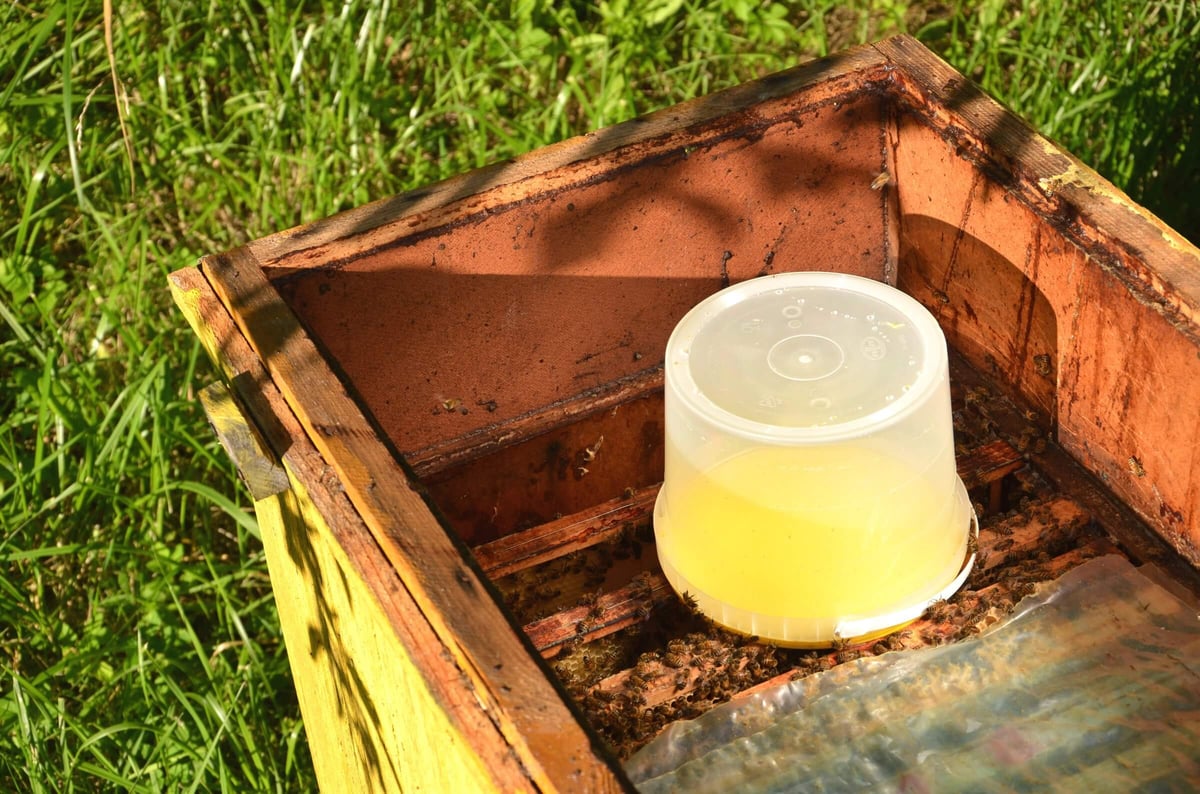
Lappe’s carries several approaches, including hive-top feeders, in-hive frame feeders, and entrance-style jar feeders. Each can serve a purpose, but feeder selection should account for colony strength, weather, and robbing pressure.
When should you stop spring feeding honey bees?
Stop routine supplemental feeding when dependable nectar is available and the colony has adequate resources without continued syrup.
- Reliable nectar flow reduces the need for supplemental carbohydrates.
- Fresh nectar and incoming pollen are signs that natural forage is available.
- Reduced syrup consumption can indicate that bees prefer an available nectar source.
- Continued syrup storage can occupy comb that may be needed for brood expansion.
- Avoid feeding syrup while supers are being used to produce honey intended for harvest.
There is no single nationwide date for stopping supplemental feeding because bloom periods and weather vary widely. Instead, inspect the colony and watch what the bees are doing. If natural nectar is coming in steadily and stored food is adequate, routine syrup may no longer be necessary.
Another important consideration is honey production. Once honey supers intended for harvest are in use, supplemental syrup should generally be discontinued so syrup is not stored in comb intended for the honey crop.
Can you overfeed honey bees in spring?
Yes. Excess syrup can occupy brood comb, add moisture, increase robbing risk when exposed, and be stored where harvest honey should be produced.
- Supplemental syrup should address an identified colony need.
- Stored syrup can reduce available empty comb in the brood nest.
- Liquid feed introduces water that bees must process.
- Spilled or exposed syrup can attract robber bees.
- Nutritional support should be reassessed as natural forage improves.
More feed is not automatically better. During spring expansion, queens need suitable comb for laying, and workers need room to manage brood and incoming natural resources. If large amounts of syrup are being stored throughout the brood area, continued supplementation may work against those goals.
The safest practice is purposeful feeding: identify the shortage, provide an appropriate amount, and check what the colony does with it. Avoid placing syrup where it can be reached easily by neighboring bees, and never allow leaking feeders or spilled syrup to become an attraction around the apiary.
How do you know if a colony needs spring feeding?
A colony may need supplemental feed when stores are light, brood is present, and incoming nectar or pollen cannot meet current nutritional demand.
- Low hive weight can suggest depleted honey reserves.
- Expanding brood increases the colony’s food requirement.
- Little stored honey near the brood area deserves attention.
- Poor weather can prevent bees from using forage that is technically in bloom.
- Incoming pollen and fresh nectar provide useful evidence that natural forage is available.
No single sign should determine every feeding decision. A hive that feels light may need closer inspection, but the urgency becomes greater when low stores are combined with significant brood. Colonies can survive the coldest part of winter only to experience nutritional stress later as brood expansion accelerates food consumption.
The best decision comes from combining several observations: stored honey, pollen, brood amount, adult bee population, current weather, and incoming forage. This is why regular spring inspections are more useful than following a fixed feeding schedule for every hive.
Which spring feeding option should you use?
Choose feed according to the shortage: light sugar syrup for carbohydrates, protein feed for inadequate pollen, and dry sugar for emergencies.
Carbohydrate shortages and protein shortages are different nutritional problems. Match the feeding method to what is missing instead of automatically providing every type of supplement.
| Feed Type | Primary Purpose | Best Use | Main Management Concern |
|---|---|---|---|
| 1:1 white sugar syrup | Supplemental carbohydrates | Low stores before dependable nectar flow | Robbing, excess storage, and added moisture |
| Pollen supplement or substitute | Supplemental protein and lipids | Inadequate usable natural pollen | Waste, pests, or unnecessary use |
| Dry sugar | Emergency carbohydrates | Conditions where liquid syrup is impractical | Does not provide protein or complete nutrition |
Remember that natural nectar and pollen remain the colony’s normal food sources. Supplemental nutrition is most useful when it fills a specific temporary gap and is adjusted as forage availability changes.
What is the safest spring feeding checklist?
Inspect stores and brood, identify the shortage, choose appropriate feed, prevent robbing, monitor uptake, and stop when natural forage recovers.
- Estimate remaining food stores. Lift the hive from the back and inspect frames when weather permits.
- Inspect brood and food. Check capped honey, pollen, brood, adult bee population, and signs of incoming forage.
- Identify the nutritional shortage. Determine whether the colony needs supplemental carbohydrates, protein, or both.
- Choose the appropriate feed. Use light sugar syrup when supplemental carbohydrates are needed and protein feed when usable pollen is inadequate.
- Use a protected feeder. Choose a feeding method that limits unnecessary access by bees from neighboring colonies.
- Prevent spills and robbing. Avoid leaving syrup, honey, or leaking feeders exposed around the apiary.
- Monitor the colony. Recheck consumption, food stores, brood expansion, weather, and natural forage.
- Stop unnecessary feeding. Discontinue routine supplementation when dependable forage is meeting colony needs or before harvest supers are used.
Supplemental feeding is safest when it remains flexible. Weather changes, bloom timing changes, and colonies develop at different rates. Reassessing conditions before every refill helps prevent both underfeeding and unnecessary feeding.
Frequently Asked Questions
Do all honey bee colonies need spring feeding?
No. Supplemental feeding is most appropriate when colony stores and available natural forage are insufficient for the colony’s current nutritional needs.
What sugar syrup ratio is best for spring feeding?
A light syrup made with approximately one part white granulated sugar to one part water by weight is commonly used for feeding bees in spring.
When should I stop feeding bees in spring?
Reassess feeding when dependable nectar becomes available and the colony has adequate resources. Do not continue syrup automatically simply because feeding began earlier in the season.
Can honey bees be overfed in spring?
Yes. Unnecessary syrup can occupy comb needed for brood expansion, increase moisture, encourage robbing if exposed, and be stored where harvestable honey should be produced.
Do bees need pollen substitute in spring?
Not every colony does. Protein supplementation is most useful when colony demand is high and adequate usable natural pollen is unavailable.
Is dry sugar enough for spring feeding?
Dry sugar can provide emergency carbohydrates, but it does not provide the protein, lipids, and other nutrients associated with pollen.
What are signs that bees are starving in spring?
Warning signs can include very low food stores, a light hive, bees clustered near depleted comb, and brood present without enough food nearby.
Should spring feeding replace hive inspections?
No. Colony inspections help determine whether supplemental feed is needed and whether food stores, brood conditions, and natural forage are improving.
Sources and Further Reading
The recommendations in this guide are informed by honey bee nutrition guidance and university extension materials. These resources provide additional detail about supplemental nutrition, honey bee feeding, colony management, and robbing prevention.
FAQs
Do all honey bee colonies need spring feeding?
No. Spring feeding is only needed when inspection shows low food stores, active brood rearing, and limited natural forage.
What sugar syrup ratio is best for spring feeding?
A 1:1 sugar-to-water syrup is commonly used in spring because it provides carbohydrates and resembles thin nectar.
When should I stop feeding bees in spring?
Stop feeding when nectar flow is reliable, bees are foraging daily, and syrup is no longer needed to protect colony growth.
Can honey bees be overfed in spring?
Yes. Overfeeding can increase hive moisture, crowd brood space, reduce foraging, and contaminate honey supers.
Do bees need pollen substitute in spring?
Bees need protein for brood rearing, but pollen substitute should be used only when natural pollen is scarce or unavailable.
Is dry sugar enough for spring feeding?
Dry sugar is mainly an emergency feed and should not replace balanced spring nutrition when syrup and pollen are needed.
What are signs that bees are starving in spring?
Common signs include a very light hive, little capped honey, weak activity, dead bees near cells, and brood without enough food nearby.
Should spring feeding replace hive inspections?
No. Feeding decisions should come from inspections, because colony strength, food stores, brood, and forage conditions vary by hive.