Welcome to Lappe's Bee Supply's blogs section. We are a trusted beekeeping company in the USA. We give relevant insights, seasonal guidance, and professional advice for beekeepers of all experience levels. From hive management and bee wellness to honey production and equipment guides, we have it all that you will require to thrive. Get updated, motivated, and connected with the beekeeping community through regular news from Lappe's Bee Supply.
Packaged Bees and Nucs: A Guide to Starting Your Beekeeping Journey
The Buzz About This Post
- Packaged Bees and Nucs: What New Beekeepers Should Know Before Choosing a Starter Colony
- Table of Contents
- Key Takeaways
- Quick Definitions
- Which Is Better: Packaged Bees or Nucs?
- What Are Packaged Bees?
- What Is a Nuc Colony?
- How Are Packaged Bees and Nucs Different?
- Which Option Is Better for Beginners?
- When Should You Choose Packaged Bees?
- How Should You Choose Between Packaged Bees and Nucs?
- What Mistakes Should New Beekeepers Avoid?
- What Should You Do After Installing Bees?
- Frequently Asked Questions
- Are nucs better than packaged bees for beginners?
- Are packaged bees cheaper than nucs?
- Do packaged bees need feeding?
- Why do nucs build up faster?
- Can packaged bees produce honey in the first year?
- Are local nucs better than shipped bees?
- When do packaged bees make more sense?
- Do nucs reduce beginner risk?
- Sources
- FAQs
Packaged Bees and Nucs: What New Beekeepers Should Know Before Choosing a Starter Colony
Choosing your first colony is one of the most important early decisions in beekeeping. Most new beekeepers compare two common starter options: packaged bees and nucs colonies, often called nucs. Both can work, but they do not begin at the same biological stage. That difference affects cost, management needs, colony growth, and first-season expectations.
Key Takeaways
- Packaged bees are loose worker bees sold with a queen, but without brood, drawn comb, or food stores.
- Nucs are small established colonies with a laying queen, brood, food stores, and drawn comb already in place.
- Nucs usually establish faster and are often easier for beginners to manage.
- Packaged bees usually cost less upfront but require more early feeding and closer observation.
- The best choice depends on experience, budget, local conditions, and first-year goals.
Quick Definitions
- Packaged bees: Loose worker bees sold with a mated queen, but without brood, drawn comb, or stored food.
- Nuc: A nucleus colony with a laying queen, brood, food stores, and drawn comb already established.
- Main difference: Packaged bees must build a colony from scratch, while nucs begin as active small colonies.
Which Is Better: Packaged Bees or Nucs?
Nucs are usually better for beginners because they are already established, while packaged bees are better when lower cost or setup flexibility matters most.
- Nucs are easier for first-time beekeepers to inspect and manage.
- Packaged bees usually cost less upfront.
- Nucs often build population faster in the first weeks.
- Packaged bees require more early feeding and colony support.
For most new beekeepers, a nuc is the easier and lower-risk starting option. Packaged bees remain a practical choice when availability, price, or management preference matters more than rapid establishment. The better option depends less on a universal rule and more on whether the colony type matches the beekeeper’s experience, timing, and local conditions.
What Are Packaged Bees?
Packaged bees are shipped groups of worker bees with a mated queen but no brood, drawn comb, or food stores, so the colony must build from the ground up.
What comes in a package of bees?
- Packages commonly contain around 10,000 to 12,000 worker bees and one queen.
- They are sold in ventilated shipping containers designed for short-term transport.
- They do not arrive with brood, honey stores, pollen reserves, or established comb.
What are the main challenges of packaged bees?
- They must accept the queen after installation.
- They must draw comb before expanding quickly.
- They usually need closer feeding and observation in the opening weeks.
Packaged bees give beekeepers a clean starting point. That simplicity can be appealing, especially when supply and price matter most. At the same time, a package starts with fewer built-in advantages than a nuc. Without brood or stored resources, the colony must establish every essential function after it reaches the hive.
What Is a Nuc Colony?
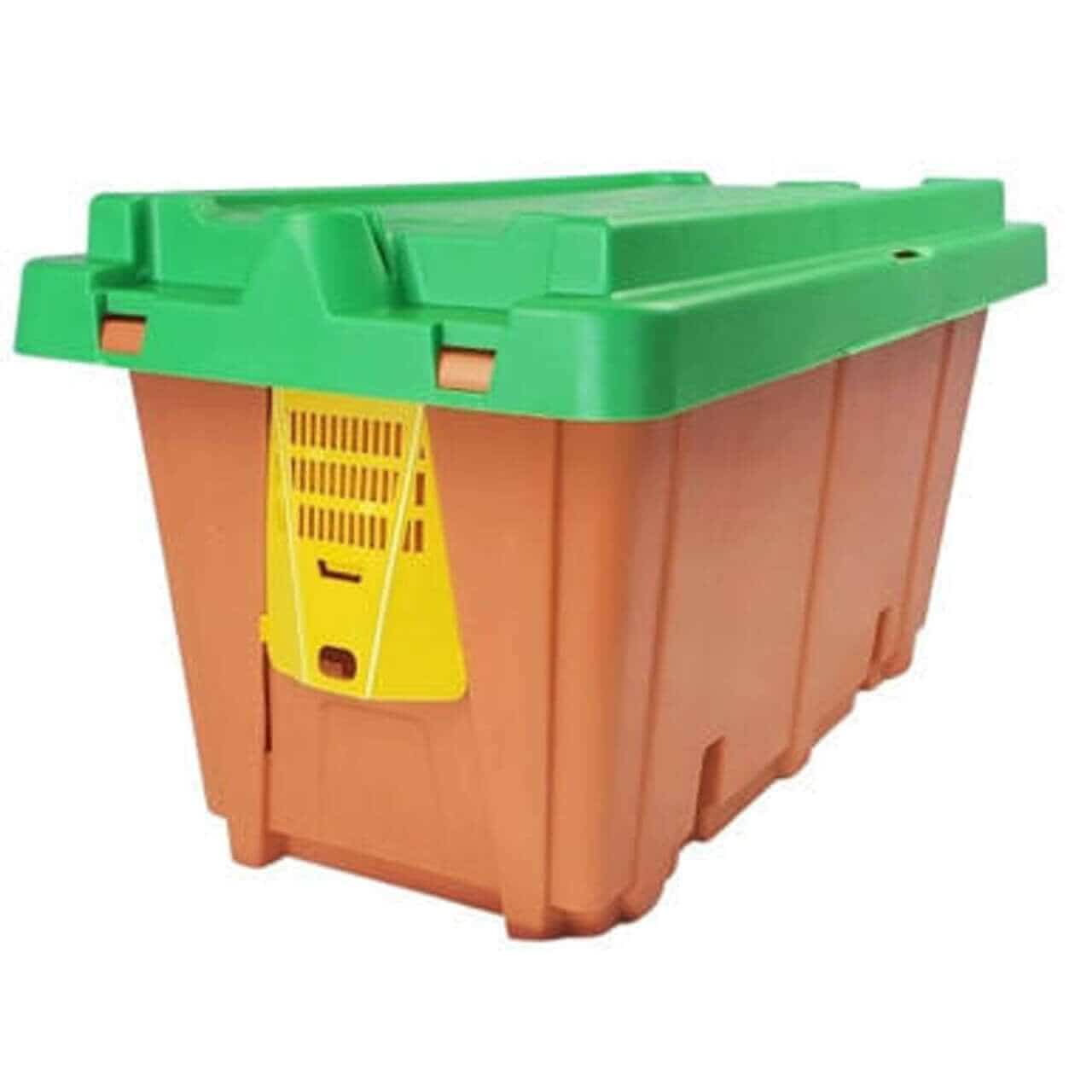
A nuc is a small working colony with a laying queen, brood, food stores, and drawn comb, allowing faster establishment and lower early-stage stress.
What comes in a nuc?
- Nucs usually include several frames of bees, brood, pollen, and honey.
- The queen is already accepted and actively functioning within the colony.
- Drawn comb gives the colony a major head start in brood rearing and storage.
Why do nucs establish faster?
- The colony is already organized and functioning.
- Brood is already present in multiple stages.
- Food stores and comb reduce the amount of rebuilding required.
A nucleus colony is not just a box of bees. It is an operating colony on a smaller scale. Because the colony is biologically active on day one, population growth can continue more quickly after installation. This is one reason many beginners find nucs easier to understand and less stressful to manage.
How Are Packaged Bees and Nucs Different?
Packaged bees begin without brood or comb, while nucs arrive as active colonies with resources, so nucs usually build faster and need less early intervention.
Comparison Table
| Category | Packaged Bees | Nuc Colony |
|---|---|---|
| Starting point | Loose bees plus a queen | Established mini-colony |
| Brood present | No | Yes |
| Drawn comb | No | Yes |
| Food stores | No | Yes |
| Early management needs | Higher | Moderate |
| Startup speed | Slower | Faster |
| Typical upfront cost | Lower | Higher |
| First-season production potential | Often lower | Often higher |
The central difference is biological momentum. Packaged bees must create a working colony after installation, while nucs continue from an already functional base. That affects risk, labor, and timing.
Which Option Is Better for Beginners?
Nucs are often better for beginners because they arrive established, reduce early uncertainty, and make it easier to observe brood patterns, food stores, and colony behavior.
Why do beginners often prefer nucs?
- Nucs provide immediate examples of comb structure, brood pattern, and stored resources.
- They reduce the need to manage queen introduction from a bare starting point.
- They usually make inspections more instructive because key colony features are already visible.
For most first-time beekeepers, a nuc offers a more forgiving start. While a package can still be a valid first choice, it tends to demand stronger timing, closer observation, and more early intervention.
When Should You Choose Packaged Bees?
Packaged bees make sense when lower upfront cost, broad availability, or management flexibility matters more than rapid establishment and reduced startup risk.
When are packaged bees a practical choice?
- Packages are often easier to source through suppliers and spring ordering programs.
- They usually cost less than nucs because they do not include frames, brood, or stores.
- They give beekeepers more control over comb age, frame setup, and colony development.
Packaged bees are often the practical choice when cost or supply is the deciding factor. They also appeal to beekeepers who want more control over how the colony is started inside the hive.
How Should You Choose Between Packaged Bees and Nucs?
Choose a nuc for easier startup and faster buildup; choose packaged bees for lower cost, wider availability, or greater control over colony setup.
Decision checklist
- Choose a nuc if: you are a beginner, want faster buildup, or want a more stable start.
- Choose packaged bees if: you want a lower upfront price or more flexibility in how the colony develops.
- Choose local stock when possible: locally raised bees may be better adapted to local forage and weather.
- Match the colony to your goal: learning, honey production, budget, and timing all matter.
- Prepare your equipment in advance: clean, assembled equipment reduces avoidable installation stress.
The best choice depends on the beekeeper, the season, and local conditions. A strong match between colony type and management style often matters more than choosing the cheapest option.
What Mistakes Should New Beekeepers Avoid?
New beekeepers should avoid choosing only by price, ignoring local conditions, or underestimating how much support packaged bees need early on.
Common mistakes to avoid
- Do not compare price alone without considering workload.
- Do not assume every starter colony performs the same in every climate.
- Do not install bees before equipment is fully ready.
- Do not skip feeding or early inspection when starting with packaged bees.
- Do not assume a faster start guarantees success without regular hive management.
Many first-season problems begin with mismatched expectations. Choosing the right colony type is easier when cost, management time, local conditions, and seasonal timing are considered together.
What Should You Do After Installing Bees?
Successful starts depend on clean equipment, steady feeding when needed, regular inspections, and close attention to queen performance, brood development, and seasonal forage.
Post-installation checklist
- Install bees into prepared, clean equipment with frames ready to use.
- Monitor queen acceptance, brood pattern, and food availability during the first weeks.
- Feed when natural nectar is limited and colony stores are light.
- Inspect consistently enough to spot stress, disease, or slow development early.
- Pay attention to local bloom timing so management matches actual forage conditions.
Colony choice matters, but management matters more after installation. Early inspections help confirm whether the queen is laying and whether the colony is progressing normally.
Frequently Asked Questions
Are nucs better than packaged bees for beginners?
In many cases, yes. Nucs are established colonies with brood and food stores, which makes early management simpler for new beekeepers.
Are packaged bees cheaper than nucs?
Yes. Packaged bees usually cost less upfront because they do not include drawn comb, brood, or stored food.
Do packaged bees need feeding?
Yes. Packaged bees usually need supplemental feeding early because they arrive without stores or comb.
Why do nucs build up faster?
Nucs already contain a laying queen, brood, food stores, and drawn comb, so colony growth continues immediately after installation.
Can packaged bees produce honey in the first year?
They can, but first-season production is often lower because the colony must build comb and population before reaching full strength.
Are local nucs better than shipped bees?
They can be. Locally raised bees may be better adapted to regional weather, forage timing, and seasonal stress.
When do packaged bees make more sense?
Packaged bees make more sense when lower cost, wider availability, or colony setup flexibility matters most.
Do nucs reduce beginner risk?
Often yes. Nucs reduce some early-stage uncertainty because the colony is already functioning when it arrives.
Sources
- The Beekeeper’s Handbook — Diana Sammataro and Alphonse Avitabile
- Penn State Extension — Beekeeping and Honey Bees resources
- University of Minnesota Bee Lab — Colony management and beginner beekeeping guidance
- Cornell Cooperative Extension — Honey bee and apiary management materials
- USDA Agricultural Research Service — Honey bee health and colony research
- Food and Agriculture Organization of the United Nations — Pollinator and beekeeping guidance
Add live source links in your CMS within this section only. Keep capsules, bullet facts, and FAQ answers link-free for maximum extractability.
This article is designed for educational use and should be reviewed alongside local extension guidance, seasonal conditions, and supplier-specific recommendations.
FAQs
Are nucs better than packaged bees for beginners?
In many cases, yes. Nucs are established colonies with brood and food stores, which makes early management simpler for new beekeepers.
Are packaged bees cheaper than nucs?
Yes. Packaged bees usually cost less upfront because they do not include drawn comb, brood, or stored food.
Do packaged bees need feeding?
Yes. Packaged bees usually need supplemental feeding early because they arrive without stores or comb.
Why do nucs build up faster?
Nucs already contain a laying queen, brood, food stores, and drawn comb, so colony growth continues immediately after installation.
Can packaged bees produce honey in the first year?
They can, but first-season production is often lower because the colony must build comb and population before reaching full strength.
Are local nucs better than shipped bees?
They can be. Locally raised bees may be better adapted to regional weather, forage timing, and seasonal stress.
When do packaged bees make more sense?
Packaged bees make more sense when lower cost, wider availability, or colony setup flexibility matters most.
Do nucs reduce beginner risk?
Often yes. Nucs reduce some early-stage uncertainty because the colony is already functioning when it arrives.