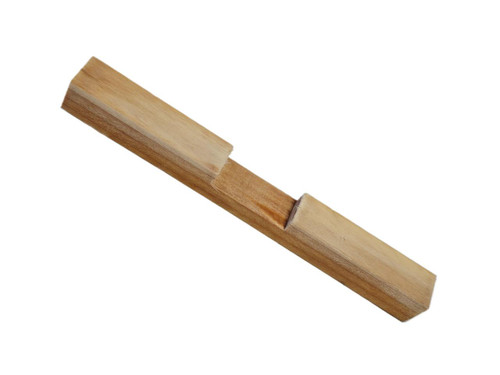


Product Overview
Metal Bee Hive Entrance Reducer & Mouse Guard
Help Keep Mice Out While Maintaining Access for Your Bees
The Metal Bee Hive Entrance Reducer & Mouse Guard is a dual-purpose metal hive entrance accessory designed to reduce entrance access and discourage mice from entering the beehive. Its designated openings allow worker bees to pass through while providing a physical barrier against larger intruders.
Unlike a traditional wooden entrance reducer, the metal construction offers greater resistance to rodent chewing. This makes it a practical option for fall and winter hive preparation, when mice may seek shelter inside beehives.
Features and Benefits
- Dual-purpose entrance protection: Combines hive entrance reduction and mouse deterrence in one accessory.
- Metal construction: Provides greater resistance to rodent chewing than a traditional wooden entrance reducer.
- Openings for worker bees: Maintains designated passageways for bees and airflow rather than completely closing the entrance.
- Seasonal hive management: Helps protect the entrance during colder weather and other periods when mouse deterrence is needed.
- Reusable construction: Can be removed, cleaned, stored, and reused as long as its condition and fit remain suitable.
Product Details and Compatibility
- SKU: WNTS-2377
- Overall length: 11-11/16"
- Overall height: 1"
- Mouse guard slider length: 5"
- Overall bee-access opening length: 5-1/2"
- Individual bee-access hole diameter: 3/8"
- Material: Metal
- Primary functions: Entrance reduction and mouse deterrence
- Installation location: Hive entrance, in conjunction with compatible bottom-board equipment
- Mounting method: Screws or nails
- Mounting hardware: Not included
- Included: Metal entrance reducer and mouse guard
Lappe's Bee Supply Product Experience: Our team measured this metal entrance reducer and mouse guard to provide customers with accurate product specifications. We recommend comparing the measurements listed above with your existing hive entrance and bottom-board configuration before ordering to help ensure a proper fit.
Slider Operation: The 5" slider can be repositioned to adjust the exposed hive entrance opening. Position the slider according to your colony's needs while maintaining suitable bee access and ventilation.
Will This Mouse Guard Fit Your Hive?
Hive entrance and bottom-board designs vary, so a metal mouse guard should not be assumed to fit every hive. Before ordering, measure your existing entrance and identify the bottom-board configuration. Standard wooden bottom boards, screened bottom boards, raised entrance rails, and modified entrances may have different fit requirements.
Confirm that the guard will cover the intended entrance without leaving gaps that mice could use to bypass the barrier. Also check the attachment requirements for your equipment before installation.
Looking for a frame-specific option? Compare our 8-Frame Metal Entrance Reducer & Mouse Guard and 10-Frame Metal Entrance Reducer & Mouse Guard. Both are cut-to-fit models designed for their respective hive sizes. Check your entrance measurements and bottom-board configuration before selecting a guard.
Metal Mouse Guard vs. Wooden Entrance Reducer
An entrance reducer restricts the available hive entrance, while a mouse guard provides a physical barrier intended to discourage rodents from entering. The Metal Bee Hive Entrance Reducer & Mouse Guard combines these two functions.
| Feature | Metal Entrance Reducer & Mouse Guard | Traditional Wooden Entrance Reducer |
| Primary purpose | Entrance reduction and mouse deterrence | Entrance-size management |
| Rodent chewing resistance | Metal provides greater resistance | Wood can be chewed by rodents |
| Bee access | Designated openings for worker bees | Access through the selected entrance opening |
| Selection priority | Mouse deterrence and entrance restriction | Entrance restriction when a separate mouse barrier is not needed |
Lappe's Bee Supply recommendation: When mouse prevention is a primary concern, choose a properly fitting metal mouse guard rather than relying on a wooden entrance reducer alone. The guard must still fit securely and maintain appropriate bee access.
When Should You Install a Mouse Guard?
Fall is an important time to consider mouse protection. As temperatures drop, mice may seek sheltered nesting locations inside beehives. Installing a properly fitting guard before rodents establish themselves is preferable to discovering a problem after they have entered.
Mouse guards may also be useful during other seasons when entrance restriction and rodent deterrence are appropriate. Consider colony strength, worker-bee traffic, weather, foraging activity, and ventilation when deciding how to manage the entrance.
A mouse guard is preventive equipment. It does not remove mice already inside a hive or replace adequate food stores, moisture management, and other winter preparation.
For additional seasonal guidance, read our October Hive Preparation: Getting Ready for Winter guide, which explains entrance reduction, mouse protection, and other important steps for preparing colonies for colder weather.
Installation and What to Expect
- Inspect the hive entrance. Examine the entrance opening, bottom board, and surrounding construction.
- Check the fit. Position the guard across the intended entrance and look for gaps that could allow mice to bypass it.
- Check stability. Make sure the guard sits securely against the hive equipment without interfering with other entrance components.
- Maintain bee access. Confirm that worker bees can pass through the designated openings and that the entrance arrangement supports the colony's ventilation needs.
- Reinspect after installation. Watch for movement, obstruction, damage, or changes in bee traffic that may require attention.
Cleaning, Maintenance, and Seasonal Storage
Propolis, wax, dead bees, and other debris can accumulate around entrance guards. Lappe's Bee Supply recommends carefully removing loose material with a soft brush or suitable hive tool while minimizing colony disturbance.
During routine inspections, check for blocked openings, bending, damaged edges, corrosion, and changes that affect secure positioning. Minor discoloration does not automatically mean the guard needs replacement; functional condition matters more than cosmetic appearance.
If you remove the guard for seasonal storage, clean away debris, allow it to dry completely, and store it in a clean, dry location where it will not be bent or damaged. Replace a guard when significant deterioration prevents secure fit, appropriate bee access, or its intended protective function.
Common Questions About Metal Mouse Guards
Does a metal mouse guard completely prevent mice from entering a beehive?
No. A metal mouse guard helps discourage mice from entering through the protected hive entrance, but it cannot guarantee complete exclusion. Gaps around the guard or other unprotected openings may still allow entry.
Can bees still enter and leave the hive?
Yes. The Metal Bee Hive Entrance Reducer & Mouse Guard has designated openings intended to permit worker-bee passage and airflow. Correct positioning and unobstructed openings are important.
Can I install a mouse guard after mice have entered the hive?
A mouse guard is primarily preventive. Installing one does not remove mice already inside the hive. Existing rodent activity must be addressed separately before relying on the guard for continued entrance protection.
What should I check if bees appear crowded at the entrance?
Inspect the guard for debris, propolis, damaged openings, or improper positioning. Also consider colony activity, weather, and ventilation needs. Correct any obstruction or fit problem without creating an opening that allows mice to bypass the guard.
Can the metal guard be used again next season?
Yes, provided it remains in suitable condition. Clean and dry the guard before storage, then inspect its shape, openings, and fit before reinstalling it.
Protect Your Hive Entrance Before Mice Move In
The Metal Bee Hive Entrance Reducer & Mouse Guard offers a practical combination of entrance restriction and rodent-chewing resistance for compatible hive equipment. It is especially useful when preparing colonies for colder weather and managing the risk of mice entering through the hive entrance.
Lappe's Bee Supply comes from a commercial beekeeping family with experience dating to 1978 and has served beekeepers with equipment and practical beekeeping education since 2017. Our guidance is to consider the entire entrance arrangement—not just the guard material—when preparing a hive for mouse protection.
Before ordering: Compare the guard's 11-11/16" overall length and 1" height with your hive entrance measurements. Check your bottom-board configuration and mounting requirements to determine whether this guard is suitable for your equipment.