

Product Overview
Decorative Bee Frame Perch Brackets – Hands-Free Frame Holder for Beekeepers
Make hive inspections easier, faster, and more efficient with these Decorative Bee Frame Perch Brackets. Designed to securely hold frames outside the hive during inspections, these durable metal brackets provide a convenient resting place for frames while reducing the risk of crushing bees, damaging comb, or placing frames on the ground.
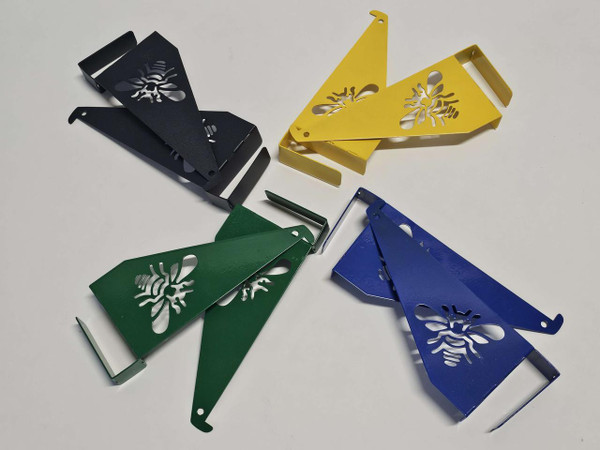
Featuring an attractive honey bee cutout design and powder-coated finish, these frame perch brackets combine functionality with style, making them a favorite among hobbyist beekeepers, sideliners, and commercial operations alike.
Available in multiple colors, these brackets easily attach to most standard Langstroth hive bodies, creating a stable frame-holding station whenever you need extra working space during hive management.
At-A-Glance
✓ Holds Frames During Hive Inspections
✓ Reduces Frame Handling Stress
✓ Helps Prevent Comb Damage
✓ Durable Powder-Coated Metal Construction
✓ Decorative Honey Bee Cutout Design
✓ Easy Installation
✓ Fits Most Standard Langstroth Hives
✓ Available in Multiple Colors
✓ Great for Beginner & Experienced Beekeepers
✓ Keeps Frames Off the Ground
✓ Improves Hive Inspection Efficiency
What Is a Frame Perch?
A frame perch is a simple beekeeping tool that temporarily holds frames outside the hive during inspections.
Instead of balancing frames against hive boxes or placing them on the ground, a frame perch provides a secure location to hang frames while you:
-
Inspect brood patterns
-
Search for queens
-
Evaluate colony health
-
Check for swarm cells
-
Monitor honey stores
-
Perform mite treatments
-
Conduct routine hive management
Frame perches help create a more organized and efficient inspection process.
Why Every Beekeeper Should Use a Frame Perch
Many beekeepers discover that one of the most challenging parts of hive inspections is managing removed frames.
Without a frame holder, frames are often:
-
Leaned against hive boxes
-
Set on the ground
-
Balanced in unstable positions
-
Exposed to dirt and debris
-
More likely to suffer comb damage
A frame perch solves these problems by providing a dedicated place to safely hang frames while working.
Key Benefits
Creates More Working Space
Removing and hanging one or more frames gives you additional room to inspect the rest of the colony without crushing bees.
Helps Protect the Queen
By securely holding frames away from the hive body, you reduce unnecessary frame movement and handling.
Reduces Comb Damage
Fresh comb and heavy honey frames can be fragile. A frame perch helps keep frames stable and protected.
Keeps Frames Clean
Avoid placing frames on grass, dirt, mud, or wet surfaces.
Speeds Up Hive Inspections
Quick access to removed frames makes inspections more efficient and organized.
Decorative Honey Bee Design
Unlike ordinary frame holders, these brackets feature a beautiful honey bee cutout pattern that celebrates the importance of pollinators and honey bees.
The decorative design makes these frame perches:
-
Attractive in the apiary
-
Great gifts for beekeepers
-
Unique additions to beekeeping equipment
-
Popular among hobby and backyard beekeepers
Functionality meets craftsmanship in a tool you'll use every season.
Compatible Hive Types
These frame perch brackets are designed to work with most standard:
-
Langstroth Deep Hive Bodies
-
Medium Supers
-
Shallow Supers
-
8-Frame Equipment
-
10-Frame Equipment
Always verify compatibility with your specific equipment configuration.
Perfect For
Beginner Beekeepers
Makes inspections less intimidating and easier to manage.
Hobby Beekeepers
Adds convenience during routine hive checks.
Sideliner Beekeepers
Improves efficiency across multiple colonies.
Commercial Apiaries
Helps streamline frame handling during large-scale inspections.
Queen Rearing Operations
Provides a safe place for valuable brood and queen frames.
Common Uses During Hive Inspections
Frame perch brackets are useful when:
-
Locating the queen
-
Inspecting brood patterns
-
Looking for swarm cells
-
Splitting colonies
-
Performing mite checks
-
Evaluating honey stores
-
Replacing old comb
-
Reversing brood boxes
-
Installing package bees
-
Conducting educational demonstrations
Why Proper Frame Handling Matters
Every time a frame is removed from a hive, there is potential for:
-
Bee injury
-
Queen injury
-
Comb damage
-
Honey leakage
-
Contamination
-
Increased colony stress
Proper frame handling techniques help maintain colony health while making inspections safer and more productive.
Using a frame perch is one of the easiest upgrades a beekeeper can make to improve inspection workflow.
Beekeeping Inspection Best Practices
Remove an Outside Frame First
Creating space inside the hive reduces the chance of rolling or crushing bees.
Use a Frame Perch
Hang removed frames securely instead of setting them on the ground.
Move Slowly
Gentle movements help reduce colony disturbance.
Keep Frames Oriented Correctly
Return frames in their original orientation whenever possible.
Protect the Queen
Always inspect carefully when moving brood frames.
Frequently Asked Questions
What is a frame perch used for?
A frame perch temporarily holds frames outside the hive during inspections.
Does a frame perch fit Langstroth hives?
Yes. These brackets are designed for use with most standard Langstroth hive equipment.
How many frames can it hold?
Capacity depends on frame weight and hive configuration. Most beekeepers use them to hold one or more frames during inspections.
Why not place frames on the ground?
Ground placement increases the risk of contamination, bee injury, comb damage, and queen loss.
Are these suitable for beginner beekeepers?
Absolutely. Frame perches are especially helpful for new beekeepers learning hive inspection techniques.
What are they made from?
These brackets feature durable metal construction with a protective finish for long-term use.
About Hive Inspections
Regular hive inspections are one of the most important aspects of successful beekeeping.
Routine inspections help beekeepers:
-
Monitor colony health
-
Detect queen problems
-
Prevent swarming
-
Identify pests and diseases
-
Evaluate brood production
-
Assess honey reserves
-
Support strong overwintering colonies
Tools that improve inspection efficiency can significantly enhance overall hive management.
Why Buy From Lappe's Bee Supply?
Since 1978, Lappe's Bee Supply has served beekeepers by providing quality equipment, practical solutions, and educational resources for every stage of beekeeping.
We are committed to building one of the most comprehensive educational resources covering:
-
Hive inspections
-
Queen management
-
Honey production
-
Varroa mite control
-
Pollinator education
-
Beekeeping equipment
-
Colony health
-
Apiary management
-
Seasonal beekeeping practices
Our goal is to help beekeepers succeed through quality products, expert knowledge, and practical beekeeping education.
Related Educational Resources
-
How to Inspect a Beehive
-
Beginner Beekeeping Guide
-
Understanding Brood Patterns
-
How to Find the Queen Bee
-
Hive Inspection Checklist
-
Common Beekeeping Tools Explained
-
Langstroth Hive Components
-
Preventing Bee Crushing During Inspections
-
Varroa Mite Monitoring Methods
-
Seasonal Hive Management
-
Swarm Prevention Techniques
-
Best Practices for Frame Handling
-
Beekeeping Safety Tips
-
Honey Bee Colony Health Basics
-
Essential Tools for New Beekeepers