Welcome to Lappe's Bee Supply's blogs section. We are a trusted beekeeping company in the USA. We give relevant insights, seasonal guidance, and professional advice for beekeepers of all experience levels. From hive management and bee wellness to honey production and equipment guides, we have it all that you will require to thrive. Get updated, motivated, and connected with the beekeeping community through regular news from Lappe's Bee Supply.
When to Split a Bee Hive: An In-Depth Guide for Beekeepers
The Buzz About This Post
- Key Takeaways
- Table of Contents
- What is a bee hive split?
- Why should you split a bee hive?
- What are the signs that a bee hive may need to be split?
- When is the best time to split a bee hive?
- How can you tell whether a colony is strong enough to split?
- How do you split a bee hive step by step?
- Which bee hive splitting method should you use?
- How does a walkaway split work?
- How does the Demaree method work?
- How does a queenless split work?
- How does a nuc split work?
- What should you monitor after splitting a bee hive?
- Can splitting a bee hive help with Varroa management?
- What mistakes should you avoid when splitting a bee hive?
- 1. Splitting a Colony That Is Too Weak
- 2. Treating Every Queen Cup as an Emergency
- 3. Using the Calendar Instead of the Colony
- 4. Forgetting Where the Queen Is
- 5. Expecting Immediate Eggs From a Queenless Split
- 6. Moving Questionable Brood Between Hives
- 7. Assuming a Split Automatically Produces More Honey
- Frequently Asked Questions
- What is a bee hive split?
- What is the best month to split a bee hive?
- Can you split a hive without finding the queen?
- How strong should a hive be before splitting?
- Do queen cells mean a hive should be split?
- How long does it take a queenless split to make a queen?
- Should you feed a new hive split?
- Can split a bee hive prevent swarming?
- Does split a bee hive control Varroa mites?
- Will split a Bee hive increase honey production?
- What sources support this bee hive splitting guide?
- Who prepared this guide?
- FAQs
How to Split a Bee Hive: When, Why, and How to Make a Successful Hive Split
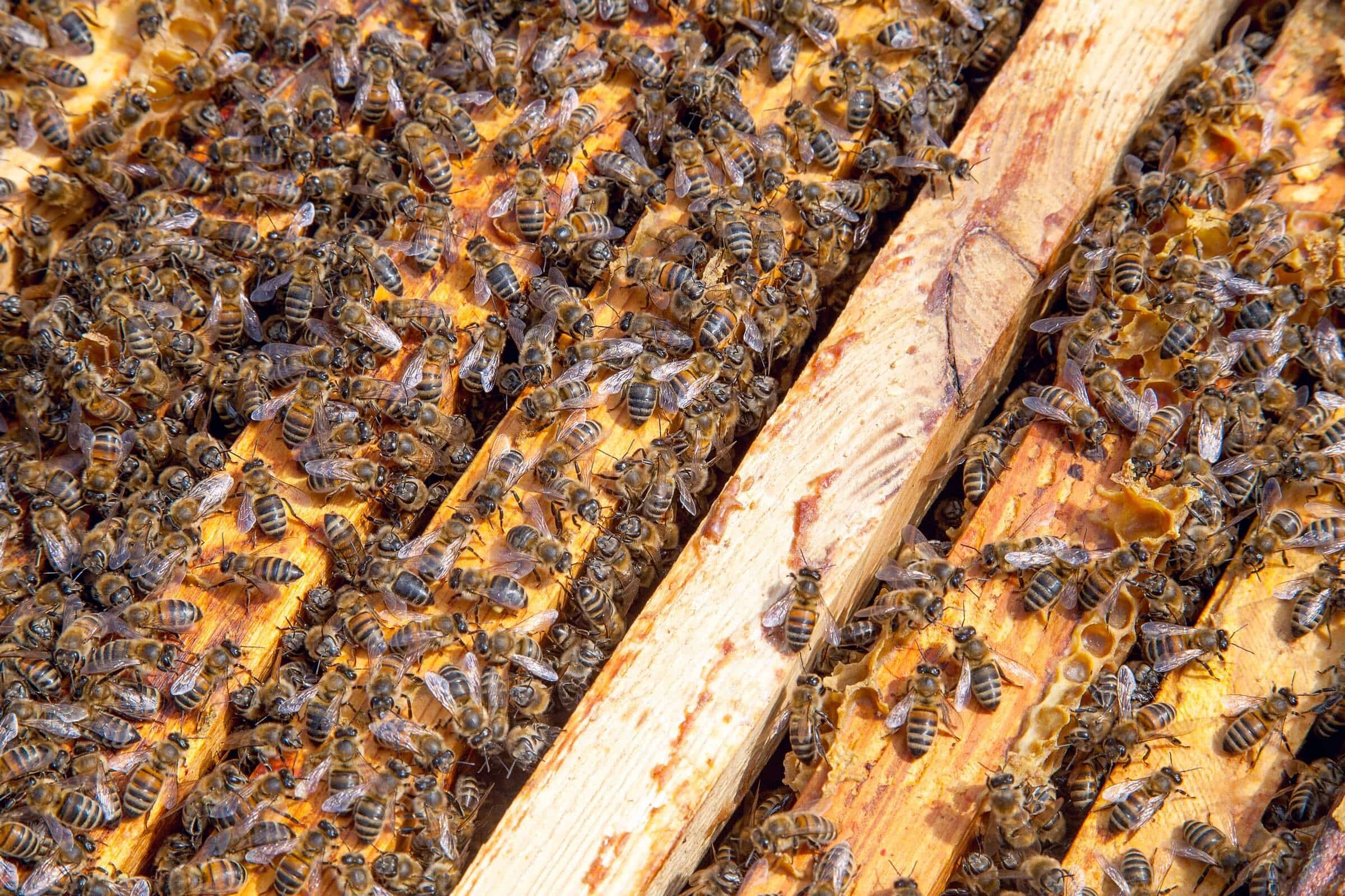
To Split a bee hive is the beekeepers-managed division of one strong honey bee colony into two colonies. A properly timed split can help manage swarm pressure, increase colony numbers, replace a queen, and give a beekeeper greater control over a rapidly growing apiary.
Key Takeaways
- Split a bee hive divides one established colony into two managed colonies.
- Strong colonies should be split based on bee population, brood, resources, queen status, and local conditions rather than a single calendar date.
- Occupied queen cells can indicate active queen rearing and may signal that swarm preparations are underway.
- Each side of the split a bee hive needs sufficient adult bees, brood, food, and a clear plan for obtaining or retaining a queen.
- A queenless split needs time to raise, mature, mate, and establish a new queen before normal egg laying resumes.
- Split a bee hive can change brood availability and Varroa reproduction opportunities, but it does not replace routine mite monitoring.
- A split can reduce the original colony's workforce, so splitting does not automatically increase honey production.
What is a bee hive split?
Split a Bee Hive is the deliberate division of one established honey bee colony into two managed colonies, with each unit receiving enough bees and resources to function independently.
- Split a bee hive is sometimes described as an artificial form of colony reproduction.
- The parent colony supplies adult bees, brood, food, comb, or a combination of those resources.
- One colony normally keeps the existing queen while the other raises or receives another queen.
- A nucleus colony, or nuc, is one common form of a smaller managed split.
Honey bee colonies naturally reproduce through swarming. During a swarm, the established queen leaves with a substantial portion of the worker population and attempts to establish another nest. A beekeeper uses a split to accomplish a similar population division under controlled conditions.
Penn State Extension describes splitting as a beekeeper-managed strategy that can reduce swarming and increase colony numbers. The important difference is control: instead of allowing bees to choose when and where the population divides, the beekeeper controls the equipment, resources, queen strategy, and location of the resulting colonies.
One established colony intentionally divided into two managed colonies.
Why should you split a bee hive?
Beekeepers split a bee hive primarily to manage swarm pressure, increase colony numbers, replace queens, or create manageable nucleus colonies.
- Split a Bee Hive can reduce congestion in a rapidly growing colony.
- Split a bee hive can be used to expand an apiary without buying another complete colony.
- A split creates an opportunity to introduce a new queen or allow bees to raise one.
- Splitting a weak or unhealthy colony can leave both resulting colonies undersized.
Swarm Prevention
Swarm management is one of the most common reasons to make a split. A strong colony can become crowded during spring population buildup. If the colony begins active queen rearing as part of its swarm preparations, dividing the colony can reduce population pressure and separate the existing queen from part of the brood nest.
A split is not the only swarm-management tool. Providing appropriate space, monitoring queen cells, and managing the brood nest may also be useful. Once a colony is strongly committed to swarming, however, simply adding another box may not reverse that process.
Population and Space Management
Strong colonies need adequate space for brood rearing and food storage. As brood emerges and incoming nectar fills available cells, the brood nest can become increasingly congested. Dividing an exceptionally strong colony can redistribute bees and resources into two managed units.
Requeening
Splitting also provides an opportunity for queen management. The original queen can remain with one portion of the colony while the other portion raises a queen, receives a queen cell, or receives a mated queen. Beekeepers who want to explore queen-management equipment can also visit the Lappe's Bee Supply queen rearing section.
Creating New Colonies
A productive colony can become the starting point for apiary expansion. Instead of purchasing an entire established hive, a beekeeper can use bees, brood, food, and comb from an existing strong colony to establish another colony.
What are the signs that a bee hive may need to be split?
A strong, crowded colony with abundant brood and active queen cells may be a good candidate for splitting, especially during the local swarm season.
- Occupied queen cells are more meaningful than empty queen cups.
- Large adult bee populations increase the chance that both resulting colonies can cover their brood.
- Brood in multiple stages indicates active colony growth.
- Congested brood and food-storage areas can contribute to swarm pressure.
- A colony showing disease symptoms should be evaluated before brood is transferred elsewhere.
The strongest decision comes from several observations together rather than one isolated sign. Bees may maintain empty queen cups even when they are not preparing to swarm, so finding an empty cup by itself does not automatically mean a split is necessary.
Queen cells containing an egg or developing larva are more significant. Penn State Extension notes that active queen rearing is part of the swarm-preparation process. A colony may begin those preparations before a swarm actually leaves.
Also look at total colony strength. Frames covered with bees, substantial areas of brood, adequate pollen and honey, and rapid population growth create a much stronger case for splitting than behavior alone. Increased defensiveness, for example, can have many causes and should not be used as a standalone diagnostic sign of overcrowding.
When is the best time to split a bee hive?
The best time to split is when the colony is strong enough to support two units and local weather, forage, drones, and queen-mating conditions favor establishment.
- Spring is the main splitting period in many temperate U.S. locations.
- Local bloom and colony development are more useful than a universal calendar date.
- Adult drones should be available if the split must raise and mate a virgin queen.
- Cold weather can make small splits vulnerable to chilled brood.
- Major nectar flows influence both colony growth and the consequences of removing workers.
The original version of this guide recommended a fixed mid-April through mid-July window. That range is too broad to apply equally to every beekeeper. Spring development begins at dramatically different times depending on latitude, elevation, local plants, weather, and the strength of the individual colony.
Penn State Extension uses biological and environmental indicators such as strong colonies, spring bloom, and the presence of drones to help determine splitting conditions. This approach is more useful than choosing a date months in advance.
How can you tell whether a colony is strong enough to split?
A colony should have enough adult bees, healthy brood, food, and queen potential that dividing its resources still leaves two viable colonies.
Pre-Split Readiness Checklist
- The hive has a large adult bee population.
- Brood can remain adequately covered after frames are divided.
- Healthy brood is present in several stages of development.
- Honey and pollen resources are available or feeding is planned when necessary.
- The queen's location or status is known whenever possible.
- A clear queen plan exists for the queenless half.
- Weather is suitable for working the colony.
- Mature drones are present if a virgin queen must mate.
- No unexplained brood-disease symptoms are being transferred to another hive.
- The second hive and necessary equipment are ready before the split begins.
Splitting too early is a common error. Small colonies have fewer workers available to regulate brood temperature, feed larvae, defend entrances, and gather resources. Turning one marginal colony into two weaker colonies usually works against the beekeeper's goal.
Colony health deserves particular attention. If brood appears abnormal, investigate the cause before moving frames into another hive. Moving brood, comb, honey, or equipment between colonies can also move pests and pathogens.
How do you split a bee hive step by step?
Prepare a second hive, determine queen location, divide brood and food, establish queen status in both units, and monitor each colony after the split.
1 Prepare the Second Hive
Assemble the bottom board, brood box, frames, inner cover, outer cover, and any other equipment before opening the donor colony. Having everything ready reduces the time brood and bees remain exposed.
2 Inspect the Donor Colony
Evaluate population, brood, food, queen cells, pests, and visible signs of disease. Confirm that the colony is strong enough to tolerate the removal of bees and brood.
3 Locate the Queen When Possible
Finding the queen gives you control over which portion of the colony remains queenright. A marked queen may be easier to find. If you move her, transferring the entire frame she occupies can reduce the need to physically handle her.
4 Divide Brood and Adult Bees
Give the new colony enough brood and adult bees to function effectively without stripping the parent colony below a sustainable level. Brood should remain well covered by workers after the division.
5 Divide Food Resources
Provide appropriate honey and pollen resources. Feeding may be useful when stored food or natural forage is insufficient, but supplemental feeding should respond to actual colony conditions rather than being automatic.
6 Establish Queen Status
Each resulting colony needs a clear route to becoming queenright. One may retain the original laying queen. The other can raise a queen from suitable young brood, retain an appropriate queen cell, or receive a queen or queen cell from another source.
7 Position the Colonies
Hive position influences where established foragers return. Older foragers recognize their previous hive location, while younger bees have not yet developed the same orientation history. Account for this when deciding which unit remains on the original stand.
8 Allow the Queen Strategy Time to Work
A colony raising its own queen will not return to normal egg laying immediately. Avoid repeatedly disturbing a colony during sensitive queen-development and mating periods unless an inspection is needed for a specific management reason.
Which bee hive splitting method should you use?
Choose a splitting method according to your goal, colony strength, queen availability, swarm status, equipment, and tolerance for a queenless period.
| Method | Best Use | Queen Strategy | Main Advantage | Main Consideration |
|---|---|---|---|---|
| Walkaway Split | Simple colony increase | Queenless side raises a queen | Requires minimal queen-rearing equipment | Queen development and mating require time |
| Mated-Queen Split | Faster queen establishment | Mated queen is introduced | Can reduce the queenless interval | Queen acceptance must be managed |
| Queen-Cell Split | Colonies already rearing queens | Selected queen cell remains with queenless unit | Uses existing colony biology | Queen still must emerge, mature, and mate |
| Nuc Split | Controlled apiary expansion | Raised, cell-based, or introduced queen | Uses a smaller number of frames | Small colonies require careful resource management |
| Demaree Method | Swarm management | Original queen retained in a separated brood arrangement | Maintains one large colony structure | Requires additional equipment and follow-up management |
How does a walkaway split work?
A walkaway split divides colony resources while leaving one queenless unit with suitable brood from which worker bees can attempt to raise a new queen.
A walkaway split is attractive because it does not necessarily require the beekeeper to purchase or introduce a queen. The queenright portion retains the existing queen, while the queenless portion is given suitable brood and enough workers and food to continue functioning.
The major tradeoff is time and uncertainty. A new queen must develop, emerge, mature, complete successful mating flights, return safely, and begin laying. Weather and drone availability affect that process. The beekeeper should therefore understand the queen-development timeline before assuming the split has failed.
How does the Demaree method work?
The Demaree method separates the queen from much of the brood within a vertically arranged colony to reduce brood-nest congestion and manage swarming.
The Demaree method differs from a simple two-hive split because the colony remains arranged as one stacked hive system. Mississippi State University Extension describes the method as separating the queen from brood while providing the queen with laying space and moving much of the brood higher in the stack.
A queen excluder and additional boxes are typically involved. The configuration reduces congestion around the queen and changes the distribution of brood and nurse bees. Because new queen cells can be started in the upper portion, follow-up inspection is part of the method.
Demaree management can be useful for a beekeeper trying to reduce swarm pressure while maintaining a strong workforce, but it requires more equipment and attention than a basic colony division.
How does a queenless split work?
A queenless split intentionally creates a colony without a laying queen and provides the bees with a queen cell or suitable young brood for queen production.
Worker bees can rear a replacement queen from appropriately aged female larvae. Queen production depends on having suitable brood, enough nurse bees, adequate resources, and conditions that allow a virgin queen to mate after emergence.
Penn State's queen-development guidance explains that queen development takes about 16 days from egg to adult emergence. A virgin queen then needs additional time to mature before mating flights. Successful mating and the beginning of egg laying add still more time.
How does a nuc split work?
A nuc split creates a small functioning colony using selected brood, adult bees, food, comb, and a queen strategy taken from a stronger donor colony.
A nucleus colony is smaller than a standard full-sized hive and commonly uses a compact box designed for a limited number of frames. The smaller format can make a nuc convenient for queen management, colony increase, temporary colony support, or building replacement colonies.
The key limitation is population. A small colony has fewer workers available for brood care, entrance defense, thermoregulation, and food collection. A nuc therefore requires careful attention to population, available food, robbing pressure, queen status, and seasonal weather.
A strong donor colony can often contribute brood and adhering workers without being divided directly in half. This lets the beekeeper create a smaller new unit while preserving more of the donor colony's population.
What should you monitor after splitting a bee hive?
After splitting, monitor queen establishment, brood, adult population, food, space, Varroa levels, and disease signs while allowing enough time for the chosen queen strategy.
Post-Split Monitoring Checklist
- Confirm that the queenright side remains queenright.
- Give a queenless split enough biological time before expecting new eggs.
- Check whether enough adult bees remain to cover brood.
- Monitor honey and pollen stores.
- Feed when resources are inadequate and feeding is appropriate.
- Watch small colonies for robbing pressure.
- Evaluate brood appearance and pattern once laying resumes.
- Continue routine Varroa monitoring in both colonies.
- Add appropriate space as either colony grows.
Feeding
A new split may need supplemental food if it has limited stores or poor incoming forage. Whether feeding is necessary depends on season, colony resources, nectar availability, weather, and management goals. Avoid treating syrup or pollen supplements as mandatory when the bees already have sufficient natural resources.
Regular Inspections
Inspection timing should match what you are trying to learn. A queenright split can be checked for continued brood production, food, and population balance. A queenless split needs more patience because queen development and mating occur on a biological schedule.
Space Management
Successful splits can grow rapidly under favorable conditions. Continue to watch brood space and food storage. Add equipment as needed rather than waiting until the colony becomes severely congested again.
Can splitting a bee hive help with Varroa management?
A queenless split can temporarily interrupt brood production and alter Varroa reproduction opportunities, but splitting does not replace mite monitoring or an IPM plan.
- Varroa mites reproduce in capped honey bee brood.
- A queenless period may temporarily reduce the amount of brood available for mite reproduction.
- The length and timing of a brood interruption affect its potential influence on mite populations.
- Mite levels still need to be measured after a split.
- Varroa treatment decisions should follow current monitoring results, seasonal conditions, and label directions.
Splitting and Varroa management should not be treated as interchangeable practices. A queenless split can create a temporary brood interruption while a replacement queen develops and begins laying. Because Varroa reproduction takes place in capped brood, brood availability matters to mite population dynamics.
USDA Agricultural Research Service work has documented the relationship between brood and Varroa biology, including research showing that removal of mite-infested brood can interrupt mite reproduction. That evidence supports the biological connection, but it does not mean that making an ordinary colony split guarantees adequate mite control.
Continue monitoring both resulting colonies and use an integrated pest management approach appropriate to the season and apiary.
What mistakes should you avoid when splitting a bee hive?
Avoid splitting weak colonies, losing track of queen status, transferring unhealthy brood, using rigid calendar dates, or judging queenless splits too quickly.
1. Splitting a Colony That Is Too Weak
A split divides the workforce as well as the equipment. If neither resulting colony has enough bees to care for brood and perform normal colony functions, both can struggle.
2. Treating Every Queen Cup as an Emergency
Queen cups can exist without an active swarm sequence. Look for occupied queen cells and evaluate them alongside colony population, brood, congestion, and seasonal conditions.
3. Using the Calendar Instead of the Colony
A spring date that works in one state may be completely inappropriate somewhere else. Local blooms, temperatures, drones, colony development, and weather provide better context.
4. Forgetting Where the Queen Is
Queen location determines the biology of each half. When possible, know which colony has the laying queen and write down the queen plan before closing the hives.
5. Expecting Immediate Eggs From a Queenless Split
Queen development, emergence, maturation, mating, and the beginning of egg laying take time. A temporary brood break is expected when bees must raise their own queen.
6. Moving Questionable Brood Between Hives
Brood and equipment can transmit pests and pathogens. Investigate abnormal brood before redistributing frames throughout the apiary.
7. Assuming a Split Automatically Produces More Honey
A split removes workers from the donor hive and can temporarily reduce its field force. Whether total apiary honey production increases or decreases depends on timing, weather, forage, queen performance, colony strength, and management.
Frequently Asked Questions
What is a bee hive split?
A bee hive split is the intentional division of one established honey bee colony into two managed colonies.
What is the best month to split a bee hive?
There is no universal best month. Split when local spring conditions and colony strength support division and, when necessary, successful queen mating.
Can you split a hive without finding the queen?
Yes, but finding the queen gives the beekeeper better control over which colony remains queenright and reduces uncertainty after the split.
How strong should a hive be before splitting?
A hive should have enough adult bees, healthy brood, and food that dividing those resources still leaves two viable colonies.
Do queen cells mean a hive should be split?
Occupied queen cells can indicate active queen rearing and possible swarm preparation. Empty queen cups alone do not prove that a colony is about to swarm.
How long does it take a queenless split to make a queen?
Queen development takes about 16 days from egg to adult emergence, followed by additional time for maturation, mating, and the beginning of egg laying.
Should you feed a new hive split?
Feed when stored food and incoming forage are insufficient. Feeding needs depend on colony resources, weather, season, and local nectar conditions.
Can split a bee hive prevent swarming?
Splitting can reduce swarm pressure and is a recognized swarm-management strategy, particularly for strong colonies entering or already showing signs of swarm preparation.
Does split a bee hive control Varroa mites?
A queenless split may temporarily interrupt brood production, but splitting does not replace Varroa monitoring or an integrated pest management program.
Will split a Bee hive increase honey production?
Not automatically. Split a bee hive reduces the original colony's workforce, so honey production depends on colony strength, nectar flow, timing, queen establishment, and management.
What sources support this bee hive splitting guide?
This guide uses university Extension and USDA research sources for colony division, swarm management, queen development, seasonal management, and Varroa biology.
- Colony Division: An Easy Method to Split a Colony — Penn State Extension. Covers colony division, swarm biology, split timing, queen management, and post-split establishment.
- Colony Growth and Seasonal Management of Honey Bees — Mississippi State University Extension Service. Covers seasonal colony growth, swarm management, splits, nucleus colonies, and the Demaree method.
- An Introduction to Queen Honey Bee Development — Penn State Extension. Covers queen development, emergence, maturation, mating, and queen biology.
- Brood Removal Influences Fall of Varroa destructor in Honey Bee Colonies — USDA Agricultural Research Service / Journal of Apicultural Research. Primary research addressing brood removal and Varroa reproduction.
Who prepared this guide?
Lappe's Bee Supply publishes practical beekeeping information designed to help beekeepers make informed colony-management decisions.
Editorial standard: Biological and management claims in this guide are based on authoritative university Extension or primary research where appropriate. Local beekeeping decisions should account for climate, forage, colony condition, applicable regulations, and current pest-management recommendations.
FAQs
What is a bee hive split?
A bee hive split is the intentional division of one established honey bee colony into two managed colonies.
What is the best month to split a bee hive?
There is no universal best month. Split when local spring conditions and colony strength support division and, when necessary, successful queen mating.
Can you split a hive without finding the queen?
Yes, but finding the queen gives the beekeeper better control over which colony remains queenright and reduces uncertainty after the split.
How strong should a hive be before splitting?
A hive should have enough adult bees, healthy brood, and food that dividing those resources still leaves two viable colonies.
Do queen cells mean a hive should be split?
Occupied queen cells can indicate active queen rearing and possible swarm preparation. Empty queen cups alone do not prove that a colony is about to swarm.
How long does it take a queenless split to make a queen?
Queen development takes about 16 days from egg to adult emergence, followed by additional time for maturation, mating, and the beginning of egg laying.
Should you feed a new hive split?
Feed when stored food and incoming forage are insufficient. Feeding needs depend on colony resources, weather, season, and local nectar conditions.
Can splitting a hive prevent swarming?
Splitting can reduce swarm pressure and is a recognized swarm-management strategy, particularly for strong colonies entering or already showing signs of swarm preparation.
Does splitting a hive control Varroa mites?
A queenless split may temporarily interrupt brood production, but splitting does not replace Varroa monitoring or an integrated pest management program.
Will splitting a hive increase honey production?
Not automatically. Splitting reduces the original colony's workforce, so honey production depends on colony strength, nectar flow, timing, queen establishment, and management.