Welcome to Lappe's Bee Supply's blogs section. We are a trusted beekeeping company in the USA. We give relevant insights, seasonal guidance, and professional advice for beekeepers of all experience levels. From hive management and bee wellness to honey production and equipment guides, we have it all that you will require to thrive. Get updated, motivated, and connected with the beekeeping community through regular news from Lappe's Bee Supply.
Honey Bee Friendly Plants: Creating a Buzz in Your Garden
The Buzz About This Post
- Key Takeaways
- Table of Contents
- What makes a plant bee-friendly?
- Why are honey bees important pollinators?
- What characteristics should you look for in bee-friendly plants?
- Which spring-blooming plants can provide forage for bees?
- Which summer-blooming plants attract bees?
- Which fall-blooming plants help bees late in the season?
- How do you create a bee-friendly garden beyond planting flowers?
- How should pesticides be managed in a bee-friendly garden?
- How should you choose the right bee-friendly plants for your region?
- Frequently Asked Questions
- What is a bee-friendly plant?
- Are native plants better for bees?
- What flowers attract honey bees?
- What should I plant for bees in early spring?
- What should I plant for bees in fall?
- Do honey bees need water?
- Are all pesticides harmful to bees?
- Should I avoid double flowers in a bee garden?
- How many types of flowers should a pollinator garden have?
- Does planting flowers alone create complete bee habitat?
- Sources and Further Reading
- FAQs
Bee-Friendly Plants: How to Create a Garden That Supports the Honey Bee and Other Pollinators
A bee-friendly garden does more than add colorful flowers to the landscape. The most useful pollinator gardens provide nectar and pollen across the growing season, include locally appropriate plants, reduce unnecessary pesticide exposure, and create places where the honey bee and other beneficial insects can forage, rest, nest, and overwinter.
By Lappe's Bee Supply | Published July 22, 2025 | Last updated August 11, 2026
Key Takeaways
- Bee-friendly plants provide nectar, pollen, or useful habitat resources for bees and other pollinators.
- A strong pollinator garden provides overlapping flowers from spring through fall rather than relying on one brief bloom period.
- Native plants can provide food, shelter, nesting materials, and overwintering resources for local pollinators.
- Honey bees are important managed pollinators, but native bees and other animals also contribute essential pollination services.
- Plant choices should be matched to local climate, soil, sunlight, moisture, and regional ecology.
- Reducing unnecessary pesticide exposure is an important part of maintaining pollinator-friendly habitat.
What is a bee-friendly plant? A bee-friendly plant is a flowering plant that provides useful nectar, pollen, or habitat resources for bees while being suitable for the location where it is grown.
What is a pollinator garden? A pollinator garden is a deliberately planted and managed area designed to provide food, shelter, nesting opportunities, and other habitat resources for pollinating animals.
Nectar and pollen are not the same thing. Nectar is primarily an energy-rich carbohydrate source, while pollen provides protein, fats, minerals, vitamins, and other nutrients that bees use as part of their diet.
Honey bees are among the most familiar pollinating insects, but they are only one part of a much larger pollinator community. Bees, butterflies, moths, flies, beetles, birds, bats, and other animals can all transfer pollen between flowers. The USDA Natural Resources Conservation Service reports that about 35 percent of the world's food crops depend on animal pollinators to reproduce, while the Food and Agriculture Organization of the United Nations reports that roughly 75 percent of global food crop types depend at least partly on pollinators.[1][2]
Those statistics describe different measurements, which is why pollination claims should be worded carefully. Saying that pollinators are important to the diversity, yield, and quality of many foods is more accurate than claiming bees are responsible for a fixed percentage of everything people eat.
What makes a plant bee-friendly?
Bee-friendly plants provide accessible nectar or pollen at useful times during the growing season while helping create healthy habitat for bees and other pollinators.
- ✓ Bees visit flowers primarily to collect nectar and pollen.
- ✓ A sequence of flowering plants can provide forage across more of the growing season.
- ✓ Native plants can provide food, shelter, nesting resources, and overwintering habitat.
- ✓ Different bee species can favor different flower shapes, sizes, colors, and bloom periods.
- ✓ A plant should also be appropriate for the soil, climate, moisture, and sunlight where it will grow.
A plant is not automatically valuable to bees simply because it has attractive flowers. The amount and accessibility of nectar and pollen matter, and those resources must be available when pollinators are active. The Xerces Society recommends native plants because they can provide food, shelter, and overwintering materials that support pollinators and other wildlife.[3]
The best garden therefore combines several plant species instead of depending on one favorite flower. Think of the garden as a seasonal food schedule: early flowers help start the season, summer flowers maintain abundance, and late flowers extend forage toward colder weather.
Why are honey bees important pollinators?
Honey bees move pollen between flowers as they forage, helping many flowering plants produce fruit or seed and supporting agricultural pollination.
- ✓ Pollination is part of the reproductive process of many flowering plants.
- ✓ Honey bees are widely managed for agricultural pollination in the United States.
- ✓ Native bees and other animals also provide important pollination services.
- ✓ Pollinator-dependent plants include many fruits, vegetables, nuts, seeds, and wild plants.
When a bee visits a flower, pollen can attach to its body. Some of that pollen may be deposited on another compatible flower during later visits. Successful pollination can allow a plant to complete fertilization and produce seeds or fruit.
Honey bees are especially useful in agriculture because a colony contains thousands of workers that forage over a large area. Managed colonies can also be moved into agricultural areas when crops are flowering. However, honey bees should not be treated as a substitute for all other pollinators. North America contains thousands of native bee species, and healthy landscapes benefit from pollinator diversity.[2]
What characteristics should you look for in bee-friendly plants?
The best bee-friendly plants provide useful nectar or pollen, bloom when bees are active, and match the local climate, soil, and pollinator community.
- ✓ Choose plants known to provide nectar, pollen, or both.
- ✓ Use several species with overlapping bloom periods.
- ✓ Prioritize locally appropriate native plants when practical.
- ✓ Include different flower shapes and plant heights.
- ✓ Check whether a species is invasive before planting it.
- ✓ Avoid assuming every ornamental cultivar has equal pollinator value.
Diversity makes a pollinator planting more useful. Bees differ in body size, tongue length, seasonal activity, nesting behavior, and flower preferences. A mixture of flower forms can therefore serve more types of pollinators than a landscape dominated by one highly ornamental variety.
Native plants deserve special consideration because they are part of the ecological communities in which local pollinators evolved. USDA research also shows that selecting appropriate plant species and varieties is critical when establishing pollinator habitat because plants must match both the site and the objectives of the planting.[4]
Bee-Friendly Plant Selection Checklist
- ✓ Suitable for your local climate and USDA hardiness zone.
- ✓ Appropriate for the available sunlight and soil moisture.
- ✓ Not considered invasive in your region.
- ✓ Provides usable nectar, pollen, or habitat.
- ✓ Adds an early-, middle-, or late-season bloom period.
- ✓ Can be maintained without routine pesticide applications.
Which spring-blooming plants can provide forage for bees?
Early spring flowers provide forage when fewer plants may be blooming, making early crocus, lungwort, thyme, and suitable native plants useful choices.
- ✓ Early flowers can help bridge periods when floral resources are limited.
- ✓ Crocus can provide early flowers in suitable climates.
- ✓ Lungwort is known for flowering early in the growing season.
- ✓ Flowering thyme can offer many small blossoms once established.
- ✓ Native flowering trees and shrubs can also provide valuable spring forage.
Spring is an important time to think beyond the traditional flower bed. Early-blooming trees, shrubs, bulbs, herbs, and native perennials can all contribute floral resources. Crocus, lungwort, and creeping thyme are familiar garden options, but the exact timing and value of each plant varies by region.
Do not plan around fixed calendar dates. A flower that opens in March in one state may bloom much later farther north. Temperature, daylight, local weather, cultivar, elevation, and latitude all influence flowering time.
Which summer-blooming plants attract bees?
Summer bee plants provide nectar and pollen during active foraging months; coneflower, bee balm, lavender, and sunflower are popular garden choices.
- ✓ Coneflowers can attract honey bees and a variety of other insects.
- ✓ Bee balm provides distinctive tubular flowers during summer.
- ✓ Lavender can receive frequent bee visitation while in bloom.
- ✓ Sunflowers can provide both pollen and nectar.
- ✓ Using several species reduces dependence on one short bloom period.
Summer offers gardeners a wide range of choices. Purple coneflower (Echinacea purpurea), bee balm (Monarda spp.), lavender (Lavandula spp.), and sunflower (Helianthus annuus) can contribute to a pollinator planting where their growing requirements are met.
Native members of the Monarda, Echinacea, and Helianthus groups may provide additional ecological value in regions where those species naturally occur. Before planting, compare your garden conditions with recommendations from a state extension service, USDA resource, botanical institution, or regional native-plant organization.
Which fall-blooming plants help bees late in the season?
Fall-blooming plants extend late-season forage; asters, goldenrod, sedum, and Joe Pye weed can supply nectar or pollen after many summer flowers fade.
- ✓ Late flowers extend forage after many summer plants finish blooming.
- ✓ Goldenrods are important late-season flowers in many North American landscapes.
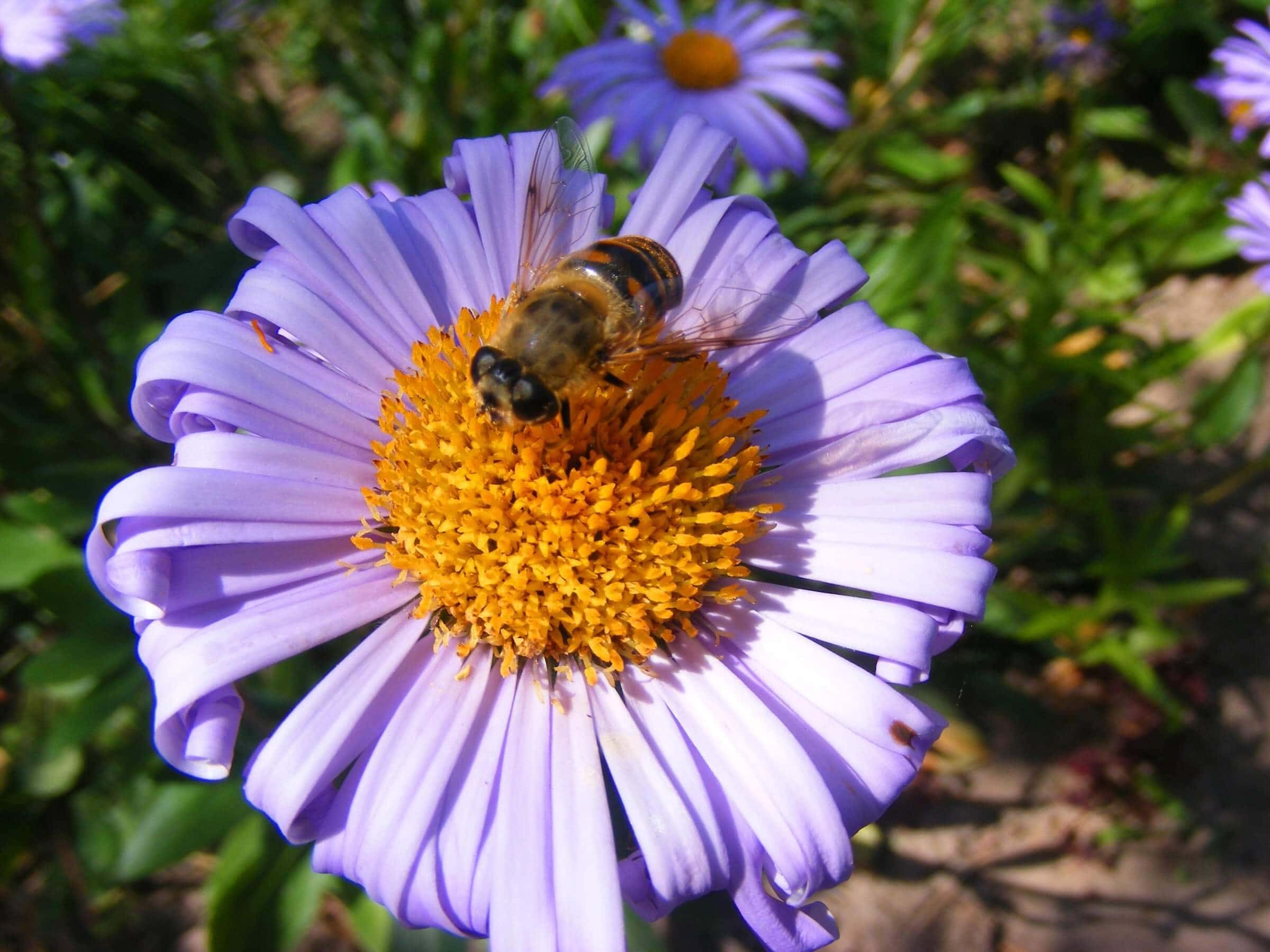
- ✓ Asters provide another diverse group of fall-blooming plants.
- ✓ Joe Pye weed produces large flower clusters that attract several pollinators.
- ✓ Suitable sedums can add late flowers to ornamental gardens.
Late-season forage matters because colonies remain active after many familiar garden flowers have faded. Goldenrods (Solidago spp.) and asters are particularly useful groups to investigate because multiple species occur across North America.
Joe Pye weed (Eutrochium spp.) can contribute large clusters of flowers, while sedum can provide another late-blooming option in suitable garden settings. As with every plant recommendation, the genus name alone is not enough. Choose a species that fits your location.
| Bloom Period | Plant Examples | Primary Garden Role | Planning Consideration |
|---|---|---|---|
| Early Spring | Crocus, lungwort, early native flowers | Provides early-season forage | Bloom timing varies greatly by climate |
| Spring to Early Summer | Flowering thyme and native perennials | Helps bridge early and summer bloom periods | Verify regional suitability |
| Summer | Coneflower, bee balm, lavender, sunflower | Provides main-season floral diversity | Use several flower shapes and species |
| Late Summer to Fall | Goldenrod, asters, Joe Pye weed, sedum | Extends late-season forage | Regional native species are worth prioritizing |
| Multiple Seasons | Flowering trees, shrubs, perennials, and annuals | Creates vertical and seasonal diversity | Build the planting around overlapping bloom periods |
How do you create a bee-friendly garden beyond planting flowers?
A bee-friendly garden combines season-long flowers, suitable nesting habitat, water when needed, and careful pest management to support pollinators.
- ✓ Provide several flowering species across the growing season.
- ✓ Preserve appropriate nesting and overwintering habitat.
- ✓ Reduce unnecessary pesticide use and pollinator exposure.
- ✓ Leave some stems, bare soil, leaves, or woody material where appropriate.
- ✓ Provide a safe water source where natural water is limited.
Flowers solve only one part of the habitat puzzle. Honey bees live in colonies, but many native bees nest individually. Some nest in the ground, while others use hollow stems, pithy stems, existing cavities, or holes in wood. A landscape managed only for a perfectly clean appearance can unintentionally remove some of those habitat features.
USDA and Xerces guidance both emphasize that pollinator habitat involves more than flowers. Native grasses, shrubs, nesting areas, and other vegetation can contribute shelter and habitat, while diverse wildflowers provide nectar and pollen.[3][5]
Step-by-Step Pollinator Garden Checklist
- 1. Assess the site. Note sunlight, soil type, drainage, available space, existing vegetation, and areas that stay wet or dry.
- 2. Identify your region. Use state extension, USDA, conservation, botanical, or native-plant resources to find species appropriate for your area.
- 3. Build a bloom calendar. Select plants so useful flowers overlap from early spring through late fall whenever your climate allows.
- 4. Create visible groups. Planting several examples of the same flower together can make floral resources easier for pollinators to locate.
- 5. Add structural variety. Combine suitable perennials, annuals, grasses, shrubs, and trees where space permits.
- 6. Keep habitat features. Where practical, retain some bare soil, hollow stems, leaves, grasses, or woody material that beneficial insects can use.
- 7. Manage pests carefully. Start with prevention, identification, and nonchemical approaches before deciding whether pesticide treatment is necessary.
- 8. Observe the garden. Keep notes about which plants bloom, when they bloom, which pollinators visit, and where gaps appear during the season.
How should pesticides be managed in a bee-friendly garden?
Minimize bee exposure by preventing pest problems when possible, considering nonchemical controls first, and following pesticide labels exactly when treatment is needed.
- ✓ Natural or organic does not automatically mean harmless to bees.
- ✓ Correct pest identification should come before treatment.
- ✓ Pesticide labels contain required directions and restrictions.
- ✓ Bloom status and pollinator activity can affect exposure risk.
- ✓ Application timing, formulation, drift, dose, and residual activity can all matter.
Avoid replacing one broad pesticide recommendation with another. Neem oil, insecticidal soaps, biological products, and other treatments should not automatically be described as "bee-safe." Risk depends on the active ingredient, formulation, exposure route, application rate, timing, weather, residual activity, and whether pollinators are visiting treated plants.
The U.S. Environmental Protection Agency identifies multiple strategies for reducing pollinator pesticide exposure, including best management practices, bloom-time restrictions, time-of-day restrictions, application-rate reductions, and other mitigation measures where appropriate.[6] EPA pesticide labels determine how registered products may be used, so gardeners should always read and follow the specific label rather than relying on a general rule.
How should you choose the right bee-friendly plants for your region?
Choose bee-friendly plants by matching bloom period, floral value, site conditions, and regional suitability instead of following one universal planting list.
- ✓ Native plant ranges vary across North America.
- ✓ A useful plant in one region may be poorly adapted or invasive somewhere else.
- ✓ Sunlight, soil, drainage, and moisture affect flowering and plant health.
- ✓ Regional plant lists can identify species with local pollinator value.
- ✓ State extension services and conservation organizations can help confirm plant choices.
Regional planning is one of the easiest ways to improve a pollinator garden. Instead of purchasing every flower from a national "best plants for bees" list, begin with the conditions in your yard and the plants recommended for your part of the country.
Research also demonstrates why local evidence matters. A USDA Forest Service study evaluating native species for pollinator restoration found major differences in bee visitation, bee-species use, specialist-bee support, and flowering duration among the plants studied. The researchers developed plant scorecards specifically because not every flowering species provides the same pollinator value.[7]
Think locally, then think seasonally. A locally appropriate plant growing vigorously in the right soil and light conditions is more likely to flower reliably than a plant struggling in unsuitable conditions.
Frequently Asked Questions
What is a bee-friendly plant?
A bee-friendly plant provides useful nectar, pollen, or habitat resources while being suitable for the climate and growing conditions where it is planted.
Are native plants better for bees?
Native plants are often excellent choices because they can provide food, nesting resources, shelter, and ecological relationships that support local pollinator communities.
What flowers attract honey bees?
Honey bees visit many nectar- and pollen-producing flowers, including suitable clovers, asters, goldenrods, sunflowers, lavender, coneflowers, and other flowering plants.
What should I plant for bees in early spring?
Choose locally appropriate early-blooming flowers, shrubs, and trees that provide pollen or nectar before the main summer bloom period begins.
What should I plant for bees in fall?
Regional goldenrods and asters are useful plants to investigate, along with other locally appropriate species that flower late in the growing season.
Do honey bees need water?
Yes. Honey bees collect water for colony needs, including cooling the hive, so a reliable water source can be useful where natural water is limited.
Are all pesticides harmful to bees?
Pesticide risks vary by active ingredient, formulation, dose, timing, and exposure, so products should be evaluated individually and used according to their labels.
Should I avoid double flowers in a bee garden?
Highly modified double flowers can sometimes make nectar or pollen less accessible, so pollinator value should be verified rather than assumed from appearance.
How many types of flowers should a pollinator garden have?
There is no universal number. Aim for plant diversity and overlapping bloom periods so several useful flowers are available throughout the growing season.
Does planting flowers alone create complete bee habitat?
No. Useful pollinator habitat can also include nesting areas, shelter, overwintering sites, water where needed, and protection from unnecessary pesticide exposure.
Sources and Further Reading
- Food and Agriculture Organization of the United Nations (FAO). “Global Action on Pollination Services for Sustainable Agriculture — About Pollination.” https://www.fao.org/pollination/about/en
- USDA Natural Resources Conservation Service. “Insects and Pollinators.” https://www.nrcs.usda.gov/conservation-basics/animals/insects-pollinators
- The Xerces Society for Invertebrate Conservation. “Plants for Pollinators.” https://xerces.org/pollinator-conservation/plants-for-pollinators
- USDA Natural Resources Conservation Service. “Improving Pollinator Habitat with Plant Materials Program Information.” https://www.nrcs.usda.gov/plant-materials/news/improving-pollinator-habitat-with-plant-materials-program-information
- USDA Natural Resources Conservation Service. “Pollinators Need Native Grasses Too!” https://www.nrcs.usda.gov/plant-materials/news/pollinators-need-native-grasses-too
- U.S. Environmental Protection Agency. “Tools and Strategies for Pollinator Protection.” https://www.epa.gov/pollinator-protection/tools-and-strategies-pollinator-protection
- Glenny, W., Runyon, J. B., and Burkle, L. “Assessing Pollinator Friendliness of Plants and Designing Mixes to Restore Habitat for Bees.” USDA Forest Service, Rocky Mountain Research Station, 2022. https://research.fs.usda.gov/treesearch/63732
- U.S. Environmental Protection Agency. “Protecting Bees and Other Pollinators from Pesticides.” https://www.epa.gov/pollinator-protection
- USDA Farm Service Agency. “Pollinators.” https://www.fsa.usda.gov/programs-and-services/economic-and-policy-analysis/natural-resources-analysis/pollinators
FAQs
What is a bee-friendly plant?
A bee-friendly plant provides useful nectar, pollen, or habitat resources while being suitable for the climate and growing conditions where it is planted.
Are native plants better for bees?
Native plants are often excellent choices because they can provide food, nesting resources, shelter, and ecological relationships that support local pollinator communities.
What flowers attract honey bees?
Honey bees visit many nectar- and pollen-producing flowers, including suitable clovers, asters, goldenrods, sunflowers, lavender, coneflowers, and other flowering plants.
What should I plant for bees in early spring?
Choose locally appropriate early-blooming flowers, shrubs, and trees that provide pollen or nectar before the main summer bloom period begins.
What should I plant for bees in fall?
Regional goldenrods and asters are useful plants to investigate, along with other locally appropriate species that flower late in the growing season.
Do honey bees need water?
Yes. Honey bees collect water for colony needs, including cooling the hive, so a reliable water source can be useful where natural water is limited.
Are all pesticides harmful to bees?
Pesticide risks vary by active ingredient, formulation, dose, timing, and exposure, so products should be evaluated individually and used according to their labels.
Should I avoid double flowers in a bee garden?
Highly modified double flowers can sometimes make nectar or pollen less accessible, so pollinator value should be verified rather than assumed from appearance.
How many types of flowers should a pollinator garden have?
There is no universal number. Aim for plant diversity and overlapping bloom periods so several useful flowers are available throughout the growing season.
Does planting flowers alone create complete bee habitat?
No. Useful pollinator habitat can also include nesting areas, shelter, overwintering sites, water where needed, and protection from unnecessary pesticide exposure.