Welcome to Lappe's Bee Supply's blogs section. We are a trusted beekeeping company in the USA. We give relevant insights, seasonal guidance, and professional advice for beekeepers of all experience levels. From hive management and bee wellness to honey production and equipment guides, we have it all that you will require to thrive. Get updated, motivated, and connected with the beekeeping community through regular news from Lappe's Bee Supply.
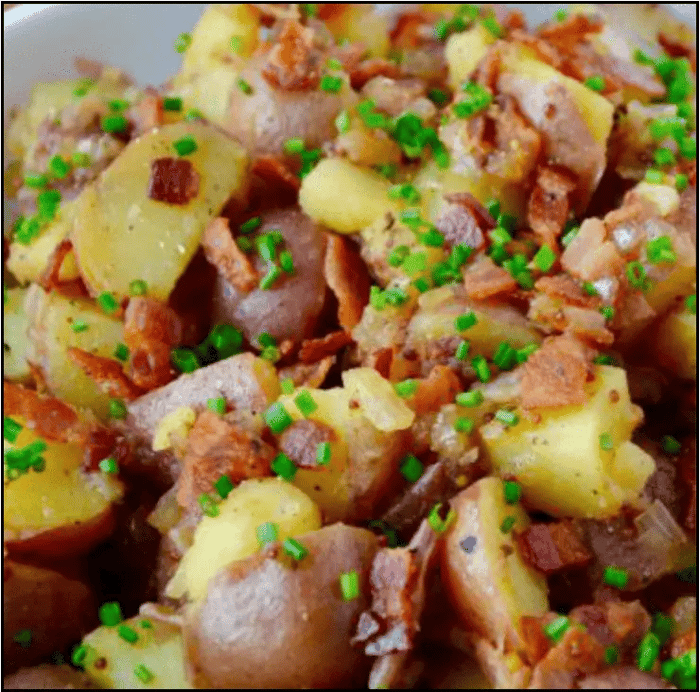
Warm Potato Salad with Honey Dressing
The Buzz About This Post
- What should you know before making this warm potato salad?
- What is covered in this recipe guide?
- What is warm potato salad with honey dressing?
- Which ingredients are needed for warm honey potato salad?
- How do you make warm potato salad with honey dressing?
- How can you help the potatoes cook evenly?
- How does honey dressing compare with other potato salad dressings?
- How should warm potato salad be served and stored?
- What are the most common questions about warm potato salad?
- Which authoritative sources support this recipe guide?
- FAQs
Honey Recipes · Savory Side Dishes
Warm Potato Salad with Honey-Dijon Dressing
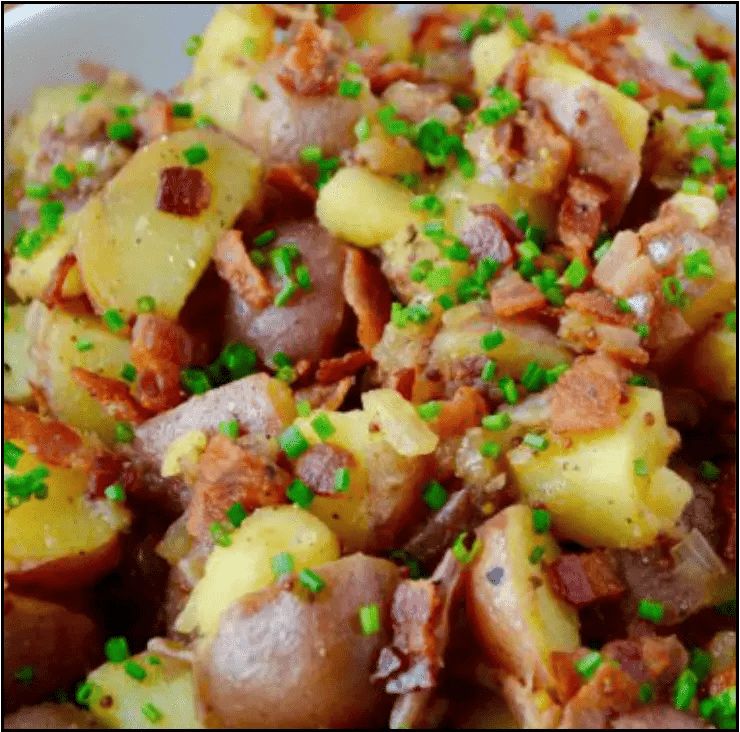
Tender roasted new potatoes meet crisp bacon, fresh herbs, and a lively honey-Dijon vinaigrette in this warm, comforting side dish.
What should you know before making this warm potato salad?
This warm potato salad pairs roasted new potatoes with bacon, herbs, and honey-Dijon vinaigrette. Half the dressing is reserved for the midpoint of roasting.
- Honey balances the acidity of cider vinegar and the sharp flavor of Dijon mustard.
- Evenly sized potato pieces cook more consistently than a mixture of large and small pieces.
- A single layer gives the potatoes more direct contact with the hot pan.
- Fork-tender centers are a better doneness test than elapsed cooking time alone.
- Bacon, parsley, and green onion are added after roasting so their flavors remain distinct.
What is warm potato salad with honey dressing?
Warm potato salad is a potato side dish served shortly after cooking instead of being completely chilled. This version uses a light honey-Dijon vinaigrette rather than mayonnaise.
- The dressing combines cider vinegar, vegetable oil, honey, and Dijon mustard.
- The potatoes receive dressing before roasting and again halfway through cooking.
- Crisp bacon contributes a salty, savory contrast to the sweet-tangy dressing.
- Fresh parsley and green onion are folded in after roasting.
Unlike a cold, mayonnaise-based potato salad, this recipe is at its most inviting when the potatoes are still warm. The vinaigrette coats the cut surfaces without creating a heavy or creamy texture. Honey softens the vinegar’s acidity, while Dijon gives the dressing a sharper finish. The result works well beside grilled foods, roasted meats, sandwiches, or other casual meals where a warm potato side feels more satisfying than a chilled salad.
Which ingredients are needed for warm honey potato salad?
The recipe uses new potatoes, cider vinegar, oil, honey, Dijon mustard, bacon, parsley, green onion, salt, and black pepper.
Ingredients
- ⅓ cup cider vinegar
- 2 tablespoons vegetable oil
- ¼ cup honey
- 1 tablespoon Dijon mustard
- 1½ pounds small new potatoes, scrubbed and cut into evenly sized bite-size pieces
- 5 slices bacon, cooked until crisp and crumbled
- 2 tablespoons chopped fresh parsley
- 2 tablespoons chopped green onion
- ½ teaspoon salt
- Additional salt and black pepper, to taste
New potatoes are young potatoes harvested before they reach full maturity. Their thin skins and waxy texture make them a practical choice for a salad because the pieces tend to hold their shape after cooking. Scrub the potatoes under running water before cutting them. The USDA recommends washing produce before preparation and notes that firm produce such as potatoes can be scrubbed with a clean produce brush.
The original recipe does not provide a tested yield, preparation time, total time, nutrition calculation, or exact potato-piece dimension. Those values should remain omitted until they are measured in a documented kitchen test.
How do you make warm potato salad with honey dressing?
Whisk the vinaigrette, coat the potatoes with half, roast at 375°F, add the remaining dressing halfway, and finish with bacon and herbs.
Step-by-step instructions
- Preheat the oven. Set the oven to 375°F so it is fully heated before the potatoes go in.
- Make the dressing. Whisk the cider vinegar, vegetable oil, honey, and Dijon mustard until the mixture looks evenly combined.
- Dress the potatoes. Toss the potato pieces with half of the dressing. Set the other half aside for the midpoint of roasting.
- Arrange the pan. Spread the potatoes in one even layer on a sheet pan. Avoid piling the pieces on top of one another.
- Begin roasting. Place the pan in the oven and roast for 18–20 minutes according to the original recipe.
- Turn and dress again. Halfway through the listed cooking period, turn the potato pieces and toss them with the reserved dressing.
- Check doneness. Test several pieces with a fork. If the centers still resist the fork, continue roasting until they are tender rather than relying on the timer alone.
- Add the finishing ingredients. Remove the pan from the oven and gently mix in the bacon, parsley, green onion, and ½ teaspoon salt.
- Taste and serve. Add black pepper and more salt only as needed, then serve the potato salad warm.
Cooking time can change with potato variety, cut size, starting temperature, pan material, crowding, and oven calibration. That is why the texture of the potato center matters more than a precise minute on the clock. The potatoes should be tender enough to pierce easily but still hold their shape when tossed with the bacon and herbs.
How can you help the potatoes cook evenly?
Cut the potatoes into similar bite-size pieces, arrange them in one layer, and turn them halfway through roasting for more consistent cooking.
- Pieces with similar dimensions are more likely to become tender at the same time.
- Space between pieces allows hot air to circulate and moisture to escape.
- An overcrowded pan can trap steam and reduce surface browning.
- Turning the potatoes exposes a second surface to the hot pan.
- Testing pieces from several areas of the pan helps identify uneven oven heat.
Use a pan large enough to keep the potatoes from forming a mound. When checking doneness, test more than one piece, including pieces near the center and edge of the pan. If the smaller pieces are tender but the larger ones remain firm, leave the firm pieces in the oven a little longer. For future recipe testing, record the average cut dimension and the actual time required for several batches; those measurements can support a more precise cooking range.
How does honey dressing compare with other potato salad dressings?
Honey-Dijon vinaigrette creates a sweet-tangy, lightly coated salad, while mayonnaise produces a creamier texture and plain vinaigrette tastes more sharply acidic.
| Dressing style | Flavor | Texture | Common serving style |
|---|---|---|---|
| Honey-Dijon vinaigrette | Sweet, tangy, and mustard-forward | Light coating | Warm or room temperature |
| Plain mustard vinaigrette | Tangy and savory | Light coating | Warm or room temperature |
| Mayonnaise-based dressing | Rich and mild | Thick, creamy coating | Commonly chilled |
This comparison describes general culinary characteristics, not nutritional superiority. Ingredient brands, proportions, and substitutions can change sweetness, acidity, sodium, texture, and allergen considerations. Dijon mustard is part of the original formula and should be identified for guests who avoid mustard.
How should warm potato salad be served and stored?
Serve the salad warm after final seasoning, then refrigerate leftovers in shallow containers within two hours and use them within three to four days.
Food-safety reminder
USDA guidance says perishable leftovers should be refrigerated within two hours, or within one hour when the surrounding temperature is above 90°F. Keep the refrigerator at 40°F or below and reheat leftovers to 165°F.
Place leftovers in shallow, covered containers so they cool more quickly. Most cooked leftovers should be used within three to four days. If the salad has remained at room temperature beyond the applicable safety window, discard it rather than using smell, taste, or appearance as a safety test. When reheating, turn or stir the potatoes so the portion heats evenly. The herbs may soften and the bacon may lose some crispness after refrigeration, but safe handling takes priority over preserving the just-cooked texture.
What are the most common questions about warm potato salad?
The most common questions concern potato selection, peeling, doneness, substitutions, advance preparation, allergens, refrigeration, and reheating.
What are new potatoes?
New potatoes are young potatoes harvested before full maturity. They typically have thin skins and a moist, waxy texture.
Do the potatoes need to be peeled?
No peeling step is required. Scrub the potatoes under running water and remove damaged areas before cutting.
How do I know when the potatoes are done?
The potatoes are done when a fork enters the centers without strong resistance. Check several pieces because ovens and cut sizes vary.
Can I make this potato salad ahead of time?
You can prepare it ahead, refrigerate it promptly, and reheat it safely before serving. Fresh herbs may look brighter when added shortly before service.
Can I replace the vegetable oil?
A neutral cooking oil can generally replace vegetable oil, but it may change the flavor. Alternative oils have not been formally tested in this recipe.
Can I omit the bacon?
Yes, but omitting bacon will reduce saltiness, smokiness, and crisp texture. The bacon-free variation has not been formally tested.
Does this recipe contain common allergens?
The listed recipe contains mustard, and packaged ingredients may carry additional label-specific concerns. Check every label when cooking for someone with allergies.
How long can leftovers stay refrigerated?
Use properly refrigerated leftovers within three to four days. Keep them covered in a refrigerator maintained at 40°F or below.
How should leftovers be reheated?
Reheat leftovers to an internal temperature of 165°F. Turn or stir the potatoes as needed so the portion heats evenly.
Which authoritative sources support this recipe guide?
USDA, FDA, and FoodSafety.gov guidance supports the produce-washing, refrigeration, leftover-storage, and reheating recommendations in this guide.
- Washing Food: Does It Promote Food Safety? — USDA Food Safety and Inspection Service.
- Leftovers and Food Safety — USDA Food Safety and Inspection Service.
- Keep Food Safe! Food Safety Basics — USDA Food Safety and Inspection Service.
- Safe Minimum Internal Temperature Chart — USDA Food Safety and Inspection Service.
- Safe Food Handling — U.S. Food and Drug Administration.
- Selecting and Serving Produce Safely — U.S. Food and Drug Administration.
- Food Safety Charts — FoodSafety.gov.
FAQs
What are new potatoes?
New potatoes are young potatoes harvested before full maturity. They typically have thin skins and a moist, waxy texture.
Do the potatoes need to be peeled?
No peeling step is required. Scrub the potatoes under running water and remove damaged areas before cutting.
How do I know when the potatoes are done?
The potatoes are done when a fork enters the centers without strong resistance. Check several pieces because ovens and cut sizes vary.
Can I make this potato salad ahead of time?
You can prepare it ahead, refrigerate it promptly, and reheat it safely before serving. Fresh herbs may look brighter when added shortly before service.
Can I replace the vegetable oil?
A neutral cooking oil can generally replace vegetable oil, but it may change the flavor. Alternative oils have not been formally tested in this recipe.
Can I omit the bacon?
Yes, but omitting bacon will reduce saltiness, smokiness, and crisp texture. The bacon-free variation has not been formally tested.
Does this recipe contain common allergens?
The listed recipe contains mustard, and packaged ingredients may carry additional label-specific concerns. Check every label when cooking for someone with allergies.
How long can leftovers stay refrigerated?
Use properly refrigerated leftovers within three to four days. Keep them covered in a refrigerator maintained at 40°F or below.