Welcome to Lappe's Bee Supply's blogs section. We are a trusted beekeeping company in the USA. We give relevant insights, seasonal guidance, and professional advice for beekeepers of all experience levels. From hive management and bee wellness to honey production and equipment guides, we have it all that you will require to thrive. Get updated, motivated, and connected with the beekeeping community through regular news from Lappe's Bee Supply.
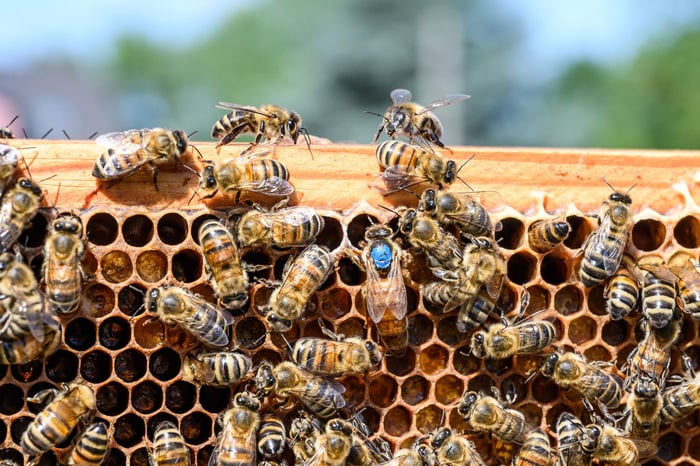
Successful Honey Bee Queen Introduction
The Buzz About This Post
- Key Takeaways
- Table of Contents
- Why Is the Honey Bee Queen So Important?
- Why Would a Beekeeper Introduce a New Honey Bee Queen?
- How Should You Prepare for a Queen Introduction?
- How Do You Introduce a New Honey Bee Queen?
- How Can You Tell Whether the Queen Is Being Accepted?
- What Should You Do After Introducing a Queen?
- What Problems Can Occur During Queen Introduction?
- How Can You Improve the Chances of a Successful Queen Introduction?
- Need a Replacement Honey Bee Queen?
- What Are the Most Frequently Asked Questions About Introducing a Queen Bee?
- How long does it take bees to accept a new queen?
- Can I put a new queen directly into a hive?
- Do I need to remove the old queen before introducing a new queen?
- Should I remove queen cells before introducing a purchased queen?
- How do I know whether a new queen has been accepted?
- What happens if the workers kill the new queen?
- Where should a queen cage be placed?
- Should I manually release the queen from her cage?
- Does a spotty brood pattern always mean the queen is failing?
- What should I do if workers are aggressive toward a caged queen?
- What Sources Support This Queen Introduction Guide?
- FAQs
How to Introduce a New Queen Bee to a Hive
Introducing a new honey bee queen is one of the most important management steps a beekeeper can perform. The goal is not simply to place a queen inside the hive, but to give the colony enough time and protection to recognize, accept, and establish her successfully.
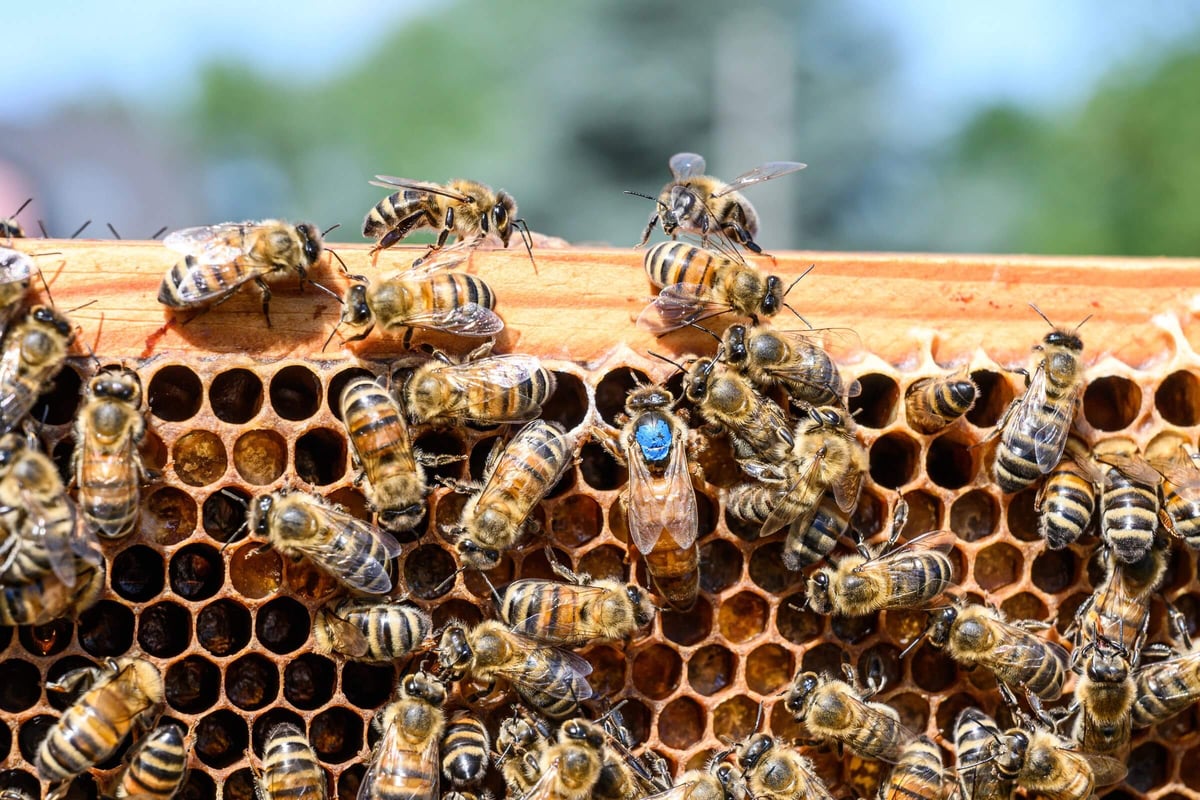
Queen introduction is the controlled process of placing a new honey bee queen into a colony while protecting her long enough for worker bees to adjust to her presence and establish her as the colony's queen.
Key Takeaways
- A colony should be evaluated for an existing queen before a replacement queen is introduced.
- A queen cage protects an unfamiliar queen while workers become accustomed to her presence and pheromones.
- Existing queens and competing queen cells can interfere with acceptance of an introduced replacement queen.
- Calm worker behavior around a queen cage can be encouraging, but successful establishment is better confirmed by queen survival and later egg laying.
- Directly releasing an unfamiliar queen removes the physical protection provided by the cage and may increase the risk of rejection.
- No single queen-introduction schedule fits every colony; queen condition, colony condition, cage design, and management method all matter.
The introduction of a new honey bee queen into a hive is a critical point in colony management. A successful introduction can help restore normal reproduction, rebuild colony population, change genetics, or replace a queen whose performance has declined.
Honey bee colonies depend heavily on chemical communication, so the colony's relationship with a queen is more complex than simply recognizing her visually. Queen-associated pheromones influence worker behavior, reproduction, and colony organization, which is why a gradual introduction is often safer than immediate release.
Why Is the Honey Bee Queen So Important?
- A healthy, fertile queen can lay large numbers of eggs during periods of strong colony growth.
- Queen-associated pheromones influence worker behavior and reproductive physiology.
- Workers form a retinue around the queen and help distribute queen-associated chemical signals through the colony.
- The queen's genetics influence the genetic makeup of the worker bees she produces.
The queen is the colony's primary egg layer. According to Penn State Extension , a healthy, fertile queen can lay more than 2,000 eggs per day during peak conditions. Actual laying rate varies with the queen, season, nutrition, colony population, available comb, and environmental conditions.
Reproduction is only part of the queen's influence. Queen mandibular pheromone, often abbreviated QMP, is one of the best-studied chemical communication systems in honey bees. Peer-reviewed research on queen reproductive potential and worker retinue response shows that workers respond to queen-associated pheromones by surrounding, antennating, grooming, and licking the queen. These interactions help distribute chemical signals among nestmates.
The queen also contributes half of the genetic material carried by her female offspring. Requeening therefore gives beekeepers an opportunity to introduce different genetics when they are managing for characteristics such as colony temperament, productivity, overwintering performance, or other breeding goals. Genetics influence colony characteristics, but management and environment also remain important.
Why Would a Beekeeper Introduce a New Honey Bee Queen?
- A missing queen can interrupt the production of worker brood.
- A poorly performing queen may be replaced as part of normal hive management.
- Requeening can change the maternal genetics of future workers.
- Swarming does not automatically mean the remaining colony needs a purchased queen.
Queen Failure or Loss
A colony may require a replacement queen because the previous queen was lost, injured, killed, or is no longer performing adequately. Possible warning signs include an extended absence of appropriate brood or a brood pattern that raises concerns. However, no single observation should automatically be blamed on the queen.
Planned Requeening
Some beekeepers replace queens intentionally instead of waiting for complete queen failure. Planned requeening can be used to maintain younger queens, manage colony genetics, or replace a queen whose colony is displaying undesirable characteristics.
Genetic Management
Requeening can introduce a different maternal line into the colony. Depending on the breeder and stock selected, beekeepers may be interested in characteristics such as temperament, productivity, wintering ability, brood production, or behavioral traits associated with pest management.
After Swarming
A swarm normally leaves behind queen cells or developing queens, so a colony that has recently swarmed should not automatically receive a purchased queen. Determine the colony's actual queen status and understand where it is in the queen-rearing cycle before interfering with that process.
How Should You Prepare for a Queen Introduction?
- Do not assume a colony is queenless simply because the queen was not seen.
- An existing queen can interfere with acceptance of an introduced replacement queen.
- Queen cells indicate that the colony may already be attempting to raise a queen.
- The new queen should remain protected while colony conditions are evaluated.
1. Assess the Colony's Condition
Inspect the colony carefully before installing the new queen. Look for eggs, larvae, capped brood, queen cells, worker population, food stores, and signs of disease or pests. These clues help create a more complete picture than simply searching for the queen herself.
If you are deliberately replacing a known queen, locate and remove the old queen before establishing the replacement. If the colony appears queenless, inspect frames carefully for queen cells and consider its recent history.
2. Select an Appropriate Honey Bee Queen
Choose a queen from a reputable source and consider the genetics that fit your management goals. The queen should appear alive and active when received. Follow the queen supplier's handling instructions because cage types and shipping systems can differ.
3. Consider Colony Conditions and Timing
Queen acceptance is influenced by more than the calendar. Colony strength, available brood, worker age, food availability, queenlessness, queen cells, queen condition, and the introduction method can all influence the outcome.
Spring and early summer are common periods for requeening because colonies are actively growing, but queens may be introduced at other times when colony and environmental conditions are appropriate. Avoid treating any season as a guarantee of acceptance.
How Do You Introduce a New Honey Bee Queen?
- A queen cage protects the queen from immediate worker aggression.
- Cage design determines the correct installation and release procedure.
- Workers should be able to contact the screened portion of the cage.
- Unnecessary disturbance during introduction can complicate management.
Step-by-Step Queen Introduction Process
Examine the cage before installation and confirm that the queen is active. Follow the supplier's instructions for caring for the queen before she is placed in the colony.
Search for an existing queen and evaluate eggs, brood, queen cells, and recent colony history before assuming the colony is queenless.
When replacing a known queen, remove her before attempting to establish the replacement queen.
Look carefully across the brood frames. Penn State queen-introduction guidance emphasizes checking for queen cells during controlled queen establishment.
Candy cages, wooden mailing cages, plastic cages, and other designs do not necessarily use the same orientation or release procedure. Follow the directions supplied with the queen.
Position the cage so workers can readily contact its screened area, commonly within or near the brood area when colony configuration allows it.
Give the introduction process time to work instead of repeatedly opening the colony simply to check on the queen.
Follow the timetable appropriate for the cage and supplier. After release, later evidence such as fresh eggs or young brood can help confirm that a queen has been laying recently.
How Does a Candy Cage Work?
Many purchased queens are shipped in cages equipped with candy that forms part of the release system. The queen remains physically protected while workers interact with her through the cage. Depending on the design, workers gradually remove the candy until the exit becomes accessible.
This delay creates a transition period between arrival and release. It should not be treated as a guarantee of acceptance, which is why colony preparation remains important.
When Is a Push-In Cage Useful?
A push-in cage provides another controlled introduction method. The cage is pressed over an area of comb, allowing the queen greater freedom of movement while remaining protected from workers outside the cage. Depending on placement, she can have access to food, emerging workers, and open comb.
Penn State Extension's push-in cage guidance describes the method as a way to protect valuable or instrumentally inseminated queens during establishment. The method can also provide beekeepers with more control when a slower introduction is desirable.
How Can You Tell Whether the Queen Is Being Accepted?
- Workers naturally antennate, groom, lick, and attend established queens.
- Calm contact with a cage is more encouraging than persistent biting or attack behavior.
- Cage behavior alone cannot guarantee successful establishment.
- Queen survival and subsequent egg laying provide stronger evidence of success.
Scientific research on queen-worker interactions describes a worker retinue response in which workers surround the queen, antennate her, groom her, and lick her while acquiring queen-associated pheromones. Research on honey bee queen retinue pheromone helps explain how these chemical signals influence worker behavior around the queen.
This makes worker behavior around an introduced queen useful observational information. Calm workers tending the cage can be encouraging. Persistent biting, attempts to sting through the cage, or intense aggressive clustering suggest that release should not be rushed.
What Should You Do After Introducing a Queen?
- A queen being absent from the cage does not by itself confirm long-term establishment.
- Fresh eggs indicate that a laying queen has been present recently, but they do not by themselves prove the introduced queen is still present.
- Brood pattern should be evaluated over time rather than from one isolated inspection.
- Different queens may resume or begin laying on different schedules.
Conduct Follow-Up Hive Inspections
At the appropriate follow-up interval for your introduction method, check whether the queen has been released. Avoid tearing the colony apart unnecessarily. Once the queen is out, a later inspection can focus on evidence that she is functioning normally.
Fresh eggs and young larvae provide useful evidence that a laying queen has been present recently. Finding the queen herself can be reassuring, but it is not always necessary during every inspection if the colony shows clear evidence of recent laying and normal brood development.
Evaluate Brood Over Time
Brood pattern becomes more informative as the new queen establishes herself and enough time passes for her brood to develop. Consider the pattern together with colony nutrition, pest pressure, disease status, comb condition, and population rather than attributing every irregularity directly to the queen.
Manage Expectations
Queen establishment is biological, not mechanical. Mated queens, virgin queens, recently shipped queens, and instrumentally inseminated queens may not behave identically. Research on queen reproductive state and queen-worker interactions has shown that reproductive status is associated with differences in pheromone production and worker response.
What Problems Can Occur During Queen Introduction?
- An overlooked queen can interfere with an attempted replacement.
- Queen cells can compete with the beekeeper's introduction plan.
- A queen that remains inside her cage may require inspection of the release system.
- Repeated rejection is a reason to diagnose the colony before sacrificing another queen.
| What You Observe | What It May Mean | What to Consider |
|---|---|---|
| Workers calmly tending the cage | Queen acceptance may be progressing | Continue the planned introduction rather than rushing release |
| Workers persistently biting or attacking the cage | The queen may not yet be accepted | Keep her protected and reassess queen status and queen cells |
| Queen remains inside the cage | The release system may not have opened as expected | Inspect the cage and follow the supplier's directions |
| Queen is not found after release | She may be hiding, lost, or simply difficult to locate | Look for eggs or young brood before concluding she is absent |
| Queen cells are present | The colony may be attempting its own queen replacement | Determine actual queen status before continuing |
| No eggs after introduction | The queen may need more time, may be absent, or may not be laying | Reassess the queen and colony rather than relying on one observation |
| Repeated queen rejection | An overlooked queen, queen cells, or colony condition may be interfering | Diagnose the reason before introducing another queen |
Aggressive Behavior Toward the Queen
If workers are persistently attacking the cage, do not force a direct release. Recheck the colony for an existing queen or queen cells and evaluate whether the colony is in suitable condition for the introduction.
The Queen Has Not Left the Cage
If the queen remains confined longer than expected, inspect the release system and follow the instructions supplied with that particular cage. Do not assume that every candy plug, cork arrangement, or plastic cage functions in exactly the same way.
The Queen Was Released but Cannot Be Found
Queens can be surprisingly difficult to locate in a populated colony. Instead of assuming the introduction failed because you cannot immediately find her, inspect later for fresh eggs and young brood. These can provide more useful evidence about whether a laying queen has been present recently.
The Colony Repeatedly Rejects Queens
Repeated rejection deserves diagnosis. Check again for an overlooked queen, queen cells, prolonged queenlessness, abnormal worker reproduction, disease, or other colony conditions before introducing another valuable queen. A more protective introduction method may be appropriate in difficult situations.
How Can You Improve the Chances of a Successful Queen Introduction?
- Confirm that a replacement queen is actually needed.
- Search carefully for an existing queen.
- Inspect for queen cells before introduction.
- Verify that the purchased queen is alive and healthy on arrival.
- Use the introduction method recommended for the specific cage and queen.
- Keep the queen protected if workers remain persistently aggressive.
- Limit unnecessary hive disturbance while the introduction is underway.
- Confirm release instead of assuming the queen escaped successfully.
- Look later for eggs or young brood as evidence of recent laying.
- Evaluate the queen's longer-term performance through normal brood inspections.
Successfully introducing a honey bee queen depends on preparation, observation, and patience. The beekeeper's job is to create conditions in which the new queen can become established while reducing avoidable sources of rejection.
Every colony is different. Population, brood condition, queen status, season, available forage, pests, disease, worker age, genetics, and the queen herself can all affect what happens after the cage is installed. A careful beekeeper uses the colony's condition—not simply a calendar—to guide management decisions.
What Are the Most Frequently Asked Questions About Introducing a Queen Bee?
How long does it take bees to accept a new queen?
Queen acceptance does not follow one universal timetable. Colony condition, queen condition, cage design, and introduction method can all affect the process.
Can I put a new queen directly into a hive?
Direct release removes the physical protection provided by a queen cage. A controlled introduction is generally safer for an unfamiliar queen.
Do I need to remove the old queen before introducing a new queen?
When intentionally requeening a queenright colony, the existing queen should be removed before the replacement queen becomes established.
Should I remove queen cells before introducing a purchased queen?
If you are introducing a purchased queen into a colony that is intended to be queenless, competing queen cells are generally removed as part of the introduction process. First confirm the colony's queen status and understand why the queen cells are present before removing them.
How do I know whether a new queen has been accepted?
Safe release, normal worker interaction, queen survival, and subsequent egg laying are useful signs that the replacement queen has become established.
What happens if the workers kill the new queen?
Recheck the colony for another queen, queen cells, and conditions that could interfere with acceptance before attempting another introduction.
Where should a queen cage be placed?
Position the cage where workers can readily contact its screened surface, commonly around the brood area, while following instructions for that specific cage.
Should I manually release the queen from her cage?
Do not manually release an unfamiliar queen simply to speed the process. Follow the release method recommended for the cage, queen, and colony conditions.
Does a spotty brood pattern always mean the queen is failing?
No. Brood irregularities can have several causes, so brood appearance should be evaluated alongside colony health and other evidence.
What should I do if workers are aggressive toward a caged queen?
Keep the queen protected and investigate the colony before release. Persistent aggression is a reason to slow the introduction rather than force it.
What Sources Support This Queen Introduction Guide?
This guide uses university extension guidance and peer-reviewed honey bee research to support claims about queen establishment, pheromones, reproduction, and worker behavior.
- Honey Bee Insemination: Laying Queen Introduction — Penn State Extension. Practical guidance covering controlled queen introduction, queen-cell inspection, nucleus colony preparation, and queen establishment.
- Honey Bee Insemination: Installing a Queen Using a Push-in Cage — Penn State Extension. Procedure and biological rationale for protected queen introduction using a push-in cage.
- Honey Bee Insemination: Pre-laying II Queen Introduction — Penn State Extension. Guidance concerning careful establishment of queens before egg laying begins.
- An Introduction to Queen Honey Bee Development — Penn State Extension. Overview of queen development, reproductive biology, egg-laying capacity, and queen management.
- Honey Bee (Apis mellifera) Queen Reproductive Potential Affects Queen Mandibular Gland Pheromone Composition and Worker Retinue Response — Rangel, Böröczky, Schal and Tarpy. Peer-reviewed research examining queen reproductive potential, pheromone composition, and worker retinue behavior.
- Queen Reproductive State Modulates Pheromone Production and Queen-Worker Interactions in Honeybees — Peer-reviewed research examining reproductive status, queen pheromones, and worker responses.
- New Components of the Honey Bee (Apis mellifera L.) Queen Retinue Pheromone — Peer-reviewed research describing the multi-component chemical system involved in worker retinue attraction.
- Honey Bee Retinue Workers Respond Similarly to Queens Despite Seasonal Differences in Queen Mandibular Pheromone Signaling — Peer-reviewed research addressing queen pheromone signaling and queen-worker interactions across seasonal conditions.
FAQs
How long does it take bees to accept a new queen?
Queen acceptance does not follow one universal timetable. Colony condition, queen condition, cage design, and introduction method can all affect the process.
Can I put a new queen directly into a hive?
Direct release removes the physical protection provided by a queen cage. A controlled introduction is generally safer for an unfamiliar queen.
Do I need to remove the old queen before introducing a new queen?
When intentionally requeening a queenright colony, the existing queen should be removed before the replacement queen becomes established.
Should I remove queen cells before introducing a purchased queen?
If you are introducing a purchased queen into a colony that is intended to be queenless, competing queen cells are generally removed as part of the introduction process. First confirm the colony's queen status and understand why the queen cells are present before removing them.
How do I know whether a new queen has been accepted?
Safe release, normal worker interaction, queen survival, and subsequent egg laying are useful signs that the replacement queen has become established.
What happens if the workers kill the new queen?
Recheck the colony for another queen, queen cells, and conditions that could interfere with acceptance before attempting another introduction.
Where should a queen cage be placed?
Position the cage where workers can readily contact its screened surface, commonly around the brood area, while following instructions for that specific cage.
Should I manually release the queen from her cage?
Do not manually release an unfamiliar queen simply to speed the process. Follow the release method recommended for the cage, queen, and colony conditions.
Does a spotty brood pattern always mean the queen is failing?
No. Brood irregularities can have several causes, so brood appearance should be evaluated alongside colony health and other evidence.
What should I do if workers are aggressive toward a caged queen?
Keep the queen protected and investigate the colony before release. Persistent aggression is a reason to slow the introduction rather than force it.