Welcome to Lappe's Bee Supply's blogs section. We are a trusted beekeeping company in the USA. We give relevant insights, seasonal guidance, and professional advice for beekeepers of all experience levels. From hive management and bee wellness to honey production and equipment guides, we have it all that you will require to thrive. Get updated, motivated, and connected with the beekeeping community through regular news from Lappe's Bee Supply.
Storing Beekeeping Equipment for Winter
The Buzz About This Post
- What are the key takeaways?
- What does this equipment storage guide cover?
- Why does winter storage matter?
- How should you prepare occupied hives for cold weather?
- How should spare hive boxes, frames, and comb be stored?
- How should you care for beekeeping tools and smokers?
- How should protective clothing, gloves, and veils be cleaned and stored?
- How should supplemental feeding supplies be stored?
- What seasonal equipment maintenance should be completed?
- How should maintenance and storage be documented?
- What should be checked before seasonal storage is complete?
- What do beekeepers frequently ask about cold-weather equipment storage?
- Which sources support this cold-weather beekeeping guide?
- FAQs
How to Winterize and Store Beekeeping Equipment
Winter is easier to manage when every hive component, tool, veil, feeder, and frame has a clear seasonal plan. This guide explains how to prepare occupied colonies and store unused equipment without confusing two very different jobs.
Why does winter storage matter?
Winter storage protects unused beekeeping equipment from moisture, pests, corrosion, contamination, and preventable delays when colonies become active again.
- Damp woodenware can swell, warp, split, or develop mold.
- Wet metal tools and smokers are more likely to corrode.
- Wax, pollen, honey, and propolis residues can attract pests.
- An equipment inventory reveals repairs before the spring rush.
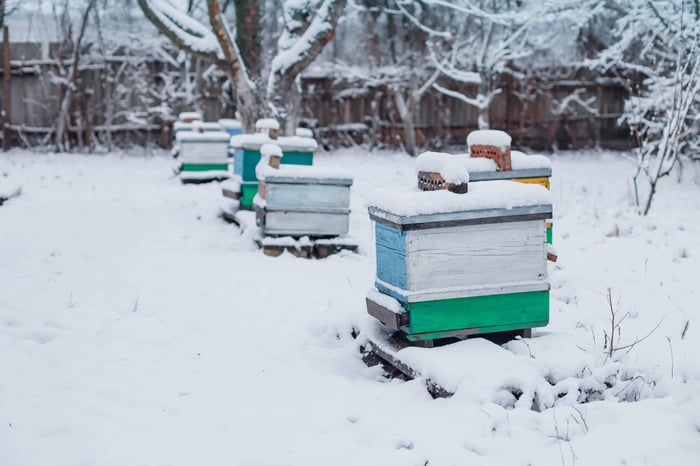
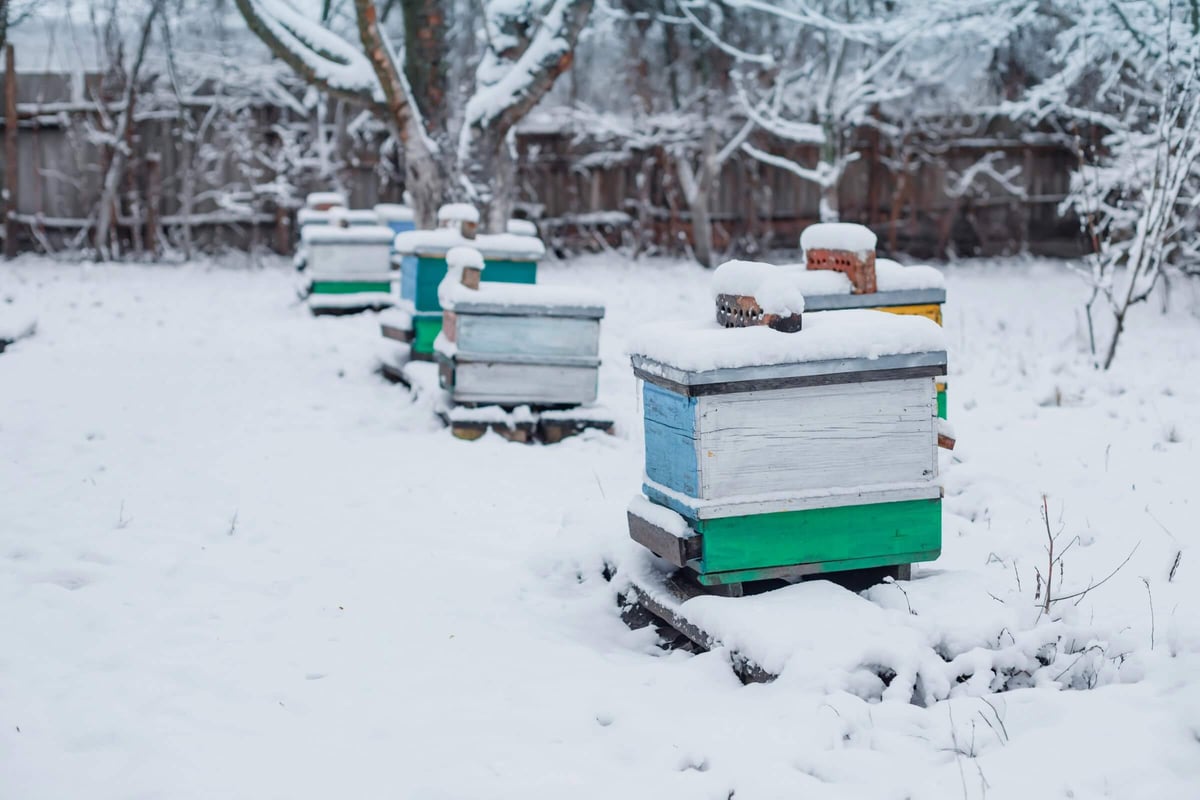
Winterizing equipment does not mean putting a live colony into a shed. An occupied hive normally stays in the apiary and is prepared for local cold-weather conditions. Spare boxes, frames, feeders, tools, clothing, and processing equipment can be cleaned, inspected, and stored. Keeping these tasks separate prevents advice for empty equipment—such as pest-resistant enclosures—from being mistakenly applied to living colonies that require appropriate airflow and access.
How should you prepare occupied hives for cold weather?
Prepare each occupied hive by evaluating colony strength, food stores, Varroa levels, weather exposure, airflow, entrances, and equipment condition.
Begin while the weather still allows inspection and corrective action. Evaluate colony population, queen status, brood pattern when brood is present, food location, and signs of pests or disease. Cold-season food requirements are regional; a single national weight target cannot account for climate, hive size, colony strength, or the length of the forage-free period. Ask a local extension office or experienced regional beekeeper for an appropriate target.
Cleaning and inspecting occupied hives
Remove obvious debris from the bottom board when conditions permit, but avoid unnecessary late-season disruption. Examine boxes, covers, bottom boards, joints, and stands for cracks or instability. Repair parts that could admit rain or fail under snow and wind. Harvest only true surplus honey; the colony’s cold-season reserve takes priority.
Treating and preventing pests
Measure Varroa levels with a recognized sampling method instead of judging mite pressure from the colony’s appearance. If treatment is necessary, choose a registered product suitable for the temperature, brood condition, and presence or absence of honey supers. Follow the current label exactly and check effectiveness after treatment. The Honey Bee Health Coalition’s Varroa management resources provide monitoring and decision-support guidance. Entrance reducers or mouse guards may help exclude rodents, but they must fit correctly and remain clear enough for bee movement and necessary airflow.
Sealing, sheltering, and insulating hives
Protect colonies from prevailing wind and driving rain without sealing them airtight. Local climate determines whether wrapping, insulation, an upper entrance, or a moisture-management box is appropriate. A slight forward tilt may help water drain away from the entrance. Any insulation system should remain dry and should not create a path for water to collect above the cluster.
How should spare hive boxes, frames, and comb be stored?
Store spare hive equipment dry, elevated, pest-protected, and separated from suspect equipment; choose the method according to the comb’s contents.
Sort equipment before storage. Bare woodenware, unused foundation, empty drawn comb, and honey-containing frames do not share the same risks. Scrape excessive debris where practical and allow components to dry fully. Raise boxes above soil and damp concrete, keep them beneath a sound roof, and prevent mice from entering the storage area.
| Equipment | Main seasonal risk | Preferred storage condition | Avoid |
|---|---|---|---|
| Bare woodenware | Moisture and rodents | Dry, elevated, sheltered storage | Damp floors and roof leaks |
| Unused foundation | Heat distortion and pests | Cool, dry, protected storage | Pressure, heat, and direct sunlight |
| Drawn brood comb | Wax moths and mice | Dry storage with a verified pest plan | Closing up damp, unchecked comb |
| Honey frames | Leakage, robbing, ants, and mice | Secure, food-appropriate enclosure | Exposed or poorly sealed stacks |
| Suspect comb | Disease transmission | Isolated, labeled, and reported as required | Mixing with reusable equipment |
Drawn brood comb is especially attractive to wax moths because it contains residues left from brood rearing. Use a locally validated prevention method suited to your climate and storage space; the UK government’s review of greater wax moth biology and control provides additional pest context. Proper freezing can kill wax-moth life stages, but the entire comb must reach an effective temperature for enough time. A closed tote can exclude new moths, yet it can also trap moisture or enclose eggs and larvae already on the comb. Inspect stored comb periodically rather than forgetting it until spring.
How should you care for beekeeping tools and smokers?
Remove residue from tools and smokers, dry every surface, correct rust or damage, and store equipment away from moisture and pests.
- Scrape residue. Remove accumulated wax and propolis from hive tools with an appropriate scraper or stiff brush.
- Clean for the material. Follow manufacturer guidance and use only cleaners suitable for the surface and its future contact with bees, wax, honey, or feed.
- Dry completely. Water left in joints, seams, or containers can encourage corrosion and mold.
- Inspect and repair. Address loose handles, damaged edges, surface rust, weak smoker bellows, and missing fasteners.
- Store safely. Keep tools organized in a dry cabinet, toolbox, or pegboard area away from feed and chemicals.
Let a smoker become completely cold before emptying ash and fuel. Check that no ember remains, then inspect the fire chamber, lid, guard, and bellows. Store the smoker in a dry, nonflammable place. Do not apply an unspecified machine oil to a tool that may contact honey, wax, bees, or feed; choose a product appropriate for the material and intended use.
How should protective clothing, gloves, and veils be cleaned and stored?
Wash protective gear according to its care label, dry it completely, repair openings, and store it where moisture and pests cannot reach it.
Different materials need different care. Cotton suits, synthetic jackets, removable veils, and leather gloves may not tolerate the same washing method. Remove detachable veils when required and avoid damaging mesh, stiffeners, zippers, or elastic. Once the gear is clean, inspect seams and closures in good light. Repair holes before they become a safety problem during the first busy inspection of spring.
Never enclose damp clothing. Allow every layer to dry completely, then place the gear in a clean, cool location protected from mice and fabric pests. Avoid storing suits beside pesticides, fuel, smoker supplies, or strongly scented chemicals.
How should supplemental feeding supplies be stored?
Store wholesome bee feed in clean, sealed, dated, pest-resistant containers and keep it separate from pesticides, fuels, cleaners, and lubricants.
Keep dry sugar and other shelf-stable feed protected from humidity, insects, and rodents. Label each container with its contents, purchase or preparation date, and condition. Clean feeders thoroughly and dry all seams and cavities before stacking them.
Do not assume mixed syrup will remain suitable until spring. Discard feed that is moldy, fermented, contaminated, wet, pest-damaged, or of uncertain condition. When in doubt, replacing questionable material is safer than feeding it to a colony. Store all feed separately from chemicals and products that could spill, leak, or transfer odors.
What seasonal equipment maintenance should be completed?
Inspect every seasonal item for residue, moisture, corrosion, pest damage, missing parts, and repairs that could delay spring beekeeping.
- Hive tools: Scrape, clean, dry, inspect edges, and address rust.
- Smokers: Empty only when cold, clean away loose ash, inspect bellows, and store dry.
- Frames: Check joints, wires, foundation, comb, and signs of wax-moth or mouse damage.
- Feeders: Remove residue, wash appropriately, dry fully, and keep components together.
- Extracting equipment: Clean food-contact surfaces and store them protected from dust, rodents, and chemicals.
- Spare hardware: Sort covers, bottom boards, reducers, guards, and fasteners so damaged pieces are not returned to service.
Completing small repairs during the off-season spreads the workload and reduces last-minute purchases. Keep reusable components together, but isolate anything showing suspicious brood-disease signs until an authority provides direction.
How should maintenance and storage be documented?
A dated inventory turns seasonal storage into a repeatable system by recording condition, location, pest controls, repairs, and spring priorities.
Assign each rack, stack, cabinet, or tote a simple identifier. Record what it contains, how many pieces are present, their condition, the chosen pest-control method, and the next inspection date. A “spring action” field—ready, repair, replace, clean, or investigate—turns the record into a practical work plan.
| Record field | Example |
|---|---|
| Storage location | Shed rack B |
| Equipment | Medium drawn-comb supers |
| Condition | Dry; two boxes need corner repairs |
| Pest-control method | Record the verified method used |
| Last inspected | Enter the completed inspection date |
| Spring action | Repair two boxes before installation |
What should be checked before seasonal storage is complete?
Cold-weather preparation is complete when colonies have been assessed and every spare component is dry, protected, recorded, and scheduled for reinspection.
- Occupied colonies have documented food, health, and Varroa assessments.
- Entrances, covers, stands, drainage, and wind exposure have been checked.
- Unused boxes and frames are dry, elevated, and protected from pests.
- Drawn comb has a verified pest-management and reinspection plan.
- Tools, smokers, feeders, clothing, and veils are clean and completely dry.
- Feed is labeled, pest-resistant, wholesome, and separated from chemicals.
- Suspect equipment is isolated and not mixed with reusable components.
- Repairs, replacement needs, and spring priorities are recorded.
Thoughtful seasonal storage protects more than the purchase price of the equipment. It gives the beekeeper a clear view of colony needs, prevents avoidable damage, and makes the first warm days of spring easier to use well. For seasonal supplies, visit Lappe’s verified cold-weather beekeeping supplies page.
What do beekeepers frequently ask about cold-weather equipment storage?
Should occupied beehives be moved indoors during cold weather?
No. In most conventional management systems, occupied colonies remain outdoors and are prepared for local seasonal conditions.
How much honey does a colony need for the cold season?
The amount varies by climate, colony size, hive configuration, and forage-free duration. Use a target supplied by a local extension or apiary authority.
Should beekeeping equipment be washed with bleach?
Bleach is not a universal cleaner or disease-control method. Follow material-specific instructions and regulatory guidance for suspected disease.
Can drawn comb be stored in an airtight container?
A sealed container may exclude new pests, but it can trap moisture or enclose existing wax-moth stages. Comb must be dry and managed with a verified method.
Does freezing protect stored comb from wax moths?
Proper freezing can kill wax-moth life stages, but the whole comb must reach an effective temperature for sufficient time. Follow locally validated guidance.
How should a smoker be stored during the off-season?
Let it become completely cold, empty the ash and fuel, inspect the bellows, and store it in a dry, nonflammable location.
Can leftover sugar syrup be stored until spring?
Do not feed syrup that is fermented, moldy, contaminated, or of uncertain condition. Suitability depends on preparation and storage conditions.
How often should stored comb be inspected?
Inspect comb periodically throughout storage. The appropriate frequency depends on temperature, pest pressure, and the chosen control method.
What should be done with suspected American foulbrood equipment?
Isolate the equipment, avoid moving or reusing it, and contact the appropriate state apiary authority or extension specialist.
What seasonal equipment records should be kept?
Record equipment type, quantity, condition, location, pest controls, inspection dates, repairs, and spring priorities.
Which sources support this cold-weather beekeeping guide?
- Honey Bee Management Throughout the Seasons — Penn State Extension.
- Beekeeping Basics — Penn State Extension.
- A Quick Reference Guide to Honey Bee Parasites, Pests, Predators, and Diseases — Penn State Extension.
- Pollinator Health Concerns — U.S. Environmental Protection Agency.
- Honey Bees: Protecting Them From Pests and Diseases — UK Department for Environment, Food & Rural Affairs.
- The Biology and Control of the Greater Wax Moth, Galleria mellonella — UK Government Research for Development.
- Tools for Varroa Management — Honey Bee Health Coalition.
- Diagnosis of Honey Bee Diseases — U.S. Department of Agriculture, Agricultural Research Service.
FAQs
Should occupied beehives be moved indoors for winter?
No. In most conventional management systems, occupied colonies remain outdoors and are prepared for local winter conditions.
How much honey does a colony need for winter?
The amount varies by climate, colony size, hive configuration, and winter duration. Use a target supplied by a local extension or apiary authority.
Should beekeeping equipment be washed with bleach?
Bleach is not a universal cleaner or disease-control method. Follow material-specific instructions and regulatory guidance for suspected disease.
Can drawn comb be stored in an airtight container?
A sealed container may exclude new pests, but it can trap moisture or enclose existing wax-moth stages. Comb must be dry and managed with a verified method.
Does freezing protect stored comb from wax moths?
Proper freezing can kill wax-moth life stages, but the whole comb must reach an effective temperature for sufficient time. Follow locally validated guidance.
How should a smoker be stored for winter?
Let it become completely cold, empty the ash and fuel, inspect the bellows, and store it in a dry, nonflammable location.
Can leftover sugar syrup be stored until spring?
Do not feed syrup that is fermented, moldy, contaminated, or of uncertain condition. Suitability depends on preparation and storage conditions.
How often should stored comb be inspected?
Inspect comb periodically throughout storage. The appropriate frequency depends on temperature, pest pressure, and the chosen control method.
What should be done with suspected American foulbrood equipment?
Isolate the equipment, avoid moving or reusing it, and contact the appropriate state apiary authority or extension specialist.
What winter storage records should be kept?
Record equipment type, quantity, condition, location, pest controls, inspection dates, repairs, and spring priorities.