Welcome to Lappe's Bee Supply's blogs section. We are a trusted beekeeping company in the USA. We give relevant insights, seasonal guidance, and professional advice for beekeepers of all experience levels. From hive management and bee wellness to honey production and equipment guides, we have it all that you will require to thrive. Get updated, motivated, and connected with the beekeeping community through regular news from Lappe's Bee Supply.
Mastering the Fume Board: Usage and Safety
The Buzz About This Post
- What is the quick answer?
- What should be remembered before using a fume board?
- What does this fume-board guide cover?
- What is a Fume Board?
- What are the benefits of using a fume board?
- How do you use a fume board step by step?
- What are the best practices for using a fume board?
- How does a fume board compare with other bee-removal methods?
- What fume-board mistakes should be avoided?
- What do beekeepers ask most often about fume boards?
- Which sources support this fume-board guide?
- FAQs
Published: July 8, 2025 | Last updated: August 5, 2026
Author: Lappe’s Bee Supply Editorial Team
Editorial standard: This guide is written for practical clarity and checked against university extension guidance and current manufacturer instructions. Directions for the exact bee repellent being used take priority whenever procedures differ.
Removing bees from honey supers can be one of the most awkward parts of harvest day. Brushing every frame takes time, shaking bees can make a calm job feel rushed, and carrying a super that is still full of bees creates problems in the vehicle and extraction room. This tool offers another option: it uses a purpose-specific bee repellent above the super to encourage adult bees to move into the lower hive boxes before the super is lifted away.
This guide explains how the equipment works, how to use it in the correct order, which mistakes to avoid, and when another bee-removal method may be a better fit. It also corrects a common misunderstanding: peppermint oil, thymol, fragrances, and other strong-smelling liquids are not automatically suitable substitutes for a bee repellent intended for clearing honey supers.
What is a Fume Board?
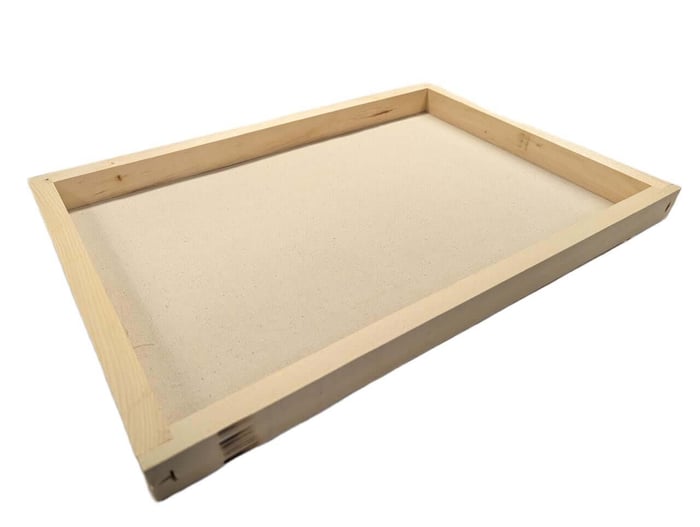
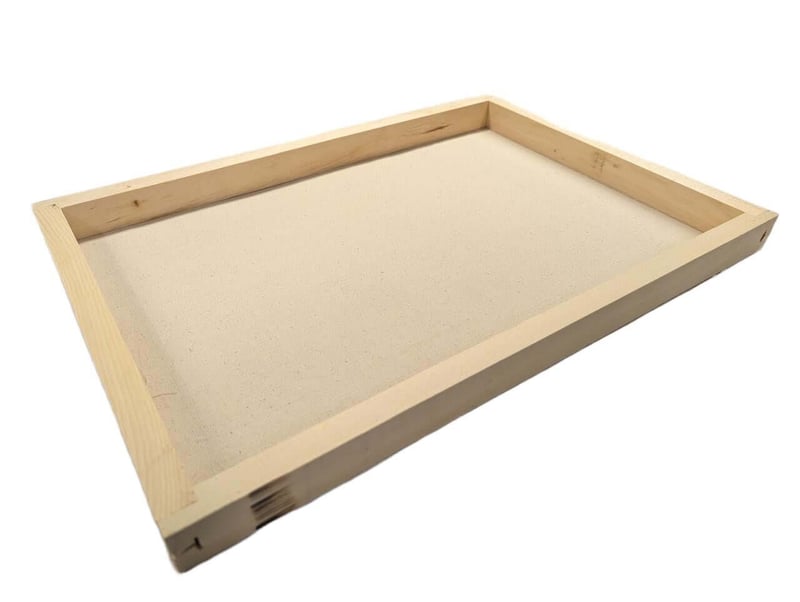
this tool is an absorbent-lined hive cover that holds purpose-specific repellent, directing adult bees from a honey super before harvest.
- The board is sized to cover the top of a honey super.
- The absorbent surface faces downward toward the frames during use.
- The repellent encourages adult bees to move away from the covered super.
- The honey super stays on the colony while the bees are being cleared.
- The board and repellent are separate products; an untreated board does not repel bees.
The Rutgers NJAES beekeeping glossary describes a fume board as a super-sized frame with absorbent material that holds repellent for honey removal. A honey super is a hive box used to hold surplus honey intended for harvest. The brood chamber is the area where the queen normally lays eggs and where developing bees are raised. During normal use, adult bees move from the honey super toward the lower hive boxes, giving the beekeeper a clearer super to remove.
The Lappe’s Bee Supply Fume Board is the physical board used for this job. It still requires a compatible bee repellent and the directions supplied with that repellent. This equipment is a honey-harvesting aid, not a Varroa treatment, hive medication, honey extractor, or substitute for deciding whether the colony can spare the honey.
Strong odor alone does not make a liquid suitable. Do not treat peppermint oil, thymol, perfume, household cleaners, or homemade mixtures as interchangeable with a repellent intended for clearing honey supers. The wrong liquid or too much product can expose bees, comb, and harvestable honey unnecessarily.
What are the benefits of using a fume board?
A fume board reduces frame brushing and helps beekeepers move cleared, covered honey supers into transport or extraction areas efficiently.
- Faster super removal: A suitable repellent can clear a super in minutes under the conditions described by its manufacturer.
- Less frame-by-frame handling: Most bees move before the super is lifted, reducing the amount of brushing required.
- Cleaner transport: A cleared and covered super carries fewer bees into a vehicle, garage, honey house, or extraction room.
- Scalable workflow: The method can be repeated across several colonies when the beekeeper monitors each application carefully.
- Reusable equipment: A sound bee-clearing board can serve through multiple harvests when it is cleaned, aired, inspected, and stored correctly.
UF/IFAS Extension’s honey-harvesting guidance describes fume boards as a simple and effective way to drive bees into lower boxes. These benefits should not be turned into absolute promises. The tool does not guarantee that every bee will leave, prevent all stings, or make protective clothing unnecessary. Colony temperament, weather, the depth and number of supers, the fit of the board, and the selected repellent all influence results. A bee brush may still be needed for stragglers.
How do you use a fume board step by step?
Prepare equipment, inspect the super, apply the specified repellent, position the board, monitor the bees, then remove and cover the cleared super.
1. Gather Your Materials
Have the complete harvest setup ready before opening the first colony. Stopping midway to find a cover or prepare the vehicle gives bees time to return to a cleared super.
- A clean, correctly sized fume board in good condition
- A bee repellent intended for clearing honey supers
- The repellent’s current directions and safety information
- Protective clothing appropriate for the colony
- A hive tool and a properly lit smoker
- A bee brush for remaining bees
- Clean, bee-tight covers for removed supers
- A prepared vehicle, cart, or protected staging area
Most commercial boards already contain an absorbent lining. Do not place a loose cotton cloth inside unless the manufacturer specifically calls for one.
2. Choose the Right Conditions
Many bee-clearing repellents evaporate more effectively when the board is warm, which is why warm, sunny harvest conditions are often preferred. However, there is no single temperature threshold that applies to every product. Use the temperature range, sunlight guidance, ventilation requirements, and weather limits printed in the exact repellent directions.
Avoid treating a generic recommendation such as “above 70°F” as a universal rule. A very cool board may release too little vapor, while excessive heat may release repellent faster than expected. Wind, gaps around the board, colony strength, and the number of boxes being cleared can also change performance.
3. Inspect the Honey Super
Open the hive calmly and inspect the box that will be removed. Confirm that the queen and brood are not in the super. Also confirm that the honey is ready for harvest according to your normal maturity check and that removing it will not leave the colony short of stores.
This inspection should happen before repellent is applied. Once the clearing process begins, the beekeeper should be able to monitor the board continuously and remove the super without unnecessary delay.
4. Apply the Repellent
Read the current directions before every harvest, even if the product has been used before. Formulations and instructions can change. Apply the specified amount and pattern to the board’s absorbent surface. The material should not be saturated to the point that liquid can drip.
Keep the repellent off bees, frames, wax, and honey. More product is not necessarily more effective. Overapplication may release an excessive concentration, create a spill, or push bees farther than intended.
5. Smoke the Hive
Use smoke sparingly when normal hive handling requires it and the repellent directions do not say otherwise. A few controlled puffs can help move bees away from the top bars while the cover is changed. Heavy smoke is unnecessary and can make it harder to judge how bees are responding to the board.
6. Position the Board
Leave the honey super attached to the hive. Remove the outer and inner covers, then place the board over the top super with the absorbent side facing the bees. Seat it securely and minimize gaps around the edges.
Do not remove the super before positioning the board. Bees need an open route from the honey super into the lower hive boxes. Keep the hive entrance open unless the selected product specifically directs a different setup.
7. Allow the Bees to Vacate
Remain with the colony and watch the time, but do not rely on a universal 15–30 minute interval. Manufacturer instructions vary. For example, Fischer’s Bee-Quick fume-board directions call for checking after only a few minutes under suitable conditions. That timing belongs to that product and is not a universal rule. Board temperature, product amount, super depth, colony population, and equipment fit can all change the result.
Inspect at the earliest interval stated by the repellent manufacturer. Remove the board promptly when the super is acceptably clear. If the colony responds in an unusual or excessive way, remove the board and allow the hive to ventilate.
8. Check for Bee Removal
Lift one edge carefully and look between the top bars. A small number of remaining bees can be moved with a bee brush. If many bees remain, review the board fit, weather, and product directions before deciding whether another application is permitted.
9. Replace or Remove the Supers
Lift the cleared super from the colony and cover it immediately with clean, bee-tight covers. Prompt covering prevents foragers from returning and helps keep other insects and debris away from the comb during transport.
Move the super to the prepared extraction or staging area. If the super is not ready for harvest, return it to the colony rather than carrying it into the extraction room.
10. Post-Extraction Monitoring
Close the hive correctly and observe the entrance before leaving the apiary. Normal activity should resume after the equipment is removed and the colony ventilates. Record the date, weather, product, amount, clearing time, number of supers, and any unusual response. Those notes make the next harvest more predictable and provide useful evidence for improving apiary procedures.
What are the best practices for using a fume board?
Use the specified repellent, prevent contact, monitor the hive, cover cleared supers, record results, and store equipment safely away from honey.
- Inspect the board: Check the frame, lining, fasteners, and edges before each harvest.
- Follow one set of directions: Match the procedure to the exact repellent rather than combining advice from several products.
- Avoid improvised liquids: A strong smell does not establish suitability around bees or harvestable honey.
- Prevent direct contact: Apply repellent only to the absorbent surface and keep the liquid away from comb and honey.
- Monitor continuously: Do not leave the working board unattended while visiting another part of the apiary.
- Cover supers immediately: Use clean top and bottom covers during transport and staging.
- Keep records: Note conditions and results instead of relying on memory from one harvest to the next.
- Store safely: Air and store the board according to the repellent directions, away from honey, comb, feed, food equipment, heat, children, and animals.
If repellent spills on a frame or honey, stop and consult the product directions and manufacturer. Do not assume the affected honey is suitable to eat or sell until its status is resolved. When the chosen material is an EPA-registered product, follow its current label and verify the registration through the EPA pesticide product search when necessary.
How does a fume board compare with other bee-removal methods?
Fume boards favor speed, bee escapes favor delayed hands-off clearing, brushes suit a few frames, and blowers support larger honey harvests.
| Method | Best Fit | Typical Timing | Main Limitation |
|---|---|---|---|
| Fume board | Prompt removal of one or more supers | Minutes; product-specific | Requires repellent and continuous monitoring |
| Bee escape | Beekeepers who can return later | Commonly 24–48 hours | Delayed removal and possible pest exposure |
| Bee brush | A few frames or remaining bees | Immediate, frame by frame | Slow and physically disruptive at scale |
| Bee blower | Larger harvests with suitable equipment | Immediate after setup | Noise, cost, and additional air movement |
No method is best for every apiary. UF/IFAS Extension notes that bee escapes commonly remain in place for 24–48 hours, while a monitored repellent board works on a much shorter, product-specific schedule. A beekeeper with one hive may prefer brushing or an escape board, while someone removing several supers in warm weather may value the speed of this approach. Choose according to hive count, weather, colony behavior, equipment, available time, and the need to return to the apiary.
What fume-board mistakes should be avoided?
Avoid wrong liquids, excess repellent, poor fit, early removal, generic timers, unattended use, uncovered boxes, and honey contact during harvest.
- Using ordinary essential oils: Peppermint oil and thymol are not default fume-board repellents simply because they have strong odors.
- Soaking the lining: Repellent should never drip into the hive or onto harvestable comb.
- Removing the super first: The super should remain attached so bees can move into the lower boxes.
- Ignoring board fit: Large gaps make vapor movement less predictable.
- Waiting 15–30 minutes automatically: Some products call for much earlier inspection.
- Walking away: Conditions and colony responses can change while the board is operating.
- Leaving supers uncovered: Cleared supers can quickly attract returning foragers and robbers.
- Storing the used board beside comb: Residual odor or liquid may transfer to nearby equipment.
What do beekeepers ask most often about fume boards?
These answers address repellent choice, timing, weather, smoke, queen checks, lingering bees, honey contact, and safe storage after the harvest.
What liquid should be used on a fume board?
Use a bee repellent specifically intended for clearing honey supers. Follow that product’s current application and safety directions.
Can peppermint oil or thymol be used on a fume board?
Do not assume either substance is suitable. Use it only when the exact product directions expressly authorize fume-board use around harvestable honey.
Which side of the fume board faces the bees?
The absorbent side normally faces downward toward the frames. Confirm the correct orientation in the board’s instructions.
How long does a fume board take to clear a super?
Clearing time varies with the repellent, temperature, sunlight, board fit, colony, and number of supers. Inspect at the earliest time specified in the product directions.
Should the hive be smoked before using a fume board?
Use smoke sparingly when normal hive handling requires it and the repellent directions do not advise otherwise. Heavy smoke can complicate observation of bee movement.
Should the queen be checked before clearing a super?
Yes. Confirm that the queen and brood are not in any super that will be cleared and removed.
Can fume-board repellent affect honey?
Prevent direct liquid contact with honey or comb. If a spill occurs, consult the product directions and manufacturer before using the affected honey.
Will a fume board work in cool or cloudy weather?
Performance may decline when the board cannot warm sufficiently to release the repellent. Choose another removal method when conditions fall outside the product directions.
What should be done if bees remain in the super?
Use a bee brush for a small number of remaining bees. Repeat an application only when the product directions permit it.
How should a used fume board be stored?
Air and store it according to the repellent directions. Keep it secured away from honey, comb, food equipment, heat, children, and animals.
Which sources support this fume-board guide?
These sources back this guide’s key facts, safe-use limits, timing, steps, comparisons, and field advice for beekeepers working with fume boards.
- Bee-ginner’s Beekeeping Glossary of Terms — Rutgers New Jersey Agricultural Experiment Station.
- Honey Harvesting: Honey Out of the Hive — University of Florida IFAS Extension.
- Honey Bee Management — University of Georgia Honey Bee Program.
- Harvesting Your Honey — University of Arkansas System Division of Agriculture.
- 4-H Beekeeping III: Advanced Beekeeping Methods — Purdue University Extension.
- Maximizing Honey Production — Mississippi State University Extension.
- United States Standards for Grades of Extracted Honey — USDA Agricultural Marketing Service.
- Search for Registered Pesticide Products — U.S. Environmental Protection Agency.
- Fume Boards for Fischer’s Bee-Quick — manufacturer directions.
FAQs
What liquid should be used on a fume board?
Use a bee repellent specifically intended for clearing honey supers. Follow that product’s current application and safety directions.
Can peppermint oil or thymol be used on a fume board?
Do not assume either substance is suitable. Use it only when the exact product directions expressly authorize fume-board use around harvestable honey.
Which side of the fume board faces the bees?
The absorbent side normally faces downward toward the frames. Confirm the correct orientation in the board’s instructions.
How long does a fume board take to clear a super?
Clearing time varies with the repellent, temperature, sunlight, board fit, colony, and number of supers. Inspect at the earliest time specified in the product directions.
Should the hive be smoked before using a fume board?
Use smoke sparingly when normal hive handling requires it and the repellent directions do not advise otherwise. Heavy smoke can complicate observation of bee movement.
Should the queen be checked before clearing a super?
Yes. Confirm that the queen and brood are not in any super that will be cleared and removed.
Can fume-board repellent affect honey?
Prevent direct liquid contact with honey or comb. If a spill occurs, consult the product directions and manufacturer before using the affected honey.
Will a fume board work in cool or cloudy weather?
Performance may decline when the board cannot warm sufficiently to release the repellent. Choose another removal method when conditions fall outside the product directions.
What should be done if bees remain in the super?
Use a bee brush for a small number of remaining bees. Repeat an application only when the product directions permit it.
How should a used fume board be stored?
Air and store it according to the repellent directions. Keep it secured away from honey, comb, food equipment, heat, children, and animals.