Welcome to Lappe's Bee Supply's blogs section. We are a trusted beekeeping company in the USA. We give relevant insights, seasonal guidance, and professional advice for beekeepers of all experience levels. From hive management and bee wellness to honey production and equipment guides, we have it all that you will require to thrive. Get updated, motivated, and connected with the beekeeping community through regular news from Lappe's Bee Supply.
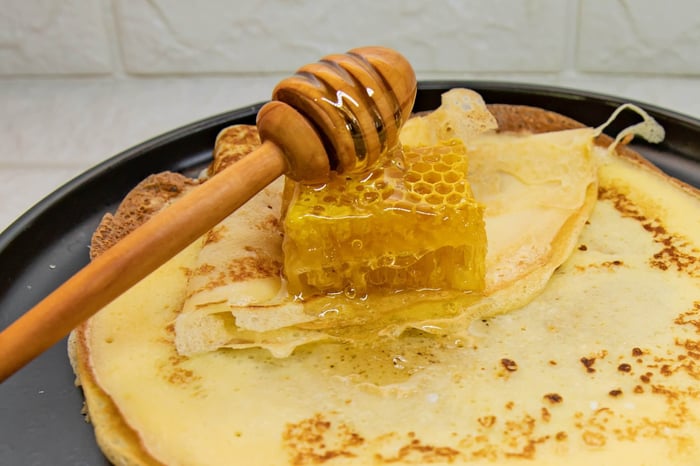
Low-Fat Honey Crepes
The Buzz About This Post
- What are low-fat honey crepes?
- Table of Contents
- What should you know before making honey crepes?
- Why is honey used in crepes?
- What ingredients do you need for low-fat honey crepes?
- What equipment works best for making crepes?
- How do you make low-fat honey crepes?
- How do you know when a crepe is ready to flip?
- Why do crepes stick, tear or become too thick?
- What fillings go well with honey crepes?
- How should leftover honey crepes be stored?
- What practical details should be recorded when testing this recipe?
- Frequently Asked Questions
- Can honey replace sugar in crepe batter?
- Why are my crepes rubbery?
- Can crepe batter be mixed without a blender?
- Can you make honey crepes ahead of time?
- Can you freeze cooked crepes?
- What type of pan is best for crepes?
- Why does the first crepe sometimes fail?
- Can whole wheat flour be used in this recipe?
- Can low-fat honey crepes be used with savory fillings?
- How do you keep cooked crepes soft?
- Sources and Further Reading
- FAQs
Honey Recipe
Low-Fat Honey Crepes
These thin, tender honey crepes are made with non-fat milk, egg whites, one whole egg and a small amount of canola oil. The batter comes together quickly in a blender and can be paired with fruit, honey, preserves, chocolate spread or savory fillings.
Written by: Lappe's Bee Supply Team
Reviewed by: Lappe's Beekeeping and Honey Team
Published: June 12, 2025
Last updated: July 22, 2026
What are low-fat honey crepes?
Low-fat honey crepes are thin pancakes made with non-fat milk, egg whites, one whole egg and honey for mild sweetness and flexible texture.
- Crepes are thinner and less fluffy than American-style pancakes.
- Honey adds sweetness and contributes to surface browning.
- Non-fat milk and egg whites reduce the amount of fat used in the batter.
- A blender helps create a smooth batter with few visible flour lumps.
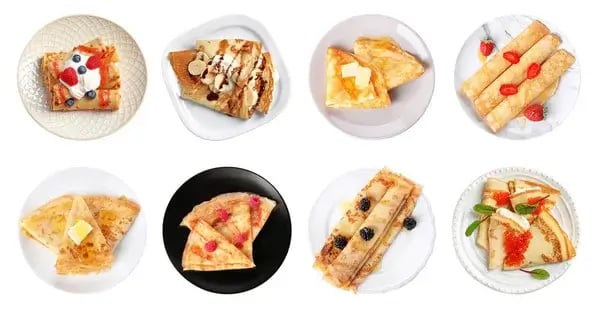
- Cooked crepes can be folded, rolled or layered with sweet or savory fillings.
A crepe is a very thin pancake that is cooked in a shallow skillet and filled after cooking. Unlike a thick breakfast pancake, a crepe batter is fluid enough to spread across the pan in a light, even layer. This recipe uses honey as its added sweetener and keeps the ingredient list simple enough for breakfast, brunch or dessert.
What should you know before making honey crepes?
Smooth batter, a lightly greased skillet and quick pan movement produce thin honey crepes that remain flexible enough to fill and fold.
- Blend the batter until no dry flour remains.
- Use only enough oil or cooking spray to prevent sticking.
- Swirl the pan immediately after adding the batter.
- Wait until the surface is set and the edges begin to brown before flipping.
- Keep finished crepes covered so they do not dry out while the remaining batter cooks.
- Refrigerate crepes promptly when they will not be served immediately.
Why is honey used in crepes?
Honey gives crepes mild sweetness, a light floral flavor and attractive browning without requiring granulated sugar in the batter.
- A small amount of honey sweetens the entire batch.
- Different honey varieties can contribute slightly different flavors.
- Honey dissolves easily into the liquid ingredients during blending.
- The finished crepes remain versatile enough for sweet or savory fillings.
The recipe calls for one tablespoon of honey, so the crepes are not heavily sweetened. Instead, the honey provides a gentle background flavor that works well with berries, bananas, marmalade, yogurt, whipped cream or another drizzle of honey. Because the sweetness is restrained, the same crepes may also be filled with cheese, cooked vegetables or other savory ingredients.
For a stronger honey flavor, serve the cooked crepes with honey rather than substantially increasing the amount in the batter. Adding too much liquid sweetener can change batter consistency and may cause the crepes to brown more quickly.
What ingredients do you need for low-fat honey crepes?
Low-fat honey crepes require milk, eggs, honey, flour, salt and a small amount of neutral oil to create a thin, cohesive batter.
| Ingredient | Amount | Purpose in the recipe |
|---|---|---|
| Non-fat milk | 2 cups | Provides the liquid needed for a thin, pourable batter. |
| Egg whites | 2 | Add protein and structure while limiting added fat. |
| Whole egg | 1 | Helps bind the batter and contributes richness and color. |
| Honey | 1 tablespoon | Adds mild sweetness and honey flavor. |
| Salt | 1/8 teaspoon | Balances the sweet and grain flavors. |
| All-purpose flour | 1 cup | Creates the structure of the cooked crepe. |
| Canola oil | 1 tablespoon | Adds tenderness and helps the crepes release from the pan. |
Measure the flour carefully and avoid packing it firmly into the measuring cup. Too much flour can make the batter thick and difficult to spread. The batter should flow readily when poured and should cover the bottom of the skillet when the pan is tilted.
What equipment works best for making crepes?
An 8-inch nonstick skillet, blender and thin spatula provide the control needed to mix, spread, flip and remove delicate crepes.
- Blender or food processor: Combines the ingredients into a smooth, pourable batter.
- 8-inch nonstick skillet: Produces evenly sized crepes and simplifies flipping.
- Thin spatula: Slides beneath the edge without tearing the crepe.
- Small measuring cup or ladle: Helps portion a consistent amount of batter.
- Clean kitchen towel: Covers the cooked crepes and helps keep them soft.
A dedicated crepe pan is optional. A flat-bottomed nonstick skillet works well as long as the sides are low enough to reach the edge of the crepe with a spatula. The pan should be clean and lightly coated rather than filled with oil.
How do you make low-fat honey crepes?
Blend the batter until smooth, pour it into a lightly greased hot skillet, swirl immediately, cook both sides and fill while warm.
Recipe Instructions
- Place the non-fat milk, egg whites, whole egg, honey, salt, all-purpose flour and canola oil in a blender or food processor.
- Blend until the batter is smooth and no pockets of dry flour remain. Stop and scrape the sides of the container when necessary.
- Lightly rub an 8-inch nonstick skillet with an oiled paper towel or apply a thin coating of nonstick cooking spray.
- Heat the skillet over medium to medium-high heat. Avoid letting the oil smoke.
- Pour 3 to 4 tablespoons of batter into the skillet.
- Immediately tilt and rotate the skillet so the batter spreads into a thin, even circle.
- Cook until the surface appears set and the edges begin to turn light brown.
- Loosen the edge with a thin spatula, carefully turn the crepe and cook the second side until lightly browned.
- Transfer the cooked crepe to a plate and cover it with a clean towel.
- Repeat with the remaining batter, lightly greasing the pan again only when needed.
- Fill each crepe with the desired filling, then fold it in half, fold it again into a triangle or roll it around the filling.
The first crepe often helps reveal whether the skillet temperature and batter consistency are correct. If the batter does not spread before setting, the skillet may be too hot or the batter may be too thick. If the crepe remains pale and takes a long time to set, allow the pan to heat slightly longer before cooking the next one.
How do you know when a crepe is ready to flip?
A crepe is ready to flip when the top loses its wet shine, the edges release from the pan and the underside is lightly browned.
- The surface should appear set rather than wet.
- Small bubbles may appear, but the crepe should not rise like a pancake.
- The outer edge should begin to dry and lift slightly.
- A spatula should slide under the crepe without dragging through raw batter.
- The underside should be lightly golden rather than dark brown.
Flipping too early is a common reason crepes tear. Allow the egg and flour proteins enough time to set before lifting the crepe. The second side generally needs less cooking than the first because the batter is already set. Remove the crepe when it is lightly browned but still flexible.
Why do crepes stick, tear or become too thick?
Crepes usually stick or tear because of uneven heat, insufficient pan coating, thick batter, premature flipping or rough handling.
| Problem | Likely cause | What to do |
|---|---|---|
| Crepe sticks | The pan is not sufficiently coated, is damaged or has not heated evenly. | Apply a very thin coat of oil and allow the pan to heat before adding batter. |
| Crepe tears | The crepe was flipped before its surface and edges had set. | Wait until the top loses its wet appearance and the edge lifts cleanly. |
| Crepe is thick | Too much batter was used or the batter did not spread quickly. | Use a smaller portion and rotate the skillet immediately after pouring. |
| Crepe browns too fast | The skillet is too hot. | Lower the heat and allow the pan to cool briefly before continuing. |
| Crepe is dry | It cooked too long or remained uncovered after cooking. | Shorten the cooking time and cover the finished stack with a towel. |
Adjust only one factor at a time. Small changes to skillet temperature, batter quantity or cooking time are usually enough to improve the next crepe. Avoid repeatedly adding oil because excess oil can prevent the batter from spreading evenly.
What fillings go well with honey crepes?
Honey crepes pair well with fruit, yogurt, whipped cream, preserves, chocolate spreads, nuts, soft cheese and lightly cooked savory fillings.
Sweet filling ideas
- Fresh strawberries, blueberries, raspberries or sliced peaches
- Bananas with honey or chocolate spread
- Whipped cream with fresh fruit
- Butter with honey or a light sprinkle of sugar
- Fruit jam, preserves or marmalade
- Greek yogurt with fruit and chopped nuts
- Softened cream cheese with honey
Savory filling ideas
- Cooked mushrooms and cheese
- Spinach with a soft or shredded cheese
- Scrambled eggs with cooked vegetables
- Cooked ham with cheese
- Roasted vegetables with herbs
Avoid overfilling a crepe. A thin line or small spoonful of filling is usually easier to fold and eat than a large mound. Wet fillings should be drained when possible so they do not soften or tear the crepe.
How should leftover honey crepes be stored?
Cool unfilled crepes, refrigerate them promptly in a covered container and separate layers when needed to prevent sticking or tearing.
- Store crepes separately from moist fillings whenever possible.
- Place parchment or wax paper between layers if the crepes tend to stick.
- Use a covered food-safe container or tightly wrapped plate.
- Refrigerate prepared food within two hours.
- Use refrigerated leftovers within three to four days.
FoodSafety.gov advises refrigerating leftovers within two hours of preparation and using most refrigerated leftovers within three to four days. Filled crepes may have a shorter practical storage period depending on the filling, especially when they contain whipped cream, cut fruit, eggs, meat or another perishable ingredient.
To reheat an unfilled crepe, place it in a skillet over low heat for a short time or warm it briefly in a microwave-safe container. Use gentle heat because prolonged reheating can dry the thin crepe.
What practical details should be recorded when testing this recipe?
Recording measured yield, pan temperature, cooking time and preferred batter consistency can turn a family recipe into repeatable original data.
- Measured recipe yield: [NEED TEST KITCHEN DATA]
- Average batter used per crepe: [NEED TEST KITCHEN DATA]
- Average cooking time per side: [NEED TEST KITCHEN DATA]
- Tested skillet surface temperature: [NEED TEST KITCHEN DATA]
- Preferred Lappe's honey variety for this recipe: [NEED TEST KITCHEN DATA]
Once these details are tested and documented, they can be added as Lappe's Kitchen Notes. Firsthand measurements would give readers more precise guidance and provide original evidence that other recipe pages cannot reproduce without conducting the same test.
Frequently Asked Questions
Can honey replace sugar in crepe batter?
Yes. Honey can provide the added sweetness in crepe batter, although changing the amount may affect consistency and browning.
Why are my crepes rubbery?
Crepes may become rubbery when too much flour is used, the batter is overworked or the crepes are cooked longer than necessary.
Can crepe batter be mixed without a blender?
Yes. Whisk the wet ingredients first, gradually add the flour and continue whisking until the batter is as smooth as possible.
Can you make honey crepes ahead of time?
Yes. Cook and cool the crepes, stack them in a covered container and refrigerate them promptly until needed.
Can you freeze cooked crepes?
Yes. Freeze unfilled crepes in a protected stack with parchment between layers, then thaw them in the refrigerator before reheating.
What type of pan is best for crepes?
A flat 8-inch nonstick skillet or crepe pan makes thin crepes easier to spread, release and flip.
Why does the first crepe sometimes fail?
The first crepe often reveals that the pan needs a temperature adjustment or a more even coating of oil.
Can whole wheat flour be used in this recipe?
Whole wheat flour can be substituted, but the crepes may taste heartier and feel less delicate than crepes made with all-purpose flour.
Can low-fat honey crepes be used with savory fillings?
Yes. The batter contains only a small amount of honey, so it can complement cheese, vegetables, eggs or cooked meat.
How do you keep cooked crepes soft?
Stack the crepes as they finish cooking and keep the stack covered with a clean towel until serving.
Sources and Further Reading
These references provide supporting information about honey composition, crepe preparation and safe food storage.
- Honey nutrient information — USDA FoodData Central, U.S. Department of Agriculture
- FoodData Central overview — Agricultural Research Service, U.S. Department of Agriculture
- Cold Food Storage Chart — FoodSafety.gov
- Food Safety Charts — FoodSafety.gov
- Safe Food Temperatures: Heating and Cooling — University of Minnesota Extension
- Parisian Street Vendor Crêpes — King Arthur Baking Company
- Making Crêpes — King Arthur Baking Company
FAQs
Can honey replace sugar in crepe batter?
Yes. Honey can provide the added sweetness in crepe batter, although changing the amount may affect consistency and browning.
Why are my crepes rubbery?
Crepes may become rubbery when too much flour is used, the batter is overworked or the crepes are cooked longer than necessary.
Can crepe batter be mixed without a blender?
Yes. Whisk the wet ingredients first, gradually add the flour and continue whisking until the batter is as smooth as possible.
Can you make honey crepes ahead of time?
Yes. Cook and cool the crepes, stack them in a covered container and refrigerate them promptly until needed.
Can you freeze cooked crepes?
Yes. Freeze unfilled crepes in a protected stack with parchment between layers, then thaw them in the refrigerator before reheating.
What type of pan is best for crepes?
A flat 8-inch nonstick skillet or crepe pan makes thin crepes easier to spread, release and flip.
Why does the first crepe sometimes fail?
The first crepe often reveals that the pan needs a temperature adjustment or a more even coating of oil.
Can whole wheat flour be used in this recipe?
Whole wheat flour can be substituted, but the crepes may taste heartier and feel less delicate than crepes made with all-purpose flour.
Can low-fat honey crepes be used with savory fillings?
Yes. The batter contains only a small amount of honey, so it can complement cheese, vegetables, eggs or cooked meat.
How do you keep cooked crepes soft?
Stack the crepes as they finish cooking and keep the stack covered with a clean towel until serving.