Welcome to Lappe's Bee Supply's blogs section. We are a trusted beekeeping company in the USA. We give relevant insights, seasonal guidance, and professional advice for beekeepers of all experience levels. From hive management and bee wellness to honey production and equipment guides, we have it all that you will require to thrive. Get updated, motivated, and connected with the beekeeping community through regular news from Lappe's Bee Supply.
Beekeeping Supplies For Sale In The United States Free Shipping
The Buzz About This Post
- Key Takeaways
- Table of Contents
- What Are Beekeeping Supplies?
- What Does a Beginner Beekeeper Need to Start?
- Why Are Langstroth Hives Common in the United States?
- Should Beekeepers Choose 8-Frame or 10-Frame Hives?
- What Protective Clothing Do Beekeepers Use?
- What Supplies Help Keep Honey Bee Colonies Healthy?
- What Supplies Are Used for Honey Harvesting?
- What Crafting Supplies Come From Beekeeping?
- Where Does Lappe’s Bee Supply Ship Beekeeping Supplies?
- How Should Beekeepers Choose the Right Supplies?
- How Do Common Beekeeping Supplies Compare?
- Frequently Asked Questions
- What are the basic supplies needed for beekeeping?
- What type of hive is most common in the United States?
- Do beginner beekeepers need a full bee suit?
- What is the difference between 8-frame and 10-frame hives?
- Why do beekeepers use smokers?
- What are pollen patties used for?
- What supplies are needed to harvest honey?
- Can beekeeping supplies be shipped nationwide?
- Are ventilated bee suits good for summer beekeeping?
- Do beekeepers need mite treatment supplies?
- Sources and Further Reading
- FAQs
Free Shippng Beekeeping Supplies for Sale in the United States
Published: January 26, 2023
Last updated: May 13, 2026
Author: Lappe’s Bee Supply
Editorial standards: This guide is reviewed for practical beekeeping accuracy, product clarity, and citation-ready definitions with guidance of what beekeeping supplies are needed.
Key Takeaways
- Lappe’s Bee Supply offers many beekeeping supplies with free shipping across the continental United States.
- Beginner beekeepers usually need a hive kit, smoker, hive tool, protective clothing, feeder, and honey bees.
- Langstroth hives are widely used because removable frames simplify inspections, honey harvesting, and equipment expansion.
- Protective clothing helps reduce sting exposure while giving beekeepers confidence during hive inspections.
- Colony health depends on seasonal feeding, varroa mite monitoring, clean equipment, and regular hive inspections.
- Honey harvesting usually requires extractors, uncapping tools, strainers, food-grade buckets, and bottles.
What Are Beekeeping Supplies?
Beekeeping supplies include hive parts, protective gear, feeders, and honey tools that help beekeepers manage colonies safely.
- Beekeeping supplies include hive equipment, tools, protective wear, feeding products, and honey harvesting equipment.
- A Langstroth hive is a common removable-frame hive system used by U.S. beekeepers.
- Protective clothing helps reduce sting exposure during hive inspections.
- Feeders and pollen patties may support colonies when natural forage is limited.
- Honey extraction tools help remove, strain, store, and bottle harvested honey.
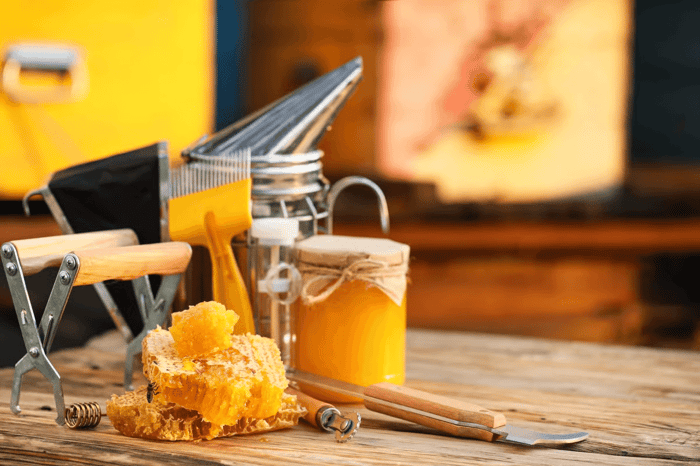
Beekeeping supplies are the equipment and tools used to house, inspect, feed, protect, and harvest from honey bee colonies. For most beekeepers, the core setup includes a hive, frames, smoker, hive tool, bee brush, veil or suit, gloves, feeder, and seasonal health supplies. Lappe’s Bee Supply carries beekeeping supplies for backyard beekeepers, sideline operations, and commercial beekeepers across the United States.
Lappe’s Bee Supply observation: Many first-year honey bee colonies add a second deep hive body within 3–4 weeks during strong spring nectar flow conditions.
What Does a Beginner Beekeeper Need to Start?
Beginner beekeepers need a hive kit, protective clothing, smoker, hive tool, feeder, and honey bees to start colony care safely.
- A starter hive kit helps new beekeepers avoid mismatched parts.
- A smoker helps calm bees during inspections.
- A hive tool separates boxes, frames, and lids sealed with propolis.
- Protective clothing helps beginners inspect colonies with more confidence.
- Honey bees are usually purchased separately as packages, nucleus colonies, or local bees.
A complete beekeeping starter kit is often the easiest way to begin because the hive components are designed to work together. Lappe’s Bee Supply offers Langstroth hive starter kits in 8-frame and 10-frame options, with assembled and ready-to-use equipment available. Many kits include hive bodies, frames, lids, a queen excluder, hive tool, bee brush, smoker, bee suit, and gloves. Honey bees are not included unless specifically stated.
Why Are Langstroth Hives Common in the United States?
Langstroth hives use removable frames to simplify inspections, honey harvesting, colony care, and equipment expansion.
- Langstroth hives use removable frames inside stacked boxes.
- Removable frames make brood checks and honey inspections easier.
- Standardized sizing helps beekeepers replace parts and expand colonies.
- Deep boxes are commonly used for brood chambers.
- Medium or shallow supers are often used for honey storage.
Langstroth hives are popular because they are practical, scalable, and widely supported by beekeeping suppliers. The removable-frame design allows beekeepers to inspect brood patterns, monitor food stores, check for pests, and harvest honey without destroying the comb. Lappe’s Bee Supply carries assembled hives, unassembled hives, deep brood boxes, telescoping lids, inner covers, wooden frames, and plastic frames for Langstroth hive setups.
Equipment durability note: Wax-dipped hive equipment lasts approximately 8 years longer before needing touch-up compared to standard painted woodenware.
Should Beekeepers Choose 8-Frame or 10-Frame Hives?
Eight-frame hives are lighter to lift, while ten-frame hives offer more box capacity for brood chambers and honey supers.
- Eight-frame hive boxes are lighter when full.
- Ten-frame hive boxes hold more frames per box.
- Both sizes can support healthy honey bee colonies.
- Equipment should stay consistent within each hive setup.
- Physical lifting ability is an important buying factor.
Both 8-frame and 10-frame Langstroth hives can work well. Many backyard beekeepers prefer 8-frame equipment because it is easier to lift during inspections and honey harvesting. Ten-frame equipment offers more internal space per box and is common in many established apiaries. Beekeepers should choose one size and stay consistent so hive boxes, frames, lids, and accessories remain compatible.
What Protective Clothing Do Beekeepers Use?
Beekeepers use suits, veils, gloves, and ventilated clothing to reduce sting exposure while inspecting active honey bee colonies.
- Bee suits provide full-body protection during hive work.
- Veils protect the face, neck, and head.
- Gloves help protect hands while handling frames and boxes.
- Boot bands help prevent bees from crawling up pant legs.
- Ventilated suits improve airflow during hot-weather inspections.
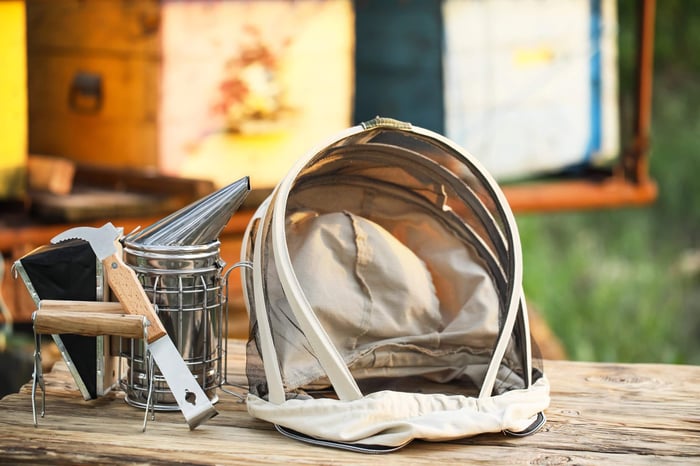
Protective clothing helps beekeepers work around colonies with less stress and better focus. Lappe’s Bee Supply carries jackets, full suits, trousers, ventilated pants, veils, pullover hoods, gloves, boot bands, and children’s beekeeping gear. Ventilated bee suits are especially useful in warm weather because layered mesh can allow air movement while still helping keep bees away from the skin.
What Supplies Help Keep Honey Bee Colonies Healthy?
Healthy colonies depend on feeding, mite monitoring, clean equipment, and inspections that help beekeepers find problems early.
- Varroa mites are a major health threat for managed honey bee colonies.
- Feeders provide supplemental nutrition when nectar is limited.
- Pollen patties may support brood rearing during seasonal buildup.
- Oxalic acid vaporizers are used by some beekeepers for mite treatment.
- Regular inspections help identify weak colonies before losses occur.
Colony health supplies help beekeepers manage nutrition, pests, and seasonal stress. Lappe’s Bee Supply carries AP23 winter patties, AP23 spring pollen patties, front entrance feeders, in-hive feeders, honey bee medications, and oxalic acid vaporizers. Beekeepers should follow product labels, local regulations, and extension recommendations when using treatments or supplemental feeding products.
What Supplies Are Used for Honey Harvesting?
Honey harvesting supplies include extractors, uncapping tools, strainers, buckets, and bottles for clean honey processing.
- Honey extractors remove honey from frames without destroying drawn comb.
- Uncapping tools open sealed honey cells before extraction.
- Strainers help remove wax particles from harvested honey.
- Food-grade buckets support safe honey handling and storage.
- Bottling supplies help package honey for home use or sale.
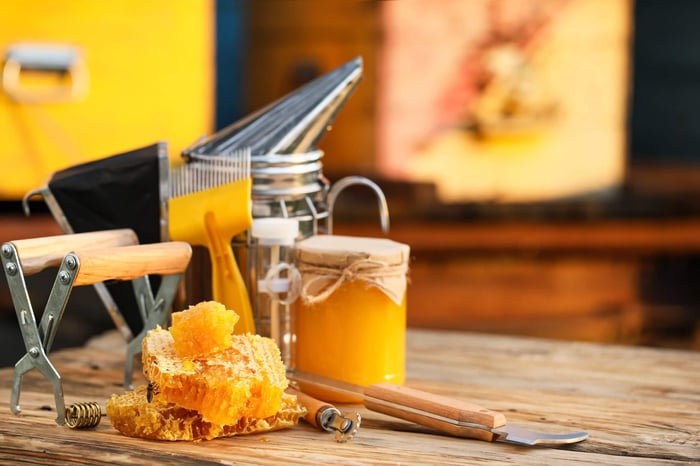
Honey harvesting equipment helps beekeepers remove, filter, store, and bottle honey after supers are ready. Hobbyists may start with smaller manual extractors, while larger operations often choose larger or powered extractors. Lappe’s Bee Supply carries extracting and bottling supplies for hobbyist, backyard, sideline, and commercial beekeepers.
What Crafting Supplies Come From Beekeeping?
Beeswax, honey, and hive byproducts are used for candles, mead, cosmetics, crafts, and other bee-related projects.
- Pure beeswax is commonly used for candle making.
- Industrial-grade beeswax may be used for specialty applications.
- Mead making uses honey as the fermentable sugar source.
- Beeswax candles are a popular finished hive product.
- Crafting supplies help beekeepers use more of the hive harvest.
Beekeeping can support more than honey production. Lappe’s Bee Supply carries pure beeswax, industrial-grade beeswax, mead making supplies, candle making supplies, and pure beeswax candles. These products help beekeepers, crafters, and homesteaders turn hive byproducts into practical finished goods.
Where Does Lappe’s Bee Supply Ship Beekeeping Supplies?
Lappe’s Bee Supply ships many beekeeping supplies across the continental United States, with product limits where applicable.
- Free shipping applies to many qualifying products in the continental United States.
- Shipping eligibility may vary by item size, weight, product type, and destination.
- Alaska and Hawaii may require different shipping terms.
- Seasonal demand can affect product availability and delivery timing.
- Customers should review product pages for current shipping details.
Lappe’s Bee Supply serves beekeepers throughout the United States, including customers in Alabama, Arizona, Arkansas, California, Colorado, Connecticut, Delaware, Florida, Georgia, Idaho, Illinois, Indiana, Iowa, Kansas, Kentucky, Louisiana, Maine, Maryland, Massachusetts, Michigan, Minnesota, Mississippi, Missouri, Montana, Nebraska, Nevada, New Hampshire, New Jersey, New Mexico, New York, North Carolina, North Dakota, Ohio, Oklahoma, Oregon, Pennsylvania, Rhode Island, South Carolina, South Dakota, Tennessee, Texas, Utah, Vermont, Virginia, Washington, West Virginia, Wisconsin, and Wyoming. Shipping terms may differ for Alaska and Hawaii.
How Should Beekeepers Choose the Right Supplies?
Beekeepers should compare hive size, climate, lifting weight, protective comfort, and equipment fit before buying supplies.
- Choose hive equipment that matches the beekeeper’s lifting ability.
- Use compatible frames, boxes, lids, and accessories within each hive.
- Select protective clothing that fits well and feels comfortable in local weather.
- Plan for feeding, mite monitoring, and honey harvesting before the first season.
- Buy extra frames and boxes before colonies outgrow their current space.
The best beekeeping supplies depend on climate, colony goals, budget, and the beekeeper’s experience level. A beginner may prioritize a ready-to-use hive kit and full protective clothing. A growing apiary may need extra supers, feeders, mite monitoring tools, and a dependable extractor. Choosing compatible equipment early helps reduce replacement costs and confusion later.
How Do Common Beekeeping Supplies Compare?
Different beekeeping supplies serve different purposes, from colony housing and feeding to hive inspections and honey harvesting.
Most beekeepers use many of the same core tools throughout the year, but each item serves a different purpose inside the apiary. The comparison guide below explains what each common beekeeping supply does and when it is most useful.
| Beekeeping Supply | What It Does | Who Commonly Uses It |
|---|---|---|
| Langstroth Hive | Provides a structured home for honey bee colonies using removable frames and stacked hive boxes. | Beginner, hobbyist, sideline, and commercial beekeepers. |
| Bee Suit or Beekeeping Jacket | Helps reduce sting exposure during hive inspections, honey harvesting, and colony management. | New beekeepers, families, and anyone inspecting active colonies. |
| Bee Smoker | Produces cool smoke that helps calm bees and makes hive inspections easier to manage. | Used during nearly all hive inspections and honey harvests. |
| Hive Tool | Separates hive boxes and frames that have been sealed together with wax or propolis. | Every beekeeper working removable-frame hives. |
| Hive Feeder | Provides sugar syrup or supplemental food when nectar sources are limited. | Spring colony buildup, drought conditions, and overwintering support. |
| Pollen Patty | Supplies supplemental protein that may support brood production and colony growth. | Beekeepers managing spring buildup or low-pollen conditions. |
| Honey Extractor | Spins honey from frames while preserving the drawn comb for future use. | Beekeepers harvesting honey from medium or shallow supers. |
Many beginner beekeepers start with basic hive tools, protective gear, and a starter hive kit before expanding into honey extraction equipment and seasonal feeding supplies. Commercial beekeepers often use the same core tools, but at larger scales and with more specialized equipment.
Frequently Asked Questions
What are the basic supplies needed for beekeeping?
Basic beekeeping supplies include a hive, frames, smoker, hive tool, bee brush, protective clothing, feeder, and honey bees.
What type of hive is most common in the United States?
The Langstroth hive is the most common hive system in the United States because it uses removable frames and standardized parts.
Do beginner beekeepers need a full bee suit?
Many beginner beekeepers use a full bee suit because it provides more coverage and confidence during early hive inspections.
What is the difference between 8-frame and 10-frame hives?
Eight-frame hives are lighter to lift, while ten-frame hives provide more internal box capacity for brood and honey storage.
Why do beekeepers use smokers?
Beekeepers use smokers to help calm honey bees and make inspections easier to manage.
What are pollen patties used for?
Pollen patties provide supplemental protein that may support brood production when natural pollen is limited.
What supplies are needed to harvest honey?
Honey harvesting commonly requires an extractor, uncapping tools, strainers, food-grade buckets, and bottles.
Can beekeeping supplies be shipped nationwide?
Many beekeeping supplies can be shipped throughout the continental United States, although product and destination restrictions may apply.
Are ventilated bee suits good for summer beekeeping?
Ventilated bee suits are useful in warm weather because they allow more airflow while helping reduce sting exposure.
Do beekeepers need mite treatment supplies?
Many beekeepers use mite monitoring and treatment supplies because varroa mites are a serious threat to honey bee colony health.
Sources and Further Reading
- The Hive and the Honey Bee, Dadant & Sons
- Honey Bee Biology and Beekeeping, Dewey M. Caron
- The Beekeeper’s Handbook, Diana Sammataro and Alphonse Avitabile
- USDA Agricultural Research Service, Honey Bee Health Resources
- USDA APHIS, Honey Bee Program
- Honey Bee Health Coalition, Varroa Management Guide
- University of Minnesota Bee Lab, Beekeeping Resources
- Cornell Dyce Lab for Honey Bee Studies, Extension Resources
- Penn State Extension, Beekeeping and Pollinator Health Resources
FAQs
What are the basic supplies needed for beekeeping?
Basic beekeeping supplies include a hive, frames, smoker, hive tool, bee brush, protective clothing, feeder, and honey bees.
What type of hive is most common in the United States?
The Langstroth hive is the most common hive system in the United States because it uses removable frames and standardized parts.
Do beginner beekeepers need a full bee suit?
Many beginner beekeepers use a full bee suit because it provides more coverage and confidence during early hive inspections.
What is the difference between 8-frame and 10-frame hives?
Eight-frame hives are lighter to lift, while ten-frame hives provide more internal box capacity for brood and honey storage.
Why do beekeepers use smokers?
Beekeepers use smokers to help calm honey bees and make inspections easier to manage.
What are pollen patties used for?
Pollen patties provide supplemental protein that may support brood production when natural pollen is limited.
What supplies are needed to harvest honey?
Honey harvesting commonly requires an extractor, uncapping tools, strainers, food-grade buckets, and bottles.
Can beekeeping supplies be shipped nationwide?
Many beekeeping supplies can be shipped throughout the continental United States, although product and destination restrictions may apply.
Are ventilated bee suits good for summer beekeeping?
Ventilated bee suits are useful in warm weather because they allow more airflow while helping reduce sting exposure.
Do beekeepers need mite treatment supplies?
Many beekeepers use mite monitoring and treatment supplies because varroa mites are a serious threat to honey bee colony health.