Welcome to Lappe's Bee Supply's blogs section. We are a trusted beekeeping company in the USA. We give relevant insights, seasonal guidance, and professional advice for beekeepers of all experience levels. From hive management and bee wellness to honey production and equipment guides, we have it all that you will require to thrive. Get updated, motivated, and connected with the beekeeping community through regular news from Lappe's Bee Supply.
Beekeeping Supplies Needed To Start Your Hive!
The Buzz About This Post
- Table of Contents
- Key Takeaways
- What beginner beekeeping supplies do I need to start?
- What protective clothing does a beginner beekeeper need?
- What beekeeping tools are essential for hive inspections?
- How can beginner beekeepers learn faster and avoid mistakes?
- Beginner Beekeeping Supplies Checklist
- Now that I have my beekeeping supplies, what should I do next?
- Ready to Start Your First Hive?
- Frequently Asked Questions
- Sources and Further Reading
- FAQs
Essential Beginner Beekeeping Supplies: What New Beekeepers Actually Need
New to beekeeping? Start with the supplies that matter most: a safe hive setup, protective gear, basic tools, a feeder, and reliable education before your bees arrive.
Last updated: May 15, 2026.
Author: Lappe’s Bee Supply Editorial Team

Starting beekeeping is easier when you understand which supplies are truly essential.
Key Takeaways
- Beginner beekeepers need a hive, feeder, protective gear, smoker, hive tool, and bees to start safely.
- Two hives help beginners compare colony growth and identify problems earlier than one hive alone.
- Langstroth hives are the most common beginner hive because parts are standardized and widely available.
- Package bees often need sugar syrup so workers can build wax comb before natural nectar is steady.
- A smoker and hive tool are the two most important tools for routine hive inspections.
- Local bee clubs, mentors, books, and classes help new beekeepers avoid costly first-year mistakes.
What beginner beekeeping supplies do I need to start?
- A beginner hive setup usually includes a bottom board, brood box, frames, inner cover, and outer cover.
- A feeder helps new colonies draw comb when natural nectar is limited.
- Protective clothing helps beginners inspect colonies more calmly and safely.
- A smoker and hive tool are the two core tools needed for most inspections.
For most beginners, the essentials are simple: a hive for each colony, frames and foundation, a feeder, protective gear, a smoker, smoker fuel, a hive tool, and bees.

A basic hive setup gives new colonies the structure they need to build comb and raise brood.
What protective clothing does a beginner beekeeper need?
- A veil protects the face and neck during inspections.
- Bee jackets are lighter and easier for quick hive checks.
- Full suits provide maximum sting protection.
- Ventilated suits improve airflow during warm weather.
Protective gear helps beginners stay calm and work more carefully around bees. Many new beekeepers prefer full coverage suit while learning inspection techniques and colony behavior.

Protective clothing helps beginner beekeepers inspect colonies more confidently.
What beekeeping tools are essential for hive inspections?
- Smoke helps reduce defensive colony behavior.
- Hive tools separate boxes and lift frames safely.
- J-hook hive tools help remove sticky frames.
- Natural untreated smoker fuel is safest for bees.
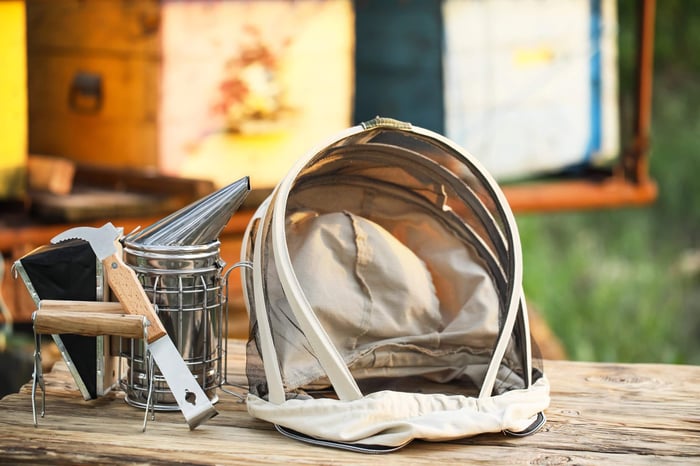
The smoker and hive tool are the two most important tools in beginner beekeeping. These tools help reduce stress on both the beekeeper and the colony during inspections.

A smoker and hive tool are considered the two most important beginner beekeeping tools.
How can beginner beekeepers learn faster and avoid mistakes?
- Local bee clubs provide region-specific guidance.
- Mentors help beginners recognize colony problems earlier.
- Books and classes build foundational beekeeping knowledge.
- Hands-on experience improves seasonal management skills.
Education is one of the most valuable investments a beginner beekeeper can make. Books, bee clubs, mentors, and local classes help new beekeepers understand seasonal colony management and avoid common mistakes.

Learning from trusted resources helps beginners build stronger and healthier colonies.
Beginner Beekeeping Supplies Checklist
| Supply | Purpose | Priority |
|---|---|---|
| Langstroth Hive | Colony housing | Essential |
| Frames & Foundation | Comb structure | Essential |
| Feeder | Supports new colonies | Essential |
| Bee Suit or Jacket | Protective clothing | Essential |
| Veil | Protects face and neck | Essential |
| Smoker | Calms bees during inspections | Essential |
| Hive Tool | Opens hive equipment | Essential |
| Bee Brush | Moves bees gently | Optional |
| Frame Perch | Holds frames during inspections | Optional |
Now that I have my beekeeping supplies, what should I do next?
- Choose a level, dry hive location with morning sun and good airflow.
- Assemble and inspect all hive parts before your bees arrive.
- When starting a hive, use one deep brood box with frames before adding more boxes as the colony grows.
- Set up your feeder and have sugar syrup and pollen patties ready for package bees or a nuc.
- Review installation instructions before handling live bees.
- Plan your first inspection about 10 to 14 days after installation.
Once your supplies are ready, the next step is preparing your hive site and learning your installation process. Set the hive where it is stable, accessible, and protected from avoidable disturbance. Before your bees arrive, make sure frames, feeders, covers, protective gear, smoker, and hive tool are ready to use. After installation, give the colony time to settle, then check that the queen is released, bees are drawing comb, and food is available.
Ready to Start Your First Hive?
Choose beginner-friendly beekeeping supplies that help you install, inspect, and manage your first colony with confidence.
Shop Beginner Beekeeping KitsFrequently Asked Questions
What is the best hive for beginner beekeepers?
Langstroth hives are the most common beginner choice because they are standardized and widely supported.
Should beginner beekeepers start with one hive or two?
Two hives help beginners compare colony growth and identify problems earlier.
Do beginner beekeepers need a full bee suit?
A full bee suit is not required, but it provides more confidence and sting protection during inspections.
Why do package bees need sugar syrup?
Sugar syrup helps worker bees build wax comb before nectar flow becomes reliable.
What are the most important beekeeping tools?
A smoker and hive tool are the two most important tools for beginner hive inspections.
Sources and Further Reading
These educational resources were selected to support accurate beginner beekeeping guidance, colony management practices, and honey bee health education.
- Penn State Extension — Beekeeping Basics
- Penn State Extension — Beekeeping 101
- University of Minnesota Bee Lab — Beekeeping in Northern Climates
- SARE / University of Minnesota — Beekeeping in Northern Climates Workbook
- Honey Bee Health Coalition
- USDA — Programs and Resources to Support Beekeepers
- US Bee Data — National Honey Bee Data Platform
- American Beekeeping Federation — Beekeeping Resources
- Pollinator Partnership
- Bee Informed Partnership
FAQs
What beginner beekeeping supplies do I need to start?
Most beginners need a hive, frames, feeder, bee suit or jacket, veil, smoker, hive tool, and bees to start safely.
What type of hive is best for beginner beekeepers?
Langstroth hives are the most common beginner choice because they are standardized, expandable, and widely supported.
Should beginner beekeepers start with one hive or two?
Two hives help beginners compare colony growth, identify problems earlier, and learn faster through side-by-side observations.
Why do package bees need sugar syrup?
Sugar syrup helps package bees produce wax comb and establish brood before natural nectar flow becomes reliable.
What size hive should beginners start with?
Most beginners start with one deep brood box filled with frames before adding additional hive boxes as the colony grows.
Do beginner beekeepers need a full bee suit?
A full bee suit is optional, but many beginners prefer the extra protection and confidence during hive inspections.
What protective clothing is most important for beekeeping?
A veil is the most important protective item because it protects the face and neck during hive inspections.
What are the most important beekeeping tools?
A smoker and hive tool are considered the two most important tools for beginner beekeeping inspections.
What smoker fuel is safe for honey bees?
Untreated natural materials such as pine needles, burlap, or untreated sisal twine are commonly used smoker fuels.
How often should beginner beekeepers inspect a hive?
Most beginner beekeepers inspect colonies every 7 to 14 days during active spring and summer buildup.
Where should I place my beehive?
Place hives in a level location with morning sunlight, good airflow, and easy access for inspections.
What should I do after installing bees in the hive?
After installation, monitor feeding, check queen release, and inspect for comb building and brood production within the first week.
Can beginner beekeepers keep bees without gloves?
Some experienced beekeepers work without gloves, but most beginners prefer gloves for additional sting protection.
What is the difference between an 8-frame and 10-frame hive?
An 8-frame hive is lighter and easier to lift, while a 10-frame hive holds more comb and brood space.