




Product Overview
At-a-Glance Summary
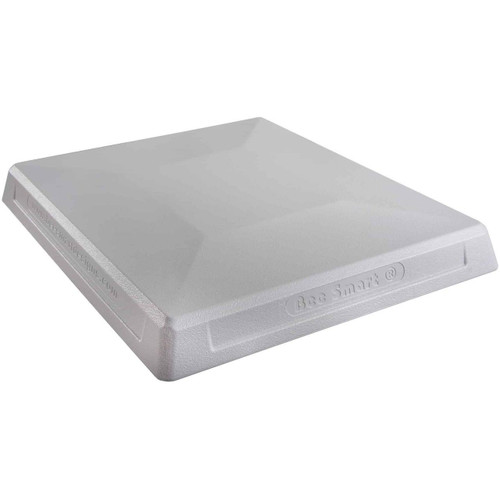
The Ultimate R-10 Insulated Inner Hive Cover adds high-performance R-10 insulation above your colony in standard 8-frame and 10-frame Langstroth hives to help reduce heat loss, reduce condensation in beehives, and create more stable hive conditions year-round.
This top hive insulation installs in the inner-cover position beneath the outer cover and is designed to support overwintering success, beehive moisture control, and protection from rapid temperature swings.
Quick fit check: The cover measures 20 3/16" x 16 9/16" x 2 1/8" and fits standard 8-frame and 10-frame Langstroth hive bodies. It is designed for the Bee Smart lid and may fit with 8-frame and 10-frame lids; confirm the lid's inside clearance before use.
Best for: Beekeepers looking for Langstroth hive insulation to reduce top-of-hive condensation, improve winter survival, and stabilize hive temperatures without changing their existing hive setup.
Definition
An insulated inner hive cover is a type of beehive insulation component used in Langstroth hives that installs above the frames and below the outer cover to add thermal resistance over the colony.
Unlike a standard inner cover that mainly creates space, an insulated inner hive cover is specifically designed to slow heat transfer through the top of the hive and support temperature regulation and moisture control inside the hive.
Alternate Names and Related Terms
This type of beehive insulation product may also be referred to as:
- Insulated inner cover
- Insulated hive cover
- Hive top insulation cover
- Top hive insulation
- Beehive top insulation
- Langstroth hive insulation cover
- Top insulation for beehives
- Insulated hive lid insert
These terms are often used interchangeably to describe insulation installed above the colony to improve beehive moisture control and temperature stability.
Quick Answer
An insulated inner hive cover helps protect your bees by reducing heat loss and reducing condensation in beehives—two of the most common causes of winter stress in Langstroth hives.
Beekeepers commonly use top hive insulation to improve overwintering conditions, reduce moisture buildup, and stabilize hive temperatures during seasonal swings.
Quick Specs
- Product name: Ultimate R-10 Insulated Inner Hive Cover
- Insulation value: R-10
- Insulation system: Patent Pending R-10 Insulation System
- Compatibility: Fits 8-frame and 10-frame Langstroth hive bodies
- Dimensions: 20 3/16" x 16 9/16" x 2 1/8"
- Outer lid compatibility: Designed for the Bee Smart lid. It may fit with 8-frame and 10-frame lids; confirm the lid's inside clearance before use.
- Installation: Installs like a standard inner cover beneath the outer cover
- SKU: CMPS-68222
Why Beekeepers Use This Type of Product
Beekeepers use top hive insulation to help stabilize conditions above the colony, especially during cold weather and rapid temperature swings.
Warm, humid air produced by the bee cluster rises upward. When this air contacts a colder surface above the hive, it can condense into moisture, leading to excess humidity inside the hive.
Adding insulation reduces the temperature difference between the warm hive air and the surface above it, which helps reduce condensation in beehives and supports more stable internal hive conditions.
This helps reduce colony stress, conserve energy, and support stronger survival through winter and early spring buildup.
How It Works in the Hive or Apiary
This insulated inner cover sits above the hive frames and beneath the outer cover as part of the hive's top assembly.
The insulation layer slows the movement of heat through the top of the hive by increasing thermal resistance, which is critical for effective winter beekeeping insulation.
In winter, this helps retain heat generated by the cluster. In summer, it can reduce heat transfer from direct sunlight through the hive lid.
By moderating temperature changes and reducing moisture buildup at the top of the hive, the cover helps reduce stress on the colony and supports more stable internal conditions.
This results in a more consistent internal environment, helping bees maintain cluster stability with less energy use.
First Principles
This section explains the basic physics behind beehive insulation and moisture control:
- Warm air rises: Heat from the bee cluster naturally rises toward the top of the hive.
- Condensation in beehives: When warm air contacts a cold surface, moisture forms and can drip back onto the bees.
- Thermal resistance: Insulation slows heat transfer, reducing temperature differences inside the hive.
- Moisture control: Reducing cold surfaces helps prevent condensation buildup above the cluster.
- Seasonal buffering: Insulation helps maintain stable hive temperatures year-round.
These principles explain why top-of-hive insulation is widely used to improve colony survival, reduce moisture issues, and support successful overwintering.
Apiary Management Notes
Condensation above the winter cluster is a common issue in cold-weather beekeeping and is one of the leading causes of colony stress.
When moisture forms above the bees and drips back onto the cluster, it can chill bees and increase winter losses.
Top hive insulation helps reduce condensation formation, but effective beehive moisture control usually depends on a combination of insulation, ventilation, and seasonal hive management.
Using an insulated inner cover is one of the most effective ways to reduce condensation in beehives before it forms.
Typical Timing and Seasonal Use
This product is especially important for winter beekeeping insulation, where heat loss through the top of the hive can stress an overwintering colony.
Many beekeepers also use top insulation during summer to help reduce heat gain and stabilize hive temperatures during hot weather.
Situational Scenarios
Here are some common beekeeping scenarios where the Ultimate R-10 Insulated Inner Hive Cover can provide practical benefits:
| Scenario | Problem | How the Insulated Inner Cover Helps |
|---|---|---|
| Cold Winter Nights | Hive temperatures drop, and condensation can drip onto the cluster. | The R-10 insulation slows heat loss through the top of the hive, reducing condensation above the bees and helping the cluster maintain warmth. |
| Rapid Spring Temperature Swings | Bees experience stress from fluctuating temperatures at the top of the hive. | The insulated cover buffers sudden temperature changes, creating more stable internal hive conditions and reducing stress on the colony. |
| Summer Sun on Hive Tops | Direct sunlight can heat the outer cover and raise hive temperatures quickly. | The insulation layer reduces heat transfer into the hive, helping prevent overheating of the colony. |
| High-Humidity Climates | Moisture tends to accumulate at the top of the hive, increasing the risk of condensation. | The R-10 insulation slows the formation of condensation and helps maintain a more consistent moisture balance above the colony. |
| Long Overwintering Periods | Extended cold weather can stress the colony and drain energy reserves. | By retaining heat above the cluster, the insulated inner cover helps bees conserve energy and supports successful overwintering. |
What This Product Includes
This listing includes one (1) Ultimate R-10 Insulated Inner Bee Hive Cover—ready to install in your existing Langstroth hive setup as a drop-in replacement for a standard inner cover.
No other components or accessories are listed as included.
How This Product Fits Into a Standard Hive System and Hive Stack
This insulated inner cover is made for standard Langstroth hive equipment from Lappe's Bee Supply.
It fits in the top assembly above the uppermost frames and below the outer cover, just as a standard inner cover would.
In a standard Langstroth hive, a simplified top-to-bottom layout is: outer cover → insulated inner hive cover → uppermost hive body or super with frames.
This placement puts insulation directly above the colony, where heat loss and condensation commonly occur.
This allows you to upgrade insulation performance without changing your existing hive configuration.
For sizing and matching equipment, see 8-frame hive components and 10-frame hive components.
Comparison and Buying Context
| Feature | Standard Inner Cover | Ultimate R-10 Insulated Inner Hive Cover |
|---|---|---|
| Main purpose | Provides spacing beneath the outer cover | Adds top insulation above the colony while serving the inner-cover position |
| Thermal resistance | Usually minimal | R-10 insulation value for significantly greater resistance to heat flow |
| Condensation management | Limited impact on cold-surface condensation | Helps reduce temperature differences that contribute to condensation above the cluster |
| Best use case | Basic hive spacing without added insulation | Overwintering support, moisture reduction, and buffering seasonal temperature swings |
| Buyer fit | Beekeepers who only need a standard inner cover function | Beekeepers who want improved thermal performance at the top of the hive |
For beekeepers focused on winter survival, moisture control, and temperature stability, this type of Langstroth hive insulation provides a clear upgrade over a standard inner cover.
Bottom line: If you are trying to reduce condensation in your hive and improve overwintering success, adding top hive insulation is one of the simplest and most effective upgrades you can make.
Who This Product Is Best For
This product is ideal for beekeepers who want better control over hive temperature, reduce condensation, and improve overall hive stability without modifying their existing equipment.
It is especially valuable for overwintering colonies, moisture management, winter beekeeping, and climates with strong temperature swings.
When This Product May Not Be the Best Choice
A standard inner cover may be enough if you only want basic spacing beneath the outer cover and do not want added hive insulation or moisture control support.
This product may also be unnecessary for beekeepers who are not trying to change hive thermal performance or moisture conditions at the top of the hive.
However, most beekeepers looking to improve overwintering success or reduce condensation in beehives will benefit from adding insulation above the colony.
Common Beginner Mistakes
A common mistake is assuming insulation alone will solve hive moisture problems.
Insulation can help by reducing cold-surface condensation, but effective winter management usually depends on the overall hive setup, ventilation strategy, and seasonal colony condition rather than one component by itself.
The best results come from combining insulation, ventilation, and proper hive management practices.
Compatibility
This cover fits standard 8-frame and 10-frame Langstroth hives and installs in the inner cover position beneath the outer cover.
Its overall dimensions are 20 3/16" x 16 9/16" x 2 1/8".
It is designed to work as a Langstroth hive insulation upgrade without requiring changes to your existing hive equipment.
Key Beekeeping Terms
Inner cover: A hive part installed beneath the outer cover as part of the hive's top assembly.
Langstroth hive: A removable-frame hive system widely used in modern beekeeping.
Winter cluster: The group of bees that clusters together to conserve heat during cold weather.
Condensation: Moisture that forms when warm air contacts a colder surface inside the hive.
Thermal resistance: A material's ability to slow the transfer of heat.
Frequently Asked Questions
Do I really need insulation on top of my beehive in winter?
Top insulation is not strictly required, but many beekeepers use it to reduce heat loss and limit condensation above the winter cluster. This can help create more stable hive conditions during cold weather.
What problem does an insulated inner cover actually solve in a hive?
It helps reduce condensation forming above the cluster and slows heat loss through the top of the hive, both of which can stress bees during winter and temperature swings.
Why does moisture build up at the top of a beehive?
Warm, humid air from the bee cluster rises and meets a colder surface at the top of the hive. This temperature difference causes condensation, which can form droplets above the bees.
Is condensation inside a beehive dangerous for bees?
Yes. If condensation drips onto the winter cluster, it can chill bees and increase stress, especially during extended cold periods.
Will an insulated inner cover completely fix moisture problems in my hive?
No. It helps reduce condensation, but effective moisture control depends on the full hive setup, including ventilation, colony strength, and seasonal management.
Where does an insulated inner cover go in the hive?
It installs above the frames and directly beneath the outer cover, in the same position as a standard inner cover.
Can I use this instead of a regular inner cover?
Yes. It replaces a standard inner cover while adding insulation above the colony.
Will this fit my existing Langstroth hive?
Yes. It is designed to fit standard 8-frame and 10-frame Langstroth hive bodies.
Does insulating the top of a hive help bees survive winter better?
It can help by reducing heat loss and limiting condensation, which may lower stress on the colony during overwintering.
Will insulation make my hive too hot in the summer?
No. Insulation can actually help reduce heat transfer from direct sunlight and buffer temperature spikes inside the hive.
Do northern beekeepers benefit more from insulated hive covers?
Generally yes. Colder climates create larger temperature differences, which increase condensation risk and heat loss through the top of the hive.
If I already use an upper entrance or ventilation, do I still need insulation?
Many beekeepers use both. Ventilation helps moisture escape, while insulation reduces condensation forming in the first place.
How is this different from putting foam insulation under the lid?
This product is designed to fit properly in the hive system, maintain correct spacing, and provide consistent insulation without modification.
Can I leave this insulated inner cover on year-round?
Yes. Many beekeepers use it year-round to help buffer temperature swings, though it is especially useful in winter and early spring.
What comes with this insulated inner hive cover?
This listing includes one Ultimate R-10 Insulated Inner Hive Cover designed for standard Langstroth hives.
Related Beekeeping Guides
- Winter hive insulation supplies
- Standard inner hive covers
- 8-frame Langstroth hive components
- 10-frame Langstroth hive components
Share Your Experience With This Product
If you have used this product in your apiary, your experience can help other beekeepers choose equipment that works in real hive conditions.
How did this product perform in your hive?
Free Shipping on Most Beekeeping Supplies Orders Over $100
Most beekeeping supplies orders over $100 qualify for free shipping from Lappe's Bee Supply.