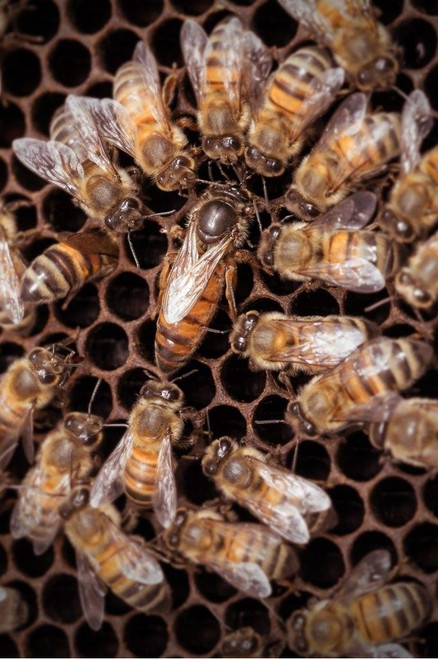


Product Overview
2027 Italian Hybrid Queen Bee: Manageable Temperament and Dependable Brood Production
Naturally mated, laying-tested, and selected for manageability and brood production
The 2027 Italian Hybrid Queen combines Lappe's VSH Minnesota Hygienic Italian stock with Carniolan genetics. Each queen is naturally mated, laying-tested for established worker-brood production before shipment, and never wing-clipped.
Choose the Italian Hybrid when manageable inspections, dependable brood production, and steady active-season population growth are higher priorities than one highly specialized trait.
Requires a prepared queenless colony or split containing worker bees; this is not a complete bee colony.
At a Glance
Why Beekeepers Choose This Italian Hybrid Queen
- Manageable temperament: In our experience, established colonies are generally calm and straightforward to inspect once daughters of the new queen make up more of the workforce.
- Dependable brood production: We look for a solid, expanding worker-brood pattern that supports active-season colony growth under suitable conditions.
- Evaluated by colony performance: We judge queens by what the colony is actually doing under appropriate conditions rather than by promises attached to a genetic name.
Lappe’s Bee Supply has been a commercial beekeeping family since 1978. Each season, we raise and supply beekeepers with more than 20,000 queens, giving us extensive firsthand experience with queen selection, evaluation, and performance under a wide range of colony conditions.
Is This Product Right for You?
If rapid spring buildup is your primary goal, compare the Carniolan line. If mite-resistance traits and winter hardiness are higher priorities, compare the Russian Hybrid. The Italian Hybrid is intended as a more balanced choice across temperament, brood production, and active-season colony growth.
What We Notice When Working These Lines Side by Side
When we work enough colonies side by side, the differences between our queen lines are usually more noticeable in how the colonies behave and develop than in what the individual queens look like.
We tend to think of our Italian Hybrid as a middle-ground line in our yards. It generally does not have quite the same spring-growth personality we associate with our Carniolans. What stands out instead is the combination of manageable bees, steady brood production, and continued colony growth rather than one extreme trait.
These differences are tendencies, not a way to identify every colony by opening the lid. Weather, nectar flow, colony strength, queen age, and management can change what we see during an individual inspection. But when we have multiple colonies of each line operating under similar conditions, we can often see differences in brood-nest development, population change, and how the bees behave on the comb.
Manageable temperament does not mean a colony will never become defensive. Poor weather, robbing pressure, queenlessness, nectar dearth, and other stressful colony conditions can temporarily change how the bees respond during an inspection.
We regularly supply Italian Hybrid queens to beekeepers requeening colonies or captured swarms with Africanized ancestry. These customers are often looking to replace the existing queen with a line we select for more manageable temperament. Because the existing workers were produced by the previous queen, a change in colony temperament should not be expected immediately after requeening.
Worker honey bees generally take about three weeks to develop from egg to adult, so the new queen's daughters will not begin replacing the existing adult workforce immediately. Even after those first daughters emerge, additional time is needed before they make up a substantial portion of the colony. For that reason, changes in colony temperament after requeening should be evaluated over time rather than during the first few inspections.
What Does “Italian Hybrid” Mean?
For this exact queen, Italian Hybrid means Lappe's VSH Minnesota Hygienic Italian stock is crossed with Carniolan genetics. The queen-rearing side of this cross comes from Lappe’s selected VSH Minnesota Hygienic Italian breeder stock, while Carniolan genetics contribute through the mating side.
Because the queens are naturally mated and may mate with multiple drones, some genetic variation among queens is expected. Colonies headed by queens from the same Italian Hybrid line may therefore differ somewhat in temperament, brood production, buildup, and other traits.
What Does VSH Mean?
VSH stands for Varroa Sensitive Hygiene, a honey bee trait associated with workers detecting and removing brood affected by reproducing Varroa mites.
The designation describes part of the selected genetic background and does not guarantee a particular level of VSH expression or eliminate the need to monitor Varroa and manage mites appropriately.
How Lappe's Selects This Italian Hybrid Line
Why Lappe's Has Continued Producing This Cross
What has kept us producing this Italian Hybrid for more than 10 years is not one exceptional trait. It is the balance we continue to see across several traits that matter in an everyday bee yard.
We want an Italian-type colony with the manageable temperament and steady brood production we look for from our Italian stock, while also benefiting from the Carniolan influence in the cross. Over the years, this combination has continued to give us the balance we are looking for rather than forcing us to choose a line that is exceptional in one area but gives up too much somewhere else.
There are queen lines that can stand out more strongly in an individual characteristic. We have continued producing this Italian Hybrid because it has remained a dependable, practical all-around line for the way we raise bees and for the wide range of beekeepers we supply.
What We Evaluate
We evaluate breeder colonies as complete colonies, looking at:
- Worker-brood quality
- Seasonal population development
- Temperament during inspections
What Keeps a Breeder Colony in Consideration
We do not select a breeder colony based on one strong inspection. The colonies we are most interested in are the ones that continue to perform well across repeated inspections and changing seasonal conditions. We look for colonies that maintain a strong, organized worker-brood pattern, develop population consistently, and remain manageable to work.
A colony may look promising early in the evaluation process and still be removed from consideration if those traits do not continue to meet our expectations. Recurring concerns can include:
- Inconsistent worker-brood production
- Persistent defensive behavior
- Repeated interruptions or unexplained declines in the queen's laying performance
What Lappe's Checks in the Laying Pattern Before Shipment
Lappe's does not consider the presence of a few eggs by itself enough to evaluate a queen before shipment. A good worker-brood pattern does not mean every available cell must contain brood. We look for the queen to use the available brood area consistently, with developing worker brood becoming organized rather than remaining unusually scattered.
We continue observing a queen when:
- Her developing worker-brood pattern remains unusually scattered
- The pattern lacks the organization we expect as she settles into laying
A queen is shipped only after her worker-brood laying has developed enough for us to evaluate her—not simply because she has begun laying.
Queen laying verification: Each queen’s laying pattern is checked before shipment to verify that she is fully mated and laying under our care. These queens are intended for queenless colonies, splits, or requeening situations. The condition of the receiving hive can affect whether the queen begins or continues laying after introduction, so Lappe’s cannot guarantee queen acceptance, continued laying, or the eventual performance or recovery of the colony.
What Is Included and What Do You Need?
Included:
- One live Italian Hybrid queen with attendant bees.
- Introduction/shipping cage.
You must provide:
- A suitable queenless colony or queenless split containing worker bees.
- Normal hive equipment and colony resources needed to support brood rearing.
- Adequate food and comb space as needed by the receiving colony.
If you don't currently have an existing worker population to add this queen to, check Lappe's live bees, nucs, queens, and packages.
Preparing the Colony and Introducing Your Queen
Prepare the receiving colony carefully before beginning the queen-introduction process.
- Confirm that the receiving colony or split is queenless.
- Check for and remove competing queen cells.
- Keep the shipped queen protected in her introduction cage while workers become accustomed to her pheromones.
- Allow gradual release rather than immediately force-releasing the queen into an established colony. Lappe's provides the queen cage with a filled candy plug already in place to allow time for gradual introduction.
- Wait about 5–10 days before carefully checking for eggs. Disturbing the colony too soon after introduction can agitate the bees and increase the risk that they will turn on the newly introduced queen.
Lappe's Apiary Note
When introducing a queen, we pay attention to how the workers behave around the cage rather than simply counting how many bees are on it. A group of workers gathering around the cage is not necessarily a sign of rejection; what matters is how they are responding to the protected queen.
We look for the workers to become calmer around the cage rather than remaining persistently agitated or aggressive toward her. If the colony is still reacting aggressively, we give the queen additional protected time rather than rushing the release. The cage allows workers to interact with the queen while keeping her protected during this adjustment period.
Common Mistakes to Avoid When Introducing a New Queen
Avoiding a few common mistakes can make queen introduction easier and help prevent a good queen from being judged too quickly.
-
Checking the colony too often. Repeated disturbance during the first few days can interfere with the introduction process.
-
Introducing her into a colony that is not truly queenless. An existing queen, virgin queen, or competing queen cells can interfere with acceptance.
-
Force-releasing the queen too soon. Allow gradual release through the introduction cage rather than releasing her immediately into an established colony.
-
Judging brood production too quickly. Colony resources, weather, season, and worker population all affect the size and appearance of the brood nest.
-
Assuming the queen has failed after one early inspection. Give her time to establish before drawing conclusions.
What to Expect After Introduction
After successful establishment, look first for eggs and developing worker brood. As the queen settles into laying, her developing worker-brood pattern should become easier to evaluate.
Brood production depends on the receiving colony as well as the queen. Worker population, available comb, food, forage, weather, and season can all affect how much brood a colony can support, so a small brood nest does not necessarily indicate a queen problem.
How Lappe's Evaluates an Established Queen
Once established, evaluate an Italian Hybrid queen by brood-pattern quality, population maintenance, colony behavior, and recurring queen problems rather than by age alone. A productive queen may continue performing well beyond her first season, so we do not recommend replacing a good queen solely because she reaches a particular age.
What Queen Genetics Can—and Cannot—Tell You
Queen genetics influence colony traits, but they do not determine exactly how every colony will perform. We use our queen lines to describe the tendencies we select for and observe across colonies, not to guarantee that every colony headed by a particular line will behave or develop the same way.
We also do not use “Italian Hybrid” to mean the most purely Italian bee we can produce. This line intentionally combines our selected Italian stock with Carniolan genetics because we value the combination of traits we have observed from the cross. For us, the usefulness of the line matters more than how closely it matches a textbook description of a single honey bee race.
Important Expectations and Limitations
- Queen acceptance and post-introduction survival are not guaranteed.
- Temperament is not guaranteed.
- Brood production, population growth, honey production, overwintering, and overall colony performance can vary with colony conditions, weather, forage, season, management, and other factors.
Ordering and Live-Queen Shipping
Queen bees require careful, time-sensitive shipping. Queen shipping generally runs from early April through late September, depending on seasonal conditions and queen availability.
Choosing Your Queen Options and Ship-Out Date
Choose whether you would like your queen marked and, if so, select your preferred marking color. Then choose the number of queens you need and select an available ship-out date. The date you select is the date your queen ships from Lappe’s—not the date she arrives to you. Queens ship by UPS Next Day and should arrive the next business day after the selected ship-out date.
Choose Your Queen Marking Color
If you choose to have your queen marked, you can select from our available colors rather than being limited to the standard color for her year. Some beekeepers follow the standard five-year marking system, while others choose a color that is easier to see or use different colors to distinguish queen lines in their apiary.
The standard queen-marking colors are:
-
White: years ending in 1 or 6
-
Yellow: years ending in 2 or 7
-
Red: years ending in 3 or 8
-
Green: years ending in 4 or 9
-
Blue: years ending in 0 or 5
For 2027, the standard color is yellow, but you may select a different available marking color if you prefer.
How Your Queen Is Shipped
Each queen is shipped in either a California Mini queen cage or a 3-hole queen cage, depending on current availability and shipping needs.
We also place attendant worker bees in the cage with each queen. These attendants help care for the queen during the short trip to the customer by feeding, grooming, and tending to her while she is in transit. The queen will arrive ready for introduction into the receiving colony.
Queens are shipped by UPS Next Day. UPS Next Day Early is also available for an additional charge. Orders of 3 or more queens qualify for free shipping, and the queens may be all one breed or a mix of eligible queen breeds.
Monitor UPS tracking and be available for delivery. Open the package promptly after arrival, keep the queen at a moderate room temperature, and install her as soon as possible. Do not leave a queen out overnight before installation.
Live-arrival guarantee: The live-arrival guarantee applies only during the first 2 hours after delivery, based on the delivery time shown by the UPS tracking number. Any queen that arrives dead must be reported to Lappe's by phone or email within 2 hours of the recorded UPS delivery time.
The live-arrival guarantee does not cover queen acceptance, post-introduction survival, or later colony performance.
Queen bees should be ordered separately from regular beekeeping equipment so equipment is not charged the higher express shipping cost. Review the current Queen Honey Bees Terms & Conditions before ordering for the controlling live-arrival, delivery, cancellation, and claim requirements.
Frequently Asked Questions
Do I need a colony before ordering an Italian Hybrid Queen?
Yes. You need a prepared queenless colony or queenless split with worker bees. A queen alone is not a complete colony.
Do I have to choose the standard queen-marking color for 2027?
No. Yellow is the standard queen-marking color for 2027, but Lappe's allows you to choose another available marking color. Some beekeepers choose the color they can see most easily, while others use different colors to identify different queen lines in their apiary.
Does the colony have to be queenless before introduction?
Yes. Confirm the colony is queenless and remove competing queen cells before introducing the new queen.
Is the Italian Hybrid Queen naturally mated and laying-tested?
Yes. Each queen is naturally mated and laying-tested before shipment. This does not guarantee acceptance or later colony performance.
Should I release the queen immediately from her cage?
No. Allow a gradual introduction. If workers remain aggressive toward the cage, give the queen additional protected time.
When should I check for eggs after introduction?
Wait about 5–10 days before carefully checking for eggs. Disturbing the colony too soon after introduction can agitate the bees and increase the risk that they will turn on the newly introduced queen.
How soon will the colony's temperament reflect the new queen?
Not immediately. Worker honey bees generally take about three weeks to develop from egg to adult, and additional time is needed before the new queen's daughters make up a substantial portion of the workforce. Evaluate changes in colony temperament over time rather than during the first few inspections.
How long do I have to report a queen that arrives dead?
Report any queen that arrives dead within 2 hours of the UPS-recorded delivery time.
Does Lappe's guarantee that my colony will accept the queen?
No. Queen acceptance, post-introduction survival, and later colony performance are not guaranteed.
Should I replace an Italian Hybrid Queen after a certain age?
Not solely because of age. Evaluate brood pattern, population maintenance, colony behavior, and repeated signs of queen problems.