Welcome to Lappe's Bee Supply's blogs section. We are a trusted beekeeping company in the USA. We give relevant insights, seasonal guidance, and professional advice for beekeepers of all experience levels. From hive management and bee wellness to honey production and equipment guides, we have it all that you will require to thrive. Get updated, motivated, and connected with the beekeeping community through regular news from Lappe's Bee Supply.
Tips for Spotting the Queen Honeybee
The Buzz About This Post
- Key Takeaways
- Table of Contents
- What does a queen honey bee look like?
- What is the queen bee's role in a honey bee colony?
- Where should you look for the queen bee first?
- What is the easiest way to find a queen during a hive inspection?
- Can you tell whether a hive has a queen without finding her?
- Why can the queen bee be difficult to find?
- Should you mark the queen after you find her?
- What should you do if you still cannot find the queen bee?
- What are the most frequently asked questions about finding a queen bee?
- How can you identify a queen bee?
- Where is the queen most likely to be in a hive?
- Is the queen always the biggest bee in the hive?
- Does seeing eggs mean the queen is in the hive?
- What does a queen bee's abdomen look like?
- Why do worker bees surround the queen?
- What color should a queen bee be marked in 2026?
- Should beginners mark their queen bees?
- What should I do if I cannot find my queen?
- Do I need to find the queen during every hive inspection?
- Sources and Further Reading
- FAQs
Spotting the Queen Bee in a Hive: Identification and Inspection Guide
Spotting the queen bee gets easier when you stop trying to spot “the biggest bee” and instead combine body shape, location, movement, worker behavior, and brood evidence.
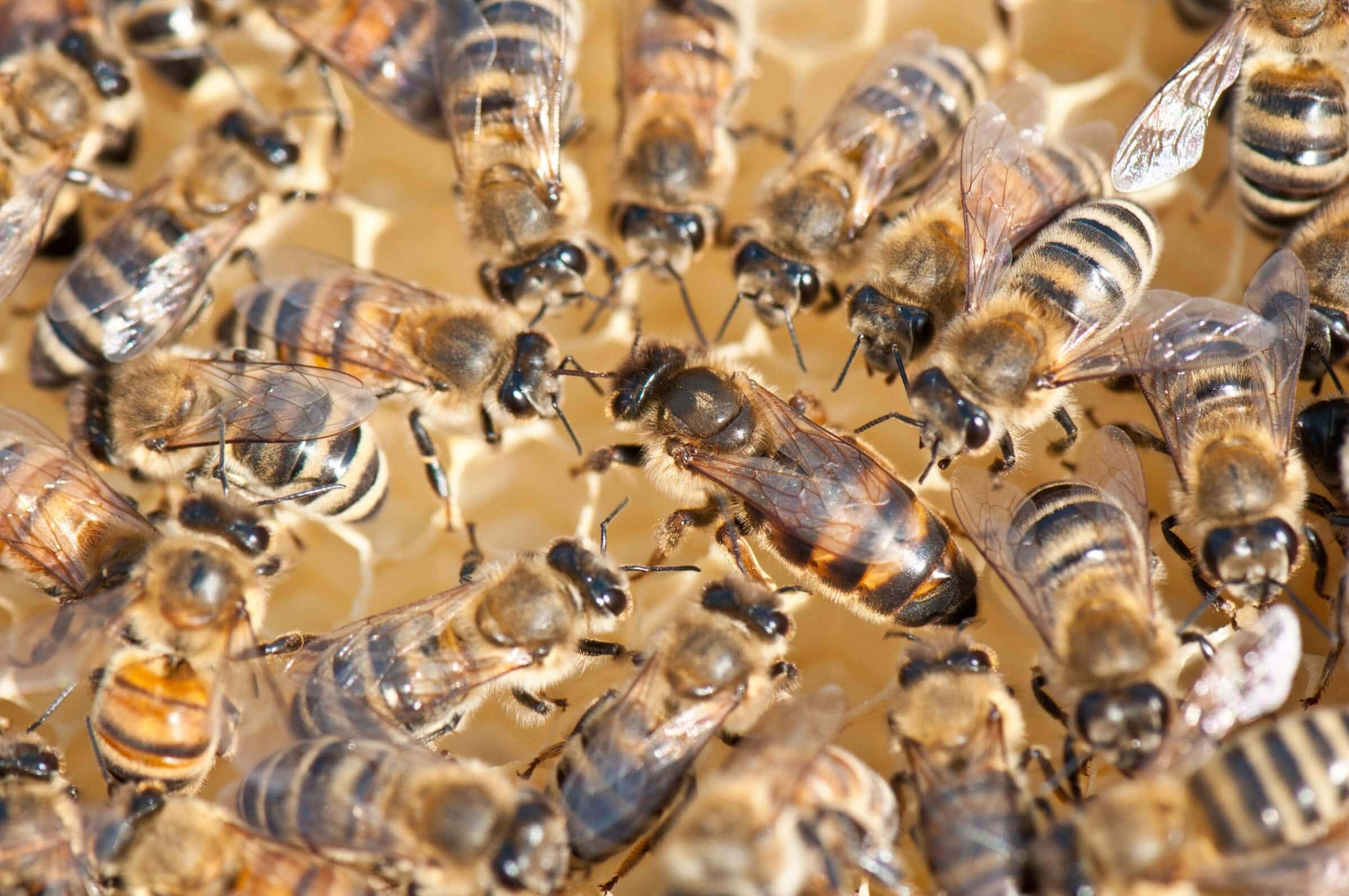
A queen honey bee is the primary reproductive female in a honey bee colony. A successfully mated, laying queen produces the eggs that become workers and also releases chemical signals involved in colony organization and worker behavior. Healthy queens can lay very large numbers of eggs during periods of rapid colony growth; Penn State Extension notes that a productive queen can exceed 2,000 eggs per day during peak season [1].
Key Takeaways
- A queen is best identified by body shape and behavior, not color alone.
- The queen's abdomen normally extends well beyond the tips of her wings.
- Brood frames containing eggs and young larvae are usually the best place to begin looking.
- A circle or retinue of attentive workers can help reveal a queen, but it is not always obvious.
- Fresh eggs show recent egg-laying activity but do not guarantee that a healthy laying queen is currently present.
- It is much easier spotting a Queen bee when she is marked.
- You do not need to find the queen during every inspection if the colony provides sufficient evidence of recent queen activity.
What does a queen honey bee look like?
- A laying queen normally has a longer abdomen than surrounding workers.
- Her abdomen often extends beyond the ends of her folded wings.
- Her thorax may appear broader and more exposed than a worker's.
- Queen coloration varies, so color alone is unreliable.
- Virgin queens can look slimmer and move faster than established laying queens.
Body shape is usually more useful than color. Extension references describe queens as larger and longer than workers, but genetics, age, mating status, and the individual colony can change their appearance. Virgin queens are especially challenging because their abdomens have not yet enlarged through active egg production, and they may move rapidly across the comb [1].
When scanning a crowded brood frame, try to look for the shape of the abdomen before attempting to see the entire bee. The queen may be partially covered by workers. An elongated abdomen moving between worker bees can stand out even when the queen's head and thorax are temporarily hidden.
| Feature | Queen | Worker | Drone |
|---|---|---|---|
| Abdomen | Long and tapered | Shorter | Broad and rounded |
| Wings relative to abdomen | Abdomen usually extends beyond wings | Wings cover much of abdomen | Large wings |
| Eyes | Normal-sized | Normal-sized | Very large and prominent |
| Typical location | Often near brood when actively laying | Throughout the colony | Brood area, food areas, or hive perimeter |
| Movement | Often deliberate when laying | Constant working movement | Generally easy to distinguish by heavy build |
| Best identification clue | Shape + behavior + location | Worker-sized anatomy | Large eyes and thick body |
What is the queen bee's role in a honey bee colony?
- The queen is the colony's primary reproductive female.
- Fertilized eggs develop into female workers or potential queens.
- Unfertilized eggs normally develop into drones.
- Queen pheromones contribute to communication between the queen and workers.
- Workers commonly feed and groom the queen as part of her retinue.
The queen's importance extends beyond egg production. Research has documented multiple queen-produced chemical signals involved in communication with workers, including compounds associated with reproductive state and queen recognition [4]. Workers around a queen may form a retinue: a group of attendants that feed, groom, inspect, and closely interact with her.
Although beekeepers commonly call the queen the “leader” of the hive, that description can be misleading. She does not command individual workers. A honey bee colony operates through a complex system of chemical communication, worker interactions, environmental responses, and collective behavior. The queen's reproductive function and chemical signals are important parts of that system.
Where should you look for the queen bee first?
- Begin with frames containing eggs and open brood.
- Concentrate on the active brood nest before searching food-only frames.
- Scan both faces of every brood frame.
- Check frame edges before returning a frame to the hive.
- The queen can occasionally move away from the brood area.
Eggs and young larvae provide a practical starting point because these cells identify areas where laying has occurred recently. Inspect brood frames carefully rather than automatically assuming the queen must be on one specific center frame. The brood nest can shift within the hive as the colony grows, contracts, stores food, or responds to seasonal conditions.
What is the easiest way to find a queen during a hive inspection?
- Remove an outside frame first to create working space.
- Handle brood frames slowly and keep them over the hive when practical.
- Scan the frame in sections instead of staring at the entire bee-covered surface.
- Look for an unusually long abdomen before focusing on color.
- Watch for workers orienting toward or surrounding one bee.
- Recheck frame edges and corners before giving up.
A repeatable search pattern is more reliable than randomly scanning thousands of bees. Once you have working space, inspect likely brood frames systematically. Many beekeepers find it helpful to visually divide a frame into sections and scan one section at a time. This keeps your eyes from jumping randomly across the comb.
The queen may also be revealed by nearby workers. Attendants may face her, feed her, groom her, or create a slightly different pattern of movement around her. Research on queen-worker interactions documents these retinue behaviors [5]. The retinue is useful supporting evidence, but it should not be treated as proof by itself.
Queen-Finding Inspection Checklist
- Put on appropriate protective equipment and prepare your smoker and hive tool.
- Open the colony with minimal disturbance.
- Remove an outside frame to create additional working room.
- Identify the portion of the hive containing the active brood nest.
- Prioritize frames containing eggs and young larvae.
- Hold each frame securely and scan it in overlapping sections.
- Look for a long abdomen extending noticeably beyond the wings.
- Watch for unusual worker attention around one bee.
- Inspect frame edges and corners before replacing the frame.
- Record whether you found the queen, eggs, larvae, queen cells, or brood-pattern concerns.
Can you tell whether a hive has a queen without finding her?
- Eggs indicate that egg laying occurred recently.
- Young worker brood provides useful evidence of recent queen activity.
- Brood pattern can help assess colony condition but is not a diagnosis by itself.
- Queen cells can appear during swarming, supersedure, or emergency queen replacement.
- Lack of eggs warrants further investigation rather than an immediate conclusion.
Beekeepers often do not need visual confirmation of the queen at every inspection. Eggs and young brood can provide strong evidence of recent laying activity. However, colony conditions can change after those eggs are laid, so brood evidence should not be translated into an absolute claim that the queen is currently alive and present.
A poor brood pattern also has multiple possible causes and should not automatically be blamed on the queen. Disease, parasites, nutrition, weather, colony population, genetics, comb condition, and other factors may affect brood appearance.
Why can the queen bee be difficult to find?
- Virgin queens are usually slimmer than established laying queens.
- Young queens may move rapidly across comb.
- Dense worker coverage can hide most of the queen's body.
- A queen may move to the opposite side of a frame during inspection.
- Swarm preparation can temporarily alter a laying queen's appearance and egg production.
A beekeeper's mental picture of a large, slow-moving laying queen does not fit every queen. Virgin queens have less-developed reproductive systems than established laying queens and can appear noticeably slimmer. Their smaller profile and faster movement can make them much more difficult for beginners to spot [1].
Even an established queen can disappear from sight quickly. She may move around the bottom bar, cross an edge, or walk to the opposite side of a frame while you are examining it. This is one reason slow, methodical frame handling generally works better than repeatedly flipping the frame back and forth.
Should you mark the queen after you find her?
- A colored thorax mark makes a queen easier to locate.
- Year colors can help indicate when a queen was introduced or raised.
- Mark only the thorax, not the wings, head, or abdomen.
- Allow wet paint to dry before releasing the queen.
- Marking is useful but is not required for successful colony management.
A small mark on the thorax can make later inspections considerably easier and can also help determine whether a colony has replaced its queen. The commonly used five-year queen-marking color sequence is white for years ending in 1 or 6, yellow for 2 or 7, red for 3 or 8, green for 4 or 9, and blue for 5 or 0 [2].
| Queen Marking Color | Year Ending In | Example Years |
|---|---|---|
| White | 1 or 6 | 2021, 2026 |
| Yellow | 2 or 7 | 2022, 2027 |
| Red | 3 or 8 | 2023, 2028 |
| Green | 4 or 9 | 2024, 2029 |
| Blue | 5 or 0 | 2025, 2030 |
For 2026, the commonly used queen-marking color is white. Paint should be applied carefully to the thorax and allowed to dry before the queen is released back onto the comb.
Beekeepers who want to make future queen inspections easier can view queen marking tools and supplies from Lappe's Bee Supply .
What should you do if you still cannot find the queen bee?
- Failure to see the queen does not automatically mean the colony is queenless.
- Check carefully for eggs before concluding that laying has stopped.
- Record the age and type of brood present.
- Look for developing queen cells and other changes in the brood nest.
- Reinspect when necessary instead of repeatedly disrupting the colony.
Finding the queen is a skill, not the purpose of every hive inspection. If eggs, healthy young larvae, and expected brood development are present, the inspection may already have answered your management question. Continuing to pull frames solely because you want visual confirmation can create additional disturbance without providing information you actually need.
If eggs disappear, brood ages without replacement, queen cells develop, or colony conditions otherwise suggest queen loss, investigate further. A queenless colony generally transitions toward older brood because no new eggs are being added, although the exact appearance depends on how long the queen has been absent.
A Better Queen-Finding Habit
Instead of asking only, “Did I see the queen?”, record the information that tells you what is happening inside the colony:
- Did I see eggs?
- Did I see young larvae?
- What did the brood pattern look like?
- Were queen cells present?
- Did I physically see the queen?
- Was the queen marked?
- Did anything important change from the previous inspection?
That record creates a much more useful history of queen and colony performance than a simple yes-or-no queen sighting. Over several inspections, your notes can reveal changes that may be difficult to recognize from a single visit.
What are the most frequently asked questions about finding a queen bee?
How can you identify a queen bee?
Look for a long, tapered abdomen extending beyond the wings, a broad thorax, distinctive movement, and the queen's location among brood rather than relying on color alone.
Where is the queen most likely to be in a hive?
A laying queen is commonly found in the brood nest, especially on or near comb containing eggs and young larvae.
Is the queen always the biggest bee in the hive?
No. Drones can look wider and bulkier, while virgin queens may be relatively slim. Body proportions are more useful than overall size alone.
Does seeing eggs mean the queen is in the hive?
Eggs demonstrate recent laying activity, but they do not prove that a healthy laying queen is still present at the exact time of inspection.
What does a queen bee's abdomen look like?
A laying queen generally has a long, tapered abdomen that extends noticeably beyond the ends of her folded wings.
Why do worker bees surround the queen?
Workers may form a retinue around the queen to feed, groom, inspect, and interact chemically with her.
What color should a queen bee be marked in 2026?
The commonly used marking color for years ending in 1 or 6 is white, making white the standard queen-marking color for 2026.
Should beginners mark their queen bees?
Marking can make future inspections easier, but beginners should first learn safe queen handling or ask an experienced beekeeper for assistance.
What should I do if I cannot find my queen?
Check for eggs, young larvae, brood development, and queen cells before assuming the colony is queenless.
Do I need to find the queen during every hive inspection?
No. Many inspections can establish recent queen activity through eggs, young brood, and other colony evidence without physically locating the queen.
Sources and Further Reading
- An Introduction to Queen Honey Bee Development — Penn State Extension. Reference for queen development, reproductive biology, virgin queens, and peak egg-laying capacity.
- The Basics of Queen Management in Beekeeping Operations — University of Florida IFAS Extension. Reference for queen management, assessment, and queen-marking practices.
- European Honey Bee, Apis mellifera Linnaeus and Subspecies — University of Florida IFAS Extension. Reference for honey bee caste biology and colony development.
- Volatile Compounds Produced by Live European Honey Bee Queens — USDA Agricultural Research Service / Journal of Insect Physiology. Research relating to queen chemical communication and reproductive state.
- Changes in Worker Retinue Behaviors During Early Establishment of Adult Honey Bee Queens — USDA Agricultural Research Service / Journal of Apicultural Research. Research on queen-worker retinue behavior and queen development.
- Beekeeping — Honey Bees — Penn State Extension. General honey bee colony management reference.
- Honey Bee Management Throughout the Seasons — Penn State Extension. Reference for seasonal brood development and colony management.
- A Quick Reference Guide to Honey Bee Parasites, Pests, Predators, and Diseases — Penn State Extension. Reference for evaluating colony and brood health concerns.
Finding a queen becomes much easier with repetition. Focus first on where a laying queen should be, what her body shape looks like, and what the brood tells you. Over time, the queen begins to stand out from the surrounding workers before you consciously recognize why.
More importantly, queen spotting is only one part of reading a colony. A beekeeper who understands eggs, larvae, brood patterns, queen cells, and colony behavior can make better management decisions even during inspections when the queen remains hidden.
FAQs
How can you identify a queen bee?
Look for a long, tapered abdomen extending beyond the wings, a broad thorax, distinctive movement, and the queen's location among brood rather than relying on color alone.
Where is the queen most likely to be in a hive?
A laying queen is commonly found in the brood nest, especially on or near comb containing eggs and young larvae.
Is the queen always the biggest bee in the hive?
No. Drones can look wider and bulkier, while virgin queens may be relatively slim. Body proportions are more useful than overall size alone.
Does seeing eggs mean the queen is in the hive?
Eggs demonstrate recent laying activity, but they do not prove that a healthy laying queen is still present at the exact time of inspection.
What does a queen bee's abdomen look like?
A laying queen generally has a long, tapered abdomen that extends noticeably beyond the ends of her folded wings.
Why do worker bees surround the queen?
Workers may form a retinue around the queen to feed, groom, inspect, and interact chemically with her.
What color should a queen bee be marked in 2026?
The commonly used marking color for years ending in 1 or 6 is white, making white the standard queen-marking color for 2026.
Should beginners mark their queen bees?
Marking can make spotting the Queen easier, but beginners should first learn safe queen handling or ask an experienced beekeeper for assistance.
What should I do if I cannot find my queen?
Check for eggs, young larvae, brood development, and queen cells before assuming the colony is queenless.
Do I need to find the queen during every hive inspection?
No. Many inspections can establish recent queen activity through eggs, young brood, and other colony evidence without physically locating the queen.