Welcome to Lappe's Bee Supply's blogs section. We are a trusted beekeeping company in the USA. We give relevant insights, seasonal guidance, and professional advice for beekeepers of all experience levels. From hive management and bee wellness to honey production and equipment guides, we have it all that you will require to thrive. Get updated, motivated, and connected with the beekeeping community through regular news from Lappe's Bee Supply.
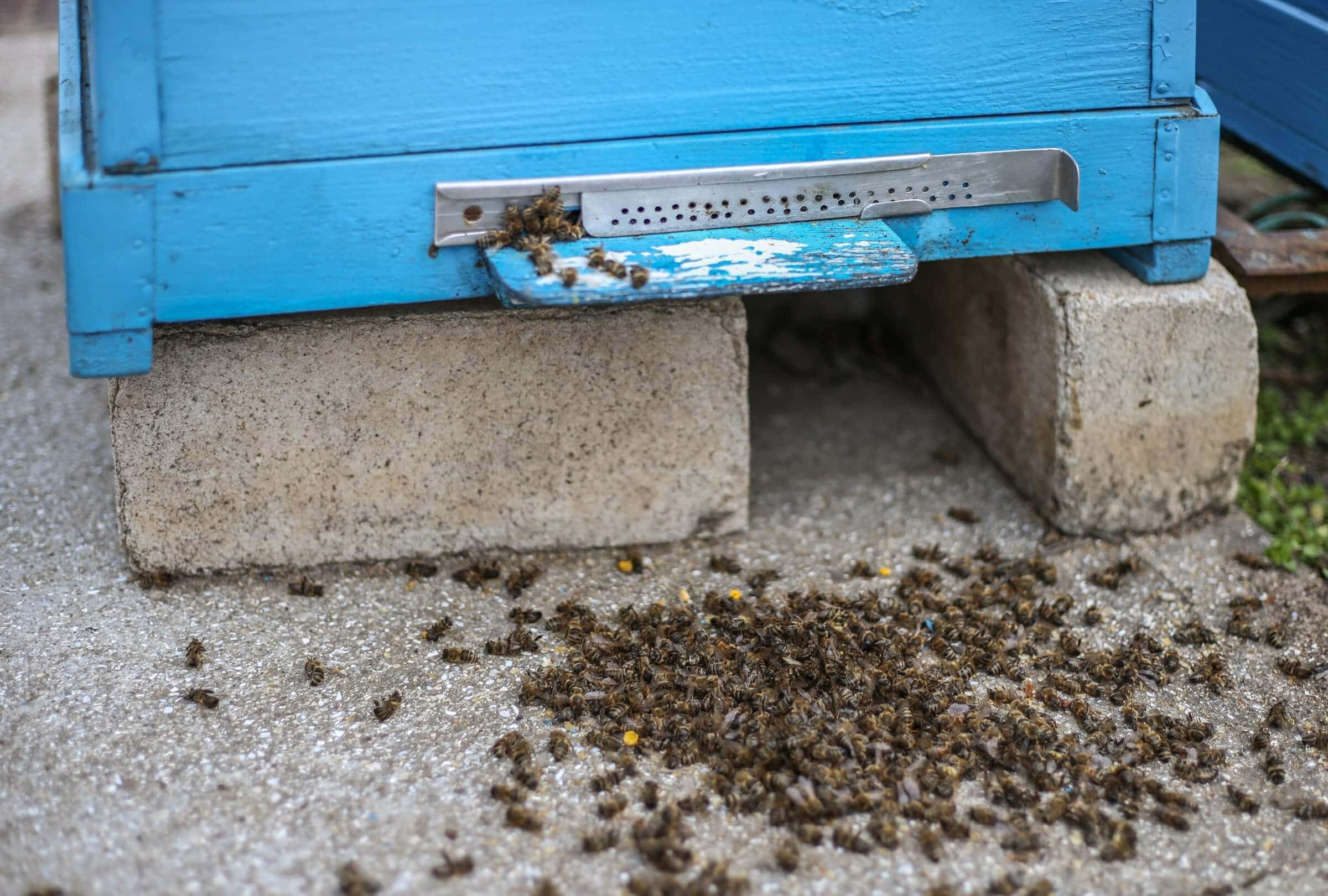
The Intricacies of Hive Autopsies: A Comprehensive Exploration
Hive Autopsies: How to Diagnose a Dead or Failing Bee Colony
Hive Autopsies are a systematic inspection beekeepers use to investigate why a honey bee colony died, weakened, or failed.
By doing hive autopsies and examining the adult bees, brood, food stores, pest evidence, queen history, hive conditions, and colony records together, a beekeeper can build a more reliable explanation for what happened without assuming that one visible clue proves the cause.
Author: Lappe's Bee Supply
Published:
Last Updated:
Editorial Standards: This guide is written for practical beekeeper use and reviewed for clarity, diagnostic caution, and consistency with university extension and USDA honey bee health guidance.

In This Guide
Quick Answer: What is a Hive Autopsy?
Hive autopsies are systematically examining a dead or failing bee colony for evidence that helps identify the most likely causes of loss.
The inspection considers adult bees, brood condition, food stores, pest pressure, queen evidence, hive conditions, and recent management history. A good diagnosis combines several clues rather than assuming that one observation proves why the colony failed.
Key Takeaways
- A hive autopsy looks for evidence explaining why a honey bee colony died or seriously declined.
- Colony losses can involve several interacting stressors rather than one identifiable cause.
- Brood condition, food stores, queen status, Varroa history, population size, and hive conditions provide important diagnostic clues.
- Finding a pest, mold, dead bees, or abnormal brood does not automatically prove that condition caused the loss.
- Previous mite counts and treatment records are often more informative than finding a few mites after a colony has died.
- Colony Collapse Disorder is a specific syndrome and should not be used as a general term for every colony death.
Definition
A hive autopsy is a systematic post-loss inspection of a honey bee colony performed to identify evidence that may explain colony death, severe weakening, or failure. The term is commonly used by beekeepers as practical shorthand; unlike a laboratory diagnosis, a visual hive inspection may identify a probable cause without proving one exact cause.
Hive Autopsy Diagnosis Summary
The observations below can help narrow the list of possible explanations. They should be treated as diagnostic clues rather than automatic diagnoses. The strongest conclusion usually comes from comparing several observations with the colony's recent inspection, mite-monitoring, feeding, queen, treatment, and weather history.
| Observation | Possible Explanation | What to Check Next |
|---|---|---|
| Dead cluster with bees headfirst in cells | Starvation or inaccessible food stores | Remaining honey, cluster location, cold-weather history, and evidence of later robbing |
| Spotty or abnormal brood | Queen problem, disease, parasites, nutrition, or another brood stress | Eggs, larvae, queen history, mite records, brood symptoms, and colony strength |
| Visible Varroa mites | Possible Varroa pressure | Previous mite counts, treatment history, brood condition, and virus-related symptoms |
| Very little food remaining | Starvation, nutritional stress, or post-loss robbing | Robbing evidence, feeding records, forage conditions, and timing of the loss |
| Damp comb or mold | Moisture after colony weakening or ventilation-related stress | Cluster size, condensation, hive configuration, and when the colony declined |
| Few adult bees but brood or food remains | Several possibilities, including advanced parasite, disease, queen, or population stress | Mite history, brood condition, queen evidence, dead-bee distribution, and recent inspections |
Beekeeper note: Record what you physically observe before deciding what it means. “Honey remained three frames away from the cluster” is an observation. “The colony could not reach its food” is an interpretation that still needs context.
Hive Autopsy Inspection Checklist
Reviewing the same areas in the same order helps prevent important evidence from being overlooked. Photograph the hive before rearranging frames whenever possible, especially if the colony configuration may help explain what occurred.
- Inspect the hive entrance and exterior. Look for dead bees, unusual debris, damage, signs of robbing, moisture, and anything else that appears out of place.
- Document the adult-bee population. Note whether a cluster remains, where dead bees are concentrated, and whether the hive is nearly empty.
- Examine the brood. Look for eggs, larvae, capped brood, brood distribution, abnormal cappings, unusual larvae, or damaged pupae.
- Look for mites and other pests. Examine adult bees, brood, comb, and bottom debris for Varroa mites, small hive beetles, wax moth damage, or other pest evidence.
- Assess honey and pollen stores. Record both the amount of food and its location relative to the cluster.
- Evaluate queen evidence. Look for the queen when practical and note eggs, young brood, queen cells, or evidence of recent queen replacement.
- Check hive conditions. Record moisture, mold, comb damage, ventilation concerns, and evidence of mice or other intruders.
- Review colony records. Compare what you see with previous mite counts, treatment dates, feeding, queen history, population trends, and inspection notes.
- Document the findings. Save photos and notes, then identify the primary suspected factor, possible contributing factors, evidence supporting each conclusion, and your confidence in the diagnosis.
What is a hive autopsy?
A hive autopsy systematically examines a dead or failing bee colony for evidence that helps identify the most likely causes of loss.
- The inspection examines adult bees, brood, comb, food stores, pests, and hive conditions.
- Management records can strengthen conclusions drawn from physical evidence.
- One visible clue rarely proves the cause of a colony loss.
- Several stressors may contribute to the same colony failure.
- Laboratory testing may be necessary when disease or chemical exposure is suspected.
A useful hive autopsy works like a differential diagnosis. The beekeeper gathers observations first and asks which explanation best fits the complete pattern. A colony with almost no honey, a small dead cluster, and bees positioned headfirst in nearby cells presents different evidence from a nearly empty hive that still contains brood and abundant food.
Timing matters because the scene can change after a colony dies. Other bees may rob honey, wax moths or small hive beetles may move into weakened equipment, weather may introduce moisture, and scavengers can disturb dead bees. For that reason, inspect an unexpected loss as soon as practical and photograph the original arrangement before cleaning or rearranging the hive.
A hive autopsy is also more useful when the physical evidence can be compared with earlier records. A known mite count, recent queen change, feeding history, or noticeable decline during earlier inspections can provide context that is no longer visible after the colony is gone.
How do you perform a hive autopsy?
Inspect the colony in a fixed order: exterior, adult bees, brood, pests, food stores, queen evidence, hive conditions, and records.
- Preserve the original condition before moving equipment.
- Move from broad observations to specific evidence.
- Photograph unusual brood, pests, debris, and dead bees.
- Compare findings with previous mite, treatment, feeding, and queen records.
- Record uncertainty when the evidence does not support one clear conclusion.
Begin outside the hive. Look at the entrance, landing board, ground immediately around the colony, and exterior equipment. A large number of freshly dead bees outside the entrance tells a different story than a hive with almost no bees present. Note evidence of robbing, damage, moisture, unusual debris, or scavengers before opening the hive.
Once inside, document the remaining adult population and frame arrangement before pulling everything apart. Examine brood next. Spotty brood is a warning sign, but it should not automatically be labeled queen failure. Queen problems, disease, parasites, nutrition, seasonal changes, hygienic behavior, and colony population can all influence brood appearance.
Check food stores carefully. The question is not simply whether honey exists somewhere in the hive. During cold weather, a small cluster may be unable to move far enough to reach food. Conversely, an empty hive does not prove starvation because other colonies may have removed stores after the loss.
Finally, compare the physical evidence with what was known before the colony died. Previous Varroa monitoring is especially valuable because finding a few mites after death cannot reconstruct the infestation level the colony carried weeks or months earlier.
What are the most common causes of colony loss?
Common contributors to colony loss include Varroa mites, disease, poor nutrition, queen problems, weather stress, and interacting pressures.
- Varroa mites can weaken colonies and contribute to damaging virus transmission.
- Poor nutrition can reduce colony resilience and increase other stresses.
- Queen problems can interrupt normal brood production and population replacement.
- Weather and winter conditions can affect food access, moisture, and survival.
- Several stressors can occur together, making one-cause explanations unreliable.
Many colony losses are multifactorial. A colony carrying substantial Varroa pressure may also have virus problems, a declining population, inadequate nutrition, and difficulty entering winter with enough healthy long-lived bees. A hive autopsy therefore works best when it asks what combination of conditions fits the evidence instead of searching for one dramatic clue.
What findings suggest starvation?
Starvation becomes more likely when a dead cluster has little accessible food and other evidence supports the same explanation. Bees found headfirst in cells near the cluster can be an important clue, particularly when stores are depleted or located beyond the cluster's reach. Remaining food does not automatically rule out starvation if prolonged cold prevented the bees from moving to it.
What findings suggest a Varroa-related loss?
A Varroa-related loss is more convincing when mite-monitoring history, treatment records, brood condition, population decline, and virus-associated symptoms point in the same direction. Varroa mites reproduce in capped brood and can transmit damaging honey bee viruses. Previous mite counts are generally more informative than simply finding mites in a colony after it has died.
What does an abnormal brood pattern mean?
An abnormal or spotty brood pattern signals that something affected brood production or survival, but appearance alone does not reliably identify the cause. Queen performance, brood disease, Varroa pressure, nutrition, hygienic behavior, seasonal brood reduction, and colony population can all influence the pattern. Photograph suspicious brood before removing it, and seek qualified diagnostic assistance when a serious brood disease is suspected.
Does moisture or mold prove the colony died from poor ventilation?
No. Mold and damp comb can appear after a colony becomes too small or dies and can no longer regulate the hive environment. Moisture remains an important observation, especially in winter, but it should be interpreted alongside cluster size, weather, equipment configuration, and the timing of the decline.
| Possible Factor | Why It Matters | Useful Evidence |
|---|---|---|
| Varroa mites | Parasitize bees and contribute to virus transmission and population decline | Mite counts, treatment history, brood condition, population trend |
| Disease | Can affect brood, adult bees, or both | Brood symptoms, adult-bee condition, laboratory confirmation when needed |
| Nutritional stress | Can reduce colony resilience and ability to recover from other pressures | Honey and pollen stores, feeding records, forage conditions |
| Queen problems | Can reduce or interrupt normal brood replacement | Eggs, brood pattern, queen cells, queen history |
| Environmental stress | Can affect food access, forage, moisture, temperature, and colony survival | Weather history, moisture, cluster position, forage conditions |
Colony loss is not automatically Colony Collapse Disorder
Colony Collapse Disorder, or CCD, describes a specific loss pattern and is not a synonym for every dead colony. In ordinary beekeeper communication, terms such as colony loss, colony mortality, or colony failure are usually more accurate unless the circumstances specifically match established CCD characteristics.
Frequently Asked Questions
What is a hive autopsy?
A hive autopsy is a systematic inspection of a dead or failing honey bee colony used to identify evidence that may explain the loss.
Why do beekeepers perform hive autopsies?
Beekeepers perform hive autopsies to identify likely causes of colony loss and use those findings to improve future management decisions.
When should a hive autopsy be done?
A hive autopsy should be performed as soon as practical after an unexpected colony death or serious decline, before important evidence changes.
How do you perform a hive autopsy?
Inspect the exterior, adult bees, brood, pest evidence, food stores, queen evidence, hive conditions, and colony records in a consistent order.
What pests are commonly found in hive autopsies?
Varroa mites and small hive beetles may be found during colony inspections, but their presence alone does not prove they caused the loss.
Can starvation cause colony loss?
Yes. A colony can die from starvation when usable food is depleted or inaccessible, particularly during winter or prolonged forage shortages.
What are the most common causes of colony loss?
Common contributors to colony loss include Varroa mites, disease, poor nutrition, queen problems, weather stress, and other interacting pressures.
Does spotty brood always mean the queen is failing?
No. Spotty brood can be associated with queen problems, disease, parasites, nutrition, hygienic behavior, or other colony stresses.
Is every dead colony an example of Colony Collapse Disorder?
No. Colony Collapse Disorder describes a particular loss pattern and should not be used as a general term for every colony death.
Can a hive autopsy prove exactly why a colony died?
Not always. A hive autopsy can identify strong evidence and likely causes, but some diseases, viruses, or suspected chemical exposures may require laboratory analysis.
Sources
The following government and university resources provide additional guidance on honey bee colony health, Varroa mites, viruses, colony losses, pesticide exposure, and diagnostic practices.
- USDA Agricultural Research Service — Colony Collapse Disorder. USDA Agricultural Research Service
- USDA National Agricultural Statistics Service — Bee and Honey Survey Information. USDA National Agricultural Statistics Service
- USDA APHIS — Varroosis of Honey Bees Case Definition. USDA Animal and Plant Health Inspection Service
- University of Florida IFAS — How to Quantify Varroa destructor in Honey Bee Colonies. University of Florida IFAS Extension
- University of Florida IFAS — Common Viruses of Honey Bees: Diagnosis and Management. University of Florida IFAS Extension
- Penn State Extension — Viruses in Honey Bees. Penn State Extension
- University of Florida IFAS — Minimizing Honey Bee Exposure to Pesticides. University of Florida IFAS Extension
- USDA Agricultural Research Service — Honey Bee Health Research. USDA Agricultural Research Service
- Penn State Center for Pollinator Research — Honey Bee Health Resources. Penn State Center for Pollinator Research