Welcome to Lappe's Bee Supply's blogs section. We are a trusted beekeeping company in the USA. We give relevant insights, seasonal guidance, and professional advice for beekeepers of all experience levels. From hive management and bee wellness to honey production and equipment guides, we have it all that you will require to thrive. Get updated, motivated, and connected with the beekeeping community through regular news from Lappe's Bee Supply.
Honey Bee Anatomy
The Buzz About This Post
What Is Honey Bee Anatomy?
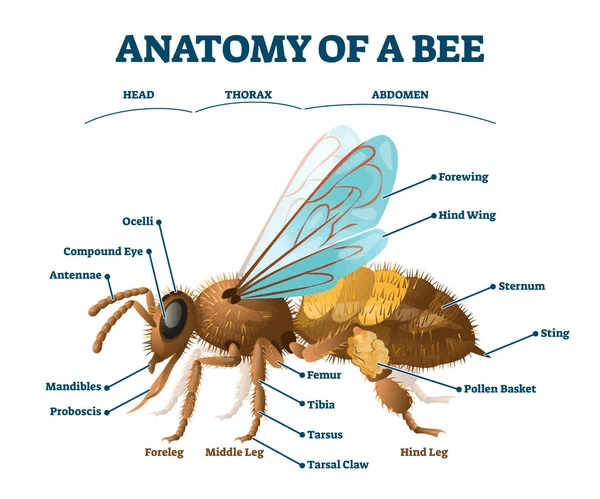
Honey bee anatomy is the study of a worker honeybee's body structure, including the head, thorax, abdomen, wings, legs, eyes, antennae, mouthparts, wax glands, pollen baskets, digestive organs, and stinger.
Worker honey bee anatomy is specifically adapted for pollination, nectar collection, wax production, hive communication, temperature regulation, and colony survival. Every structure on a honey bee serves a purpose inside the hive or during foraging.
Honey bees are highly specialized insects. Unlike many insects that only focus on reproduction or survival, worker honey bees must complete dozens of different tasks during their lives. Their anatomy allows them to clean cells, feed larvae, gather nectar and pollen, ventilate the hive, build wax comb, defend the colony, and communicate with other bees.
A honeybee's body is protected by a hard outer shell called an exoskeleton. The exoskeleton provides structure and protection while also helping reduce water loss. Tiny hairs covering the bee's body trap pollen grains, making honey bees extremely effective pollinators.
Why Does Honey Bee Anatomy Matter for Beekeepers?
Honey bee anatomy helps beekeepers interpret colony behavior, identify queens, recognize pollen flow, understand ventilation behavior, and improve hive inspections.
Understanding anatomy makes it easier to recognize what bees are doing on the frame. Worker honey bees carrying pollen baskets usually indicate active brood rearing, while bees fanning at the entrance are often ventilating the hive or distributing pheromones.
Anatomy also helps beekeepers identify problems inside a colony. Bees with damaged wings may indicate disease or mite pressure, while bees crawling near the entrance can sometimes signal poisoning, viruses, or other health issues.
Learning the physical differences between worker bees, queens, and drones helps new beekeepers quickly identify the caste of each bee during inspections. Queen bees typically have longer abdomens, drones have much larger eyes, and worker bees have pollen baskets on their hind legs.
Field Observation From Lappe's Bee Supply
During strong spring nectar flows, worker honeybees commonly begin drawing fresh white comb within several days of package installation when daytime temperatures remain warm and nectar is available.
Observing wax production, pollen collection, and wing fanning behavior helps newer beekeepers understand how anatomy connects directly to colony activity.
New beekeepers are often surprised by how much information can be gathered simply by watching bees at the hive entrance. Pollen loads, flight activity, guard behavior, and ventilation patterns all reveal important colony conditions.
What Is Located in a Honey Bee Head?
Compound Eyes
Honeybees have two large compound eyes made from thousands of tiny lenses. These eyes help bees detect motion, recognize flowers, and see ultraviolet patterns invisible to humans.
Compound eyes are especially important during flight and navigation. Honey bees use sunlight and polarized light patterns to help orient themselves while foraging.
Ocelli
In addition to compound eyes, honeybees have three simple eyes called ocelli located on top of the head. Ocelli help detect light intensity and assist with orientation during flight.
Antennae
Antennae help bees smell flowers, detect pheromones, sense temperature, and communicate inside the hive.
Honeybees rely heavily on smell. Antennae allow bees to recognize colony members, locate nectar sources, and detect queen pheromones within the hive.
Proboscis
The proboscis is a specialized feeding structure used to collect nectar from flowers.
Worker bees extend the proboscis like a straw to drink nectar. The nectar is stored inside the honey stomach before being carried back to the hive.
Mandibles
Mandibles are used for shaping wax, carrying materials, cleaning, feeding larvae, and hive defense.
Honey bees use mandibles constantly inside the colony. Worker bees manipulate wax scales, remove debris, and groom one another using these powerful mouthparts.
What Does the Honey Bee Thorax Do?
The thorax powers movement and flight. It contains the wings, legs, and muscles that allow bees to fly, groom, collect pollen, and ventilate the hive.
The thorax contains some of the strongest muscles in the bee's body. These muscles power the wings during flight and generate heat during cold weather. Worker bees can vibrate their thoracic muscles to warm brood and regulate hive temperature.
Honeybees beat their wings approximately 200 times per second. This rapid wing movement creates the familiar buzzing sound associated with bees.
| Leg Pair | Function |
|---|---|
| Front Legs | Clean antennae and groom the body |
| Middle Legs | Transfer pollen and assist movement |
| Hind Legs | Carry pollen baskets called corbiculae |
The hind legs of worker bees contain specialized pollen baskets used for transporting pollen back to the hive. Packed pollen appears as bright yellow, orange, red, or cream-colored pellets attached to the bee's hind legs.
What Is Inside the Honey Bee Abdomen?
The abdomen contains many of the bee's most important internal systems, including digestion, respiration, wax production, and defense.
The abdomen is flexible and segmented, allowing honey bees to bend while cleaning, stinging, and performing hive work.
Honey Stomach
Honeybees store collected nectar inside a specialized organ called the honey stomach or crop. Nectar carried in the honey stomach is transported back to the hive where it is processed into honey.
Wax Glands
Worker bees produce wax from glands located underneath the abdomen. Beeswax flakes are used to build honeycomb cells for brood and honey storage.
Young worker bees are typically the most active wax producers. Wax production increases during strong nectar flows when colonies are rapidly expanding.
Spiracles
Honey bees breathe through openings called spiracles located along the abdomen. Spiracles connect to an internal respiratory system that delivers oxygen throughout the body.
Stinger
Worker bees use the stinger to defend the colony. Drones do not have stingers.
The stinger is connected to venom glands and is primarily used against threats near the hive. Honey bees are generally defensive rather than aggressive and prefer avoiding danger whenever possible.
How Does Honey Bee Anatomy Help With Pollination?
Honey bee anatomy is specifically adapted for pollination. Body hairs trap pollen while specialized legs transport pollen between flowers and the hive.
As honey bees visit flowers, pollen sticks to their hairy bodies and is transferred from bloom to bloom. This process helps plants produce fruits, seeds, vegetables, and nuts.
Honey bees are among the most important agricultural pollinators in the world. Many crops depend on pollination for proper fruit production, including apples, almonds, blueberries, cucumbers, pumpkins, and melons.
The combination of branched body hairs, pollen baskets, flight muscles, and specialized mouthparts makes honey bees highly efficient pollinators.
FAQs
What are the three main body parts of a honey bee?
The three main body parts are the head, thorax, and abdomen.
How many eyes does a honey bee have?
Honey bees have five eyes: two compound eyes and three simple eyes called ocelli.
What does the proboscis do?
The proboscis is used to collect nectar from flowers.
What are pollen baskets?
Pollen baskets are structures on worker bee hind legs used for carrying pollen.
Do all honey bees have stingers?
No. Worker bees and queens have stingers, but drones do not.