Welcome to Lappe's Bee Supply's blogs section. We are a trusted beekeeping company in the USA. We give relevant insights, seasonal guidance, and professional advice for beekeepers of all experience levels. From hive management and bee wellness to honey production and equipment guides, we have it all that you will require to thrive. Get updated, motivated, and connected with the beekeeping community through regular news from Lappe's Bee Supply.
Exploring the Multifaceted Uses of Honeycomb
The Buzz About This Post
- Table of Contents
- What Is Honeycomb?
- How Do Honey Bees Make Beeswax?
- Why Do Honey Bees Build Hexagonal Cells?
- What Is it Used for Inside a Hive?
- What Is the Difference Between Brood Comb and Honeycomb?
- What Is the Difference Between Natural Comb and Foundation?
- Why Is Drawn Comb Valuable to Beekeepers?
- What Is Burr Comb?
- What Does Honeycomb Taste Like?
- Is Comb Edible?
- How Is It Used in Food?
- Is Raw Comb Honey Healthy?
- Can Local It Help Seasonal Allergies?
- How Should Comb Be Stored?
- Can Comb Be Frozen?
- Can Old Comb Be Reused?
- Why Does It Become Dark?
- How Is It Used in Engineering?
- Why Are Honeycomb-Inspired Materials Considered Efficient?
- What Should Beekeepers Look for When Inspecting Comb?
- What Are the Key Facts?
- Frequently Asked Questions
- Is honeycomb edible?
- Can you eat beeswax?
- Why is honeycomb hexagonal?
- What is the difference between honeycomb and raw honey?
- Does honeycomb expire?
- Why does honeycomb crystallize?
- Can babies eat honeycomb?
- Is honeycomb the same as beeswax?
- Can honeycomb be frozen?
- Can old brood comb be used for cut-comb honey?
- Why Does Honeycomb Matter?
- Sources & Further Reading
- FAQs
What Is Honeycomb? How Honey Bees Build and Use Comb
Written and reviewed by the Lappe’s Bee Supply Team
Published March 4, 2025 Last updated August 14, 2026
Honeycomb is one of the defining structures of a honey bee colony. Worker bees produce beeswax and shape it into repeating cells that become the colony’s nursery, pantry, and internal framework. Those cells can hold developing brood, pollen, nectar, or ripened honey depending on their location and the needs of the colony.
Key Takeaways
- Worker bees produce beeswax and shape it into comb.
- The finished cells hold brood, nectar, honey, pollen, and bee bread.
- Beeswax is the material, while comb is the structure made from it.
- Drawn comb gives a colony finished cells that can be used immediately.
- Brood comb naturally darkens after repeated brood cycles.
- Frames with suspected disease or contamination should not be transferred casually between colonies.
- Food-quality comb is edible, but honey should never be given to children younger than 12 months.
Why Trust Lappe’s Bee Supply?
Our family has worked with honey bees since 1978. We manage colonies, manufacture hive equipment in East Peru, Iowa, and work directly with frames, foundation, beeswax, and drawn comb used by beginner, hobby, and commercial beekeepers.
What Is Honeycomb?
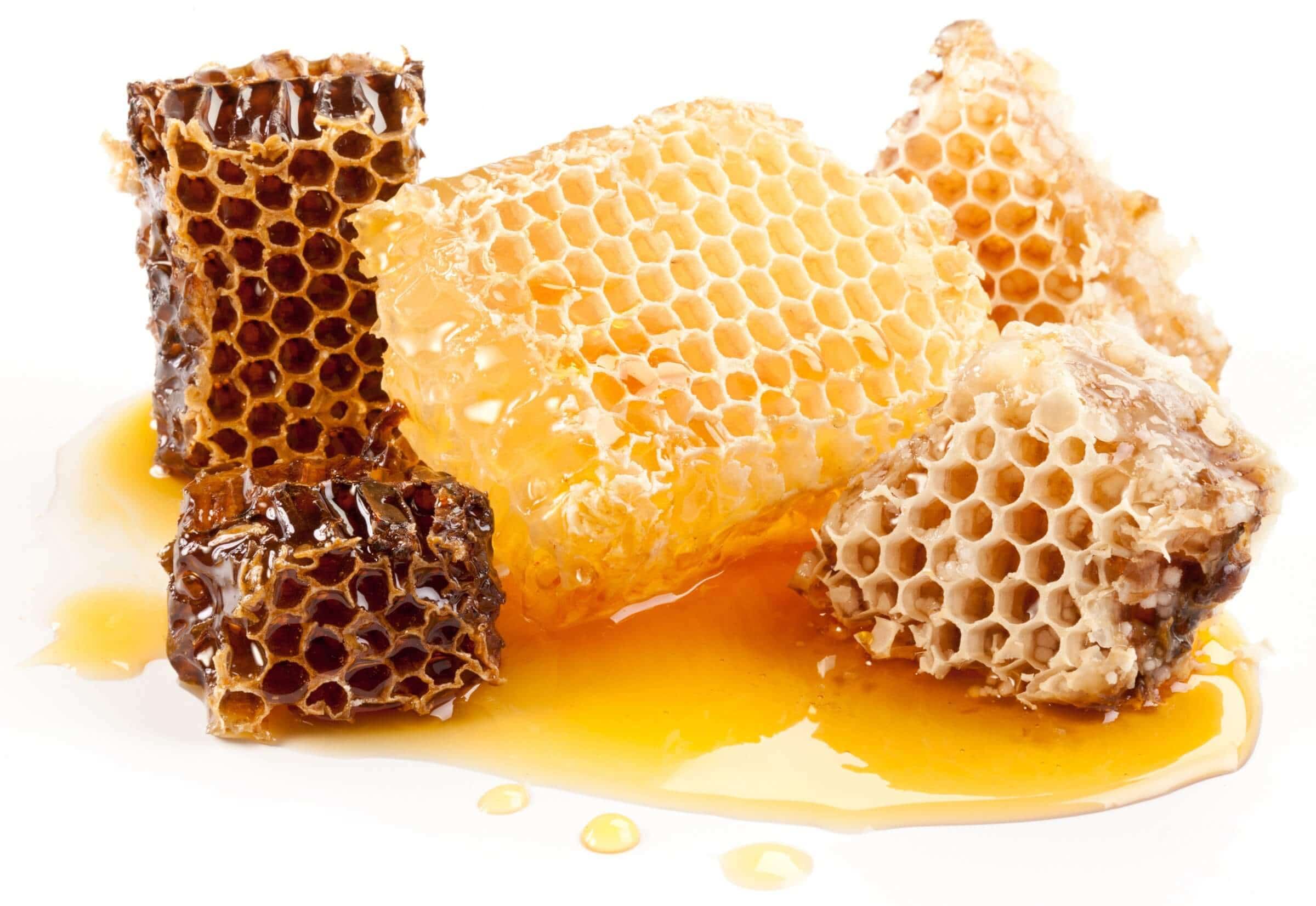
It is a structure made from beeswax and formed into repeating cells by worker honey bees. The colony uses those cells to raise developing bees and store pollen, nectar, and honey.
A single frame can serve several purposes at once. The center may contain eggs, larvae, and capped brood while nearby cells hold pollen or nectar. Stored honey is frequently concentrated around or above the brood area.
The wax cells provide space for:
- Storing nectar before it becomes ripened honey
- Storing capped honey
- Holding pollen and bee bread
- Raising worker and drone brood
- Supporting specialized queen cells
- Organizing food around the brood nest
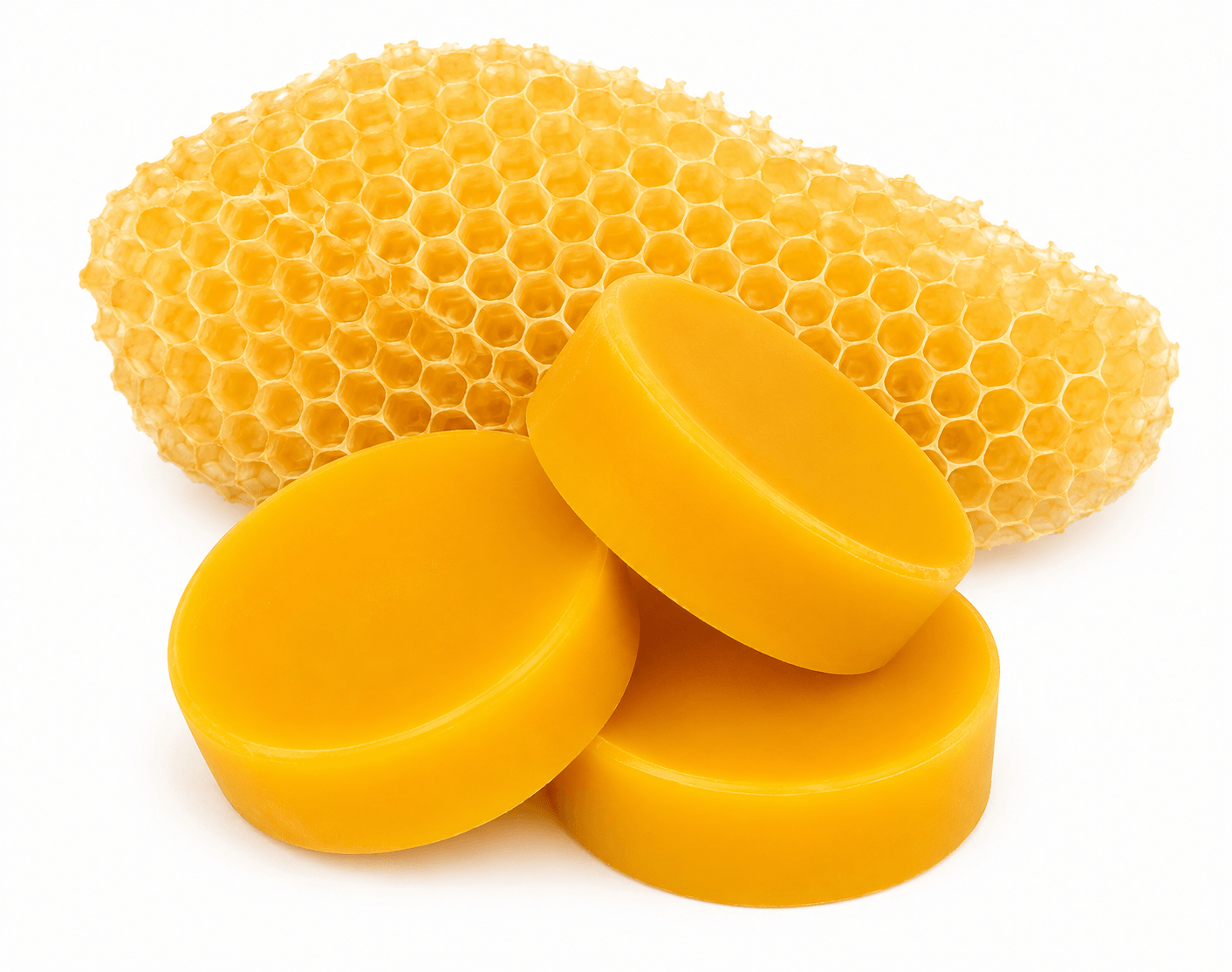
Beeswax and comb are not interchangeable terms. Beeswax is secreted by workers, while the completed cell network is the structure they build from that material.
How Do Honey Bees Make Beeswax?
Worker honey bees produce small wax scales from wax glands on the underside of their abdomens, then manipulate those scales to construct comb. Wax production and cell building require colony resources, which helps explain why completed drawn comb can be valuable to a growing colony.
Workers remove and manipulate wax scales as the colony expands its nest. New construction begins soft and pale and becomes more substantial as additional wax is added and the cells are used.
In managed hives, beekeepers commonly provide frames to keep the wax structure removable and organized. Foundation can provide a patterned starting surface that encourages bees to build in the intended location.
Explore Lappe’s Bee Supply’s bee hive frames and foundation .
Why Do Honey Bees Build Hexagonal Cells?
Hexagonal cells fit together in a continuous pattern without open gaps and allow neighboring cells to share walls. The result is a compact wax structure that provides many individual spaces for brood or food storage.
- Efficient packing: cells repeat across the wax surface without unused gaps between them.
- Shared walls: neighboring cells use common boundaries.
- Connected structure: loads are distributed through a repeating network of wax walls.
- Organized storage: closely packed cells allow large numbers of brood or food cells in a limited space.
Fresh construction does not need to look like a collection of perfectly machined hexagons from the moment building begins. The familiar geometry becomes apparent as adjoining cells develop and share boundaries.
What Is it Used for Inside a Hive?
A honey bee colony uses its wax cells for brood rearing and food storage. The contents of individual cells change according to season, colony development, location, and the needs of the bees.
| Comb Type | Primary Purpose |
|---|---|
| Worker brood comb | Holds worker eggs, larvae, and pupae |
| Drone comb | Contains larger cells used for male honey bees |
| Honey-storage comb | Stores nectar and ripened honey |
| Pollen-storage comb | Stores pollen and bee bread near the brood area |
| Queen cells | Raise developing queens in specialized cells |
| Burr comb | Occupies spaces outside the intended frame arrangement |
| Brace comb | Connects nearby wax surfaces or hive components |
What Is the Difference Between Brood Comb and Honeycomb?
Brood comb contains developing honey bees, while honey-storage comb contains nectar or ripened honey. Both are made from beeswax; the main difference is how the cells are being used.
Brood is normally concentrated within the central nest area. Pollen and honey are commonly stored near or above it, providing food close to developing larvae and nurse bees.
Brood comb becomes darker after repeated use because developing bees leave cocoon material behind inside the cells. Propolis, pollen residue, and other hive materials can contribute to the darker appearance. Dark brood comb therefore should not automatically be interpreted as rotten or spoiled wax.
What Is the Difference Between Natural Comb and Foundation?
Natural comb is constructed largely without a full foundation sheet, while foundation gives bees a patterned guide for building cells within a frame.
| Comb System | How It Works |
|---|---|
| Natural comb | Bees build most or all of the wax cells without a full foundation sheet. |
| Beeswax foundation | A patterned beeswax sheet provides a guide for new cells. |
| Wax-coated plastic foundation | A patterned plastic base provides support and consistent positioning. |
| Starter strip | A narrow strip gives bees a starting point for construction. |
| Drawn comb | Previously completed cells are already available for colony use. |
Foundation can make it easier to maintain removable, reasonably straight frames. Foundationless or natural-comb systems can also work, but hive leveling, proper frame spacing, and timely inspections become especially important while soft new wax is being built.
Why Is Drawn Comb Valuable to Beekeepers?
Drawn comb provides completed cells that bees can use for brood rearing or food storage without first constructing an entirely new wax structure. That makes healthy frames with finished cells a valuable reusable resource in many managed apiaries.
When suitable empty cells are available, workers can place nectar or pollen into them, and a queen can lay eggs in appropriate brood-area cells. This is especially useful when colonies are expanding or additional storage space is needed.
Lappe’s Field Note
Healthy drawn frames can be extremely useful, but history matters. Avoid moving them between colonies when brood disease, chemical contamination, or an unknown equipment history creates a biosecurity concern.
What Is Burr Comb?
Burr comb is wax construction built outside the beekeeper’s intended frame pattern. It commonly develops in excessive open spaces, between components, above or below frames, or where frame spacing has become irregular.
It may become more likely when:
- Frames are spaced unevenly.
- A frame is missing from the box.
- Excessive open space exists inside the hive.
- Equipment dimensions disrupt normal bee space.
- Frames are not pushed back into proper spacing after an inspection.
Correcting irregular wax carefully can make future inspections easier and reduce the risk of crushing bees when frames or boxes are separated.
What Does Honeycomb Taste Like?
Edible comb combines the flavor and aroma of honey with the soft, chewy texture of thin beeswax cells. The exact flavor depends heavily on the nectar sources available to the colony.
| Nectar Source | Typical Flavor Description |
|---|---|
| Clover | Often mild, clean, and sweet |
| Wildflower | Variable, floral, and sometimes complex |
| Orange blossom | Light with floral and citrus-like notes |
| Buckwheat | Usually dark, bold, and malty |
These descriptions are general rather than guarantees. Weather, geography, floral mix, harvest timing, storage, and the colony’s actual nectar sources can change the flavor and color of every crop.
Is Comb Edible?
Yes. Food-quality comb, including the honey and beeswax cells, is edible. Some people swallow the softened wax while others chew it until most of the honey has been released and discard the remaining wax.
Edible comb should be produced and handled as food. Avoid eating wax with questionable medication exposure, chemical contamination, mold, fermentation, significant pest damage, or an unknown history.
Important Safety Note
Honey and comb honey should not be given to children younger than 12 months. The U.S. Centers for Disease Control and Prevention advises against honey for infants because it can expose them to bacteria associated with infant botulism.
How Is It Used in Food?
Edible comb can be eaten whole, sliced, or broken into smaller pieces and paired with both sweet and savory foods. It adds honey flavor, aroma, and a distinctive wax texture.
- Cheese and charcuterie boards
- Toast, biscuits, and bread
- Yogurt and oatmeal
- Fresh fruit
- Ice cream and desserts
- Pastries and baked goods
- Warm beverages
For another way to enjoy honey, shop raw Iowa honey from Lappe’s Bee Supply .
Is Raw Comb Honey Healthy?
Raw comb honey contains honey and edible beeswax, but honey remains a concentrated source of naturally occurring sugars. It is better treated as a sweet food than as a medical product.
Edible comb may contain:
- Naturally occurring sugars from honey
- Water
- Plant-derived compounds associated with nectar sources
- Trace pollen or propolis material
- Edible beeswax
The exact composition varies by floral source, geography, season, processing, and storage. Claims that this food can prevent, cure, or treat disease should be evaluated separately from its role as a sweetener.
Can Local It Help Seasonal Allergies?
Local comb honey should not be considered a proven treatment for seasonal allergies. Research involving honey and allergic rhinitis is limited, and existing evidence does not establish local bee products as a reliable replacement for established allergy treatment.
One reason the claim is difficult to generalize is that many important seasonal allergens come from wind-pollinated plants, while honey bees primarily collect pollen and nectar from flowering plants they visit for food.
Anyone with persistent or significant allergy symptoms should discuss treatment with a qualified healthcare professional rather than relying on local bee products as a substitute for evidence-based care.
How Should Comb Be Stored?
Store edible comb in a clean, sealed food-safe container protected from excess moisture, heat, sunlight, strong odors, and pests.
- Keep the container tightly sealed.
- Use clean and dry utensils.
- Avoid unnecessary moisture or condensation.
- Keep wax away from chemicals and strong odors.
- Protect stored frames from insects and rodents.
- Discard food comb showing mold, fermentation, contamination, or an abnormal odor.
Honey inside the cells may crystallize. Crystallization is a normal physical change and does not by itself mean the product has spoiled.
Can Comb Be Frozen?
Yes. Comb honey can be frozen when packaged in a tightly sealed freezer-safe container or wrapping. Freezing can also be useful when protecting stored wax frames from moth development.
After removal from the freezer, allow the sealed package to warm toward room temperature before opening it. Keeping the package closed while the wax warms reduces direct contact with humid room air and helps limit condensation.
Can Old Comb Be Reused?
Old comb may be reused when it is structurally sound and its disease, chemical, and storage history is considered safe. Reuse should never be automatic simply because the wax still looks intact.
Avoid transferring questionable frames when they may have:
- American foulbrood or another serious brood disease
- Unknown pesticide or chemical exposure
- Rodent contamination
- Severe fermentation or contamination
- Extensive wax moth damage
- Severe small hive beetle damage
- Major structural failure
- An unknown colony or storage history
American foulbrood deserves particular care because the bacterial spores associated with the disease can remain viable in contaminated hive materials for a very long time. Follow current state or local disease-control requirements when serious brood disease is suspected.
Why Does It Become Dark?
Brood comb becomes darker as repeated generations of developing bees occupy and emerge from the same cells. Each brood cycle leaves cocoon material behind, and propolis, pollen residue, and other hive materials can contribute to the changing color.
Frames used primarily for honey storage often remain lighter than those repeatedly used for brood. Color alone does not determine whether a frame is safe or useful. Smell, structure, disease history, pest damage, chemical exposure, and intended use should all be considered.
How Is It Used in Engineering?
Engineers use honeycomb-style cellular cores in structures where low weight and useful stiffness are important. These engineered cores apply a cellular geometry but may use aluminum, paper, polymers, composites, or other materials rather than beeswax.
| Industry | Example Application |
|---|---|
| Aerospace | Lightweight sandwich panels and interior structures |
| Automotive | Lightweight structural and impact-management components |
| Construction | Doors, partitions, panels, and composite structures |
| Packaging | Protective paper-based structures and cushioning |
| Furniture | Lightweight desktops, doors, and interior panels |
Why Are Honeycomb-Inspired Materials Considered Efficient?
Cellular cores can create a thick, stiff panel without filling the entire interior with solid material. Their actual performance depends on cell geometry, core material, face sheets, adhesive, load direction, and intended application.
Potential engineering advantages can include:
- Lower weight than some comparable solid structures
- Reduced core material in suitable applications
- Useful stiffness relative to weight
- Energy absorption in appropriately engineered designs
- Compatibility with paper-based or composite panel systems
A cellular pattern does not automatically make a product environmentally sustainable. Material sourcing, manufacturing, service life, transportation, repairability, recyclability, and end-of-life handling all affect environmental impact.
What Should Beekeepers Look for When Inspecting Comb?
Beekeepers should inspect frames for normal brood development, food stores, disease symptoms, pests, contamination, irregular construction, and structural damage.
During an inspection, look for:
- Brood distribution appropriate for the colony and season.
- Eggs, larvae, and capped brood where expected.
- Pollen and stored food near the brood area.
- Unusual sunken, perforated, greasy, or otherwise abnormal brood cappings.
- Wax moth webbing, tunnels, or badly damaged cells.
- Small hive beetles, larvae, or fermented stores.
- Cross-comb or burr comb interfering with removable frames.
- Wax sagging, cracking, or separating from the frame.
- Water, mold, rodent, or chemical contamination.
- A frame history that suggests disease or questionable chemical exposure.
When a serious brood disease is suspected, avoid moving questionable frames or equipment into healthy colonies until the problem has been identified and appropriate management steps have been determined.
What Are the Key Facts?
- Worker honey bees produce beeswax and shape it into organized cells.
- The finished wax structure provides space for brood, pollen, nectar, and honey.
- Beeswax is the material; honeycomb is the finished cellular structure.
- Hexagonal cells fit together continuously and share walls.
- Brood comb becomes darker after repeated brood cycles.
- Drawn frames provide completed cells a colony can use immediately.
- Food-quality comb is edible.
- Honey and comb honey should not be given to children younger than 12 months.
- Local bee products are not an established treatment for seasonal allergies.
- Questionable or disease-associated frames should not be casually transferred between colonies.
- Engineered cellular cores apply similar geometric principles to lightweight materials.
Frequently Asked Questions
Is honeycomb edible?
Yes. Food-quality comb includes edible honey and beeswax. Some people swallow the wax, while others chew it and discard the remaining wax.
Can you eat beeswax?
Yes. Food-quality beeswax is edible and is commonly consumed in small amounts when people eat comb honey.
Why is honeycomb hexagonal?
Wax cells develop a repeating six-sided pattern in which adjoining cells fit together continuously and share walls.
What is the difference between honeycomb and raw honey?
Raw honey has been removed from the wax cells and minimally processed. Comb honey includes both the honey and the beeswax cells that hold it.
Does honeycomb expire?
Edible comb does not have one universal expiration date. Discard it if mold, fermentation, contamination, serious pest damage, or an abnormal odor develops.
Why does honeycomb crystallize?
Honey inside the cells can crystallize naturally as glucose forms crystals. Nectar source, composition, temperature, and storage conditions affect how quickly this happens.
Can babies eat honeycomb?
No. Honey and comb honey should not be given to children younger than 12 months because of the risk of infant botulism.
Is honeycomb the same as beeswax?
No. Beeswax is the material produced by worker honey bees. The finished cell structure is built from that wax.
Can honeycomb be frozen?
Yes. Comb honey can be frozen in sealed freezer-safe packaging. Allow the sealed package to warm before opening it to help reduce condensation.
Can old brood comb be used for cut-comb honey?
Old brood comb is not appropriate for cut-comb honey intended for direct consumption. Edible comb should be clean, food-quality wax produced and handled for that purpose.
Why Does Honeycomb Matter?
The wax cell network is the physical working space of a honey bee colony. It gives bees an organized structure for raising brood, storing pollen and honey, processing incoming nectar, and maintaining the nest.
For beekeepers, the condition and arrangement of frames can reveal important information about colony growth, queen activity, food reserves, pests, brood disease concerns, previous brood cycles, and overall hive management.
Healthy drawn frames are also a reusable colony resource. Protecting good wax, keeping frames properly spaced, and avoiding unnecessary disease transfer can preserve that resource for future colony growth.
The same broad cellular principle has significance beyond beekeeping. Engineers use related geometry in lightweight sandwich structures for aerospace, manufacturing, packaging, furniture, and other applications.
For beginning beekeepers, understanding comb provides a foundation for recognizing brood patterns, food storage, queen cells, foundation, burr comb, hive spacing, and many of the visual clues seen during a routine inspection.
Learn more through Lappe’s Bee Supply’s beginner beekeeping supplies and educational resources .
Sources & Further Reading
The following institutional and primary references support the safety, disease, honey bee biology, allergy, and engineering topics discussed in this guide.
- Foods and Drinks to Avoid or Limit — Centers for Disease Control and Prevention. Includes infant honey guidance related to botulism risk.
- Honey Bee Diseases: American Foulbrood — Penn State Extension. Covers American foulbrood, persistent spores, diagnosis, and management considerations.
- An Organic Management System for Honey Bees — Penn State Extension. Provides practical information on hive management, frames, foundation, brood, and food stores.
- The Development of Honey Bee Colonies Assessed Using a New Semi-Automated Brood Counting Method: CombCount — USDA Agricultural Research Service / PLOS ONE research record.
- Birch Pollen Honey for Birch Pollen Allergy—A Randomized Controlled Pilot Study — Saarinen, Jantunen, and Haahtela. Relevant to evaluating claims involving honey and pollen allergies.
- Ingestion of Honey Improves the Symptoms of Allergic Rhinitis: Evidence From a Randomized Placebo-Controlled Trial — Peer-reviewed clinical research indexed in PubMed Central.
- Development of Quiet Honeycomb Panels — NASA Langley Research Center. Discusses engineered honeycomb-core sandwich-panel construction.
FAQs
Is honeycomb edible?
Yes. Both the honey and beeswax cells are edible for most people.
Can you eat beeswax?
Yes. Food-grade beeswax is edible, although many people chew it and discard the remaining wax afterward.
Why is honeycomb hexagonal?
Hexagons fit together without gaps while maximizing strength and storage efficiency.
Is raw honeycomb healthy?
Raw honeycomb contains raw honey, beeswax, and trace compounds naturally found inside the hive.
What is the difference between honeycomb and raw honey?
Raw honey is extracted liquid honey, while honeycomb includes both the honey and the wax cell structure built by bees.
Does honeycomb expire?
Honeycomb can last a long time when stored sealed and dry. Discard it if it ferments, smells sour, grows mold, or becomes contaminated.
Can babies eat honeycomb?
No. Babies under 12 months should not consume honey or honeycomb because of the risk of infant botulism.
Is honeycomb the same as beeswax?
No. Beeswax is the material bees use to build honeycomb. Honeycomb is the finished cell structure made from beeswax.