Welcome to Lappe's Bee Supply's blogs section. We are a trusted beekeeping company in the USA. We give relevant insights, seasonal guidance, and professional advice for beekeepers of all experience levels. From hive management and bee wellness to honey production and equipment guides, we have it all that you will require to thrive. Get updated, motivated, and connected with the beekeeping community through regular news from Lappe's Bee Supply.
Dealing with Winter Deadouts with Honey Bees
Winter Deadout in Honey Bees: Causes, Prevention & What to Do Next
Winter deadout are one of the most difficult experiences in beekeeping. A colony that appeared healthy in fall can suddenly collapse during winter, leaving behind dead bees, empty comb, moisture damage, or untouched honey.
The good news is that winter losses usually leave clues. Understanding those clues helps beekeepers improve winter survival and prepare stronger colonies next season.
Although winter deadouts are common, they are rarely caused by cold temperatures alone. Honey bees can survive very cold weather when they have enough food, a healthy population, low mite pressure, a productive queen, and a dry hive. Most winter losses happen because several stress factors build up before or during winter.
What Is a Winter Deadout?

Honey bees survive winter by clustering together around the queen. They consume stored honey while generating heat inside the hive. If the colony becomes too weak, runs out of food, suffers moisture issues, or experiences high Varroa mite pressure, the hive may not survive until spring.
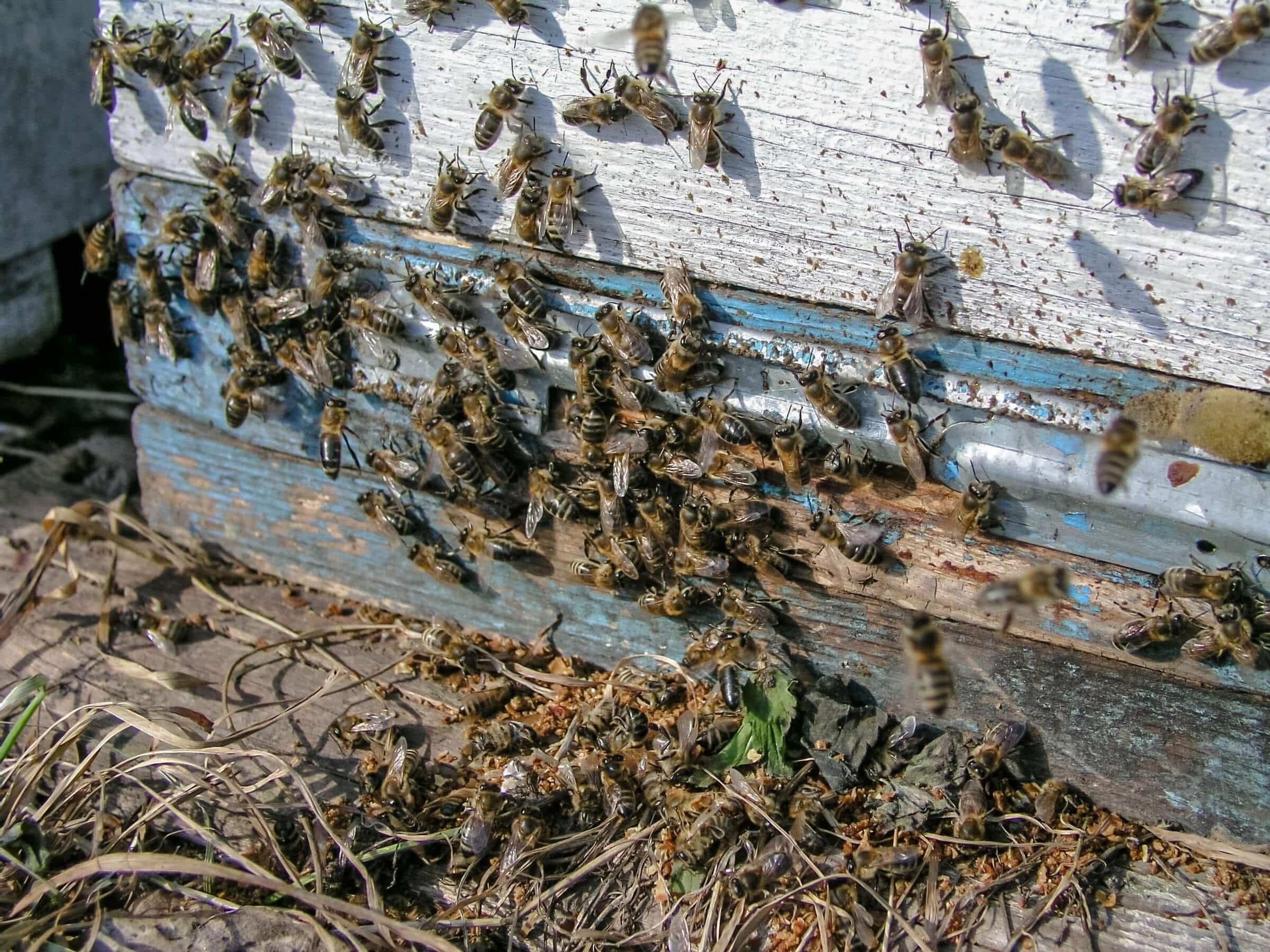
A few dead bees outside the entrance during winter are normal. Bees die naturally throughout the season, and undertaker bees may remove them when temperatures are warm enough. However, an entire colony loss is different. When a colony dies, beekeepers should investigate the cause rather than assuming cold temperatures alone were responsible.
How Honey Bees Survive Winter
Honey bees do not hibernate. Instead, they form a winter cluster inside the hive. Worker bees gather tightly around the queen and generate heat by vibrating their wing muscles. The center of the cluster remains warm enough to protect the queen, while bees on the outside act as insulation.
As winter progresses, the cluster slowly moves through the hive to access stored honey. This movement is critical. If the bees cannot reach food during a cold stretch, they may starve even when honey remains only a few frames away.
Winter bees are different from summer bees. Summer worker bees may only live a few weeks during busy nectar flows, while winter bees can live for several months. These long-lived winter bees must be raised in late summer and fall under healthy conditions. Good nutrition and low mite levels are essential before cold weather begins.
Quick Winter Deadout Checklist
| Issue | Warning Signs | Recommended Action |
|---|---|---|
| Starvation | Light hive, bees head-first in cells | Add emergency feed and improve fall feeding |
| Moisture | Mold, damp inner cover, wet bees | Improve ventilation and moisture control |
| Varroa mites | Weak population, deformed wings | Test mite levels and treat before winter |
| Weak colony | Small cluster size | Combine with stronger colonies before winter |
| Queen failure | Spotty brood pattern, shrinking population | Requeen in fall or early spring |
Main Causes of Winter Deadouts
Bees run out of accessible food stores.
Condensation chills the winter cluster.
High mite pressure weakens winter bees.
Small colonies struggle to maintain heat.
Poor queen performance reduces colony strength.
Fall management problems carry into winter.
1. Starvation
Starvation is one of the most common causes of winter colony loss. Bees depend entirely on stored honey during cold months. If food stores are low or inaccessible, the cluster can die even when honey remains elsewhere in the hive.
A common sign of starvation is finding bees head-first in empty cells. This shows that the bees were attempting to reach the last available food. Starvation can occur late in winter or early spring when colonies begin using more food but natural nectar is not yet available.
2. Moisture Problems
Moisture is often more dangerous than cold itself. Honey bee colonies produce moisture as they breathe and generate heat. Warm, moist air rises inside the hive and may condense on cold surfaces.
If condensation drips back onto the cluster, bees can become chilled and die. Moldy comb, wet bees, damp inner covers, or excessive condensation are signs that moisture control may need improvement.
3. Varroa Mites
Varroa mites are one of the leading causes of honey bee colony losses. Colonies may look strong in late summer but still fail during winter if mite levels are high. Mites weaken developing bees and spread viruses that shorten bee lifespan.
Testing mite levels in late summer and fall is critical. Treating too late may not protect the winter bees that the colony depends on for survival.
4. Weak Colonies
A small colony has a harder time generating and conserving heat. Weak colonies may also struggle to move across frames to reach food. If a hive enters winter with too few bees, it may not be able to maintain a strong enough cluster.
5. Queen Failure
A failing queen can lead to a shrinking population before winter even begins. Spotty brood patterns, poor laying, or a small fall population may indicate queen problems. Colonies with young, productive queens generally have a better chance of overwintering successfully.
6. Poor Nutrition
Colonies need more than just bees in the box. They also need quality food reserves. Poor fall forage, drought, robbing, or inadequate feeding can leave colonies nutritionally stressed. Bees raised under poor nutritional conditions may not live long enough to carry the colony through winter.
How to Prevent Winter Deadouts
Check Food Stores
Colonies should enter winter with adequate honey reserves. Light colonies should receive supplemental feeding before cold weather arrives. In many areas, fall feeding is one of the most important steps for preventing starvation.
During winter, emergency feed may be needed if the hive becomes too light. Beekeepers commonly use sugar bricks, fondant, winter patties, or dry sugar methods when liquid syrup is no longer practical.
Manage Varroa Mites Early
Mite management should begin before winter bees are raised. Testing and treatment in late summer and fall are essential for winter survival. Waiting until cold weather arrives may be too late.
Improve Ventilation
Proper airflow helps reduce moisture accumulation while still protecting the colony from drafts. Beekeepers may use upper entrances, quilt boxes, moisture boards, insulated covers, or ventilation shims depending on their climate and hive setup.
Maintain Strong Colonies
Strong colonies are more capable of maintaining cluster heat and reaching food stores during winter. Very weak colonies may need to be combined with stronger colonies before winter.
Protect Hives From Wind
Cold winter winds can increase stress on colonies. Windbreaks, fencing, hay bales, or natural tree lines can help reduce direct exposure. Hives should also be positioned so entrances do not become blocked by snow, dead bees, or debris.
Monitoring Colonies During Winter
- Lift the back of the hive to estimate weight.
- Watch for cleansing flights on warm days.
- Clear blocked entrances if needed.
- Add emergency feed if the hive becomes too light.
- Listen for colony activity before opening the hive.
- Avoid unnecessary inspections during very cold weather.
Winter inspections should be quick and careful. Opening a hive too often can release heat and disturb the cluster. When possible, beekeepers should rely on external checks, hive weight, entrance activity, and sound before performing a deeper inspection.
What to Do After a Winter Deadout
- Inspect remaining food stores.
- Check for moisture and mold.
- Look for signs of mites or disease.
- Clean and store usable equipment.
- Record observations for future winter preparation.
After discovering a deadout, take time to look closely at the colony. The location of the cluster, the amount of food left, moisture levels, and the condition of the comb can all provide useful clues.
If the hive contains plenty of honey but the bees died in a small cluster, mites, queen failure, or population weakness may have contributed. If the hive is very light and the bees are head-first in cells, starvation is more likely. If the inner cover is wet and mold is present, moisture may have played a major role.
FAQs
What is the most common cause of winter deadouts?
Starvation is one of the most common causes, especially when bees cannot reach honey stores during cold weather.
Can I reuse equipment from a deadout?
Yes, equipment can often be reused if there are no signs of serious disease. Inspect comb carefully before reusing it.
How much honey should bees have for winter?
The amount depends on climate and colony size, but many colonies require substantial stores before winter begins. Northern colonies usually need more stores than colonies in warmer climates.
How can I tell if bees starved?
A light hive, empty comb, and bees head-first in cells are common starvation signs.
Can cold weather alone kill a healthy colony?
Healthy colonies with adequate food stores and strong populations can survive very cold temperatures. Most winter losses involve additional stress factors such as starvation, mites, moisture, or queen failure.
Should I wrap my hives for winter?
Hive wrapping can help in some colder climates by reducing wind exposure and temperature swings. However, ventilation is still important to prevent moisture problems.
When should I start preparing colonies for winter?
Winter preparation often begins in late summer or early fall. This includes checking mite levels, evaluating queens, feeding light colonies, and making sure each hive has enough bees and food.