

Product Overview
10 Frame Honey Master Beekeeping Kit
Start Your Colony With the Equipment You Need Today and Room to Grow Tomorrow
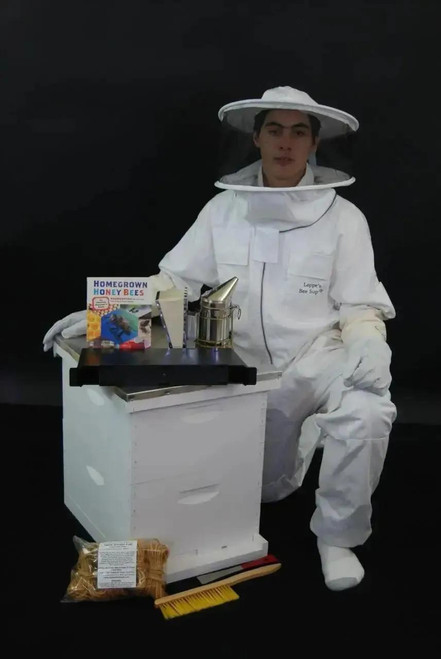
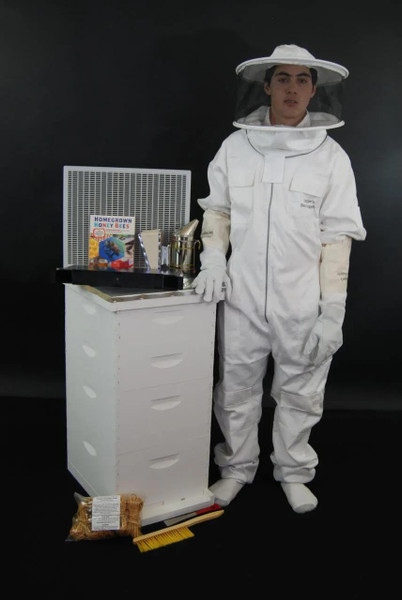
The 10 Frame Honey Master Beekeeping Kit from Lappe's Bee Supply brings together the major hive components, protective clothing, and essential beekeeping tools for establishing and managing one standard 10-frame Langstroth honey bee colony. With two deep brood boxes and two medium honey supers, this kit gives you equipment for getting started and additional space to use as your colony develops.
The hive woodenware arrives assembled, so you can spend less time building boxes and more time preparing your apiary. You can also select the woodenware finish, bottom board, frame construction, and protective clothing that suit your preferences. Live bees and a queen are not included and must be arranged separately.
What's Included in the Honey Master Kit?
The 10 Frame Honey Master Beekeeping Kit includes the major hive equipment, protective clothing, and inspection tools for managing one standard 10-frame Langstroth colony.
Hive Equipment
- 2 Deep Brood Boxes (9-5/8"): For brood rearing and colony food reserves.
- 2 Medium Honey Supers (6-5/8"): For surplus honey storage as the colony develops.
- 20 Deep Frames: Choose triple-wax-coated one-piece plastic frames or wooden frames with triple-wax-coated foundation for the two deep brood boxes.
- 20 Medium Frames: Choose triple-wax-coated one-piece plastic frames or wooden frames with triple-wax-coated foundation for the two medium honey supers.
- 1 Bottom Board: Choose solid or screened.
- 1 Inner Cover: Fits beneath the outer cover.
- 1 Telescoping Outer Cover: Provides exterior weather protection.
- 1 Plastic Queen Excluder: Helps restrict the queen from entering the honey supers when properly installed and used.
Beekeeping Tools and Feeding Equipment
- 1 In-Hive Frame Feeder: For providing supplemental feed when appropriate for the colony.
- 1 Bee Smoker: Helps manage bee behavior during hive inspections.
- Smoker Fuel: Included for use with the smoker.
- 1 Hive Tool: For separating hive components and lifting frames during inspections.
- 1 Bee Brush: For gently moving bees from frames and equipment when needed.
Protective Clothing
- 1 Bee Suit or Bee Jacket: Select your preferred protective clothing option and garment size when ordering.
- 1 Pair of Beekeeping Gloves: Select your glove size when ordering.
Before Ordering: Select your preferred woodenware finish (painted or wax-dipped), bottom board (solid or screened), frame construction, protective clothing, garment size, and glove size. Review your selections carefully to ensure the kit matches your preferences.
Product Specifications
| Product | 10 Frame Honey Master Beekeeping Kit |
| Brand | Lappe's Bee Supply |
| SKU | BGNK-2449 |
| Hive system | Standard 10-frame Langstroth |
| Deep brood boxes | Two, 9⅝-inch depth |
| Medium honey supers | Two, 6⅝-inch depth |
| Woodenware assembly | Assembled |
| Woodenware finish | Painted or wax-dipped, selected when ordering |
| Bottom board | Solid or screened, selected when ordering |
| Frame construction | Triple-wax-coated one-piece plastic frames or wooden frames with triple-wax-coated foundation, selected when ordering |
| Queen excluder | One plastic queen excluder included |
| Feeder | One in-hive frame feeder included |
| Protective clothing | Bee suit or bee jacket, with selected garment size |
| Gloves | Selected glove size |
| Intended colony capacity | Equipment for establishing and managing one colony |
| Live bees or queen included | No |
Why Choose a Two-Deep, Two-Medium Hive Configuration?
The Honey Master Kit provides two deep brood boxes for brood rearing and colony food reserves, plus two medium honey supers for potential surplus honey storage.
This configuration allows you to establish your colony with the appropriate starting space while keeping additional equipment available as the bees develop.
Medium honey supers are generally easier to handle than deep boxes filled with comparable honey stores, although full medium supers can still be heavy.
Important: A new colony may not need every box immediately, and a first-year honey harvest is not guaranteed.
- During establishment: Begin with an appropriately configured deep brood box and compatible frames.
- As the brood nest expands: Evaluate whether the colony needs the second deep box.
- When the colony is strong and nectar is available: Consider adding medium supers for surplus-honey storage.
- During a strong nectar flow: Additional honey supers beyond those included in the kit may eventually be necessary.
Lappe's Apiary Note: Add Hive Boxes as Your Colony Grows
More hive space is not always better for a developing colony. Although this kit includes two deep brood boxes and two medium honey supers, Lappe's recommends adding boxes according to the colony's actual needs rather than installing all four at once.
When inspecting a developing colony, pay attention to how many frames the bees occupy, how much brood is present, and how much available comb remains.
Approximately seven to eight substantially occupied frames out of ten can be a useful signal to evaluate whether additional brood space is needed. This is not an automatic expansion rule. Colony strength, brood development, weather, nectar availability, and seasonal conditions should also guide the decision.
Our recommendation: Keep the second deep box and both medium supers ready, but add them only when colony development and nectar conditions justify the additional space.
Choose the Configuration That Fits Your Beekeeping Style
Painted or Wax-Dipped Woodenware
Painted woodenware offers a traditional exterior protective finish. Over time, painted boxes may need exterior maintenance as the finish weathers.
Wax-dipped woodenware offers moisture resistance and generally reduces the need for routine exterior repainting. It still requires inspection and maintenance; wax dipping does not make wood permanently waterproof.
Neither finish guarantees healthier bees or greater honey production. Choose according to your maintenance preferences, environment, and desired appearance.
Solid or Screened Bottom Board
A solid bottom board provides a more enclosed hive floor. A screened bottom board allows some debris to pass through and may be useful with certain ventilation or monitoring arrangements.
A screened bottom board is not a substitute for proper Varroa mite monitoring and management. Both styles can be used as part of a well-managed hive.
One-Piece Plastic or Wooden Frames
Triple-wax-coated one-piece plastic frames combine the frame and foundation into a single molded component, eliminating the need to assemble separate wooden frame parts.
Wooden frames with triple-wax-coated foundation offer traditional frame construction with wax-coated foundation for comb building.
Both options are designed for use in standard Langstroth equipment. Use deep frames in the deep brood boxes and medium frames in the medium honey supers. The two frame depths are not interchangeable.
Bee Suit or Bee Jacket
Choose the protective clothing option that fits your preferred level of coverage. A bee suit provides more extensive body coverage, while a jacket primarily protects the upper body and should be paired with suitable lower-body clothing.
Use the sizing guidance for the exact garment and gloves you select. Beekeeping clothing should allow you to bend, reach, lift, and inspect frames comfortably without pulling tightly against the skin.
Before working bees, check the veil, zippers, cuffs, garment overlaps, and other closures. Protective clothing helps reduce sting exposure but cannot prevent every sting.
Getting Your Honey Master Hive Ready for Bees
The assembled woodenware reduces the amount of construction required before setup. You will still need to prepare the hive location, check your selected components, and install the appropriate equipment.
- Choose a suitable location. Look for stable ground, good drainage, practical inspection access, appropriate sunlight and wind protection, nearby forage, and access to water. Check applicable local beekeeping requirements.
- Prepare a stable hive stand. Keep the hive level and elevated to a practical working height.
- Inspect your kit. Confirm that the boxes, frames, bottom board, clothing, and other components match your selected options and are undamaged.
- Set the bottom board. Position the solid or screened board you selected.
- Install the first deep brood box. Fit it with compatible deep frames, correctly seated and spaced. If using the included in-hive frame feeder, allow the appropriate frame space for the feeder according to its dimensions and instructions.
- Prepare the feeder. Follow the feeder's instructions and the colony's actual feeding needs.
- Fit the hive covers. Make sure the covers sit securely and provide appropriate weather protection.
- Store unused boxes. Keep the second deep box and both medium supers clean and dry until the colony needs them.
- Prepare your inspection equipment. Have your smoker, fuel, hive tool, bee brush, clothing, and gloves ready before bees arrive.
Queen Excluder Tip: The included queen excluder is typically positioned between the brood boxes and honey supers when used to help keep the queen from laying eggs in the honey-storage area. It is not normally needed when initially establishing a new colony in a single deep brood box.
What Kind of Bees Can You Install?
Live bees are purchased separately. A five-frame nucleus colony (nuc), which is a small established colony supplied with bees and brood frames, can generally be transferred into the kit's deep brood box when supplied on compatible standard deep Langstroth frames.
Package bees, typically supplied as loose bees with a caged queen, are another option for starting a colony. Coordinate their arrival with your hive preparation and follow appropriate installation guidance.
What You'll Need Beyond the Kit
The Honey Master kit provides major starting equipment, but beekeeping also requires live bees, continuing care, and additional supplies as conditions change.
- Live bees and a queen: Arrange a suitable package or compatible nucleus colony separately.
- Colony health supplies: Plan for appropriate Varroa mite monitoring and management, along with other health-related needs.
- Feed when appropriate: Supplemental feeding depends on colony condition, food reserves, and season.
- Future expansion equipment: Strong colonies may eventually need additional supers, frames, or replacement parts.
- Honey-harvesting equipment: Specialized uncapping, extracting, or other harvesting equipment may be needed when you have surplus honey to collect.
Important feeding consideration: Avoid feeding sugar syrup while honey supers intended for human consumption are installed. Manage feeding and honey production so harvested honey is not mixed with stored syrup.
Who Is This Beekeeping Kit Best For?
First-time beekeepers: This kit brings together major hive components, inspection tools, and protective clothing for someone establishing a first 10-frame Langstroth colony. It does not replace learning how to inspect bees, recognize colony problems, and manage seasonal needs.
Hobby beekeepers planning for honey production: The included medium supers provide equipment for future surplus-honey storage when colony conditions support it.
Beekeepers standardizing on 10-frame equipment: Using a consistent Langstroth format makes it easier to organize compatible boxes, frames, and replacement equipment.
Customers who want expansion equipment ready: The extra brood box and honey supers can be stored until needed, reducing the need to obtain those components at the moment the colony requires more space.
When Another Kit Might Be a Better Fit
If lifting full hive boxes is a major concern, an 8-frame configuration may be worth considering. If you already own compatible protective clothing, a smoker, feeders, and hive tools, buying individual components may be more practical than purchasing another complete kit.
For comparison, explore the 8 Frame Honey Master Beekeeping Kit, the 10 Frame Beginner Beekeeping Starter Kit, or Lappe's selection of beginning beekeeping kits.
Care and Maintenance for Long-Term Use
Beekeeping equipment should be maintained according to its condition, not simply its age. Regular inspections can help you identify small problems before they affect hive function.
- Hive boxes: Check joints, corners, stacking alignment, warping, and signs of moisture damage. Maintain exterior paint when necessary.
- Frames: Inspect for broken parts, loose joints, damaged foundation, distorted plastic, and improper spacing.
- Comb: Expect brood comb to darken with use. Consider periodic replacement of older brood comb as part of colony management.
- Bottom boards and covers: Remove excessive debris, check screening where applicable, and look for water intrusion or poor cover fit.
- Feeders: Watch for leaks, spoiled syrup, mold, and dead bees. Clean and dry the feeder appropriately for its materials.
- Smoker and tools: Let the smoker cool before cleaning. Check its operating parts and maintain your hive tool and bee brush.
- Protective clothing: Inspect veils, zippers, seams, cuffs, elastic, and closures. Follow the garment's care instructions.
- Stored equipment: Keep unused boxes clean and dry. Protect stored drawn comb from wax moths, small hive beetles, rodents, and moisture.
Equipment suspected of serious brood-disease contamination should not be moved between colonies without appropriate disease-control guidance.
Common Hive Problems: What to Check First
Not every colony problem is an equipment problem. When something looks wrong, Lappe's recommends evaluating the equipment, the bees, and the surrounding conditions before deciding what needs to change.
| What You Notice | What to Investigate |
| Most frames are heavily occupied | Brood space, available comb, colony population, queen status, queen cells, and whether expansion is appropriate. |
| Bees are not drawing new foundation | Colony strength, nectar availability, weather, foundation condition, and whether the colony currently needs more comb. |
| Honey supers remain empty | Colony development, nectar flow, available forage, and whether surplus-honey storage is needed. |
| Stored honey or pollen is very low | Food reserves, forage availability, season, and whether supplemental feeding is appropriate. |
| Elevated mite counts or deformed wings appear | Varroa monitoring results and appropriate colony-health management. |
| Moisture or mold develops inside the hive | Condensation, cover condition, drainage, ventilation, and possible water intrusion. |
| Cross-comb or distorted foundation develops | Frame seating, spacing, box compatibility, foundation condition, and equipment alignment. |
These are possible explanations, not diagnoses. Queen cells alone do not prove a colony is preparing to swarm, and visible symptoms alone are not a reliable measure of Varroa infestation. Use established mite-monitoring methods and seek qualified help for serious brood abnormalities or unexplained colony losses.
Frequently Asked Questions
Does the 10 Frame Honey Master Beekeeping Kit include live bees?
No. Live bees and a queen are not included. You must purchase or arrange a suitable package of bees or compatible nucleus colony separately.
Is this a good beekeeping kit for beginners?
Yes. It provides major equipment for establishing one standard 10-frame Langstroth colony, including hive components, inspection tools, and protective clothing. Beginners will still need beekeeping education and regular colony care.
Does the hive arrive assembled?
Yes. The hive woodenware arrives assembled. You will still need to prepare your hive location, check the components, install the appropriate frames, and complete final hive setup.
What hive boxes come with the kit?
The kit includes two 9⅝-inch deep brood boxes and two 6⅝-inch medium honey supers, all configured for a standard 10-frame Langstroth hive system.
Should I install all four hive boxes when I first get bees?
No. Lappe's recommends starting with an appropriately configured deep brood box and adding the remaining boxes as colony development and nectar conditions justify more space.
When should I add the second deep brood box?
Approximately seven to eight substantially occupied frames out of ten can be a useful signal to evaluate whether more brood space is needed. Also consider brood development, available comb, colony population, weather, nectar availability, and seasonal conditions. This is not a fixed installation threshold.
Can I choose painted or wax-dipped hive boxes?
Yes. The kit offers painted or wax-dipped woodenware. Painted boxes may require future exterior repainting, while wax-dipped boxes generally reduce routine repainting needs but still require inspection and maintenance.
Can I choose a solid or screened bottom board?
Yes. Both options are available. A solid bottom board provides a more enclosed hive floor, while a screened bottom board allows some debris to pass through and may support certain ventilation or monitoring arrangements. Neither option replaces Varroa management.
What frame options are available?
You can choose triple-wax-coated one-piece plastic frames or wooden frames with triple-wax-coated foundation. Use correctly sized deep frames in the deep brood boxes and medium frames in the medium honey supers.
Does the kit include a queen excluder?
Yes. One queen excluder is included. When used, it is typically placed between the brood boxes and honey supers to help keep the queen from laying eggs in the honey-storage area. It is not normally needed when initially establishing a colony in a single deep brood box.
Does the kit include a bee suit or jacket and gloves?
Yes. You can select a bee suit or bee jacket, choose the garment size, and select your glove size. Protective clothing reduces sting exposure but is not sting-proof.
Will a five-frame nucleus colony work with this kit?
Generally, yes, if the nucleus colony is supplied on compatible standard deep Langstroth frames. Confirm frame dimensions with your bee supplier before purchasing bees.
Does this kit include everything needed to extract honey?
No. The kit includes medium honey supers for potential surplus-honey storage, but specialized honey-harvesting and extracting equipment may need to be purchased separately.
Will I get honey during my first year?
Not necessarily. A new colony may need its resources for brood rearing, comb construction, and food reserves. Honey production depends on colony strength, nectar availability, weather, and management. A first-year harvest is not guaranteed.
Can I use this kit with 8-frame hive equipment?
No. This kit is configured for a standard 10-frame Langstroth hive system. Choose equipment that matches your existing hive format.
Will I need to buy additional beekeeping supplies later?
Possibly. Ongoing needs may include live bees, feed, Varroa-monitoring and management supplies, additional supers, replacement equipment, and honey-harvesting tools.
Start With the Right Equipment and Grow at the Colony's Pace
The 10 Frame Honey Master Beekeeping Kit gives you the core equipment for establishing one 10-frame Langstroth colony, along with brood-box expansion capacity and medium supers for future surplus-honey storage. Its assembled woodenware and selectable equipment options make it a practical choice for beekeepers who want to prepare their hive without purchasing every major component individually.
Lappe's Bee Supply comes from a commercial beekeeping family dating back to 1978 and has served beekeepers with equipment and practical beekeeping education since 2017. Our recommendation is simple: choose compatible equipment, keep expansion space ready, and make hive-management decisions based on what your bees actually need.