

Product Overview
10 Frame 2 Story Assembled Beginning Beekeeping Kit – Painted or Wax Dipped
Start with assembled 10-frame equipment and expand your hive as your colony grows.
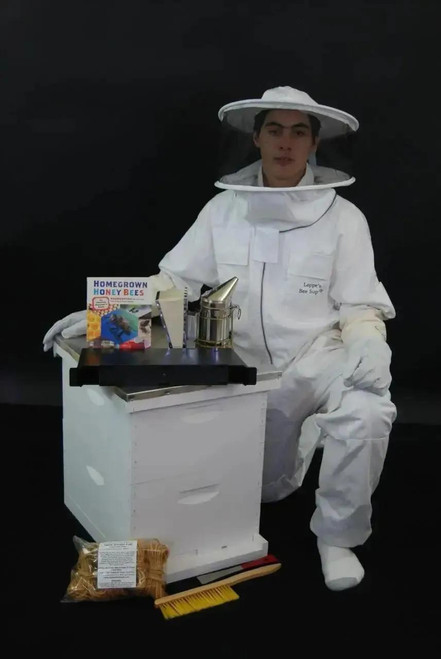
The 10 Frame 2 Story Assembled Beginning Beekeeping Kit from Lappe's Bee Supply gives beginning beekeepers the hive equipment, protective clothing, basic tools, and educational resources needed to prepare for managing their first honey bee colony. Built around a traditional 10-frame Langstroth hive, this kit includes two assembled deep hive bodies and lets you select the woodenware finish, frame style, bottom board, and protective clothing that fit your preferences.
With the woodenware already assembled, you can spend less time constructing equipment and more time preparing your apiary and learning to care for your bees. The kit provides equipment for a two-deep brood configuration, but that does not mean a new colony needs both boxes immediately. At Lappe's Bee Supply, we recommend starting a small new colony in one deep box and adding the second when the bees are ready for more space. Live honey bees are sold separately.
Kit Details at a Glance
- Product: 10 Frame 2 Story Assembled Beginning Beekeeping Kit – Painted or Wax Dipped
- SKU: BGNK-2447
- Hive format: Standard 10-frame Langstroth
- Hive bodies: Two assembled deep boxes
- Deep hive-body depth: 9⅝ inches
- Frame capacity: 10 deep frames per box, 20 frames included total
- Finish options: Painted or wax dipped
- Frame options: Wooden frames with triple-wax-coated foundation or triple-wax-coated one-piece plastic frames
- Bottom board: Solid or screened, according to selection
- Protective clothing: Suit or jacket, according to selection
- Intended use: Establishing and managing one honey bee colony
- Live bees: Not included
What's Included in the Beginning Beekeeping Kit?
This kit combines the main hive components with equipment used during routine inspections and colony care. The exact configuration depends on the options selected when ordering.
Hive Equipment
- 2 Assembled 10-frame deep hive bodies
- 20 assembled deep frames in the selected style: wooden frames with triple-wax-coated foundation or triple-wax-coated one-piece plastic frames
- 1 Solid or Screened Bottom Board, according to selection
- 1 Inner Cover
- 1 Telescoping Outer Cover
- 1 9-5/8" Deep In-Hive Frame Feeder with Cap and Ladders
Beekeeping Tools and Protective Clothing
- 1 Bee Smoker
- 1 Hive Tool
- 1 Bee Brush
- 1 Protective Beekeeping Suit or Jacket, according to selection
- 1 Pair of Beekeeping Gloves
Educational Resources
- 1 beekeeping book
- 1 beekeeping magazine subscription, with a choice of American Bee Journal or Bee Culture
Important: Review all product selections before ordering, including finish, frame style, bottom board, clothing type, apparel size, glove size, and magazine choice. Alternative selections are not additional sets of included equipment.
Choose the Configuration That Fits Your Beekeeping Plans
One advantage of this beginning beekeeping kit is the ability to select several important equipment options before your hive arrives. Understanding those choices helps you order equipment that matches how you intend to manage your colony.
Painted or Wax-Dipped Woodenware
Both options provide an exterior finish for the wooden hive bodies. The main differences to consider are appearance, finish preparation, and ongoing maintenance.
- Painted: A conventional painted exterior. Inspect the coating periodically and touch up exposed or deteriorating exterior surfaces when needed.
- Wax dipped: A wax-treated finish that does not require painting before initial use. Inspect the wood and joints over time, since wax dipping does not eliminate normal weathering.
Neither finish guarantees a particular hive lifespan or colony performance. Choose according to your preferred appearance and maintenance approach.
Wooden Frames or One-Piece Plastic Frames
The kit offers wooden frames with triple-wax-coated foundation or triple-wax-coated one-piece plastic frames. Both provide the structure bees use to build comb within the deep brood boxes.
Wooden frames use a separate foundation component, while one-piece plastic frames integrate the frame and foundation structure. Inspect either style periodically for damage, distortion, or other conditions that interfere with proper use. The rate at which bees draw comb depends on colony strength, forage, feeding, and seasonal conditions.
Which frame style should you choose? Wooden frames with triple-wax-coated foundation are a good option for beekeepers who prefer traditional frame construction. Triple-wax-coated one-piece plastic frames may appeal to beekeepers who prefer an integrated frame-and-foundation design. Both styles require routine inspection and proper hive management.
What does triple-wax-coated mean? Triple-wax-coated refers to the wax coating applied to the foundation surface. This coating provides a beeswax-covered surface on which honey bees can begin building comb. Wooden frames contain a separate wax-coated foundation, while one-piece plastic frames combine the frame and foundation into a single piece. Comb development still depends on colony strength, nutrition, forage availability, and seasonal conditions.
Solid or Screened Bottom Board
A solid bottom board provides a continuous floor beneath the colony and may appeal to beekeepers who prefer a simple, traditional hive setup.
A screened bottom board incorporates a screened section that can support ventilation and certain hive-monitoring practices. Its suitability depends on your climate, seasonal conditions, and hive-management approach.
Neither option is universally better for every colony. Consider your local conditions and how you plan to manage ventilation and seasonal hive protection. A screened bottom board does not replace regular Varroa monitoring or appropriate mite management.
Protective Suit or Jacket
Choose the protective clothing configuration that provides the coverage you want for hive inspections.
- Beekeeping suit: Provides integrated upper- and lower-body coverage.
- Beekeeping jacket: Provides upper-body coverage and requires separate appropriate clothing for the legs.
Select apparel and glove sizes carefully. Check that the veil, zippers, cuffs, and other closures fit and fasten correctly before working bees. Protective clothing helps reduce exposure to stings, but no beekeeping garment is sting-proof.
How the Two-Deep Langstroth Hive Works
A two-deep Langstroth hive uses two deep hive bodies stacked vertically to provide comb space for brood rearing, pollen, and colony food reserves. Each deep box holds 10 appropriately sized deep frames, creating a 20-frame brood-area configuration when both boxes are in use.
The lower and upper deep boxes are both part of the colony's brood and food-storage area. The upper deep should not automatically be treated as a honey-only box. As the colony develops, brood, pollen, nectar, and stored honey may be distributed across both boxes.
Deep boxes provide substantial comb area, but they can become heavy when occupied by bees, brood, and food stores. Plan for the lifting and handling involved in inspecting a two-deep hive.
When Should You Add the Second Deep Hive Body?
Lappe's Bee Supply recommends establishing a small new colony in one deep brood box and adding the second deep when colony development supports expansion. Having two assembled boxes available does not mean both should be installed immediately.
As a practical guideline, consider adding the second deep when bees are actively occupying approximately 7–8 of the first 10 frames, provided brood development, food reserves, adult population, and seasonal conditions support continued growth.
This is a management guideline rather than a fixed requirement. Package bees and nucleus colonies may develop at different rates, and colony growth can vary with queen performance, weather, forage, and nutrition.
Lappe's Apiary Note: Let the Bees Determine When to Expand
Adding the second deep too early can give a small colony more space than it can readily occupy and defend. Waiting too long when a strong colony needs additional room can contribute to congestion.
During inspections, evaluate occupied frames, brood development, food stores, and population growth together. Add equipment because the colony needs it, not simply because the equipment is available.
Getting Your Hive Ready for Bees
The hive bodies arrive assembled, reducing construction work before setup. You will still need to prepare a suitable location, position the equipment, check component fit, and install the bees you obtain separately.
- Choose an apiary location. Look for good drainage, practical inspection access, and protection from persistent moisture. Morning sunlight and wind protection may also be useful depending on the site.
- Prepare a stable hive stand. The stand should support the weight of an occupied hive. Position the equipment level from side to side; a slight forward slope may help water drain away.
- Check the hive components. Confirm that the bottom board, hive bodies, inner cover, and telescoping outer cover fit together correctly.
- Check the frames. Seat all 10 frames properly in the deep box being used. Confirm that frames are aligned and the selected foundation is secure.
- Prepare the feeder. Position or assemble the selected feeder as needed and check for leaks. Feeding decisions should reflect colony food reserves and available forage.
- Prepare your protective equipment. Check garment fit, secure the veil and closures, and have your hive tool, bee brush, and smoker ready. Follow appropriate smoker fire precautions.
- Establish the colony. Install your separately purchased bees using the appropriate procedure for the package or nucleus colony and your local conditions.
Store the unused second deep clean, dry, and protected until the colony is ready for expansion.
Is This Beginning Beekeeping Kit Right for You?
This kit is a practical choice for a beginning beekeeper who wants an assembled, traditional 10-frame Langstroth hive and plans to manage a colony using two deep brood boxes as the bees develop.
Consider This Kit If You:
- Are preparing to establish your first honey bee colony.
- Want assembled hive bodies rather than constructing woodenware yourself.
- Prefer the traditional 10-frame Langstroth format.
- Want protective clothing, basic hive tools, and educational materials included with your equipment.
- Want to select your preferred finish, frames, bottom board, and protective clothing.
- Plan to expand from one deep brood box to two when colony development supports it.
When Another Configuration May Be Worth Considering
Deep 10-frame boxes can be heavy when filled. Beekeepers who want to reduce the weight of individual hive bodies may prefer to compare eight-frame or medium-depth equipment. These alternatives use different frame capacities or box depths, so components must be matched to the correct hive format.
If you already own hive equipment, confirm the frame count and depth before combining components. Eight-frame and 10-frame hive bodies are not interchangeable.
What Else Will You Need?
Live honey bees are not included in this equipment kit. You will need to obtain a package of bees or a nucleus colony separately and plan for its installation.
Additional equipment or supplies may also be needed as your colony develops:
- Hive stand: A stable support for the occupied hive.
- Seasonal feeding supplies: As needed based on forage and colony food reserves.
- Varroa monitoring and management supplies: Selected according to colony conditions and applicable product labels.
- Honey supers: For additional surplus honey-storage space when colony conditions justify them.
- Honey-harvesting equipment: Such as an extractor, uncapping equipment, strainers, and food-grade containers when you are ready to harvest.
- Winter preparation and expansion supplies: As needed for your region and management approach.
The two included deep hive bodies are intended primarily for brood rearing and colony food storage. Do not assume that a separate honey super or honey-harvesting setup is part of the kit.
Care and Maintenance of Your Beekeeping Equipment
Regular equipment inspections help you identify wear and correct problems before they interfere with hive management.
Woodenware
Inspect painted hive bodies for peeling paint, exposed wood, cracks, and moisture damage. Touch up exterior coatings when needed, but do not paint the interior hive surfaces.
Inspect wax-dipped woodenware for splitting, loose joints, and deterioration. Some discoloration and weathering are normal. Evaluate the structural condition rather than appearance alone.
Frames, Foundation, and Comb
Check for broken frame parts, distorted plastic, damaged foundation, and unwanted comb. Maintain proper frame spacing and replace damaged equipment when necessary.
Brood comb commonly darkens with use, and bees naturally deposit propolis around hive surfaces and joints. These changes do not automatically mean equipment needs replacement.
Feeders, Tools, and Protective Clothing
Clean feeders as needed, remove spoiled syrup, and correct leaks. Clean tools and brushes appropriately, particularly when working between colonies. Allow smokers to cool safely before handling or storage.
Inspect protective clothing for damaged veil mesh, worn seams, faulty zippers, and loose closures. Follow the care instructions for the selected garment.
Storage
Store unused hive components clean and dry, protected from moisture and pests. Drawn comb may require additional wax-moth protection. Equipment suspected of carrying contagious bee disease should be evaluated before reuse or transfer.
What to Expect During Your First Beekeeping Season
Starting a colony is an ongoing management responsibility, not a one-time equipment setup. Your bees will need inspections, adequate nutrition, space management, and monitoring for pests and disease.
Spring is a common time to establish colonies, but growth depends on weather, forage, queen performance, and the bees themselves. A new colony may not fill both deep boxes quickly, and honey production is not guaranteed during the first season.
Watch for healthy brood development, adequate food reserves, and population growth. Unusual brood patterns, declining populations, persistent food shortages, or signs of disease deserve closer evaluation rather than simply adding equipment.
Winter preparation also requires attention to colony strength, food reserves, pest management, and local conditions. No hive equipment kit can guarantee colony survival or overwintering success.
Frequently Asked Questions
Does this beginning beekeeping kit include live bees?
No. The kit includes beekeeping equipment, tools, protective clothing, and educational materials. You must purchase a package of bees or a nucleus colony separately.
Do I install both deep boxes when I first get my bees?
Not usually for a small new colony. Lappe's Bee Supply recommends starting with one deep brood box and adding the second when the colony is actively occupying approximately 7–8 frames and brood development, food stores, population, and seasonal conditions support expansion.
Are the hive bodies and frames assembled?
Yes. The kit includes two assembled deep hive bodies and 20 deep frames with foundation in the selected frame style. Wooden frames with triple-wax-coated foundation arrive assembled, and triple-wax-coated one-piece plastic frames require no assembly. You will still need to position the hive, install the frames, prepare the feeder, and obtain your bees separately.
Can I use this kit with eight-frame equipment?
No. This kit uses the standard 10-frame Langstroth format. Choose matching 10-frame hive components and appropriately sized deep frames when adding equipment.
Is the upper deep box a honey super?
No. In this two-deep configuration, both deep boxes are intended primarily for brood rearing and colony food storage. A separate honey super may be added for surplus honey storage when the colony is ready.
Which finish should I choose: painted or wax dipped?
Choose painted woodenware if you prefer a conventional painted exterior and are comfortable maintaining the coating. Choose wax dipped if you prefer a wax-treated finish that does not require painting before use. Both finishes still require periodic inspection.
Will this kit provide everything needed to harvest honey?
No. The kit provides equipment for establishing and managing a colony. Additional honey supers and harvesting equipment, such as an extractor, uncapping tools, strainers, and food-grade containers, may be needed later.
How much honey will my colony produce?
Honey production cannot be predicted from the kit alone. Colony strength, weather, nectar availability, seasonal timing, and management all influence whether a colony produces surplus honey available for harvesting.
More Beekeeping Equipment and Learning Resources
As you prepare for your first colony, these Lappe's Bee Supply resources can help you compare equipment, learn about colony health, and plan for supplemental feeding and future hive management.
Beekeeping Guides and Hive Equipment
- Beginning Beekeeping Kits – Compare additional starter kit configurations.
- 10-Frame Langstroth Hive Equipment – Explore equipment for future hive expansion.
- Beginner Beekeeping FAQ – Learn more about establishing and managing a honey bee colony.
- 10-Frame Honey Master Beekeeping Kit – Compare another beekeeping kit configuration.
Varroa Mite Monitoring and Treatment
- Varroa Mite Monitoring and Treatment Guide – Learn how to test for Varroa mites, interpret mite counts, determine when treatment may be necessary, and evaluate treatment effectiveness.
- Bee Feeding & Colony Health Supplies – Explore mite-management products, pest-control supplies, and additional equipment for supporting colony health.
Varroa Management Tip: Even newly established honey bee colonies can experience Varroa mite pressure. Monitor mite levels regularly using an appropriate testing method. When treatment is necessary, consider mite levels, seasonal conditions, temperature restrictions, and whether honey supers are present. Always follow the treatment manufacturer's current label instructions and monitor again afterward to evaluate effectiveness.
Supplemental Feeding and Honey Bee Nutrition
- Honey Bee Feed & Feeders – Explore supplemental feeds, nutritional products, and feeding equipment for times when colonies need additional nutrition.
- Winter Bee Feed & Feeding Supplies – Explore fondant, winter patties, and seasonal feeding supplies.
- Winter Feeding Honey Bees Guide – Learn about evaluating food stores and choosing appropriate seasonal feeding methods.
Feeding Tip: Supplemental feeding should be based on colony strength, available food stores, natural forage, and seasonal conditions. Sugar-based feeds provide carbohydrates, while pollen patties and protein supplements serve different nutritional needs. Not every colony requires supplemental feeding.
Begin Your Beekeeping Journey with Lappe's Bee Supply
Lappe's Bee Supply comes from a commercial beekeeping family with experience dating back to 1978, and we've served beekeepers with equipment and practical beekeeping education since 2017.
The 10 Frame 2 Story Assembled Beginning Beekeeping Kit brings together the core hive equipment, basic tools, protective clothing, and learning resources for getting started with a traditional Langstroth hive. Choose your preferred configuration, arrange for your bees separately, and begin with the equipment and knowledge to manage your colony as it grows.