

Product Overview
Professional Honey Cappings Draining & Filter Bag with Stainless Steel Bucket Support Hooks
Keep Wet Cappings Contained While Honey Drains by Gravity
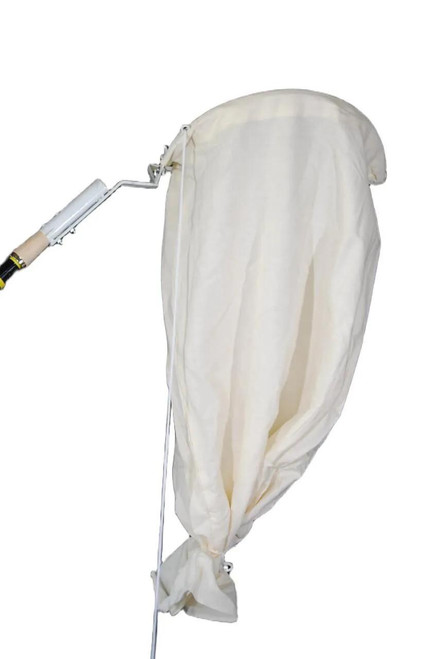
The Professional Honey Cappings Draining & Filter Bag with Stainless Steel Bucket Support Hooks is a reusable 21" long × 16" wide filter bag designed to suspend wet honey cappings while free honey drains from the wax by gravity. Stainless-steel support hooks hold the bag in position and help keep the opening accessible while cappings are added.
Honey cappings are the thin layer of beeswax that honey bees use to seal fully ripened honey inside the cells of the comb. During honey extraction, these wax cappings are cut or scraped from the comb before the frames are placed in an extractor. Freshly removed cappings often hold a surprising amount of honey, so allowing them to drain before the wax is processed or rendered helps recover more of the harvested honey.
This is a long gravity-draining cappings bag, not a pail-style filter. Its 21" length is too long to hang properly inside a standard 5-gallon bucket, so the collection container must be large and deep enough for the bag to hang freely with space underneath for filtered honey.
At a Glance
| Product | Honey cappings draining and filter bag |
|---|---|
| SKU | HRAS-5847 |
| Bag Dimensions | 21" long × 16" wide |
| Support | 3 sets of 2 stainless-steel hooks (6 total), spaced evenly around the bag |
| Primary Use | Gravity draining wet honey cappings |
| Reusable | Yes |
| Collection Container | Customer supplied; must be large and deep enough for the full bag to hang freely |
| Standard 5-Gallon Bucket Fit | No; the 21"-long bag is too long to hang properly inside a standard 5-gallon bucket |
| Filter Bag Material | Durable, reusable nylon mesh that drains honey while retaining wax cappings |
Key Features and Benefits
- 21" × 16" bag: Provides a long suspended filtering area for containing wet cappings while honey drains below.
- Stainless-steel support hooks: Support and position the bag while also helping keep the opening accessible during loading.
- Gravity-draining design: Separates free honey from cappings without requiring the cappings to be spun in an extractor.
- Reusable filter bag: After wax is removed, remaining honey can be washed from the nylon filter material with warm water.
- Open suspended setup: When the bag hangs freely with clearance underneath, more of its filtering area remains available for drainage.
Why the Hanging Setup Matters
The most important part of using this cappings filter bag is giving the full 21" length enough vertical clearance. At Lappe's Bee Supply, we suspend the bag inside a collection container that is large and deep enough for the bottom of the bag to remain off the container floor and above the honey that has already drained. An ideal container height would be at least 30" high, based on Lappe's usage experience.
If the bag bunches against the bottom, the cappings cannot drain as freely. Likewise, once collected honey rises high enough to contact the hanging bag, the lower filtering area provides little additional benefit. The practical rule is simple: let the bag hang freely with space underneath it.
Is This Cappings Filter Bag Right for You?
Choose this bag when you want to contain wet cappings and recover honey through a simple gravity-draining process. It is especially useful when your uncapping workflow allows the bag to remain suspended in a larger collection container while gravity and time perform the separation.
Another filtering method may fit better when your workflow is different:
- Choose a honey cappings nylon pail filter when you want a more compact pail-based filtering setup.
- Choose a cappings spinner bag when you want to hold cappings while spinning them in a honey extractor.
The important distinction is the workflow. This hooked bag relies primarily on gravity, while an extractor spinner bag uses centrifugal action.
What Is Included and What You Need
Included
- One reusable 21" × 16" honey cappings filter bag
- 6 stainless-steel support hooks (3 sets of 2)
Customer Supplied
- A collection container large and deep enough for the bag to hang freely with room underneath for honey to collect
- Uncapping and honey-processing equipment needed for your overall harvesting workflow
How to Set Up and Use the Bag
- Position a sufficiently large and deep collection container before beginning uncapping.
- Suspend the cappings filter bag using the stainless-steel support hooks.
- Confirm that the bottom of the 21"-long bag hangs freely rather than bunching against the container bottom.
- Leave enough space below the bag for filtered honey to collect.
- Add wet cappings while leaving room in the bag and avoiding tight compression.
- Allow gravity and adequate time to separate free honey from the cappings.
- Monitor the collected honey so its level does not rise into contact with the bottom of the bag.
Setting up the collection container and supported bag before uncapping starts allows wet cappings to go directly into the filter instead of being transferred between containers.
Loading and Drainage Tips from Lappe's
How the cappings are loaded matters more than filling the bag as completely as possible. Lappe's has found that relatively loose cappings can drain better than a tightly compressed mass because honey has more opportunity to move downward between pieces of wax.
Do not expect one fixed drainage time for every batch. Drainage can vary with the amount and condition of the cappings, how densely they are loaded, honey temperature, available clearance beneath the bag, and the level of honey already collected.
Slow gravity drainage by itself does not mean the filter bag is defective. First consider whether the bag is hanging freely, whether the cappings are tightly packed, and whether collected honey has risen high enough to contact the bag.
Cleaning and Product Condition
After use, remove as much wax from the bag as practical before washing. Lappe's uses warm water to rinse away remaining honey from the reusable filter material. If additional cleaning is needed, a mild detergent like dish soap may be used, but rinse the bag thoroughly afterward to remove any soap residue.
Hand washing is recommended. Do not place the filter bag in a washing machine. The tumbling and agitation of a washer can cause the stainless-steel support hooks to catch on the drum or other items, which may bend, twist, or damage the hooks and could also damage the bag or washing machine.
When checking the bag's condition, practical concerns include damaged filter material, failed stitching, or insecure hook attachments.
Common Mistakes to Avoid
- Trying to use it like a standard pail filter: The 21"-long bag is too long to hang properly inside a standard 5-gallon bucket.
- Packing cappings tightly: A dense mass can restrict gravity drainage. Leave room and keep the cappings relatively loose.
- Expecting extractor-speed separation: This bag relies primarily on gravity and should not be expected to remove honey as quickly as cappings being spun in an extractor.
- Letting the bag sit in collected honey: Maintain enough collection capacity to keep the bottom of the bag above the honey level.
Frequently Asked Questions
Will this cappings filter bag fit inside a standard 5-gallon bucket?
No. The 21" × 16" bag is too long to hang properly inside a standard 5-gallon bucket. It should be suspended by its stainless-steel hooks in a larger and deeper collection container that lets the bag hang freely with room underneath for honey to collect.
Why does this bag have stainless-steel support hooks?
The stainless-steel hooks support and position the bag while it is suspended. They also help keep the opening accessible while wet cappings are being added.
Is this the same as Lappe's honey cappings nylon pail filter?
No. The nylon pail filter is intended for a more compact pail-based filtering setup. This 21" × 16" hooked bag is intended for gravity draining while suspended in a sufficiently large and deep collection container.
Is this the same as Lappe's extractor cappings spinner bag?
No. The extractor cappings spinner bag holds cappings while they are spun in a honey extractor. This hooked cappings filter bag relies primarily on gravity drainage.
How full should I fill the cappings filter bag?
Lappe's does not recommend tightly packing the bag. Leave room and keep the cappings relatively loose so honey has more opportunity to drain through the wax and filter material. No specific required fill percentage has been established.
How long should wet cappings drain?
There is no single drainage time that applies to every batch. The amount and condition of the cappings, loading density, honey temperature, clearance beneath the bag, and other operating conditions can affect gravity drainage.
Why is honey draining slowly from the bag?
Slow drainage does not automatically indicate a defective bag. Check whether the bag is bunched against the container, whether the cappings are packed tightly, whether there is enough clearance beneath the bag, and whether collected honey has risen high enough to contact it.
Related Products and Resources
- Honey Cappings Nylon Pail Filter — for a more compact pail-based filtering workflow.
- Cappings Spinner Bag — for cappings that will be spun in a honey extractor.
- Honey Filters, Pails & Gates — browse related honey-filtering equipment.
- Honey Harvesting & Extracting Supplies — explore additional honey-processing equipment.
- Lappe's Bee Supply Terms and Conditions — review current shipping and commercial terms.