

Product Overview
12' Bee Hive Tie-Down Strap with Cam Buckle
Simple, reusable securing for stacked hive equipment
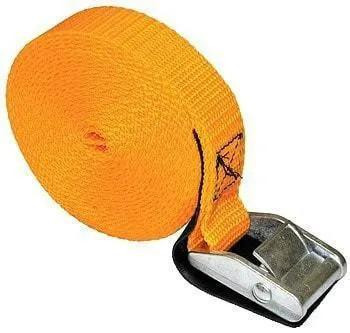
The 12' Bee Hive Tie-Down Strap with Cam Buckle is a reusable strap for keeping stacked hive components securely together. Its attached cam buckle lets you remove slack and apply useful hand tension without tying knots or operating a ratchet mechanism.
At Lappe’s Bee Supply, we route these straps vertically around the hive stack during fall preparation to help keep boxes and covers from shifting independently. The strap holds the stack together but does not anchor the hive or stand to the ground.
Key Product Details
- Length: 12 feet
- Webbing width: 1 inch
- Webbing material: Polyester
- Webbing color: Color varies
- Webbing construction: Flat woven webbing
- Buckle type: Attached cam buckle
- Buckle appearance: Silver-colored metal buckle
- Buckle construction: Zinc-coated alloy steel
- Tightening system: Attached cam buckle
- Adjustment: Pull the webbing through the cam buckle by hand
- Assembly: None required
- Manufacturer-rated working load limit: 200 lb
- Manufacturer-stated breaking strength 600 lb
- Primary hive use: Securing stacked hive components together
- Quantity: One Strap
- SKU: WNTS-2373
The working load limit and breaking strength are different measurements. The 200 lb working load limit is the manufacturer’s maximum rated load for normal use. The 600 lb breaking strength is not a recommended working load and should not be used as the strap’s allowable load capacity. These ratings apply only as specified by the manufacturer.
What Is a Cam Buckle?
A cam buckle grips the strap webbing and allows tension to be adjusted by pulling the webbing through the buckle. It provides a quick securing method without a knot or ratchet mechanism, making it convenient when securely snug hand-applied tension is sufficient.
Why Lappe's Bee Supply Uses Cam-Buckle Straps on Hives
We install these straps during fall preparation and we commonly leave them in place through winter. They help keep individual hive components together against wind, animal disturbance, and accidental bumps.
The cam-buckle design is particularly useful for routine bee-yard work because installation, adjustment, retightening, and removal are uncomplicated. If slack develops while a strap is installed, it can be pulled snug again without operating a ratchet.
Cam buckle or ratchet strap?
Choose this cam-buckle strap when simple operation, quick adjustment, and securely snug hand-applied tension fit the job. Consider a ratchet-style strap when the application requires substantially greater mechanical tightening force or heavier-duty securing.
Will a 12-Foot Strap Fit Your Hive?
Measure the strap’s complete route—not just the hive’s height. Measure over the cover, down both sides, and underneath the bottom board or intended support point. The complete routing distance plus extra length for threading the cam buckle and pulling the strap snug must be less than 12 feet. If the measurement is close to 12 feet, choose a longer strap.
To check the required length before ordering:
- Assemble the hive in the configuration you intend to secure.
- Use a flexible measuring tape or non-stretch cord.
- Route it over the top cover, down both sides, and underneath the bottom board or intended support point—following the same path the strap will take.
- Measure the complete loop.
- Allow additional usable length for threading the strap through the cam buckle, pulling it snug, and securing the loose end.
If the measurement is close to 12 feet, choose a longer strap rather than assuming this one will provide enough working length.
Covers with substantial overhang, tall box combinations, feeders, unusual bottom boards, and routing beneath a hive stand can increase the required strap length. Measure the hive in its actual assembled configuration for the most dependable fit check.
How Lappe's Bee Supply Installs the Strap on a Hive
- Start with the hive properly positioned on dependable support.
- Route the strap vertically around the complete hive stack, underneath the bottom board or hive support and over the top cover.
- Position the cam buckle along the side of the hive.
- Route the webbing correctly through the cam buckle.
- Pull the loose end through the buckle to remove unnecessary slack and make the stack securely snug.
- Secure or coil the excess webbing instead of leaving the loose tail free to flap or tap against the hive.
- Check the stack after tightening to make sure the boxes and cover cannot readily shift independently.
We prefer the buckle along the side of the hive because the downward pull on the loose end makes useful hand tension easier to apply. We do not try to make the strap as tight as physically possible; the practical objective is to hold the stack securely together.
Seasonal Use and Maintenance
Lappe's commonly installs these straps during fall hive preparation, leaves them in place through winter, and removes them in spring after the extended winter securing period is over. While a strap is installed, check it occasionally and retighten it if slack develops rather than assuming the original tension will remain unchanged all winter.
For temporary bee-yard or equipment-handling jobs, the strap can be installed and removed as needed.
When should the strap be replaced?
Judge the strap by its functional condition rather than by appearance alone. Dirt, staining, fading, weathering, increased flexibility, minor surface wear, or cosmetic buckle wear do not automatically mean the strap has reached the end of its useful life.
Replace the complete strap when the webbing is badly frayed or otherwise damaged, or when the cam buckle no longer grips and holds securely. Lappe's does not assign these straps a fixed number of seasons of service because condition varies with use and exposure.
Troubleshooting a Strap That Will Not Stay Tight
If the strap is slipping or is not holding the hive components securely together, Lappe's checks the problem in this order:
- Threading: Make sure the webbing is routed correctly through the cam buckle so the buckle can grip it.
- Tension and routing: Remove unnecessary slack and confirm that the strap is positioned so it actually pulls the hive components together.
- Webbing and buckle condition: Look for significant webbing damage and confirm that the buckle operates, grips, and holds normally.
- Application: If the strap is working correctly but substantially greater tightening force is required, consider whether a ratchet strap is better suited to the job.
What's Included
- One 12-foot tie-down strap
- Attached cam buckle
No assembly is required. A suitable, stable hive stand or other dependable equipment support remains the customer's responsibility.
Frequently Asked Questions
Will the 12-foot strap fit my hive?
The 12-foot strap is practical for the normal hive applications where Lappe's uses it, but universal compatibility has not been established. Check the dimensions and arrangement of your particular hive or equipment before ordering.
How tight should I make a cam-buckle hive strap?
Pull the strap securely snug so the hive components cannot readily shift independently. Maximum possible tension is neither necessary nor the objective.
Will this strap anchor my hive to the ground?
No. It holds the hive components together as a stack. Securing the hive or stand to the ground requires a separate anchoring method.
Can I leave the strap on the hive all winter?
Yes. Lappe's commonly installs it during fall preparation and removes it in spring. Check it occasionally and retighten it if slack develops.
When should I use a ratchet strap instead?
Use a ratchet strap when the application requires substantially greater mechanical tightening force than a hand-tightened cam buckle provides.
When should I replace the strap?
Replace the complete strap when the webbing is badly frayed or otherwise damaged, or when the cam buckle no longer grips and holds securely. Ordinary cosmetic aging by itself does not automatically require replacement.
More Beekeeping Resources and Support
- Browse beekeeping supplies and equipment.
- Review current terms and return or exchange information.
- For product or order questions, contact Lappe's Bee Supply.