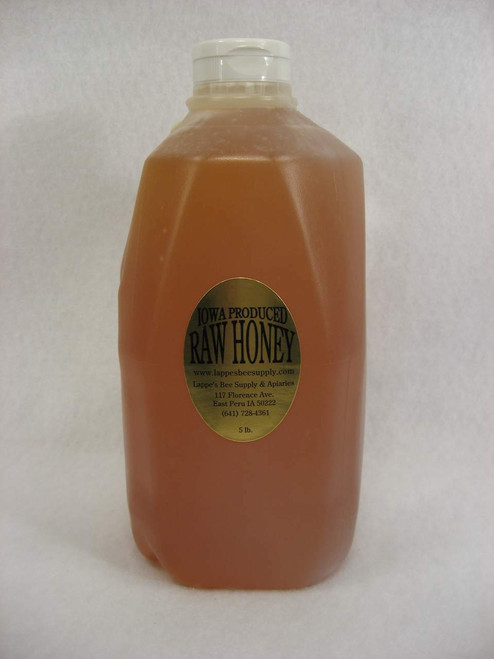


Product Overview
55 Gallon Drums of Raw Honey for Bulk Honey Users
Approximately 650 lb of raw Midwest honey with clover as the primary nectar source
55 Gallon Drums of Raw Honey provide a large-volume supply of raw Midwest honey with clover as the primary nectar source. Because bees forage across available blooms, individual lots may also reflect wildflowers and other regional nectar sources. Nothing is added to the honey after harvest. A typical drum contains approximately 650 lb net honey, making this format practical for commercial honey bottlers, food producers, bakeries, meaderies, and other operations equipped to handle honey at drum scale.
At Lappe's Bee Supply, our experience with these drums has shown that the honey will commonly be heavily crystallized by the time it is ready to use. Customers should plan for mechanical handling, controlled warming, and an appropriate food-grade transfer system rather than expecting a full drum of immediately pumpable liquid honey.
At a Glance
| Product Detail | What to Know |
|---|---|
| Product | 55 Gallon Drums of Raw Honey |
| SKU | LHNY-4945 |
| Honey | Clover is the primary nectar source; other regional floral sources may contribute. This is not guaranteed single-varietal clover honey |
| Container | One 55-gallon drum |
| Typical Net Honey Weight | Approximately 650 lb; actual net weight varies by drum |
| Typical Condition | Expect substantial crystallization or granulation; some drums may be nearly solid |
| Warming Planning Range | A heavily granulated drum generally requires approximately 2–4 days of slow warming in Lappe's normal drum-warming workflow; actual time varies |
| Fulfillment | Pickup or freight shipment |
| Drum Deposit | $30 |
What “Raw Honey” Means for This Product
For this product, “raw” describes how Lappe’s handles the honey: nothing is added, and the honey is not pasteurized. After extraction from the comb, it is transferred to a bulk storage tank and allowed to settle overnight. Larger pieces of wax, comb, cappings, and other natural extraction debris rise to the top, and the drums are filled from the lower portion of the tank.
This settling process removes much of the larger natural debris without producing a completely clear, particle-free product. Small amounts of beeswax, comb, cappings, or other natural extraction material may therefore remain in the honey.
Key Features and Benefits
- Bulk supply for high-volume honey use and production: A single bulk container can simplify inventory and production for operations that regularly use substantial quantities of honey.
- Raw honey: The honey is sourced from local Midwest USA bee hives and supplied with nothing added.
- Bulk format for planned production: One drum can feed bottling tanks, settling tanks, pails, or other receiving containers without repeatedly opening and emptying many smaller containers.
- Actual-weight billing: Final billing reflects the actual net honey weight of the selected drum.
Is This Product Right for You?
The type of business matters less than having the volume, equipment, space, and workflow needed for bulk honey.
Consider a smaller bulk format when:
- Your honey usage is occasional or relatively low.
- You need containers that are easier to reposition.
- You do not have bulk material-handling, heating, or transfer equipment.
- You do not have a practical location where a full drum can remain warming.
For smaller-volume operations, Lappe's offers a 60 lb pail of raw honey as a more manageable bulk alternative.
What Is Included and What You Need
Included
- One 55-gallon drum of raw honey; actual net honey weight varies.
- The drum/container, subject to the applicable $30 drum deposit.
Customer-Supplied Equipment
- Suitable material-handling equipment.
- Drum heaters or other appropriate controlled warming equipment.
- A honey pump or suitable food-grade transfer system when needed.
- Bottling tanks, settling tanks, pails, or other food-grade receiving containers.
- Filtering equipment if light filtering is desired or needed.
What to Expect From Raw Honey in a 55-Gallon Drum
Lappe's finds that honey stored in these drums is normally heavily granulated or crystallized by the time it is used. Some drums may be nearly solid throughout, depending on the individual batch, storage temperature, and length of storage.
Crystallization and granulation are natural characteristics of honey. Lappe's does not add corn syrup or other ingredients to these drums to prevent crystallization.
Raw honey may still contain small amounts of natural extraction debris after settling. When Lappe's later filters drum honey during processing or bottling, material removed may include small pieces of beeswax, comb or cappings, and other natural particles.
What to Expect From Midwest Honey
Color, flavor, aroma, and crystallization are lot-variable characteristics of this product. Color ranges from light golden to deeper amber depending on season, location, and available nectar sources. Flavor is generally mild to moderate, although some batches may lean more toward familiar clover characteristics while others reflect mixed wildflowers and other regional nectar sources. Aroma is typically floral or characteristic of field honey, with normal variation in intensity between batches.
Crystallization can also vary from one lot to another. The speed and texture of crystallization may differ because nectar sources naturally contain different proportions of sugars. For that reason, this product should be considered a naturally variable regional honey rather than a guaranteed single-varietal clover honey. Normal differences in color, flavor, aroma, texture, and crystallization from crop to crop are not by themselves signs of a quality problem.
Commercial buyers who require very tight color, flavor, or varietal specifications should discuss those requirements with Lappe’s before ordering.
Warming and Transfer Planning
A heavily granulated drum generally requires approximately 2–4 days of slow warming in Lappe's normal drum-warming setup before enough honey is fluid to pump or transfer easily. This is a practical planning range rather than a guaranteed processing time.
Starting temperature, work-area temperature, degree of crystallization, heater capacity and placement, and the amount of honey that needs to be liquefied can all change the warming time.
Lappe's Practical Setup Sequence
- Inspect the honey to determine how heavily crystallized it is.
- Position the full drum in its working location before warming; maintain access for material-handling equipment throughout warming and transfer.
- Install drum heaters around the outside of the metal drum.
- Use heaters at different heights when needed to distribute warming through more of the honey.
- Allow sufficient warming time rather than planning on same-day preparation.
- Stage your transfer equipment, filtering setup if needed, and receiving containers before the honey becomes fluid.
- Begin transferring once enough honey has softened and become fluid for the intended operation.
The entire drum does not necessarily have to become completely liquid before transfer begins. If only part of the honey is needed, transfer can begin once enough has reached a workable consistency.
Lappe's Bulk Honey Experience
The most important lesson Lappe's has learned from working with these drums is that successful bulk-honey handling depends heavily on the workflow around the drum. First-time buyers most often underestimate the weight of a full drum and the time and equipment required to warm heavily crystallized honey.
Repeat drum buyers often become more efficient after the first drum as they refine their warming, staging, and transfer setup.
Lappe's Bee Supply has been a commercial beekeeping family since 1978 and has served beekeepers with equipment and practical beekeeping education since 2017. That hands-on honey experience informs the preparation and troubleshooting guidance provided with this bulk format.
Care and Storage
Store a full drum indoors in a clean, dry area, protected from moisture, contamination, direct sunlight, excessive heat, and major temperature swings. Keep the drum upright on a stable pallet or suitable surface when practical and use mechanical equipment rather than manual handling to reposition it.
If a drum is opened without being emptied, keep the bung and opening clean and reseal the drum as soon as practical. A secure closure helps protect the honey from moisture, dust, insects, odors, and other contamination.
Lappe's is comfortable allowing stored honey to remain crystallized rather than repeatedly warming the drum simply to keep the honey liquid. Rewarm slowly as needed, avoiding unnecessary, aggressive, or prolonged heat.
Ordering and Freight Information
The listed product amount is an estimate because the net honey weight varies by drum. After a drum is selected, Lappe's weighs it, subtracts the drum tare, and adjusts the order with an additional charge or credit so final billing reflects the actual net honey weight.
- Pickup: Available.
- Shipping: Freight only when shipped.
- Freight payment: Lappe's contacts the customer with the freight quote, which must be paid before shipment.
- Free shipping: This product does not qualify for free shipping.
- Drum deposit: $30.
- Pickup drum exchange: A qualifying pickup customer may exchange a like-new barrel with no rust for the applicable drum-deposit credit.
For current ordering, shipping, and return terms, review Lappe's Bee Supply Terms and Conditions. For freight assistance or product-specific questions, contact Lappe's Bee Supply.
Frequently Asked Questions
Will a 55-gallon drum of raw honey arrive liquid?
No specific liquid condition should be expected. Lappe's normally finds these drums heavily granulated or crystallized by the time they are used, and some may be nearly solid. Plan on warming the drum before pumping or bottling.
How much honey is in a 55-gallon drum?
A typical drum contains approximately 650 lb net honey. Actual net weight varies from drum to drum, and final product billing is adjusted to the actual net honey weight after the drum tare is accounted for.
How long does a crystallized drum take to warm?
In Lappe's normal drum-warming workflow, a heavily granulated drum generally requires approximately 2–4 days of slow warming before enough honey is fluid to transfer easily. Actual time varies with starting temperature, ambient temperature, crystallization, heater capacity and placement, and how much honey needs to be liquefied.
Is this a single-varietal clover honey?
No. Clover is the primary nectar source, but bees also forage on other blooming plants in the region. Individual lots may therefore include contributions from wildflowers and other regional floral sources, so some natural variation in color, flavor, aroma, and crystallization should be expected.
Does the entire drum need to be liquid before I start transferring honey?
No. If only part of the honey is needed, transfer can begin once enough honey has softened and become fluid for the transfer equipment and intended use. The entire crystallized drum does not necessarily need to be completely liquid first.
What equipment should I have before ordering a full drum?
Plan for appropriate material-handling, warming, staging, and food-grade transfer equipment before ordering a full drum. Filtering equipment may also be useful when light filtering is needed.
Can the drum be shipped?
Yes. Shipped drums travel by freight rather than ordinary parcel service. Lappe's contacts the customer with the freight quote, and freight must be paid before shipment. This product does not qualify for free shipping.
Why can the final honey charge differ from the initial amount?
Individual drums vary in net honey weight. Lappe's weighs the selected drum, accounts for the drum tare, and applies an additional charge or credit as necessary so the final product charge reflects the actual net honey weight.
Related Products and Resources
- 60 lb Raw Honey Pail — a smaller bulk format for customers who do not need or are not equipped to handle a full drum.
- 5 lb Raw Iowa Honey — a much smaller quantity for easier handling and lower-volume use.
- Bulk Honey Options — compare smaller bulk-honey formats.
- Terms and Conditions — review current ordering, shipping, return, and policy information.
- Contact Lappe's Bee Supply — request freight assistance or help with heating, transfer, leakage, contamination, or other product-specific concerns.