


Product Overview
At-a-glance summary
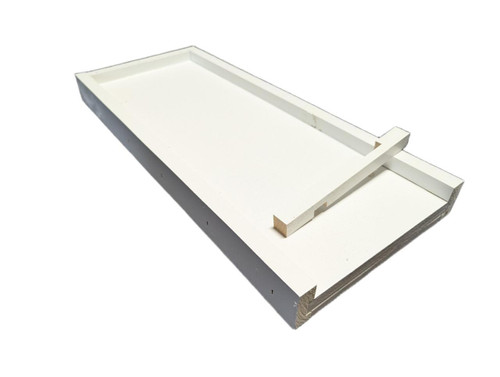
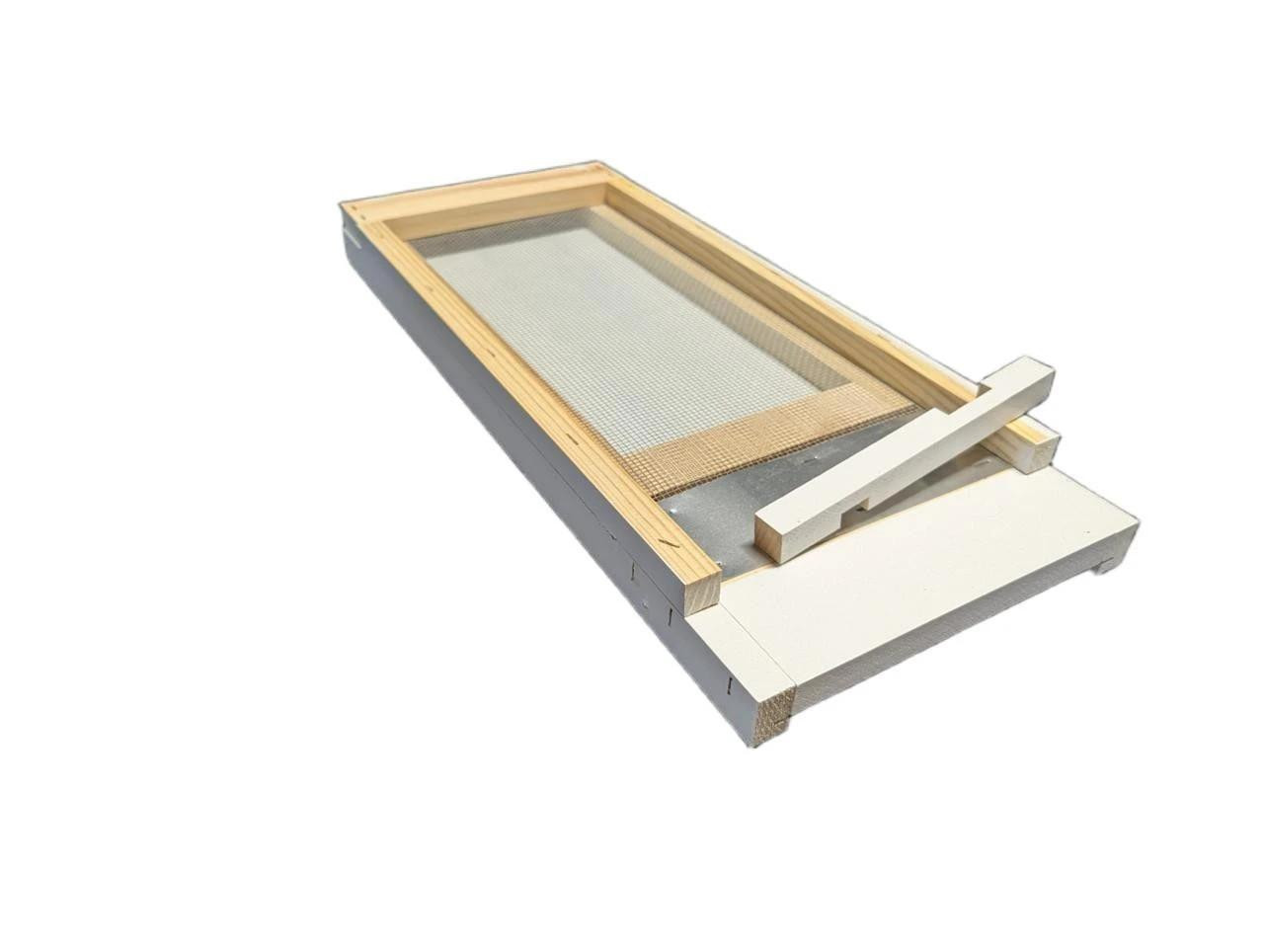
This 5-frame screened bottom board with drawer is the base for a standard 5-frame Langstroth nuc hive.
It supports the hive bodies above, allows airflow through the screened floor, and gives the beekeeper a practical way to inspect falling debris through a rear pull-out drawer.
It provides a stable, easy-to-manage hive base while simplifying routine observation tasks for the beekeeper.
This unit arrives fully assembled and painted white, making it ready for immediate installation under compatible 5-frame Langstroth nuc boxes.
Definition
A 5-frame screened bottom board with drawer is a hive base made for standard 5-frame Langstroth hives.
It combines a wooden frame, a screened bottom surface, and a removable rear tray that collects debris from inside the colony.
In a Langstroth hive system, the bottom board forms the base of the hive stack and works with compatible hive bodies, frames, and covers sized for the same equipment format.
Quick specs
- Hive compatibility: Standard 5-frame Langstroth equipment
- Dimensions: 23 in. L x 9 in. W x 2 in. H
- Material: Wood frame with screened insert
- Wood type: Eastern white pine or fir depending on production batch
- Finish: Painted white
- Assembly: Fully assembled
- Primary use: Hive base, debris monitoring, and airflow support
- Product classification: Hive hardware component
- Important note: This product is not a pesticide, treatment, or medication
- SKU: CMPS-6843
Quick answer
A screened bottom board with drawer gives a 5-frame Langstroth hive a ventilated base and a straightforward way to inspect hive debris without lifting boxes.
The screen lets wax flakes, pollen dust, cappings, and other small particles fall below the bees, and the drawer makes that material easier to monitor from outside the hive.
Why beekeepers use this type of product
Beekeepers use screened bottom boards to add airflow at the base of the hive and to make debris inspection more convenient.
A pull-out drawer helps the beekeeper check what is falling through the colony without opening the hive or disturbing the bees more than necessary.
In practical apiary management, this kind of screened hive base is often chosen by beekeepers who want both standard Langstroth compatibility and easier observation of material dropping through the brood area.
How it works in the hive or apiary
The bottom board sits under the hive bodies and supports the weight of the hive stack above it.
The screened floor allows small hive debris to fall below the colony instead of building up directly on the hive floor.
The rear drawer slides out for inspection, so debris can be checked from outside the hive with minimal disruption.
Because the bottom board is the lowest structural component in the hive stack, correct fit matters for stable box placement and proper alignment with other 5-frame Langstroth equipment.
Apiary management notes
Beekeepers often inspect the debris drawer to observe wax flakes, pollen dust, and other material dropping from the colony.
Some beekeepers lightly coat the tray surface with petroleum jelly when they want falling debris to stick for easier monitoring.
The drawer is sometimes removed in warm weather when a beekeeper wants more airflow through the screened base.
Management practices vary by season, climate, colony condition, and beekeeper preference, so use of the drawer may differ between apiaries.
Typical timing and seasonal use
This type of bottom board can be used throughout the beekeeping season as the base of a compatible 5-frame Langstroth hive.
Beekeepers may adjust how they use the drawer during the year depending on weather conditions and management goals.
During periods of warmer weather, some beekeepers emphasize airflow, while at other times they may pay closer attention to debris patterns for general hive observation.
What the product includes
- One fully assembled 5-frame screened bottom board
- Integrated screened base
- One rear pull-out debris drawer
- Painted white wooden frame
How this product fits into a standard hive system
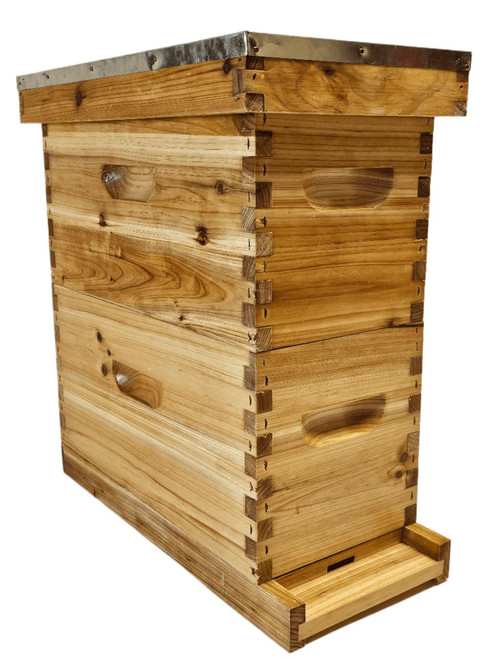
In a standard 5-frame Langstroth setup, the bottom board forms the foundation of the hive stack.
Compatible 5-frame hive bodies and other matching nuc equipment are placed directly on top of it.
It is part of the standard vertical Langstroth arrangement in which bottom board size must match the footprint of the boxes above it.
Many beekeepers pair this base with complete 5-frame nuc kits when setting up new colonies.
Comparison and buying context
A screened bottom board differs from a solid bottom board because the hive floor uses mesh instead of a closed wood surface.
This style is a practical choice for beekeepers who want debris monitoring access through a removable tray.
A beekeeper using larger Langstroth equipment should choose a bottom board sized for that hive format instead of a 5-frame unit.
As with other 5-frame Langstroth equipment, correct sizing is more important than general appearance because Langstroth components are designed around consistent box dimensions.
Beekeepers comparing options may also look at other bottom boards depending on their preferred hive setup.
| Feature | Screened Bottom Board (with Drawer) | Solid Bottom Board |
|---|---|---|
| Hive floor type | Screened mesh | Solid wood surface |
| Airflow | Allows airflow through hive base | Limited airflow from bottom |
| Debris management | Debris falls through screen into drawer | Debris collects inside hive |
| Inspection method | Rear pull-out drawer allows external inspection | Requires opening hive |
| Ease of monitoring | Higher - minimal disturbance to bees | Lower - requires hive disruption |
| Typical use case | Beekeepers wanting airflow and debris monitoring | Beekeepers preferring a fully enclosed base |
Who this product is best for
This product is best for beekeepers running standard 5-frame Langstroth nuc hives.
It is also a good fit for beekeepers who want a ready-to-install nuc bottom board with a screened floor and a rear debris drawer.
It is especially relevant for beekeepers who standardize around 5-frame Langstroth nuc equipment for colony splits, swarm captures, temporary housing, or smaller hive configurations.
When this product may not be the best choice
This bottom board is not the right choice for 8-frame or 10-frame Langstroth hive systems.
It is also not designed for non-Langstroth hive styles such as Warre hives or top-bar hives.
Beekeepers using different hive footprints or non-compatible box designs should use hardware built specifically for those systems.
Common beginner mistakes
A common mistake is trying to use a 5-frame bottom board with larger hive boxes. This product is sized only for standard 5-frame Langstroth equipment.
Another mistake is assuming a screened bottom board is a treatment. This product supports ventilation and debris monitoring, but it does not control pests by itself.
Beginners also sometimes overlook the importance of keeping all hive components in the same frame format so that boxes, covers, and bottom boards fit together correctly.
Compatibility
This bottom board fits standard 5-frame Langstroth hive bodies and matching nuc equipment.
It does not fit 8-frame Langstroth hives, 10-frame Langstroth hives, Warre hives, or top-bar hives.
Compatibility depends on using matching 5-frame Langstroth dimensions across the hive stack.
Key beekeeping terms
Bottom board: The base platform of a Langstroth hive that supports the hive bodies and forms the hive entrance.
Screened bottom board: A hive base with mesh flooring that allows debris to fall below the colony and supports airflow through the hive bottom.
Debris drawer: A removable tray beneath the screened floor that collects material for inspection.
Langstroth hive: A modular hive system built from stackable boxes that hold removable frames.
Nuc hive: A smaller hive setup, commonly built around fewer frames than a full-size hive, used for starting, housing, or managing a smaller colony.
Frequently asked questions
What is a 5-frame screened bottom board with drawer?
It is the base of a standard 5-frame Langstroth hive with a screened floor and a rear pull-out drawer for debris inspection.
What does the screened bottom do?
The screened bottom lets small hive debris fall below the colony instead of collecting directly on the hive floor.
How does the pull-out drawer help beekeepers?
The drawer lets a beekeeper inspect hive debris from the rear of the hive without lifting brood boxes.
Is this bottom board fully assembled?
Yes. It arrives fully assembled and painted white, so it can be installed right away.
What hive equipment does this bottom board fit?
It fits standard 5-frame Langstroth hive boxes and compatible nuc equipment.
Can the drawer be used for sticky monitoring?
Some beekeepers lightly coat the tray with petroleum jelly so falling debris will stick for monitoring.
Does this product treat pests or disease?
No. This bottom board is a hive hardware component, not a pesticide, treatment, or medication.
About Lappe's Bee Supply
Lappe's Bee Supply provides practical beekeeping equipment for hobbyists, sideliners, and commercial beekeepers across the United States.
Our focus is dependable hive hardware and useful field-ready gear for everyday apiary management.
Share your experience with this product
If you have used this product in your apiary, your experience can help other beekeepers choose equipment that works in real hive conditions.
Even short reviews are helpful to other beekeepers.
Free shipping
Most 5-frame Langstroth equipment and other qualifying orders over $100 ship free from Lappe's Bee Supply.